

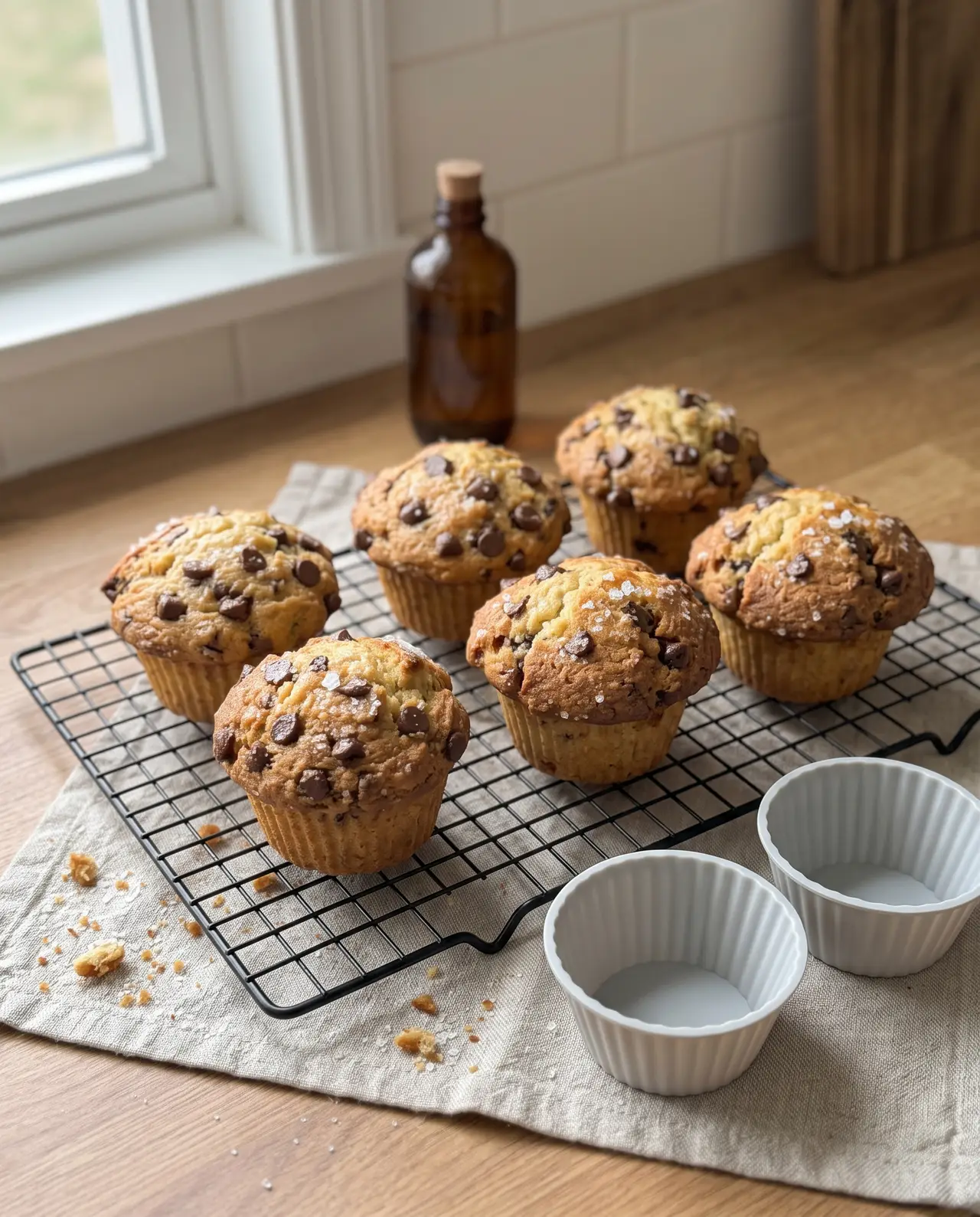
The chocolate chip muffin is the muffin people actually buy. The bran and the multigrain sit in the case doing public relations while the chocolate chip ones vanish by ten a.m., because a chocolate chip muffin is a socially acceptable way to eat cake before noon, and everyone quietly knows it. So when I say bakery style, I mean the four-dollar one from the good case: tall, crackle-topped, vanilla-scented, with chocolate in irresponsible quantities.
Getting that muffin out of an air fryer is mostly a matter of refusing the shortcuts the quick versions take. The thin recipes bake flat at one temperature with one bag of chips and call it a day, and the result is fine, and fine is not why anyone types the words bakery style into a search bar. The distance between fine and the good case is five specific decisions, and they cost maybe ten extra minutes combined.
Quick answer: Use two chocolates, a chopped dark bar for molten pools plus chips for structure, and two fats, melted butter for flavor and oil for a crumb that stays moist for days, with a double dose of vanilla. Rest the thick batter 15 minutes, fill silicone cups nearly full, crown with reserved chips, coarse sugar and a whisper of flaky salt, and bake the two-temperature schedule: 370°F for 4 minutes, then 310°F for 9 to 11, to 205°F. Serve warm, which is the part bakeries never tell you is half their secret.
What bakery style actually means
Reverse-engineer the four-dollar muffin and it comes apart into five features, each with a lever you control:
| Bakery feature | The lever |
|---|---|
| Tall domed crown | Thick rested batter, full cups, and the hot-start schedule below |
| Crackly sugared top | Coarse sugar plus a pinch of flaky salt, pressed on before the bake |
| Moist for days, not hours | Oil alongside the butter, and sour cream in the wet |
| Vanilla-forward crumb | Two teaspoons, double the timid standard |
| Chocolate as an event | The two-chocolate strategy, next section |
Notice what is not on the list: a jumbo pan, a stand mixer, or any skill beyond folding. Bakery style is an ingredient list and a schedule wearing a mystique.
The two-chocolate strategy
One bag of chips, stirred in, gives you dots of chocolate at polite intervals, which is the home-muffin look. The bakery look is chocolate with range, and it takes two forms working different jobs:
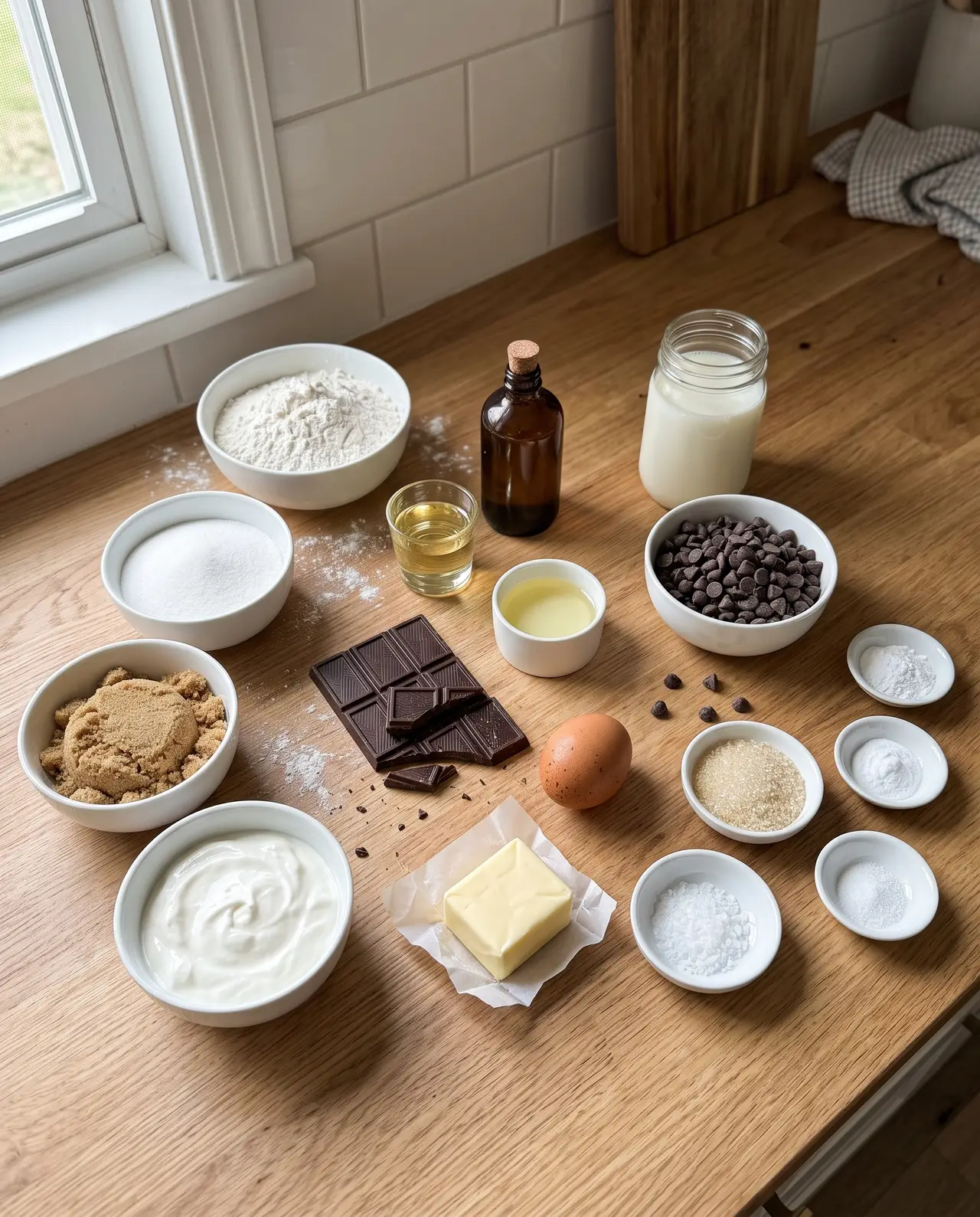
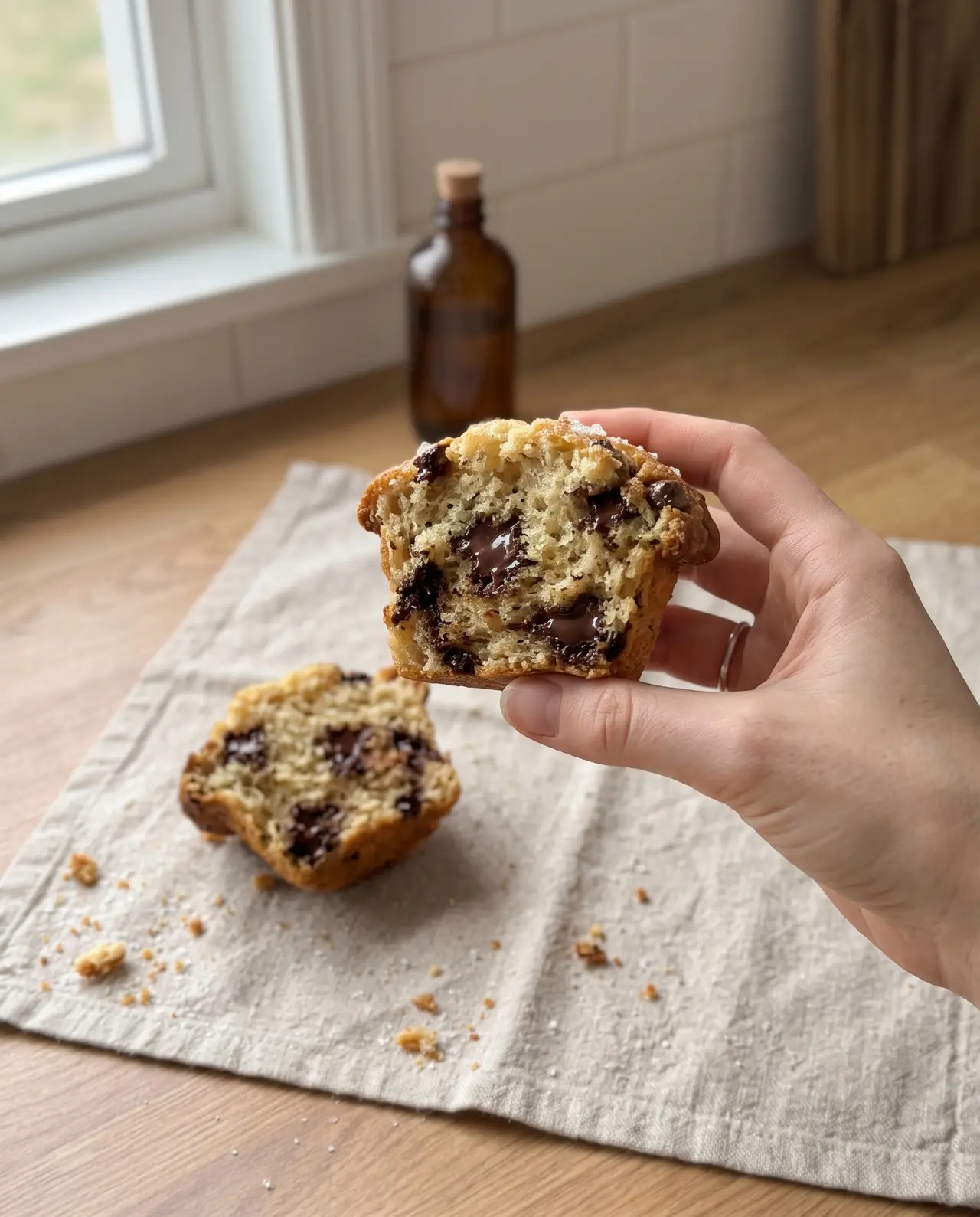
- A chopped dark chocolate bar, 3/4 cup, is the headline act. Chopping a bar gives you everything from dust to chunks, and the chunks melt into open molten pools while the dust tints the surrounding crumb. Pools are what a muffin cannot get from chips, because chips are engineered with stabilizers to hold their shape; a bar is engineered to melt.
- Standard chips, 1/2 cup, are the supporting cast: they keep their form, so the crumb reads as studded rather than marbled, and they survive the fold without smearing.
- Reserve a handful of chips for the crowns. Pressed onto the filled cups, they bake into the visible top-side chocolate that makes the case muffin look loaded before the first bite. Bakeries have done this forever; it is merchandising you can eat.
- Dark over milk in the batter, because the crumb is sweet and the chocolate is the contrast. Milk chocolate fans get their wish in the variations.
Butter and oil, and why it is not either-or
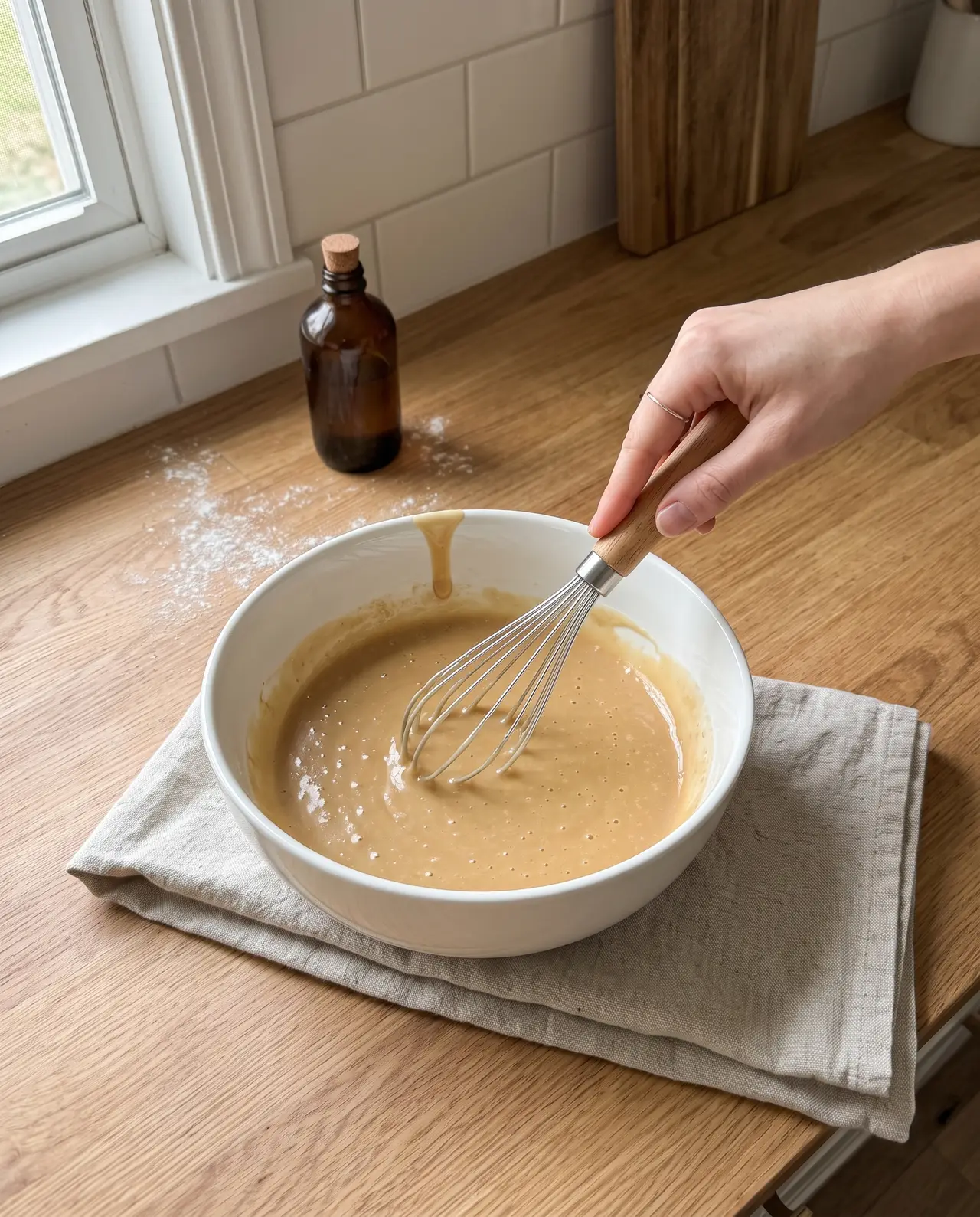
Muffin recipes split into butter camps and oil camps, and the bakery quietly uses both, because the two fats are good at different jobs. Butter carries flavor, the dairy-rich note that reads as bakery, but butter re-solidifies as the muffin cools, which is why all-butter muffins eat slightly dry by day two. Oil stays liquid at room temperature, which is why oil-crumb bakes stay moist all week, but oil brings no flavor at all. Three tablespoons of each is the split: butter for the first impression, oil for day three, and sour cream backing both with its tenderizing acidity, the same job it does in the lemon bread. This is the single most copyable idea on this page, and it upgrades any muffin recipe you already own.
The schedule, inherited
The dome comes from baking on a schedule instead of a temperature: 370°F for the first 4 minutes to fling the tops upward, then down to 310°F for 9 to 11 minutes so the centers set beneath the arch, muffins in from a cold start. The full physics of why this works, and why single-temperature muffins bake flat or sink, lives on the blueberry muffins page, this recipe's sibling and this site's muffin doctrine in full. The short version stands here: hot act for the crown, gentle act for the middle, and a 15 minute batter rest beforehand because thick batter is dome fuel. Oven bakery recipes run the same play at 425°F down to 350°F, which is also why the air fryer calculator alone cannot produce a bakery muffin: it converts temperatures honestly, and this is a sequence of two. The site's full dial lives in the air fryer baking chart.
How to make them
- Whisk the dry: 1.5 cups flour, 2 teaspoons baking powder, 1/4 teaspoon baking soda, 1/2 teaspoon salt.
- Whisk the wet: 1 egg, 1/3 cup white sugar, 1/3 cup brown sugar, 1/2 cup sour cream, 1/4 cup milk, 3 tablespoons melted butter, 3 tablespoons oil, 2 teaspoons vanilla, until glossy. The brown sugar is the fifth quiet upgrade: its molasses edge is the butterscotch undertone in good bakery muffins.
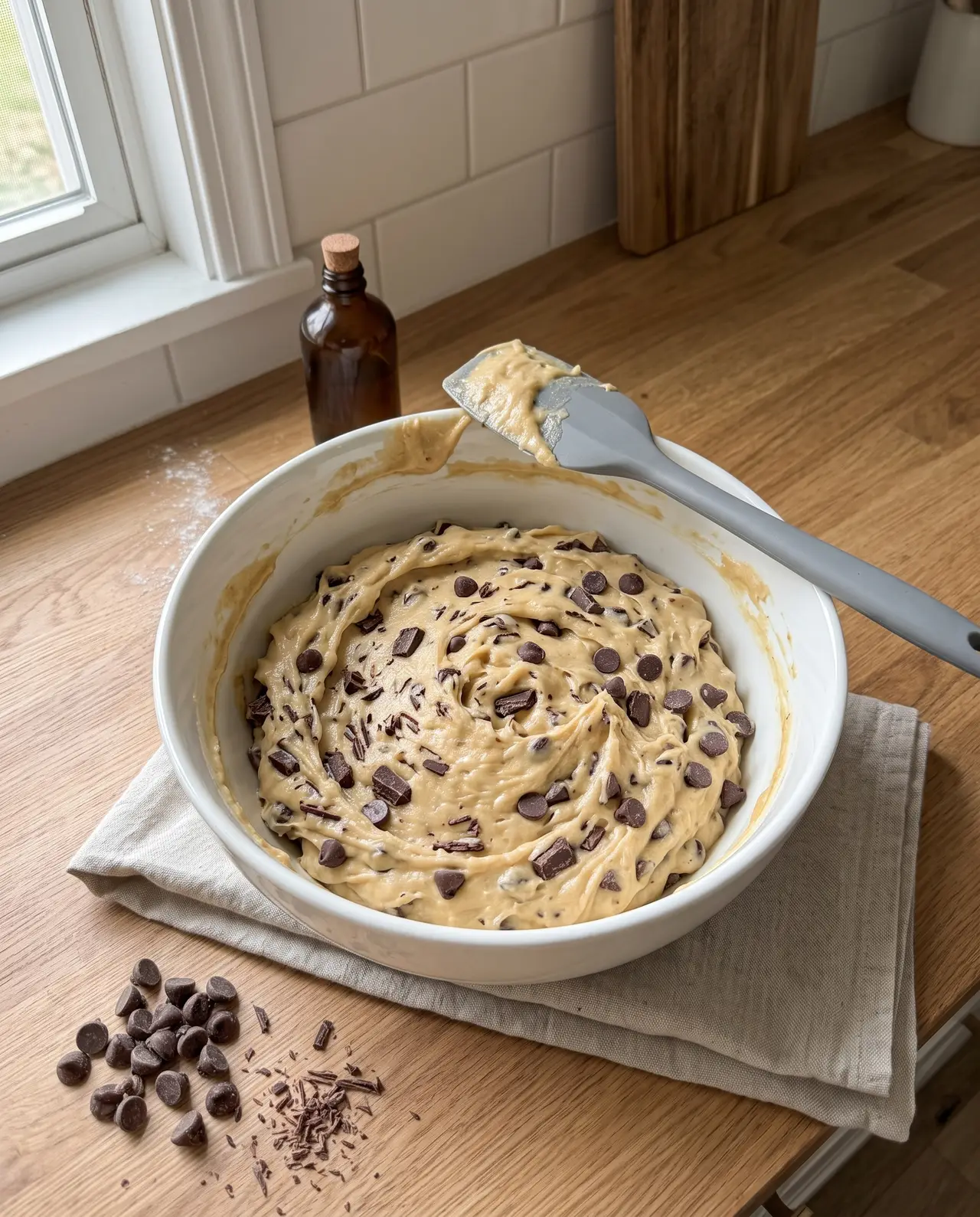
- Fold wet into dry just until the flour disappears, the quick bread family law, then fold in the chopped chocolate and all but a handful of the chips with three strokes.
- Rest the batter 15 minutes. It thickens visibly, and thick is the point.
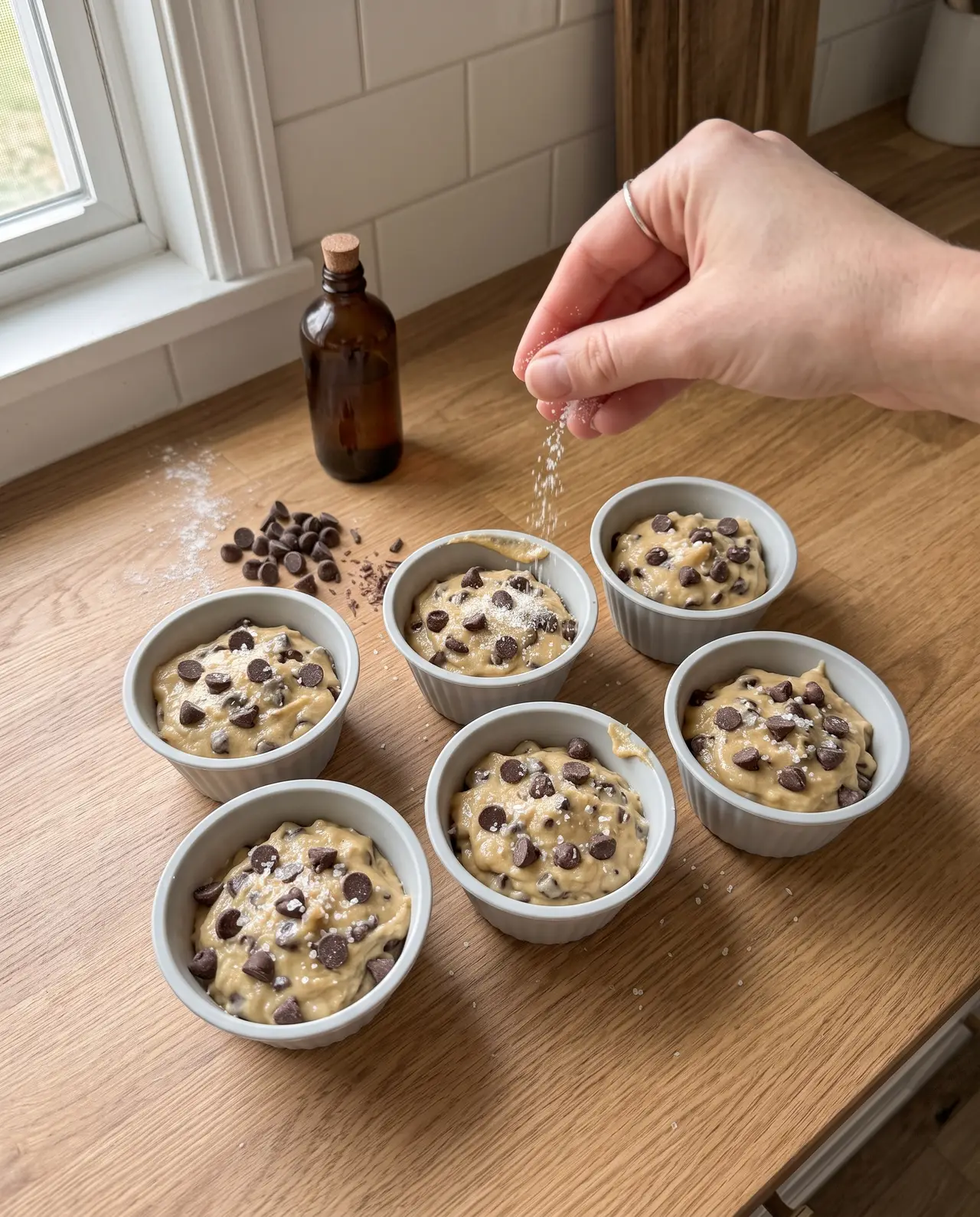
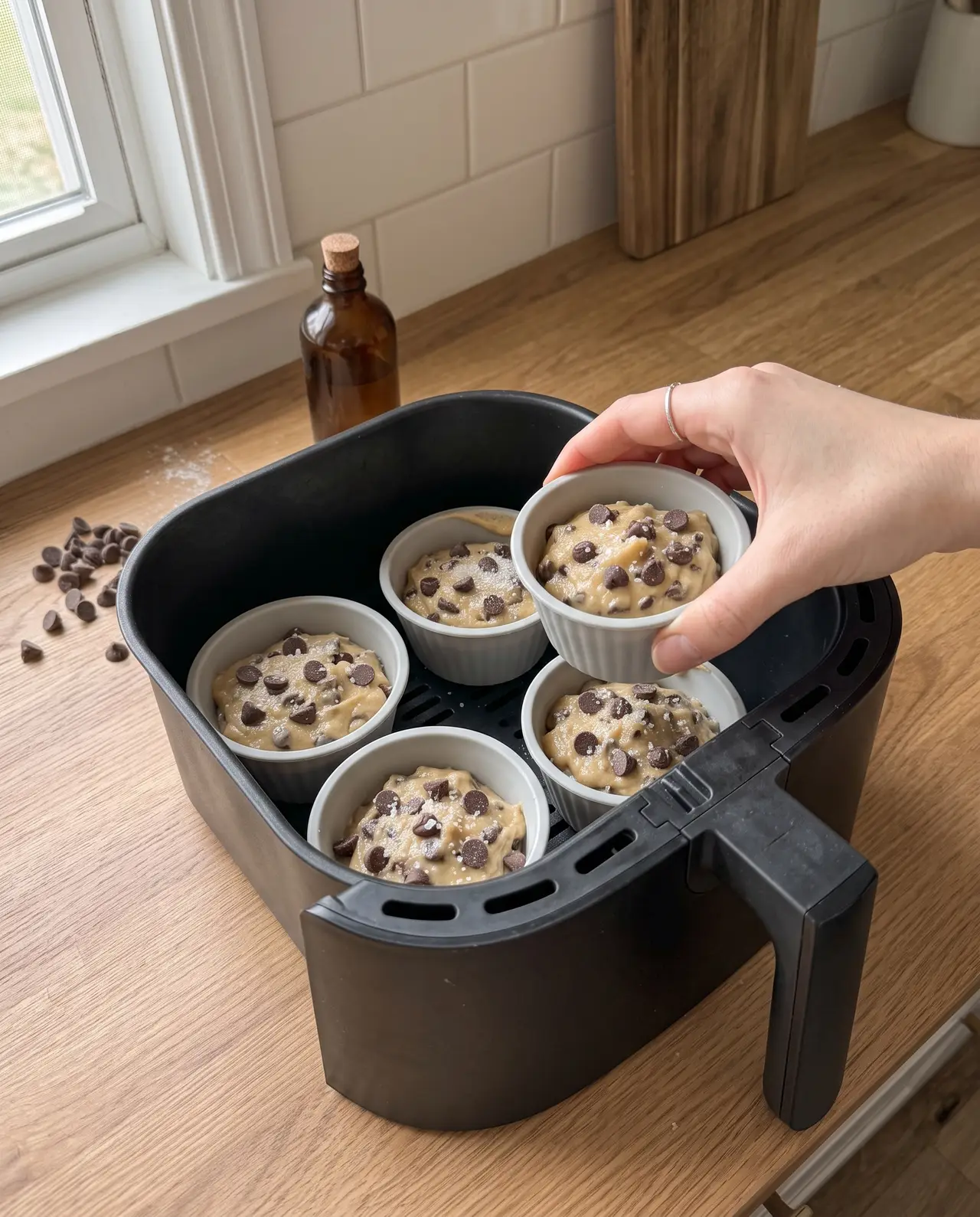
- Fill 6 silicone cups to a quarter inch below the rim. Freestanding silicone only; paper liners alone slump sideways in the fan, per the sibling page's cup rules.
- Crown each muffin: the reserved chips pressed on top, a generous pinch of coarse sugar, and a few flakes of sea salt.
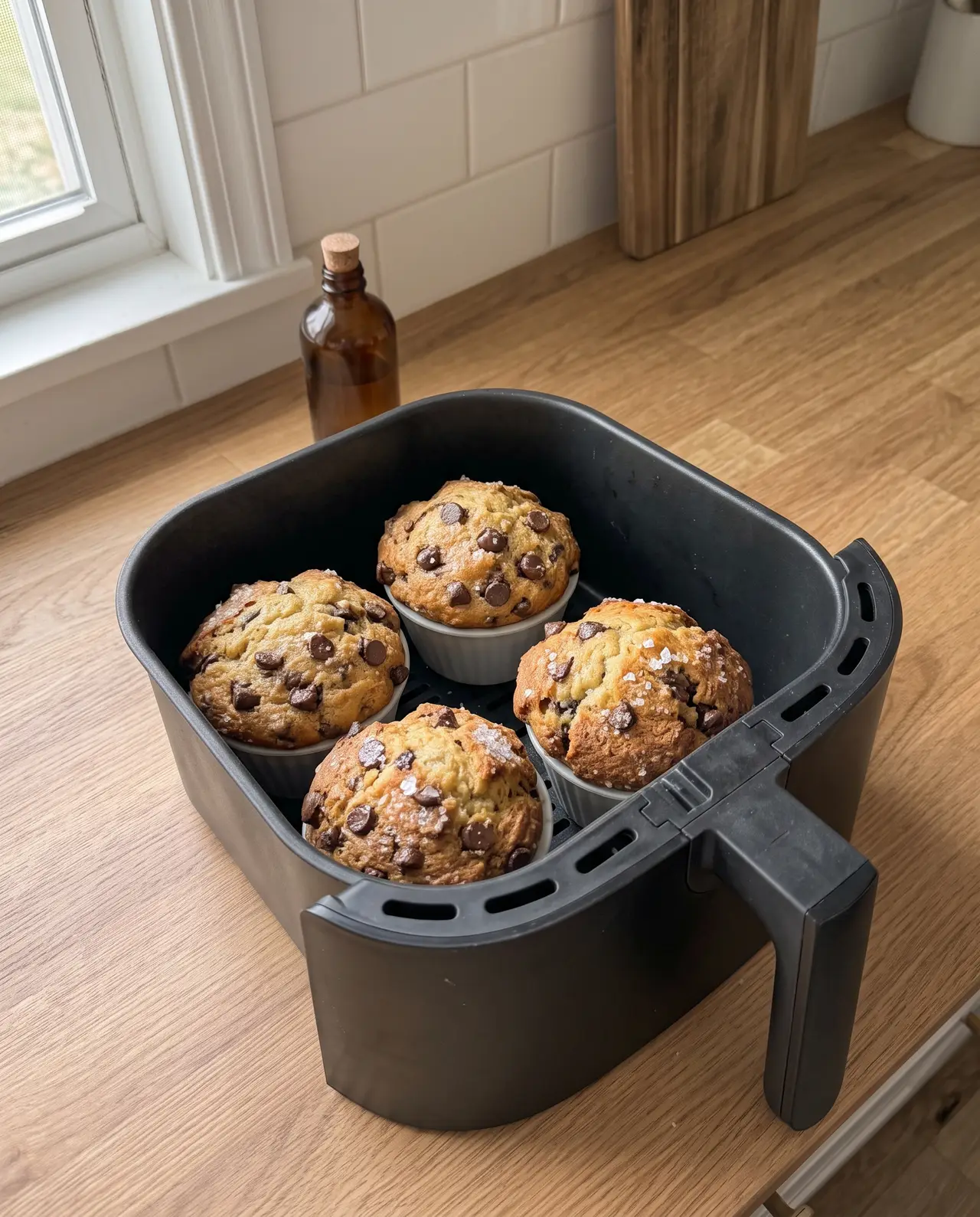
- Bake the schedule: 370°F for 4 minutes, then 310°F for 9 to 11, no preheat, swapping cup positions at the temperature drop if your machine has a known hot spot.
- Pull at domed, deep gold, and 205°F at the center. Cool 5 minutes in the cups, then onto a rack, and serve the first round warm on purpose.
Doneness: the chocolate lies to the toothpick
The berry muffins have jam pockets; these have molten chocolate, and the toothpick fails the same way. A pick dragged through a melted pool comes out smeared and dark from a perfectly finished muffin, and a pick that threads between chocolates can read clean over an underset center whose dome will sink as it cools. The answer is the family number: 205°F on an instant-read thermometer at the center of the middle muffin, aimed, as best you can, past the chocolate. Supporting evidence: a proud crown, edges pulling from the cup, and a top that springs back from a fingertip. Chocolate smears on the probe are a serving suggestion, not data.
The warm rule
Here is the part of bakery style that has nothing to do with the recipe: the case muffin tastes better partly because the case is warm. Warmth is flavor infrastructure, softer crumb, louder vanilla, and above all molten chocolate, and it is the cheapest trick on this page. Serve the fresh batch 10 minutes out of the basket, when the pools are still liquid. Re-warm day-two muffins for 90 seconds in the microwave or 2 minutes at 320°F, and the chocolate re-melts completely, which returns the muffin to within a bite of fresh. A room-temperature chocolate chip muffin is running at three-quarters power, and no one has to live that way.
Troubleshooting
| What you got | Why | Fix |
|---|---|---|
| Flat tops | One temperature, thin batter, or shy filling. | The schedule, the 15 minute rest, cups filled to a quarter inch below the rim. |
| Sunken middles | Underset center; the dome had no support. | 205°F before pulling. The full collapse taxonomy lives in the sunken middle guide. |
| All the chocolate at the bottom | Chunks cut too large, or thin batter. | Chop the bar no bigger than a thumbnail, rest the batter thick. Unlike berries, chocolate needs no flour toss; the thick batter alone holds it. |
| Greasy crumb | Oil measured generously on top of the butter. | Three tablespoons each, level. The blend is a balance, not a doubling. |
| Tough, tunneled crumb | Overmixing. | Fold to no-streaks and stop; the chocolates go in on the last three strokes. |
| Pale, sad tops | Hot act skipped or cut short. | The 4 minutes at 370°F is where the crown's color and crackle come from. |
| Burnt chip tips on the crown | Machine runs hot in the opening act. | Press the topping chips flatter into the batter, and see the burning guide for chronic scorchers. |
| One muffin always behind | Hot spot favoritism. | Swap positions at the drop; probe the laggard separately. |
No preheat, the hot act warms the chamber with the muffins aboard, roster in the preheat guide; recurring mysteries live in the troubleshooting guide.
Variations and the base-batter idea
Strip the chocolate out of this recipe and what remains is this site's bakery muffin base: two fats, sour cream, double vanilla, brown-and-white sugar, the rest, the schedule. Anything folds into it:
- Double chocolate: swap 1/4 cup of the flour for cocoa and use all dark chocolate. Serve warm or accept partial credit.
- Milk chocolate and toasted hazelnut: the candy-bar muffin, milk chocolate chunks plus 1/3 cup chopped toasted hazelnuts.
- Banana chocolate chip: swap the sour cream and milk for 3/4 cup mashed ripe banana and 2 tablespoons milk, and this page shakes hands with the banana bread.
- Chocolate chip cookie people already know the flavor thesis here, and the cookies are the same argument in a flatter format.
- Berry direction: that is the sibling page, and its frozen-berry and flour-toss rules do not transfer to chocolate, which needs neither.
- The rest of the muffin shelf: the same base carries the banana muffins and the carrot muffins, which swap the chocolate for fruit and vegetable and keep the schedule.
- Doubling: the recipe scaler handles the math; bake in rounds of six, second round a minute shorter, batter thickening happily while it waits.
Storage and freezing
- Room temperature, 4 days, in a container lined above and below with paper towels. The oil-and-sour-cream crumb outlasts an all-butter muffin by a full two days, which is the fats section paying rent.
- Skip the fridge, the standing quick bread rule.
- Freeze baked muffins 3 months, individually wrapped; thaw an hour on the counter, then the 90 second re-warm to bring the pools back to life.
- The batter holds overnight in the fridge, which deepens both the dome and the flavor. Cold batter into cups, add a minute to the gentle act, and warm bakery muffins exist 20 minutes after the alarm.
Frequently asked questions
QHow long do chocolate chip muffins take in an air fryer?
13 to 15 minutes on a two-temperature schedule: 370°F for the first 4 minutes to raise the domes, then 310°F for 9 to 11 minutes to set the centers, done at 205°F inside. Six muffins in freestanding silicone cups is the batch, no preheat needed. With the 15 minute batter rest, the whole project runs about 40 minutes, and the first round should be eaten warm on principle.
QWhat makes a muffin bakery style?
Five reproducible features: a tall domed crown from thick, rested batter and a hot-start bake; a crackly top of coarse sugar and a little flaky salt; a crumb that stays moist for days, which comes from using oil alongside butter plus sour cream; a double dose of vanilla; and chocolate in two forms so it shows up as molten pools and studs rather than polite dots. No jumbo pan or mixer involved; it is an ingredient list and a schedule.
QWhy use chopped chocolate and chips together?
They do different jobs. Chips contain stabilizers and hold their shape, giving the studded texture and surviving the fold cleanly. A chopped bar has no such manners: its chunks melt into open molten pools and its shards and dust tint the surrounding crumb, which is the loaded, marbled interior bakery muffins have. Three quarters of a cup of chopped dark bar plus a half cup of chips, with a handful of chips reserved for pressing on the crowns.
QShould muffins be made with butter or oil?
Both, in equal measure, which is the bakery's quiet answer to a question home recipes treat as a war. Butter carries the dairy-rich flavor but re-solidifies as the muffin cools, so all-butter muffins eat dry by day two. Oil stays liquid at room temperature and keeps the crumb moist all week, but tastes of nothing. Three tablespoons of each buys the first impression and day three at once, and the split upgrades any muffin recipe you already use.
QHow do I know when chocolate chip muffins are done?
205°F on an instant-read thermometer at the center of the middle muffin, because the toothpick fails here twice over: a pick through a molten pool reads wet from a finished muffin, and a pick between chocolates can read clean over an underset center that will sink as it cools. Aim the probe past the chocolate as best you can, and treat smears of melted chip on the way out as a bonus, not a verdict.
QWhy did my muffins come out flat or sunken?
Flat tops mean the bake ran at one moderate temperature or the batter was thin; sunken middles mean the center never set beneath the dome. The fixes are the schedule, hot for 4 minutes then gentle, the 15 minute batter rest that thickens the batter, cups filled nearly to the rim, and the 205°F pull. The full dome-and-collapse physics lives on this site's blueberry muffin page, which is the muffin doctrine in long form.
QDo chocolate chips need a flour toss like berries?
No. The flour toss exists to keep heavy, slick, juice-wrapped fruit from sliding through batter, and chocolate is neither juicy nor slick at fold time. A properly thick, rested batter suspends chips and chunks on its own. If your chocolate still sinks, the pieces were chopped too large, thumbnail size is the ceiling, or the batter was thin, which the 15 minute rest corrects.
QWhy rest the batter before baking?
Fifteen minutes lets the flour finish absorbing the liquid, visibly thickening the batter, and thick batter climbs into a dome instead of leveling flat; it also relaxes the gluten built during folding, so the crumb bakes tender. It is the quiet habit behind most bakery muffin tops. Overnight in the fridge works even better and turns the morning bake into a 20 minute event from alarm to warm muffin.
QHow do you store chocolate chip muffins?
Four days at room temperature in a container lined with paper towels above and below, and the butter-oil crumb genuinely holds that long. Skip the fridge, which stales the crumb. Frozen and individually wrapped they keep 3 months. The serving rule outranks the storage rule: 90 seconds in the microwave or 2 minutes at 320°F re-melts the chocolate pools, and a re-warmed muffin plays at full power again.
Never overbake again
Get our one-page times & temps cheat sheet, plus a new tested recipe each week.
No spam · unsubscribe anytime