

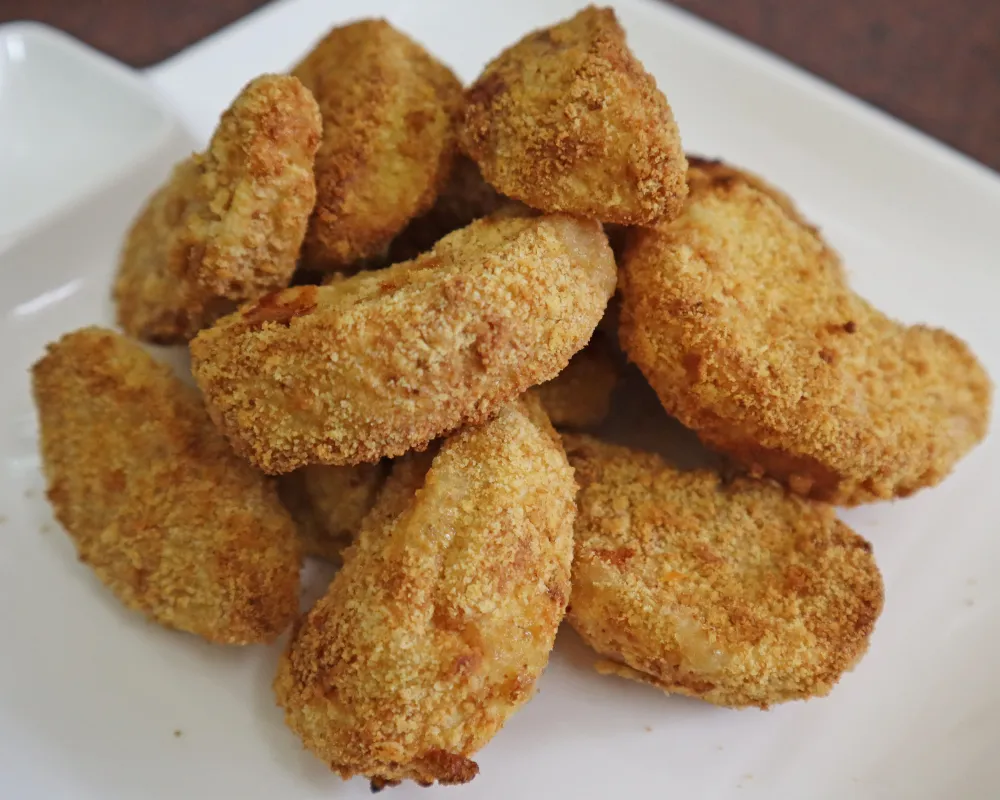
I made these because my daughter had them at a theme park and would not stop talking about them, and my first batch was a genuine disappointment. Not burnt, not raw. Just limp. The coating had gone the color of wet cardboard and the apple inside had collapsed into something closer to sauce.
The reason turned out to be simple and it is not mentioned on a single page currently ranking for this, including the one that flags sogginess as a known problem and then does not explain it.
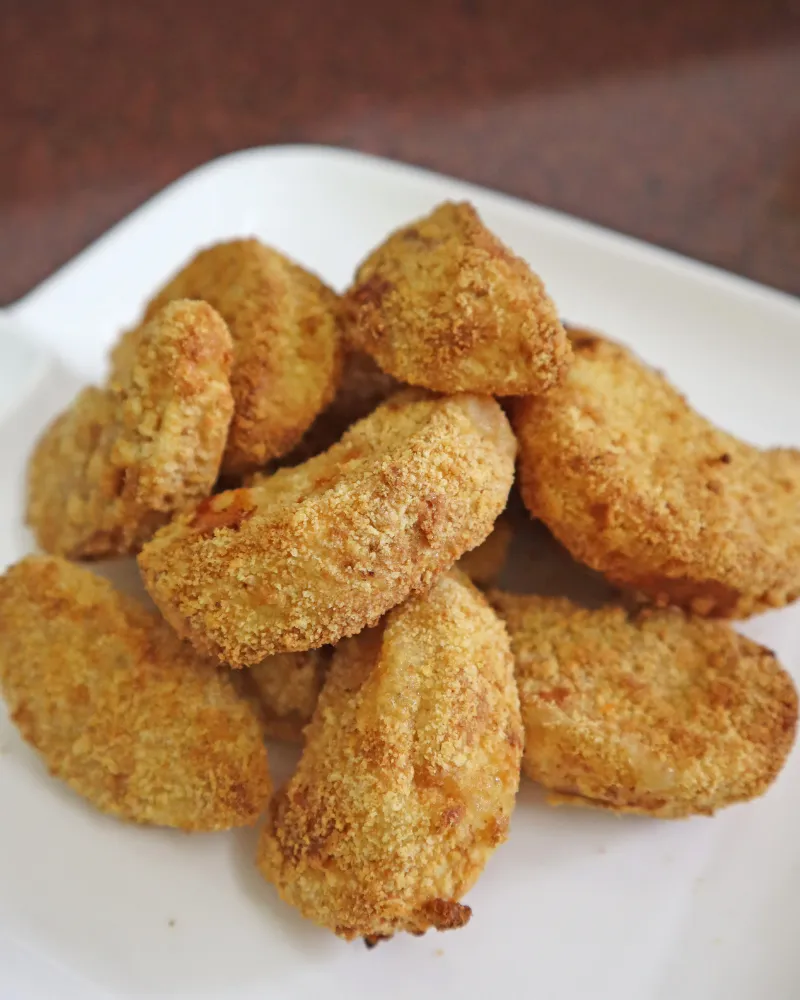
Quick answer: Peel and cut into 1/2 inch batons, pat them properly dry, then a full three-stage breading: seasoned flour with cornstarch, beaten egg, then panko. Air fry at 380°F for 8 to 10 minutes, flipping at 5. The cinnamon sugar goes on after, not in the coating, tossed on within seconds of them leaving the basket. Serve immediately, because you have about five minutes.
An apple has no starch to crisp
Start with the thing that makes this recipe different from every other fry.
A potato fry crisps because a potato is roughly 15 to 20 percent starch. Heat makes those starch granules swell and set, the surface dries out, and what you are left with is a rigid shell with a fluffy interior behind it. The potato builds its own crust.
An apple is about 85 percent water, 10 percent sugar, and almost no starch at all. There is nothing in it that can gelatinize into a shell. Put a naked apple wedge in an air fryer and it will not crisp at any temperature or for any length of time. The cell walls soften, the juice comes out, and you get a hot slice of apple. Perfectly nice, not a fry.
Builds its own shell
Starch gelatinizes, the surface dehydrates, and the fry ends up rigid. The coating is optional.
Cannot build anything
No starch means no structure. Left bare it softens and weeps. There is nothing to crisp.
The coating is the fry
Every crisp thing about an apple fry is breadcrumb. That makes the breading the structural element, not a garnish.
Which reframes the whole recipe. If the coating is the fry, then every failure is a coating failure, and the questions worth asking are how to get it to stick, how to make it crisp fast, and how to stop the apple destroying it from behind. That last one is the next section.
This is also exactly why air fryer apple chips work completely differently. There you crisp the apple itself, but only by drying it almost to nothing over an hour at a low temperature. You cannot do that to a half inch baton and still have anything left to bite.
They go soggy from the inside
This is the mechanism nobody explains, and it is the reason apple fries have a reputation for being disappointing.
When your panko crust turns golden, that surface is genuinely crisp. It is dry, it is rigid, and if you ate it at that exact second it would be excellent. But the apple behind it is now hot, its cell walls have broken down, and it is releasing juice. That juice has one place to go, and it is straight into the coating you just spent ten minutes crisping.
A potato fry does the opposite. Its interior loses moisture during cooking and keeps losing it as it cools, so the crust stays dry and a potato fry is still decent fifteen minutes later. An apple fry is being actively wetted from behind the whole time.
What follows from that:
- Serve them immediately. Not as a nice-to-have. You have roughly five minutes of proper crispness and then a steady decline. Have the dip on the table before they come out.
- Do not cover them or pile them up. A bowl of hot apple fries stacked three deep steams itself. Spread them out on a rack or a wide plate.
- Panko rather than fine crumbs. A thicker, more open coating takes longer to be saturated from behind. This is the single biggest thing you can do to extend the window.
- Do not undercook the apple, and do not overcook it either. A firmer apple releases less juice. Aim for one that still has a little resistance when you bite it.
There is no fix that makes an apple fry keep like a potato fry. This is a food you make and eat standing at the counter, and once you accept that, it is very good.
Choosing the coating
Recipes for this use three different approaches and they are not equivalent. One of the most popular versions has you shake apple batons in a bag of flour and powdered sugar with no binder at all, which will not stick to anything, and certainly not to a wet apple.
| Coating | How it behaves | Verdict |
|---|---|---|
| Panko, three stage | Large open flakes with air between them. Crisps fast in dry heat and resists wetting from behind for longest. | Best. What this recipe uses. |
| Graham cracker crumbs | Excellent flavor and very traditional, but they are fine and already sweet, so they pack dense and brown early. | Good, watch the heat |
| Fine dry breadcrumbs | Pack tightly with no air gaps. Go pasty as soon as the apple releases juice. | Avoid |
| Flour alone, shaken in a bag | No binder, so most of it falls off in the basket. What sticks turns into a raw floury film. | Does not work |
Panko is not a fussy ingredient choice. It is made from crustless bread dried in a way that produces big, irregular, airy flakes rather than dense crumbs, which means more surface, faster drying, and more physical thickness between the apple and the outside world.
The three stages, and what each one is for
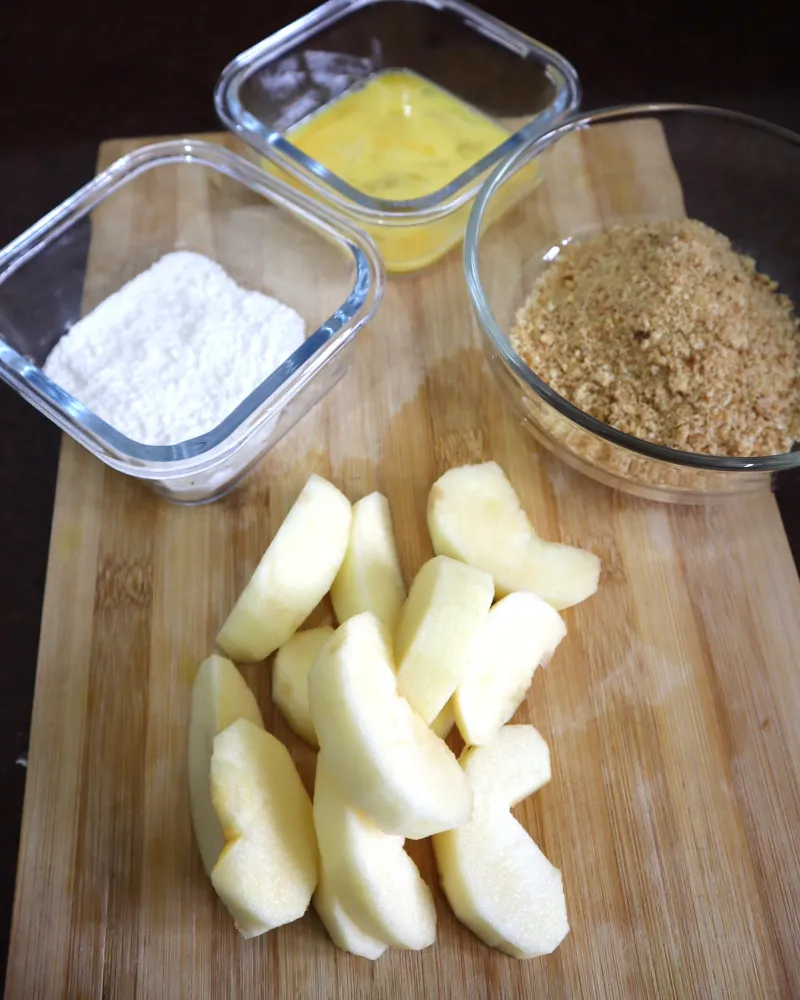
- Flour with cornstarch. The flour gives the wet apple a dry surface for the egg to grip. The cornstarch is doing a second job: it absorbs surface moisture more aggressively than flour and it fries up crisper, which is why it turns up in fried chicken dredges. Two tablespoons in a third of a cup of flour is enough.
- Beaten egg. The glue. Proteins in the egg set in the heat and physically bond the panko to the flour layer. Without it nothing holds.
- Panko. The structure. Press it on rather than sprinkling, and use more than feels necessary.
Work with one hand for the dry bowls and the other for the egg, or you will end up with breaded fingers and bald apples.
Why the sugar goes on after
Most recipes for this mix the sugar into the coating, and several add it to graham crumbs that are already sweet. Then they cook it at 380°F for ten minutes and wonder why the outside is darker than they wanted.
Sugar on the outside of food in a basket is exposed and dry, with nothing protecting it. Sucrose starts caramelizing around 320°F. Ten minutes at 380°F with sugar on the surface will take it well past golden and into bitter, and it will get there before the coating has finished crisping.
So the split is simple:
| Goes in the coating | Goes on after |
|---|---|
| Cinnamon. Heat stable, and it blooms in the flour rather than sitting raw on the outside. | Sugar. Would darken and turn bitter over ten minutes at 380°F. |
| Salt, a pinch. Makes the apple taste more like apple. | Nutmeg or apple pie spice, if you want them bright rather than baked in. |
| Cornstarch, for crispness. | Anything with sugar in it, including cinnamon sugar blends. |
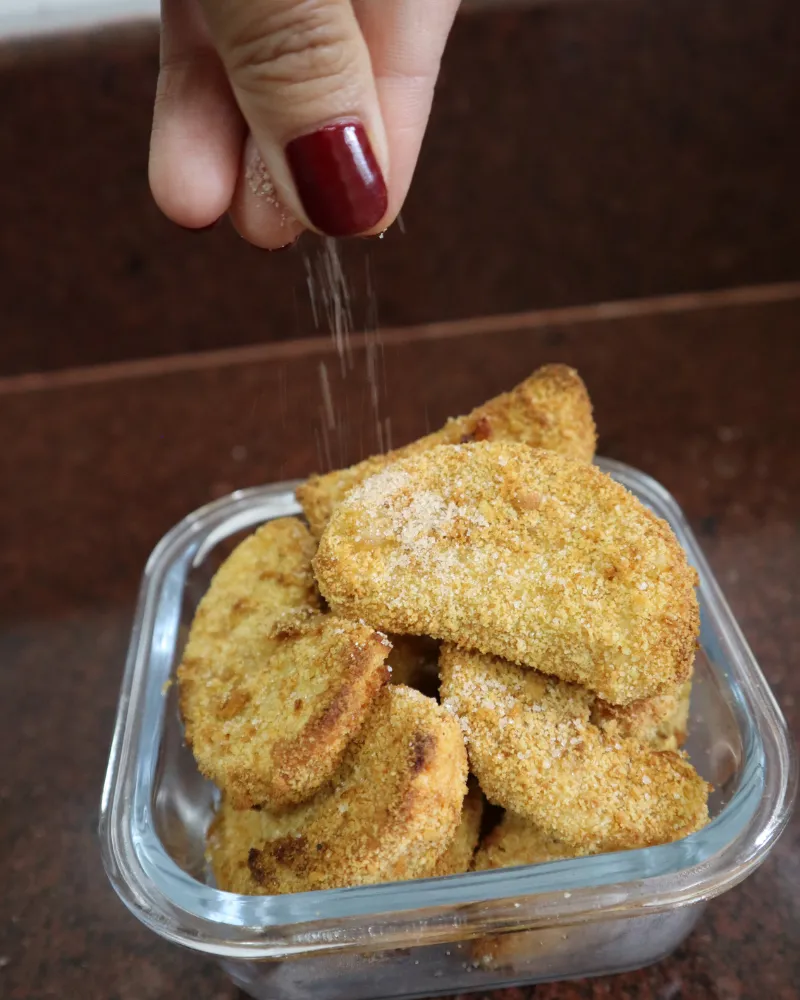
Toss the cinnamon sugar on within seconds of them leaving the basket, while the coating is hot and carries a trace of oil. Some of it melts on contact and holds the rest in place. Wait even a minute and the surface has cooled and the sugar just falls into the bottom of the bowl. The caramelization entry in our glossary has the temperatures if you want them.
Ingredients
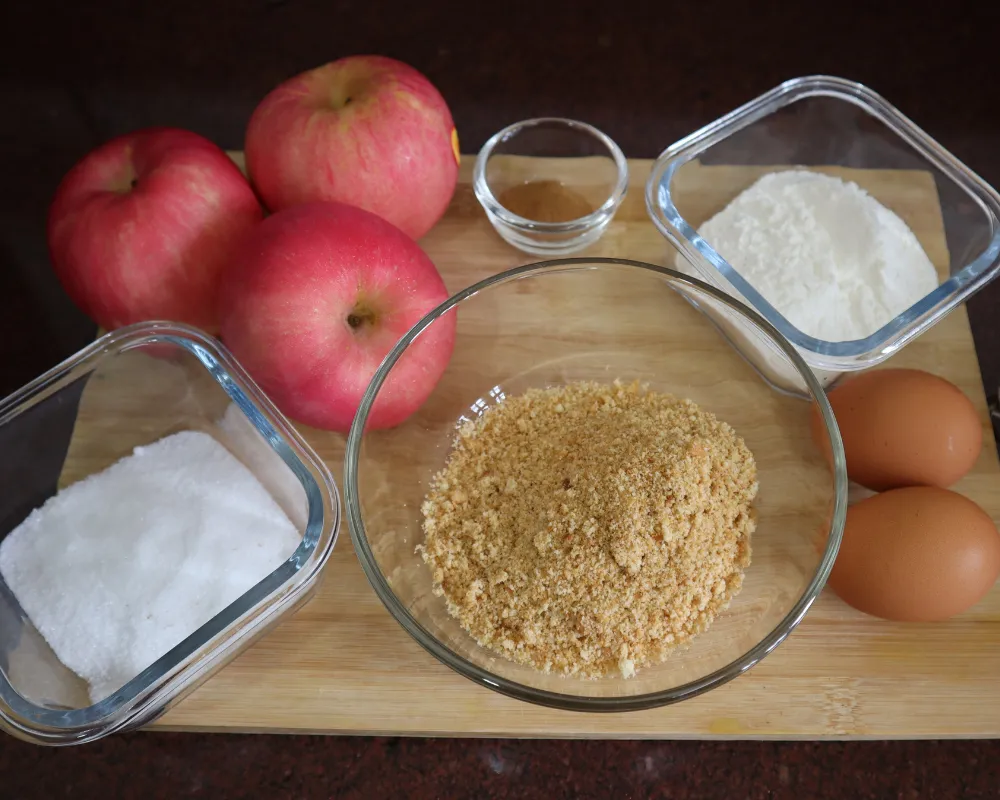
Serves 4 as a dessert or snack, from two large apples.
For the fries
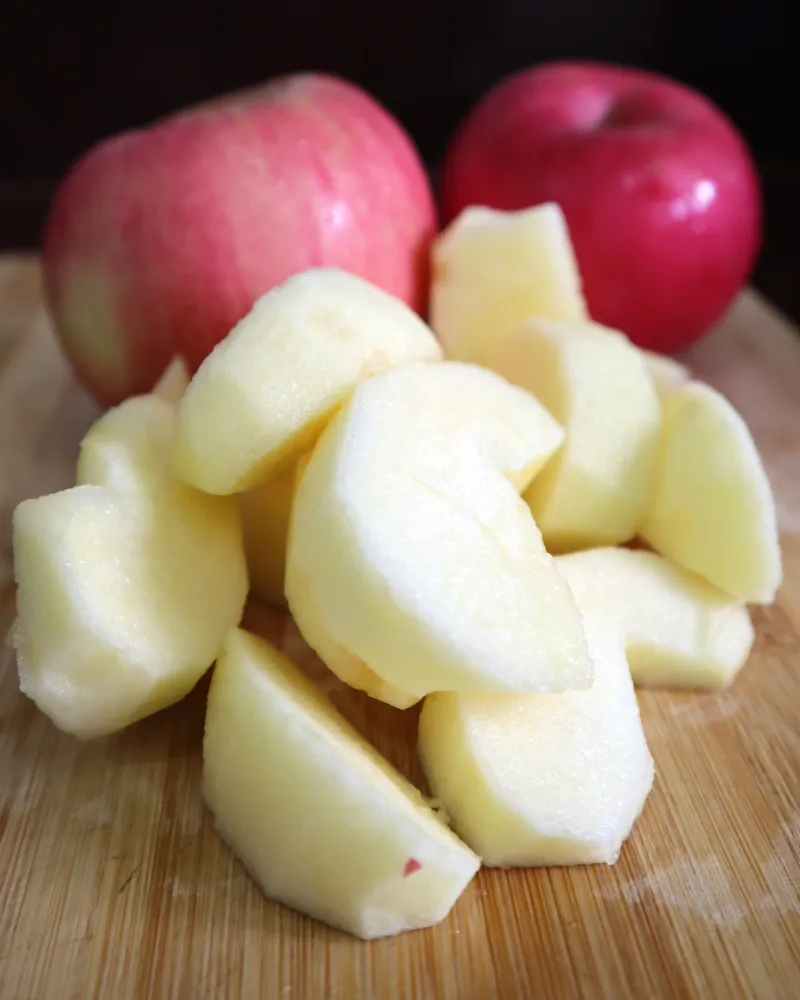
- 2 large Granny Smith apples, about 12 oz / 340g, peeled
- 1/3 cup (42g) all-purpose flour
- 2 tablespoons (16g) cornstarch
- 1 teaspoon ground cinnamon
- 1/4 teaspoon salt
- 2 large eggs, beaten
- 1 1/2 cups (90g) panko breadcrumbs
- Oil spray, or 2 tablespoons melted butter for brushing
To finish
- 3 tablespoons (36g) granulated sugar
- 1 teaspoon ground cinnamon
Two notes
- Peel them. This is one of the few apple recipes on the site where I say that. Skin does not soften in ten minutes, and worse, coating does not stick to it: the waxy surface gives the flour nothing to grab. A peeled baton takes the breading properly.
- Butter brushed on beats spray. Panko needs fat to brown, and a mist leaves gaps where the crumbs stay pale and taste raw. If you are spraying, be generous and do it after they are in the basket as well as before.
How to make them
- Preheat to 380°F (193°C) for 3 minutes. A hot basket sets the coating fast, which matters here because you are racing the juice coming out of the apple.
- Peel and cut. Peel the apples, cut them into 1/2 inch thick slabs, then cut those into 1/2 inch batons. Discard the core.
- Dry them properly. Spread the batons on paper towels, press another sheet on top, and leave them a couple of minutes. Cut apple is wet and wet apple sheds breading.
- Set up three bowls. Flour, cornstarch, cinnamon and salt whisked together in the first. Beaten eggs in the second. Panko in the third.
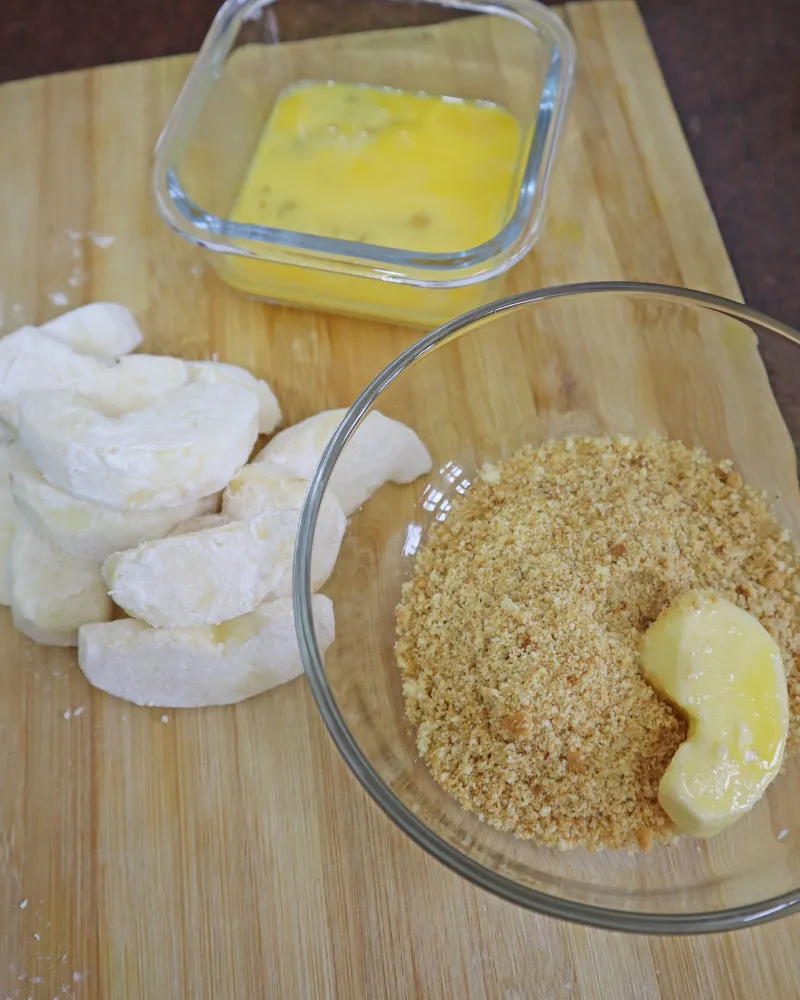
- Bread them, one at a time. Flour first and shake off the excess, then egg and let it drip, then press firmly into the panko on all sides. Press, do not sprinkle.
- Oil them. Brush or spray on all sides. Panko without fat stays pale and tastes of raw bread.
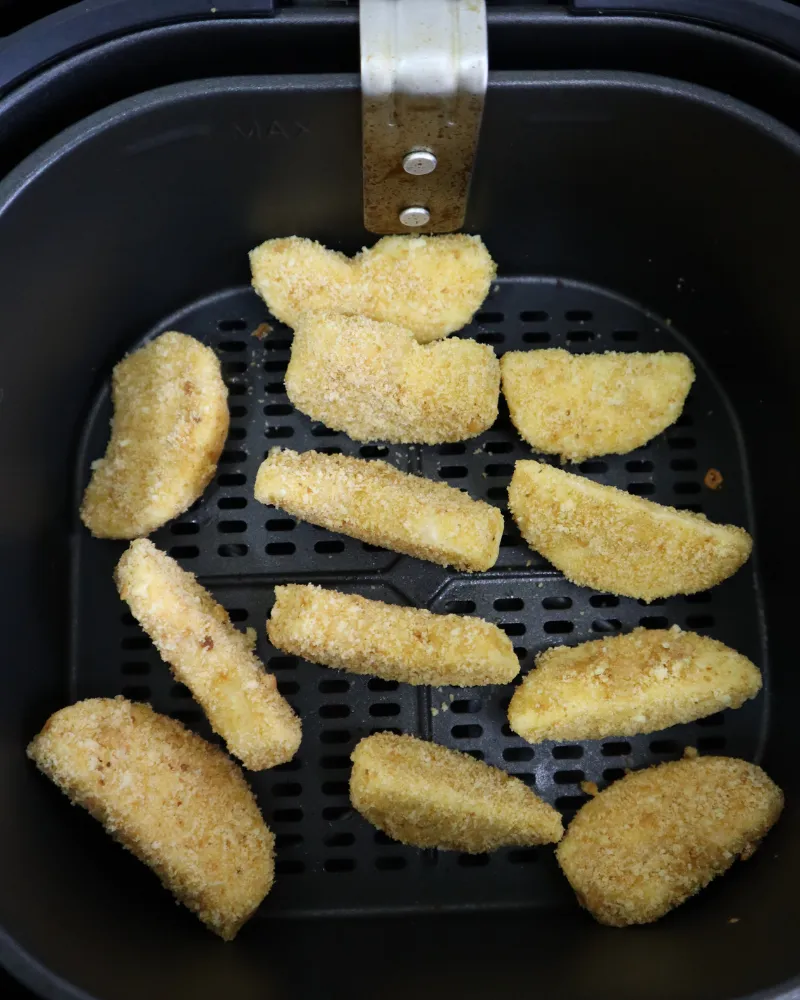
- Single layer, not touching. Anywhere two fries touch you get a pale soft seam. Cook in two batches rather than crowding, and remember the second batch runs slightly faster.
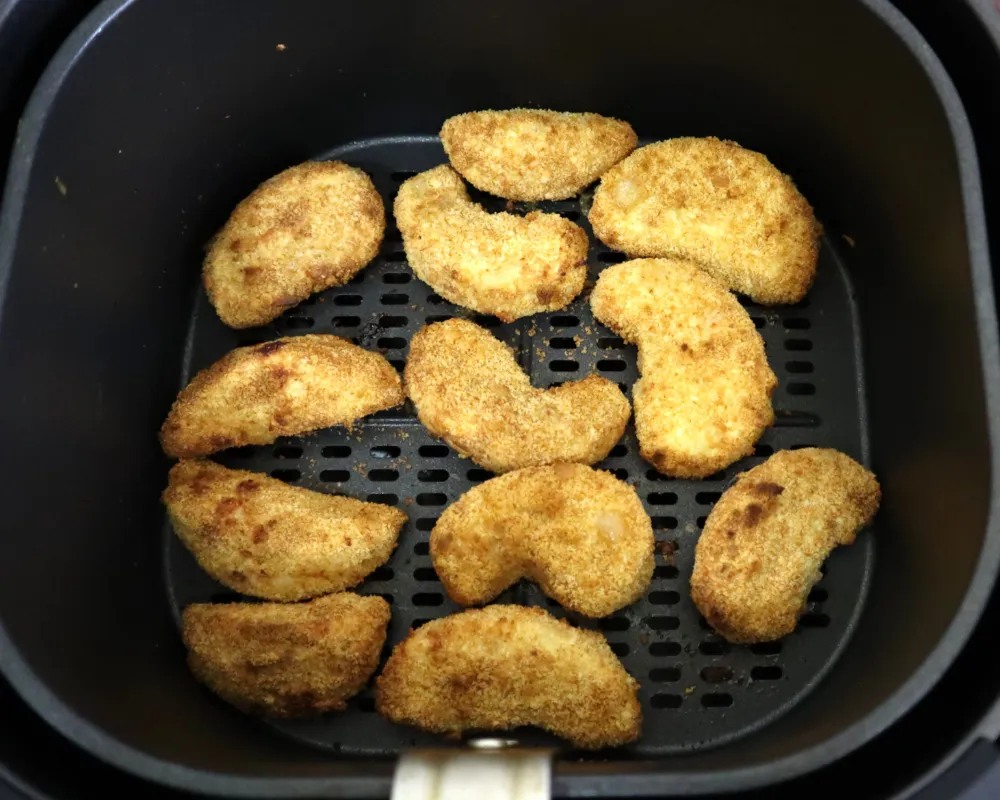
- Air fry 8 to 10 minutes, flipping at 5. Use tongs and turn them individually rather than shaking, which knocks the coating off.
- Check at 8. They are done when the panko is deep golden all over and the apple gives slightly when squeezed but still has resistance. A collapsed, soft baton has gone too far.
- Toss in cinnamon sugar immediately. Straight from the basket into a bowl with the sugar and cinnamon, tossed while hot.
- Serve now, spread out. On a rack or a wide plate rather than piled in a bowl, with the dip already on the table.
Turn them, do not shake them. Shaking the basket is right for chips and wings and wrong for anything breaded. The coating is held on by set egg and it will come off against the basket walls, leaving you with bare apple and a drift of panko in the bottom. Tongs, one at a time, five seconds. The glossary covers when shaking is the right move and this is not one of those times.
Which apples, and how to cut them
Firmness matters more than flavor here, because a soft apple collapses inside its coating and floods it.
| Apple | Holds up | Verdict |
|---|---|---|
| Granny Smith | Excellent. Dense flesh, high acid, lower sugar. | First choice, and the tartness cuts the sugar coating |
| Honeycrisp | Good, but very juicy, so expect a shorter crisp window. | Fine, eat them faster |
| Pink Lady, Braeburn | Very good. Firm and balanced. | Excellent all rounders |
| Gala, Fuji | Softer and sweeter. Fine, but they collapse sooner. | Acceptable |
| Red Delicious, McIntosh | Mealy. Turn to sauce inside the coating. | No |
Cut size
Half an inch square is the target, and it is a compromise worth understanding. Thinner and the apple cooks to mush before the panko browns, because there is not enough of it to survive ten minutes. Thicker and the outside is done while the middle is still raw and cold, which sounds like a small thing but a cold apple center in a hot crisp coating is genuinely unpleasant.
Cut the apple into half inch slabs first, then cut the slabs into batons. Trying to cut wedges off a round apple gives you tapered pieces with thin ends that overcook, which is the same problem air fryer potato peels have when the peel thickness varies.
Fixing what goes wrong
| What you got | Why | Fix |
|---|---|---|
| Coating fell off in the basket | Shaken rather than turned, or the apple was wet and the flour never gripped. | Pat dry, use all three stages, turn with tongs. |
| Soggy within minutes | Normal. The apple releases juice into the coating from behind. | Panko rather than fine crumbs, spread them out, and serve immediately. |
| Pale, raw-tasting coating | Not enough fat on the panko. Breadcrumbs need oil to brown. | Brush with melted butter, or spray generously on both sides. |
| Dark and slightly bitter outside | Sugar in the coating caramelized past golden over ten minutes at 380°F. | Cinnamon in the flour, sugar tossed on after. |
| Apple collapsed into sauce | Overcooked, or a soft variety like McIntosh. | Check at 8 minutes. Granny Smith or Pink Lady. |
| Cold in the middle | Batons cut thicker than half an inch. | Half inch square. Cut slabs first, then batons. |
| Pale patches where they touched | Crowded basket. Contact points cannot brown. | Single layer with gaps, two batches if needed. |
| Sugar all fell into the bowl | Tossed after they had cooled and the surface had dried. | Toss within seconds of them leaving the basket. |
| Breading stuck to my fingers, not the apple | Using the same hand for wet and dry stages. | One hand for the dry bowls, one for the egg. |
The general version of the crisping problem is in how to get things crispy in an air fryer, and if things are burning across different recipes rather than just this one, how to prevent burning covers it. The troubleshooting guide has the rest.
Dips and variations
- Cream cheese caramel dip. The theme park version. Beat 4 oz softened cream cheese with 1/4 cup brown sugar, 2 tablespoons of caramel sauce and a splash of vanilla. Makes enough for this batch.
- Salted caramel, warm. Straightforward and hard to beat. A pinch of flaky salt on top.
- Vanilla cream. Whipped cream folded with a little sour cream and vanilla, which is closer to the original fairground dip and lighter than caramel.
- Maple yogurt. Greek yogurt with a tablespoon of maple syrup. The one that makes these feel like breakfast.
- Graham crumb coating. Swap half the panko for crushed graham crackers. More flavor, browns faster, so drop to 370°F.
- Savory version. Skip the cinnamon sugar entirely, add a pinch of cayenne to the flour, and serve with a sharp cheddar dip. Sounds odd, works well.
- Gluten free. Rice flour in place of the all-purpose and gluten free panko. The cornstarch is already fine.
For more fairground food from a basket, air fried Oreos are the other one worth doing. For apples treated three other ways, there are apple chips for something genuinely crisp, baked apples for soft, and air fryer apple cake if you have more apples than plans.
Storage, and the five minute window
I would rather be straight about this than pad the section out. Apple fries do not keep, and unlike most things I say that about, they do not keep at all.
- Best within five minutes. That is the honest number. The coating is being wetted from behind the whole time and there is no way to stop it.
- Refrigerated: 2 days in an airtight container, but they will be soft and the coating will have gone pasty. This is a leftovers-are-fine situation, not a leftovers-are-good one.
- Re-crisping: 3 to 4 minutes at 375°F genuinely helps. It will not bring them back to new, because the apple inside has already given up most of its water, but it dries the coating out again.
- Do not freeze cooked fries. The apple turns to mush on thawing.
- Prep ahead: you can bread them up to an hour before and keep them in a single layer in the fridge, uncovered. Any longer and the egg layer starts to soften the flour into paste.
Ten minutes of air fryer time for a dessert is cheap, and against deep frying you also save the oil and the disposal, which is the real saving. The running cost calculator gives you the electricity figure for your own rate. If you are scaling up for a crowd, the recipe scaler handles the arithmetic, and remember that this is a single layer job so more fries means more batches rather than a fuller basket. Converting an oven recipe? The air fryer calculator does the temperature and time, and all four air fryer tools are in one place.
Frequently asked questions
QWhy are my air fryer apple fries soggy?
Because the apple is wetting the coating from the inside, and that is not a mistake you made. An apple is about 85 percent water with almost no starch, so as it heats the cell walls break down and juice pushes outward into the crust you just crisped. A potato fry does the opposite: its interior keeps losing moisture, so the shell stays dry. There is no fix that makes an apple fry keep like a potato fry. Use panko rather than fine crumbs, spread them out rather than piling them in a bowl, and eat them within about five minutes.
QWhat temperature and how long for air fryer apple fries?
380°F (193°C) for 8 to 10 minutes, turning them individually at the 5 minute mark. Published recipes range from 325°F to 425°F, and the high end scorches the coating before the apple is warm while the low end leaves the panko pale and raw tasting. They are done when the coating is deep golden all over and the apple gives slightly when squeezed but still has some resistance. A baton that has gone completely soft has cooked too long.
QWhy does my coating fall off?
Two usual causes. The apple went in wet, so the flour never gripped and everything above it came away with the moisture, which is why patting the batons dry on paper towels matters. Or you shook the basket instead of turning them. Shaking is right for chips and wings and wrong for anything breaded: the coating is held on by set egg and it scrapes off against the basket walls. Turn each one with tongs at the halfway mark. Also make sure you are doing all three stages, since flour alone in a bag has no binder and will not stick to an apple.
QDo I have to bread them, or can I just use cinnamon sugar?
You have to bread them. An apple contains almost no starch, so unlike a potato it cannot build its own crust, and a bare apple baton in an air fryer just softens and releases juice however long you cook it. The coating is not a garnish on an apple fry, it is the only crisp part. If you want something crisp made purely from apple, that is a different recipe entirely: thin slices dried at 200°F for the best part of an hour, which is how apple chips work.
QShould the cinnamon sugar go in the coating or on after?
On after, and this is where most recipes go wrong. Sugar on the outside of food in a basket is exposed and dry with nothing protecting it, and sucrose starts caramelizing around 320°F. Ten minutes at 380°F takes surface sugar well past golden and into bitter, and it gets there before the coating has finished crisping. Put the cinnamon in the flour, where it blooms and cannot burn, and toss the sugar on within seconds of the fries leaving the basket while the surface is hot enough to hold it.
QWhat is the best coating for apple fries?
Panko, in a three stage breading. Panko is made from crustless bread dried into large irregular flakes with air between them, so it crisps quickly in dry heat and, more importantly, it puts real physical thickness between the apple and the outside. That buys you the longest window before the juice soaks through. Graham cracker crumbs taste more traditional but they are fine and already sweet, so they pack dense and brown early. Fine dry breadcrumbs go pasty as soon as the apple releases any liquid.
QWhich apples work best?
Granny Smith, because firmness matters more than flavor here and a soft apple collapses inside its coating and floods it. Granny Smith has dense flesh, high acid and lower sugar, and the tartness cuts through the cinnamon sugar. Pink Lady and Braeburn are excellent alternatives. Honeycrisp tastes wonderful but is very juicy, so expect a shorter crisp window. Avoid Red Delicious and McIntosh, which are mealy and turn to sauce inside the breading.
QDo I need to peel the apples?
Yes, which is unusual for an apple recipe. Two reasons. Skin does not soften in ten minutes, so you get a chewy strip running through an otherwise soft baton. More importantly the skin is waxy, and coating does not stick to it: the flour has nothing to grab, so the breading slides off in the basket. A peeled baton takes the three stage breading properly and holds it.
QHow thick should I cut them?
Half an inch square, and it is a genuine compromise. Thinner and the apple cooks to mush before the panko has browned, because there is not enough of it to survive ten minutes of dry heat. Thicker and the coating is done while the middle is still raw and cold, which is worse than it sounds. Cut the apple into half inch slabs first and then cut those into batons, rather than cutting wedges off a round apple, which gives you tapered pieces with thin ends that overcook.
QCan I make them ahead?
You can bread them up to an hour ahead and keep them in a single layer in the fridge, uncovered so they do not sweat. Beyond an hour the egg layer starts softening the flour into paste and the coating loses its structure. Do not cook them ahead. Reheating at 375°F for 3 to 4 minutes dries the coating out again and genuinely helps, but the apple has already given up most of its water by then so it will not come back to new.
QCan I use cooking spray instead of butter?
Yes, but be more generous than feels right and spray both before and after they go in. Panko needs fat to brown, and a light mist leaves gaps where the crumbs stay pale and taste of raw bread. Brushed melted butter puts down a continuous film and browns better because of the milk solids. If you are using an aerosol, a refillable pump mister is worth switching to, since aerosol propellants build up on air fryer nonstick over time.
QHow many fit in the basket at once?
About half this recipe in a standard 5 to 6 quart basket, so plan on two batches. They have to sit in a single layer without touching, because anywhere two fries make contact you get a pale soft seam that never crisps. Crowding is the fastest way to a limp batch. Cook the second batch straight after and expect it to run a minute or so quicker, since the machine is fully heat soaked by then. An oven-style air fryer with a flat tray holds considerably more.
Never overbake again
Get our one-page times & temps cheat sheet, plus a new tested recipe each week.
No spam · unsubscribe anytime