

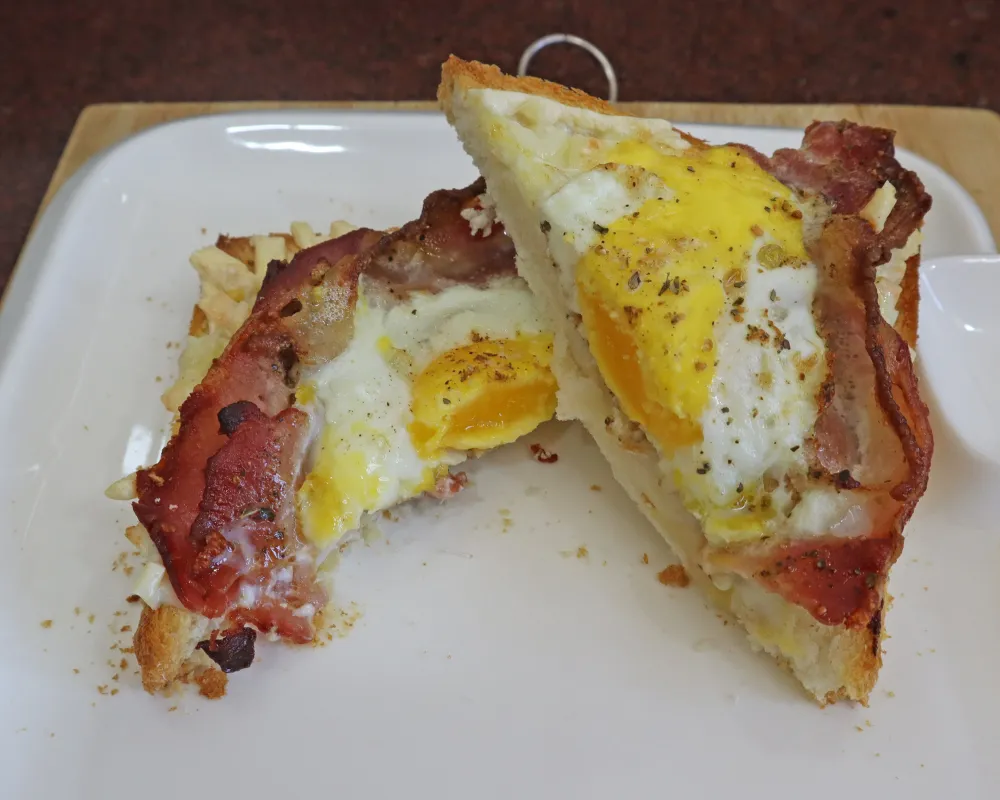
Most recipes for this tell you to put the bacon and the eggs in at the same time. I tried it that way first, following a popular recipe that has you whisk the eggs, lay raw bacon strips on top, and run the whole thing at 400°F for six minutes.
The eggs were done. The bacon was pale, floppy, and sitting in a puddle. It had spent six minutes steaming in liquid egg instead of crisping in moving air, and six minutes is not long enough to cook raw bacon anyway.
Quick answer: Cook bacon and eggs in the air fryer at 350°F. Put the bacon in first, add the eggs in a ramekin or small pan at the 4 minute mark, then cook both for 6 more minutes. Total time is 10 minutes. The bacon gets its full 10 minutes and comes out crisp, the eggs get 6 and come out with set whites and a soft yolk.
Why most recipes get this wrong
Two problems show up again and again in the recipes ranking for this.
The temperature is too high. A lot of them call for 400°F. Rendered bacon fat starts smoking somewhere between 325°F and 375°F, so at 400°F the fat dripping into the drawer is past its smoke point and your kitchen fills up. It also overcooks the egg whites into rubber before the yolk has warmed through. 350°F is under the smoke line and gentle enough for eggs. The smoke point issue gets a full explanation in the air fryer bacon guide.
The bacon and eggs go in together. They have different cooking times, so one of them is always wrong. Worse, if you lay bacon directly on top of raw egg the way some recipes suggest, the bacon is sitting in liquid rather than in circulating air. Air fryers crisp things by moving hot air across a dry surface. Take that away and you are poaching the bacon.
Staggering fixes both. Same basket, same temperature, two start times.
The timing chart
Everything below runs at 350°F. Find the row that matches how you like your breakfast. Read it as: the bacon always starts alone, the eggs join partway through, and the only thing that changes is when.
| You want | Bacon in at | Eggs in at | Everything out at |
|---|---|---|---|
| Crispy bacon, runny yolk | 0:00 | 4:00 | 10:00 |
| Crispy bacon, firm yolk | 0:00 | 2:00 | 10:00 |
| Chewy bacon, runny yolk | 0:00 | 2:00 | 8:00 |
| Chewy bacon, firm yolk | 0:00 | 0:00 | 8:00 |
| Thick cut bacon, runny yolk | 0:00 | 6:00 | 12:00 |
| Thick cut bacon, firm yolk | 0:00 | 4:00 | 12:00 |
If your air fryer runs hot or cold compared to its dial, and most do, the air fryer calculator will help you adjust a starting point rather than guessing. The air fryer baking chart is quicker if you just want a number to look up, and the baking conversion guide explains the reasoning if you would rather understand it than memorize it.
What you need, and why the egg dish matters most
Bacon, 2 to 4 eggs, salt and pepper, tongs, and a small oven safe dish. The dish is the one real decision. Eggs cannot go straight into the basket, they will run through the holes, and what you choose to hold them changes the result.
Ramekins
A 4 inch ceramic ramekin holds two eggs. Ceramic holds heat, so the whites set evenly and the bottom does not overcook. Grease properly or the eggs weld themselves on.
Silicone molds
Nothing sticks and cleanup is trivial, but silicone insulates, so add about a minute. The timing notes are in using silicone molds in an air fryer.
Small metal pan
Metal conducts fastest, good when you want the eggs scrambled or all together rather than as separate fried eggs. Watch the bottom.
Foil tray
A folded foil tray works and there is nothing to wash. Keep it weighted so the fan cannot lift it. The rules are in foil and parchment in an air fryer.
Whatever you use needs to sit next to the bacon, not underneath it. More on that in a second. The small dishes I actually keep for this are in the air fryer accessories roundup, and if you have never measured what your basket actually takes, the pan size calculator settles it in about thirty seconds.
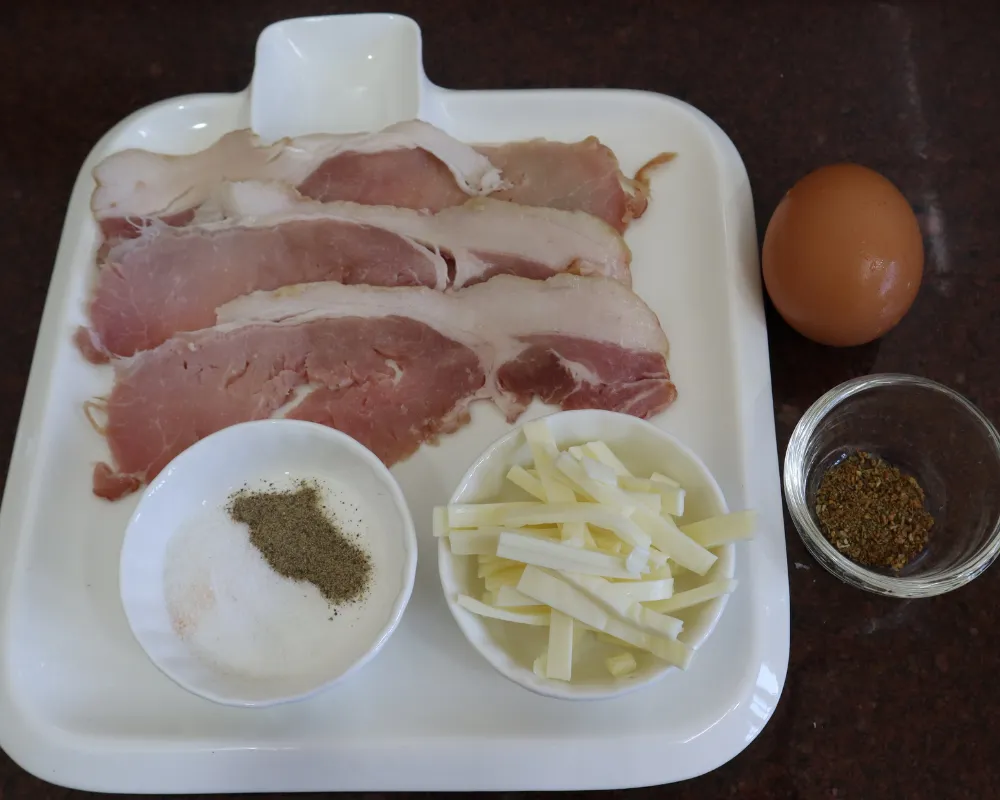
Method 1: one basket, staggered
This is the version I make on weekday mornings.
- Lay the bacon in the basket in a single layer. Push the strips toward the back of the basket and leave a clear space at the front for the egg dish. Do not preheat, because bacon renders better from a cold start. When preheating actually matters covers the bakes where the opposite is true.
- Set the air fryer to 350°F and start the timer.
- At 4 minutes, pull the basket out. The bacon will have started to render and shrink, which frees up the space you left. Grease the egg dish, crack the eggs in, season them, and set the dish in the front of the basket.
- Put it back and cook 6 more minutes.
- Check at 9 minutes. You want the egg whites fully opaque with no clear jelly around the yolk, and bacon fat that has gone from white to translucent gold.
- Take the eggs out first, then the bacon. Rest the bacon on paper towels for 2 minutes. It crisps as it cools, so pull it looking slightly softer than you want it.
Why the front of the basket. Most air fryers run hottest at the back, nearest the fan. Bacon can take that heat, eggs cannot. Putting the eggs at the front also keeps them out of the direct spatter line, so they do not end up coated in bacon grease. If your machine is small and everything has to sit close together, tuck a folded strip of foil upright between the bacon and the egg dish as a splash guard.
Method 2: dual basket
If you have a two drawer air fryer this gets easier, because you can run different temperatures.
- Bacon drawer: 350°F for 10 minutes.
- Egg drawer: 320°F for 7 minutes.
Start the bacon, wait 3 minutes, start the eggs. The lower temperature on the egg side gives you a more tender white, which is the one real advantage over a single basket. If your machine has a sync finish button, set both and let it work the timing out for you.
Method 3: bacon egg cups
Worth knowing about because it solves the problem in a completely different way.
Line each cup of a silicone muffin mold with a slice of bacon, wrapped around the inside wall like a collar. Crack an egg into the middle. Cook at 330°F for 12 to 15 minutes.
The bacon crisps against the hot mold wall while the egg cooks inside it, so there is no timing to manage. The tradeoff is that the bacon comes out chewy rather than shatteringly crisp, because part of it is pressed against the egg. Good for feeding several people at once, since you can do six at a time. The temperature drops to 330°F for this one because the bacon is in contact with the mold rather than sitting in open air, so it browns faster.
Method 4: bacon and egg on one slice
This is the version that needs no dish at all, because the bread is the dish. A slice of sandwich bread holds a coil of bacon, the bacon holds the egg, and the whole thing goes in flat. It is the fastest of the four to assemble and the only one that comes out as a single thing you can pick up. It is also the one to make when you have one slice of bread and one egg and no interest in washing a ramekin.
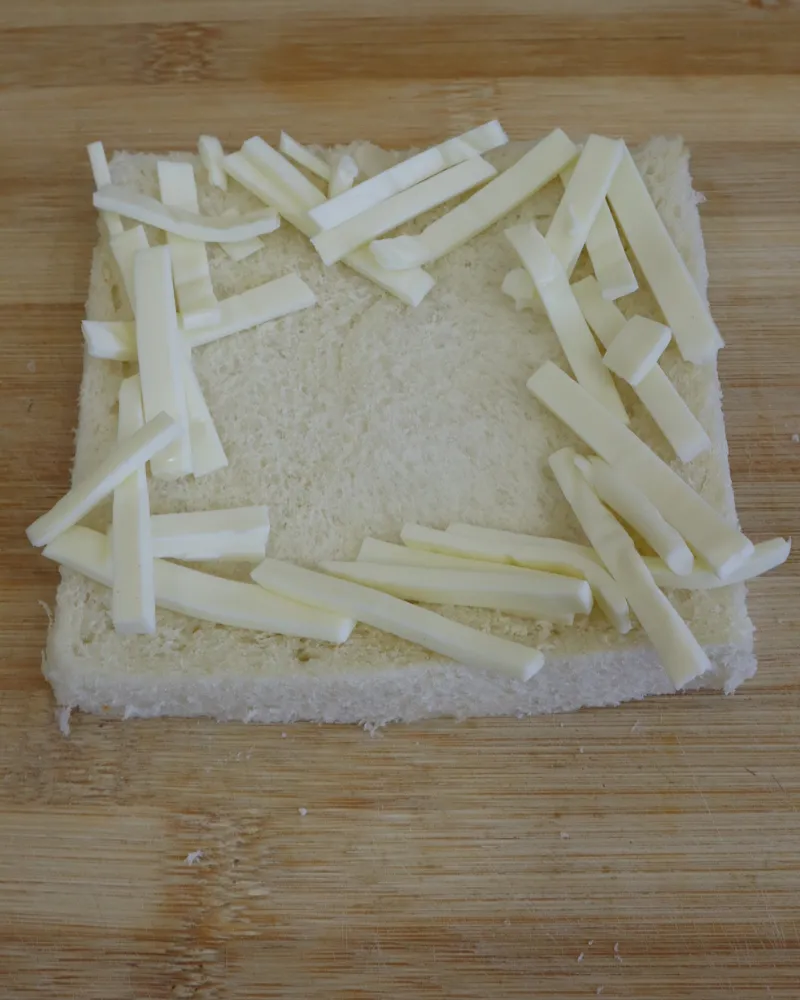
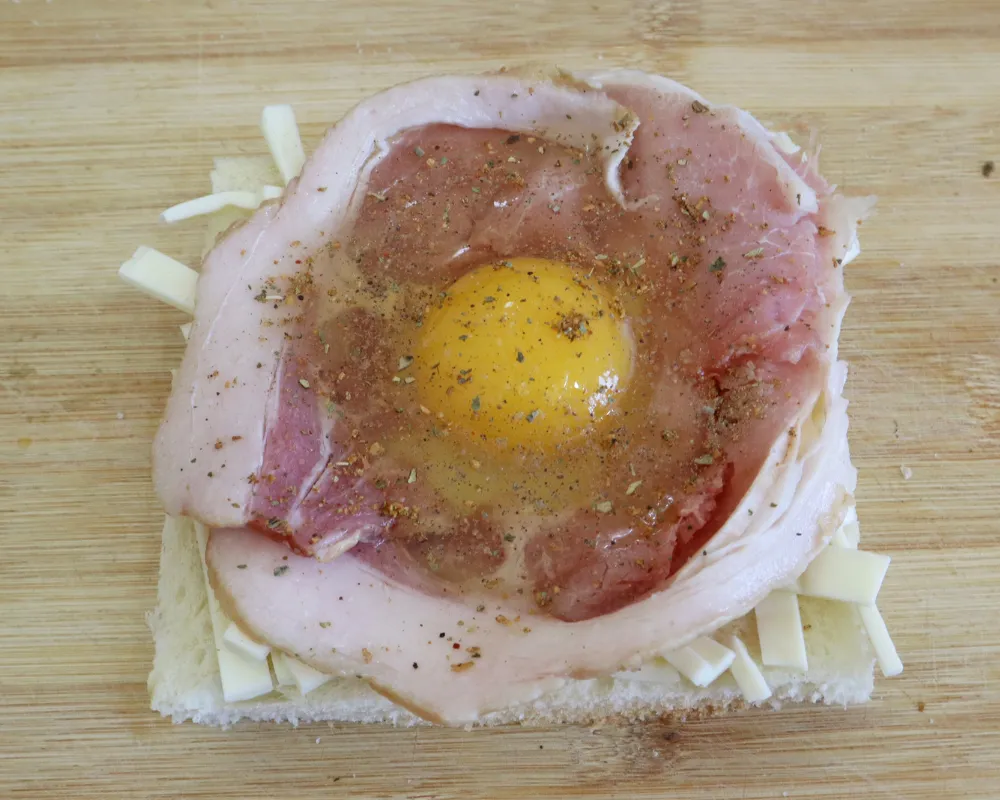
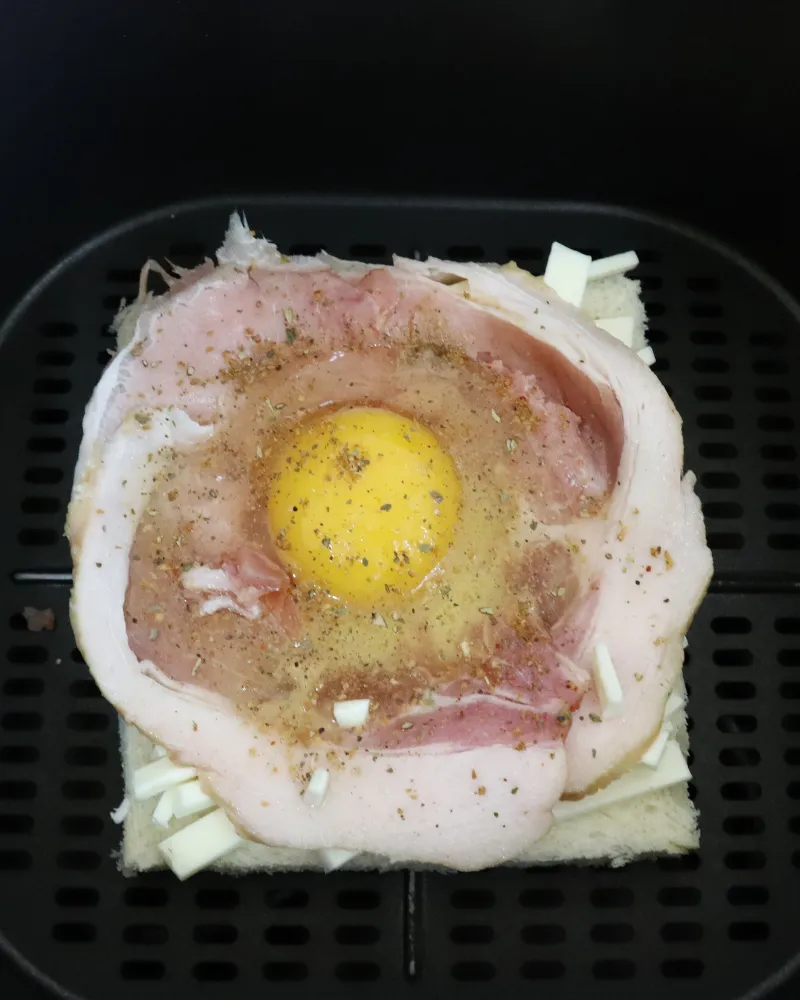
- Line the border of the bread with cheese. Sticks or grated, kept to the outer inch, with the middle left bare.
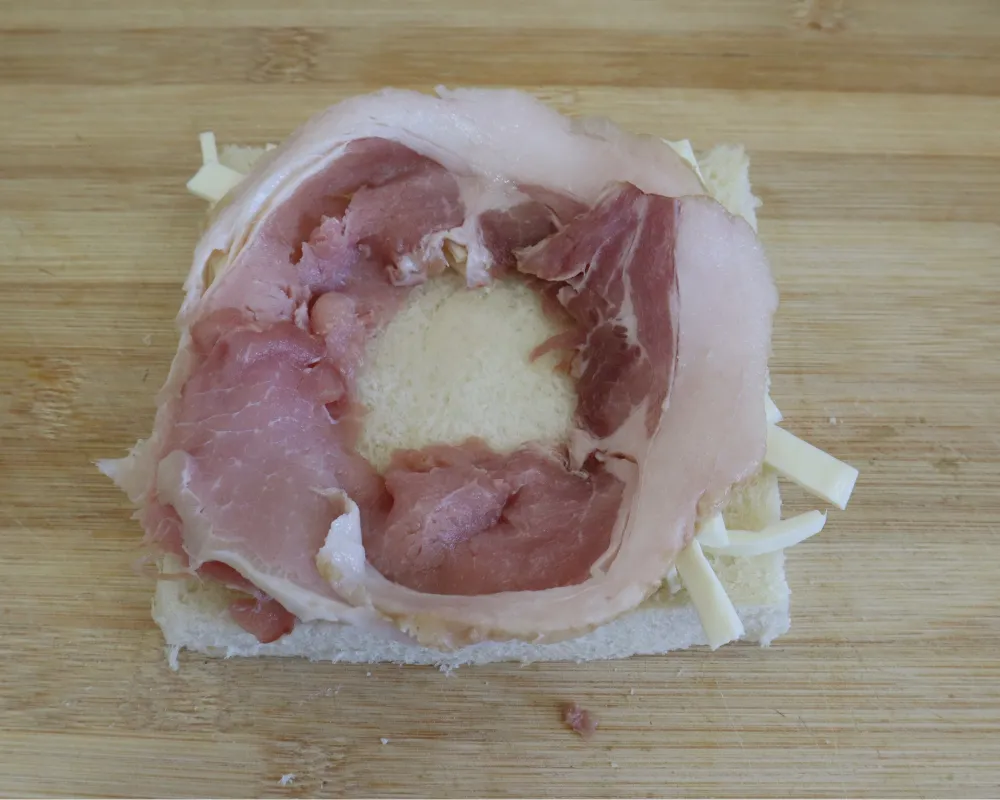
- Coil a rasher of bacon into a ring on top, pressing it into the cheese so it stays put. Leave a well in the center no wider than an egg yolk plus a little.
- Crack the egg into the well and season it. Salt, pepper, and dried herbs if you use them.
- Bake at 330°F, checking from 10 minutes. That is the same temperature as our air fryer egg toast, which is the same idea without the bacon, but this one runs longer because a raw rasher has to render on top of it. Our air fryer bacon page puts a regular cut strip at 8 to 10 minutes on its own.
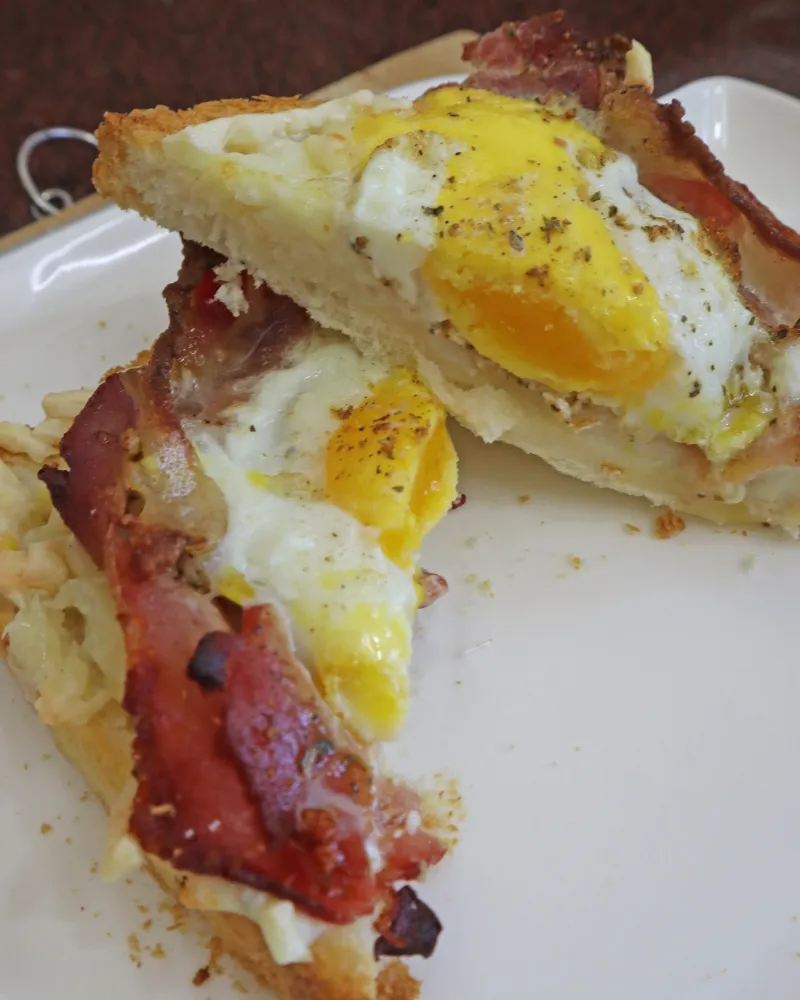
- Judge it by the egg, not the clock. White fully opaque with no clear jelly, yolk still soft if you want it to run. The bacon will be chewy-crisp rather than shattering, which is the trade for cooking it on top of a wet egg.
- Cut it in half on the diagonal and eat it with your hands.
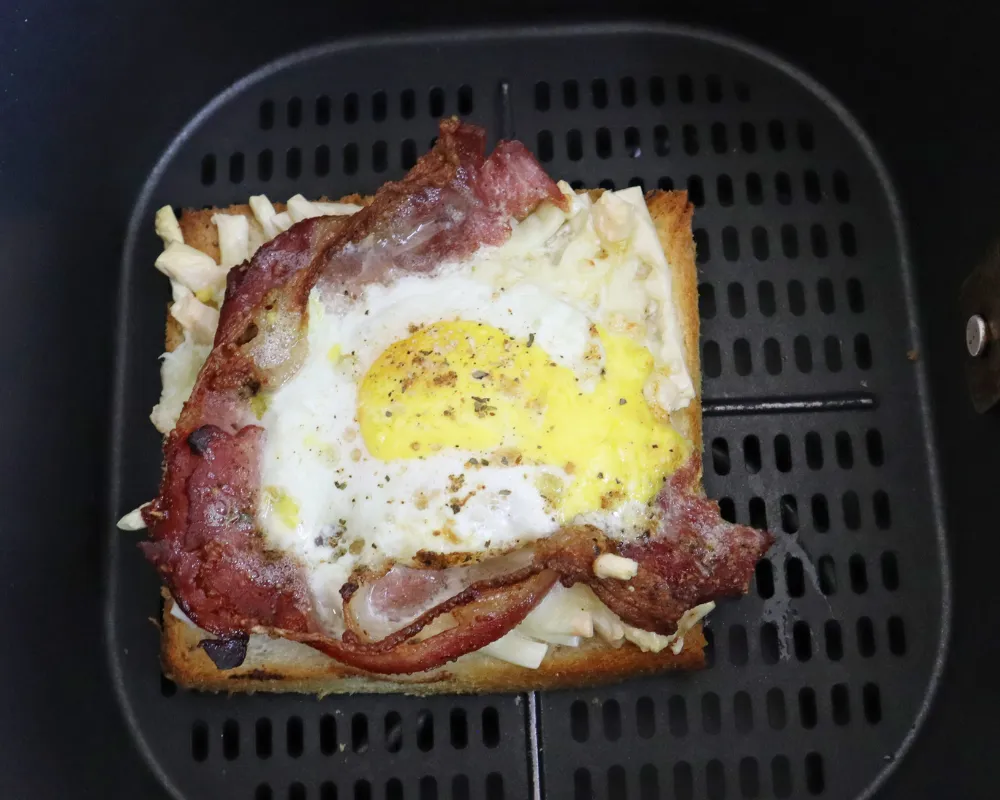
Bread choice matters more than it looks. A thin slice toasts through and goes crisp; a thick or very soft slice steams under the egg and stays pale in the middle. If you are working from a homemade loaf, cut it thinner than you would for sandwiches. Our air fryer bread slices well for this, and plain air fryer toast at 380°F is the reference for how fast bread alone colors in a basket.
Getting the yolk right
This is where most people go wrong, because eggs move quickly at the end.
| Yolk | Time at 350°F | What it looks like |
|---|---|---|
| Very runny | 5 min | Whites just set, yolk fully liquid |
| Soft, runny center | 6 min | Whites opaque, yolk domed and glossy |
| Jammy | 7 min | Yolk holds shape, still soft in the middle |
| Fully set | 8 to 9 min | Yolk pale and firm all the way through |
Two things change these numbers. Cold eggs from the fridge need an extra minute, so take them out when you start the bacon. And a tablespoon of water in the dish makes a real difference: add it before you crack the eggs in and it steams them slightly, which sets the whites faster without toughening them. That is the single easiest way to avoid rubbery whites with a raw yolk, which is the most common failure.
Carryover cooking is real here too. The yolk keeps setting for about a minute after it comes out, so pull it one stage softer than you want.
Cooking for more people
The math changes fast, so be honest about what your machine can do.
| Air fryer | Bacon | Eggs | Feeds |
|---|---|---|---|
| 2 to 4 qt basket | 3 to 4 strips | 2 eggs, one ramekin | 1 |
| 5 to 6 qt basket | 5 to 6 strips | 2 to 3 eggs | 2 |
| 8 qt basket | 7 to 8 strips | 4 eggs, two ramekins | 2 to 3 |
| Dual basket | 6 strips one side | 4 eggs other side | 2 to 3 |
| Oven style, 2 racks | 10 to 12 strips | 6 eggs on lower rack | 4 |
For four or more people in a basket machine, cook all the bacon first, hold it on a warm plate under foil, then do the eggs in one go. Bacon holds its heat and its crisp for about ten minutes. Eggs do not hold at all, so eggs are always last. Oven style machines with two racks are the only ones that do this properly for a crowd, with the eggs on the lower rack since the top runs hottest. The format differences are in basket versus oven-style air fryers, and the recipe scaler handles the quantities if you are working up from one serving.
Troubleshooting
| What you got | Why | Fix |
|---|---|---|
| Flabby bacon, done eggs | Eggs went in too early, or everything went in together. | Give the bacon its four minute head start. |
| Rubbery whites, raw yolk | Temperature too high, so the outside cooked faster than heat could reach the middle. | Drop to 320°F for the egg stage and add a tablespoon of water to the dish. |
| Eggs taste of bacon grease | The egg dish was downwind of the bacon. | Move it to the front of the basket, or stand a folded foil strip between them. |
| Eggs welded to the ramekin | Not enough grease, or a cold dish. | Butter it properly, right up the sides. If it has happened, soak rather than scrape. The bakeware cleaning guide lifts baked-on egg without wrecking the finish. |
| The machine is smoking | Bacon fat on the hot drawer base, not the eggs. | Wipe old grease out, stay at 350°F, bread slice under the basket. How to prevent burning covers the rest. |
| Broken yolk | Cracked straight into the hot dish. | Crack into a small bowl first, then tip it in. Five seconds, saves the yolk. |
| Everything tastes of last night's dinner | Grease on the element. Eggs pick up smells more than almost anything. | The full cleaning routine is in air fryer baking troubleshooting. |
Make ahead
Eggs do not reheat well, so this is not a full meal prep recipe. Split it:
- Bacon: cook a full pack ahead, refrigerate up to 5 days, and reheat at 300°F for 2 to 3 minutes. It comes back almost perfectly.
- Eggs: always fresh. They take 6 minutes.
That combination gets you a hot breakfast on a weekday in about seven minutes, since the bacon is only warming through while the eggs cook.
Bacon egg cups are the exception. They refrigerate for 3 days and reheat at 300°F for 4 minutes without going rubbery, because the bacon collar protects the egg. If you want something you can genuinely make on Sunday, make those.
What to serve with it
Toast is the obvious partner, and the air fryer does it while you are plating up. Plain air fryer toast takes 3 minutes, or make air fryer avocado toast if you want something on it. If you would rather have the egg cooked into the bread itself, air fryer egg toast is a different recipe and a good one for using up a single slice.
Air fryer hash browns round the plate out, though they need their own run in the basket. Swap the bacon for air fryer chicken sausage if you want a lighter meat, using the same staggered timing. For a slower weekend version, get air fryer cinnamon rolls going first and cook the bacon and eggs while they cool. Toast made from homemade air fryer bread is worth the effort if you have a loaf going.
Ten minutes of basket time against heating a full oven for two eggs is the clearest case this machine makes for itself, and the running cost calculator will put your own electricity rate on it. All four air fryer tools live in one place, the guides index covers the technique behind every number here, and the full recipe index has the rest of breakfast.
Frequently asked questions
QCan you cook bacon and eggs together in an air fryer?
Yes, in the same basket. Start the bacon first at 350°F, then add the eggs in a greased ramekin at the 4 minute mark and cook both for 6 more minutes. They need different cooking times, so putting them in together leaves the bacon undercooked and steaming in liquid egg rather than crisping in moving air.
QWhat temperature do you cook bacon and eggs in an air fryer?
350°F for both. Higher than that pushes bacon fat past its smoke point, which fills the kitchen with smoke, and it turns egg whites rubbery before the yolk sets. In a dual basket machine you can do better still: bacon at 350°F in one drawer and eggs at 320°F in the other for a more tender white.
QHow long does it take?
10 minutes total for crispy bacon and a soft yolk. The bacon cooks for the full 10 minutes and the eggs for the last 6. Thick cut bacon stretches the total to 12 minutes, with the eggs going in at minute 6 instead of minute 4.
QDo you need to preheat?
No. Starting cold gives the bacon fat time to render before the outside sets, and it means there is no hot grease in the drawer when the first drips land. The eggs go into a machine that is already at temperature by the time they arrive, so they never notice the cold start.
QCan the eggs go straight in the basket?
No, they will run through the holes. Use a ramekin, a silicone mold, a small metal pan, or a folded foil tray, and grease whatever you use right up the sides. A 4 inch ramekin holds two eggs comfortably.
QWhy did my eggs taste greasy?
The egg dish was sitting behind or below the bacon, catching the drips and the spatter. Move it to the front of the basket, which also happens to be the cooler zone, or stand a folded strip of foil upright between the bacon and the eggs as a splash guard. Some people like the bacon-basted flavor, which is fair enough, but it should be a choice.
QCan I scramble the eggs instead?
Yes. Whisk them, pour into a greased metal pan, and add the pan at the 5 minute mark instead of 4. Stir once at the 8 minute mark to break up the curds. Metal works better than ceramic for scrambled because the faster conduction keeps the curds from setting into a single disc.
QCan I cook frozen bacon this way?
Cook the frozen block at 350°F for 3 to 4 minutes first, separate the strips with tongs, then start the timing chart from zero. Add about 3 minutes to the total, which moves the egg entry point back by the same amount.
QWhich air fryer is best for this?
A dual basket machine, because you can run the eggs cooler than the bacon and sync the finish. Failing that, anything with a flat basket of at least 5 quarts so the ramekin and the bacon fit side by side. Specific models are in best air fryer for baking.
Never overbake again
Get our one-page times & temps cheat sheet, plus a new tested recipe each week.
No spam · unsubscribe anytime