

The best first oven
Teaching a child to bake in a full-size oven means managing a hot cavity at face height, 40 minute bakes that outlast any child's interest, and a sheet pan the size of their torso. The air fryer removes all three problems at once. It sits on the counter, so the workflow happens at a child's height. Its bakes run 5 to 15 minutes, short enough that the kid who mixed the batter is still in the kitchen, still interested, when the result comes out. And the hot part is one removable basket with a cool handle, a single clear thing to respect rather than a whole appliance to fear.
Speed is the secret teaching tool. A child who sees dough become a cookie in 8 minutes connects the cause to the effect; a 45 minute bake might as well be geology. Everything below runs in the same 5.5 quart basket as the rest of the recipe index, on the fundamentals from how to bake in an air fryer. One framing rule holds the whole page together: the child owns the bowl, the adult owns the basket.
The five safety rules
One: only the adult touches the basket. Loading, checking, shaking, unloading, all of it. The basket and the food in it are the only truly hot things in this whole activity, so the boundary is simple enough for a four year old to recite. The drawer handle stays cool on basket machines, which is exactly why the rule works: it is about the habit, not the hardware.
Two: set the prep station away from the machine. Mixing, rolling, cutting and decorating happen at the table, not beside the appliance. The air fryer also vents hot air out its back, so the machine gets counter space to itself, with the vent pointed at nothing and nobody.
Three: never parchment in an empty preheating basket. The fan lifts an unweighted sheet straight into the heating element. Parchment goes in with food already on it, every time, and it is perforated parchment for cookies and doughs. This is the one rule that is about fire rather than fingers, so it is the one the adult never delegates.
Four: the 3 minute rest is part of the recipe. Fresh bakes come out hotter than they look, marshmallow and jam most of all. Everything rests on the rack for 3 minutes before small hands get near it, which conveniently also finishes the centers, as the dry bakes guide explains. Frame it as a countdown and it becomes the most suspenseful part of the show.
Five: silicone over metal wherever possible. Silicone cups and molds cool fast, pop their contents out without a knife, and bounce when dropped, which they will be. They are the difference between a child helping with cupcakes and a child watching you make cupcakes.
The kids' baking chart
Every number comes from its linked recipe, tested in the same basket. The last column is the point of this page: the job that belongs to the child.
| Bake | Temp | Time | Their job |
|---|---|---|---|
| S'mores | 340°F | 4-5 min | Stacking the towers |
| Mug cake | 350°F | 5-6 min | Stirring their own personal cake |
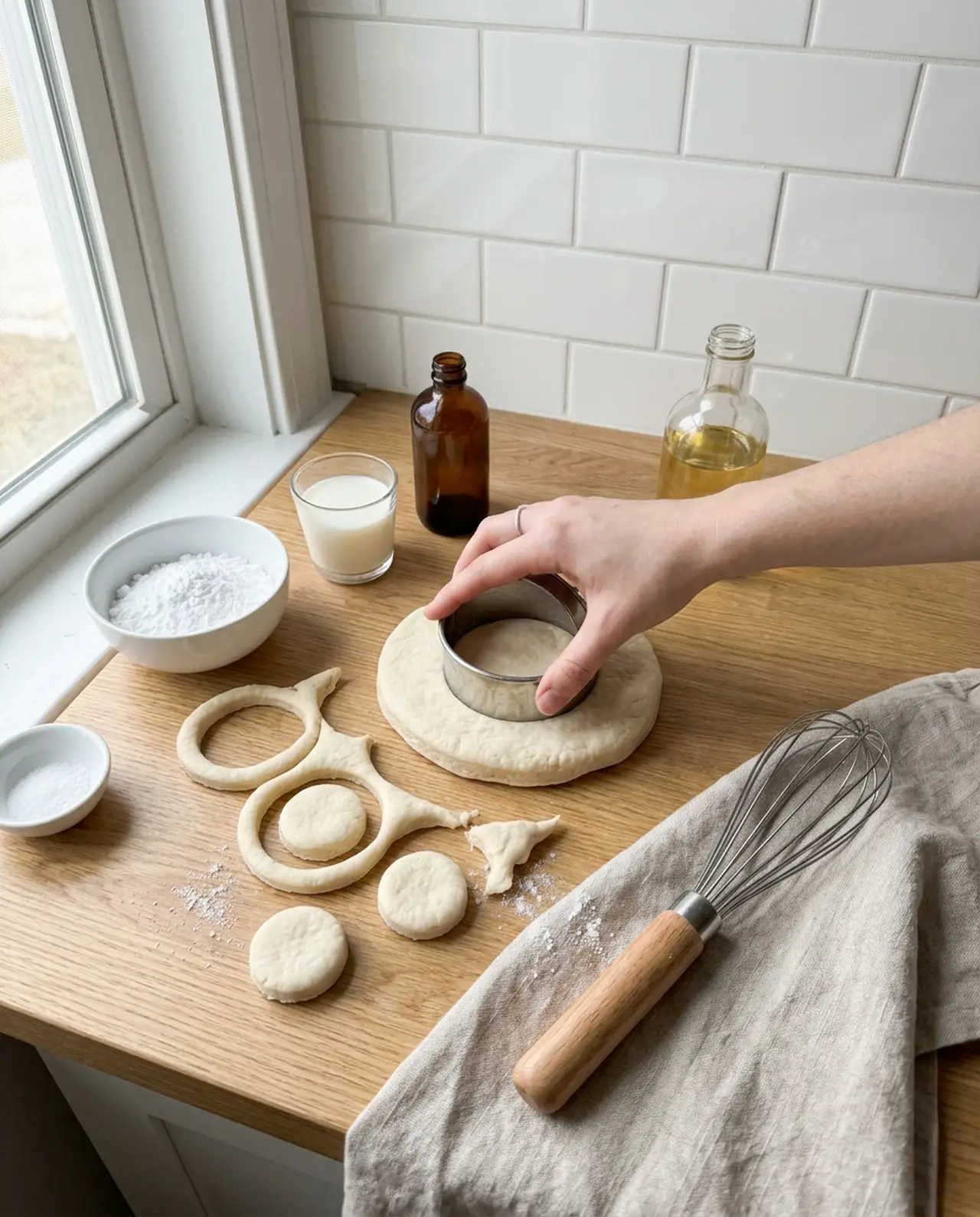
| Biscuit donuts | 330°F | 4-5 min/batch | Cutting centers with a bottle cap |
| Refrigerated cookie dough | 320°F | 6-8 min | Cutting and spacing the squares |
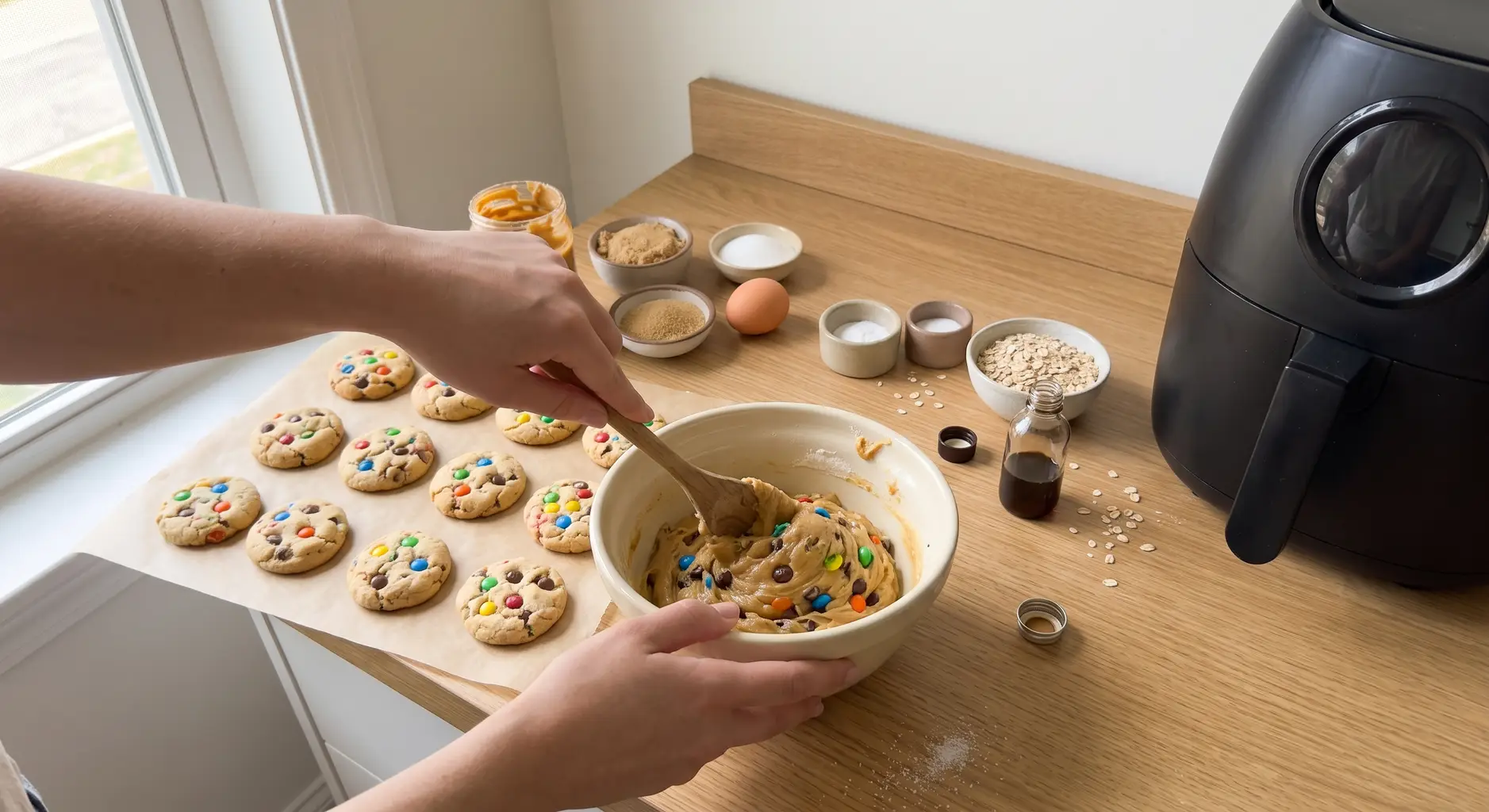
| Monster cookies | 320°F | 7-8 min | One-bowl mixing, zero flour clouds |
| Sugar cookies | 325°F | 8 min | Cutters, icing and sprinkles |
| Peanut butter cookies | 325°F | 7 min | The famous fork crisscross |
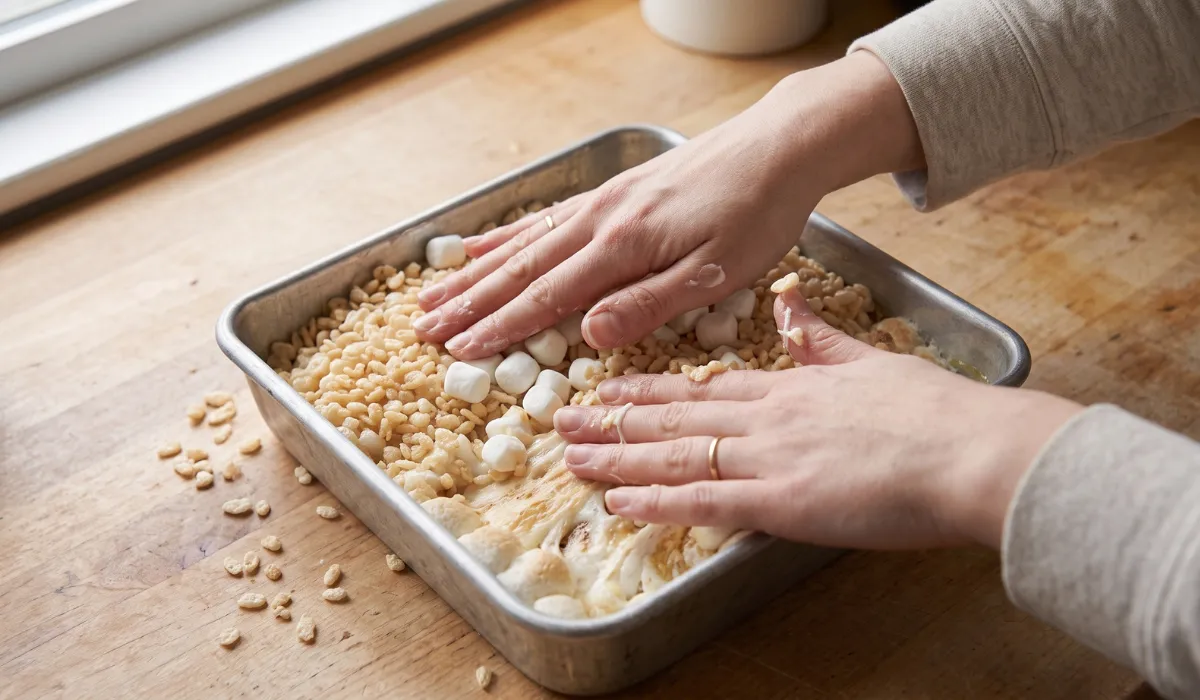
| Rice krispie treats | 300°F | 6-8 min | Gentle pressing with buttered hands |
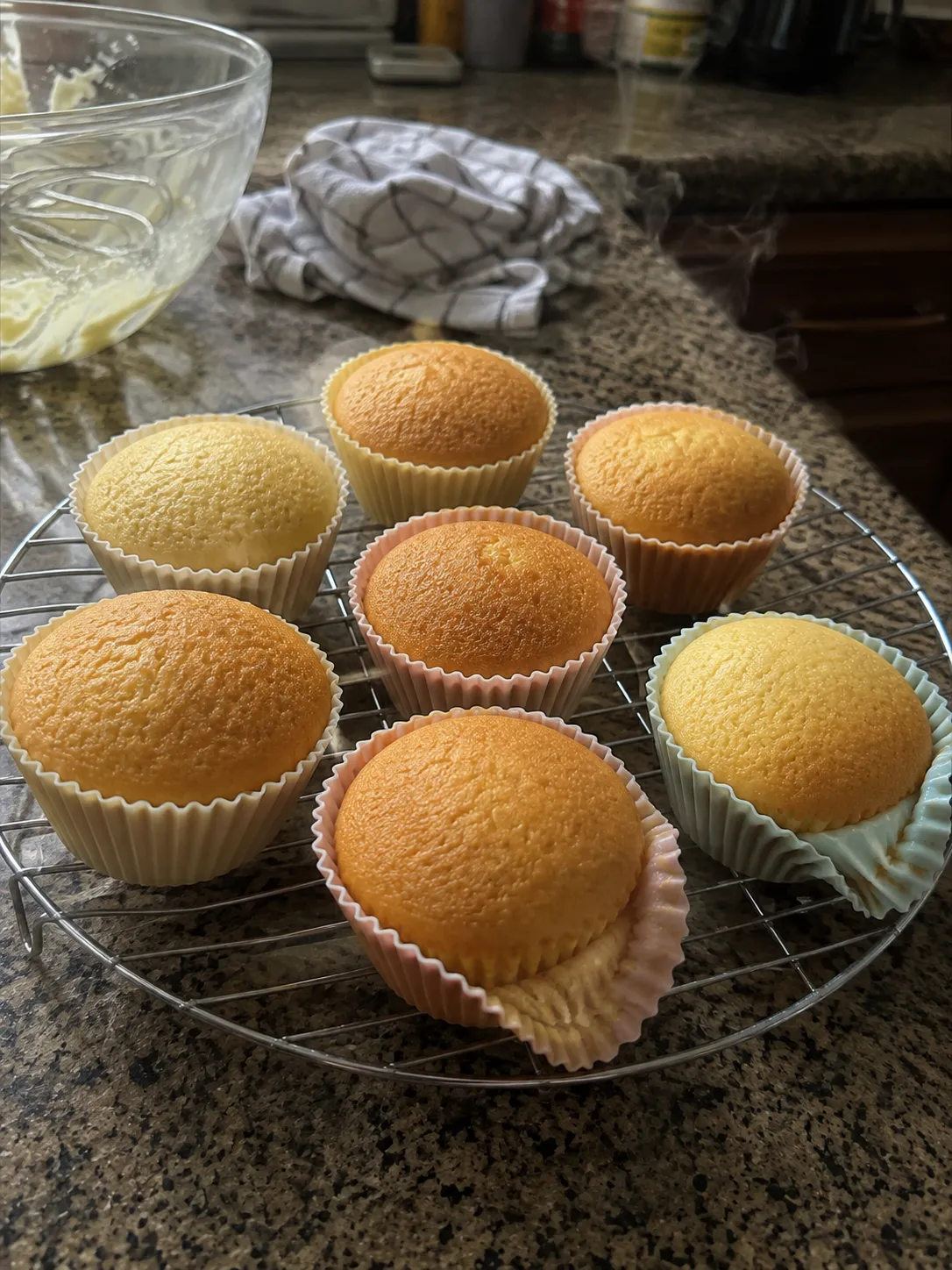
| Cupcakes | 320°F | 13-16 min | Filling cups three quarters, then frosting |
| Boxed cake mix | 310-320°F | 25-32 min | The whole mix, box to batter |
| Soft pretzels | 375°F | 7-9 min | Rolling ropes and twisting shapes |
| Gingerbread cookies | 325°F | 7-10 min | Cutting the men, naming the men |
Two fine-print notes: the pretzels' baking soda bath is an adult-only step, and the boxed cake's longer bake suits a decorate-later afternoon. Every tested setting on the site lives on the baking chart.
Jobs by age, roughly
Ages 3 to 5: the texture years. Stirring anything wet, smashing bananas, tearing marshmallows, stacking s'mores, and applying sprinkles with a density no adult would dare. The s'mores and rice krispie treats live here, because assembly is the entire recipe.
Ages 6 to 9: the tool years. Cookie cutters, the bottle-cap donut punch, fork crosshatches on peanut butter cookies, filling cupcake liners with a spoon and reasonable accuracy, and cracking eggs with supervision and optimism. Sugar cookies and gingerbread are the main event, cutters through icing.
Ages 10 and up: the recipe years. Reading the recipe aloud and keeping everyone honest, measuring by the scale, mixing a boxed cake start to finish, rolling and twisting pretzel ropes, and setting the time and temperature with an adult confirming. The basket rule stands at every age; what changes is how much of everything else is theirs.
Running the session
The order of operations does most of the parenting. Before the child arrives: ingredients measured into little bowls, station set at the table, machine's spot cleared. Baking with kids fails at the "where is the vanilla" stage, not the baking stage. The child's act one: mixing, shaping, decorating raw dough, all the jobs from the chart. The handoff: the adult carries the tray to the basket, loads it, and starts the timer, announced like a rocket launch. The wait: 5 to 15 minutes is short enough to watch, and the child who cleans one bowl during it has learned the deepest baking secret of all. The rest: 3 minutes on the rack, counted down out loud. Then the eating, which needs no instructions.
Two upgrades once the habit sticks. First, keep a bag of frozen cookie dough balls from a weekend session; a child who scooped them gets to bake "their" cookies on a random Tuesday at 325°F with no prep at all. Second, point the skills at a calendar: birthday cupcakes, Halloween treats and the Christmas cookie production line all run on exactly the jobs practiced here. Doubling a recipe when friends come over is a recipe scaler job, not mental math in front of an audience.
When the young baker graduates: cupcakes from scratch, the full cookies and bars shelf, and the seasonal calendar from Easter to Thanksgiving. The technique library lives under guides, and all four air fryer tools are in one place.
Frequently asked questions
QIs an air fryer safe to use with kids?
Yes, with one clean boundary: the child owns the bowl, the adult owns the basket. All mixing, shaping and decorating happens at a table away from the machine, and only the adult loads, checks and unloads the hot basket. Compared with a full oven, the air fryer concentrates the heat into one removable basket instead of a large hot cavity at face height, which makes the rule easy for even small children to understand and follow. Add a 3 minute cooling rest before anyone touches the food and the setup is safer than most family baking.
QWhat is the best air fryer recipe to make with kids?
S'mores for a first session: three ingredients, the child builds the stacks, and the bake takes 4 to 5 minutes at 340°F, fast enough that the builder is still watching when the marshmallow puffs. For a second session, biscuit donuts, where the child punches out the centers with a bottle cap and the first glazed donut appears about 10 minutes after the can pops. From there, sugar cookies unlock the cutter and sprinkle economy, and monster cookies give young mixers a one-bowl dough with no flour to snow the kitchen.
QWhat age can kids start baking with an air fryer?
Around 3, as long as the adult handles everything hot. Ages 3 to 5 do stirring, smashing, stacking and sprinkling. Ages 6 to 9 graduate to cookie cutters, filling cupcake liners, fork marks and supervised egg cracking. From about 10, kids can read the recipe, weigh ingredients, mix a boxed cake start to finish and set the time and temperature with an adult confirming. The one constant at every age is that the hot basket stays adult-only; what grows is ownership of everything before and after it.
QWhy is an air fryer better than an oven for baking with kids?
Time, height and heat. Air fryer bakes finish in 5 to 15 minutes, which matches a child's attention span, so the kid who mixed the dough is still present and excited when it comes out; a 40 minute oven bake loses them entirely. The machine sits on the counter, keeping the workflow at kid height instead of around a hot door at face level. And the danger is concentrated in one removable basket rather than a whole glowing cavity, which makes the safety rule short enough for a preschooler to repeat back.
QWhat safety rules matter most for air fryer baking with kids?
Five cover it. Only the adult touches the basket, ever. The prep station lives at a table away from the machine, with the hot-air vent pointed at nothing. Parchment never goes into an empty preheating basket, because the fan can lift it into the heating element; it always goes in with food on top. Every bake rests 3 minutes before small hands reach it, since marshmallow and jam hold heat far longer than they look. And silicone cups beat metal pans for anything a child handles, because they cool fast and bounce when dropped.
QCan kids use the air fryer by themselves?
Not the hot parts, at any age this page covers. An adult always loads and unloads the basket and stays in the kitchen while the machine runs. What changes with age is everything else: older kids can own the recipe, the scale, the mixing and the settings, with the adult reduced to confirming numbers and moving hot things. That division holds until the teenager years, when the judgment call becomes the same one you would make about the oven, and by then a kid raised on 8 minute cookie trays will have logged more successful bakes than most adults.
Baked from this guide? Rate it.
Never overbake again
Get our one-page times & temps cheat sheet, plus a new tested recipe each week.
No spam · unsubscribe anytime