

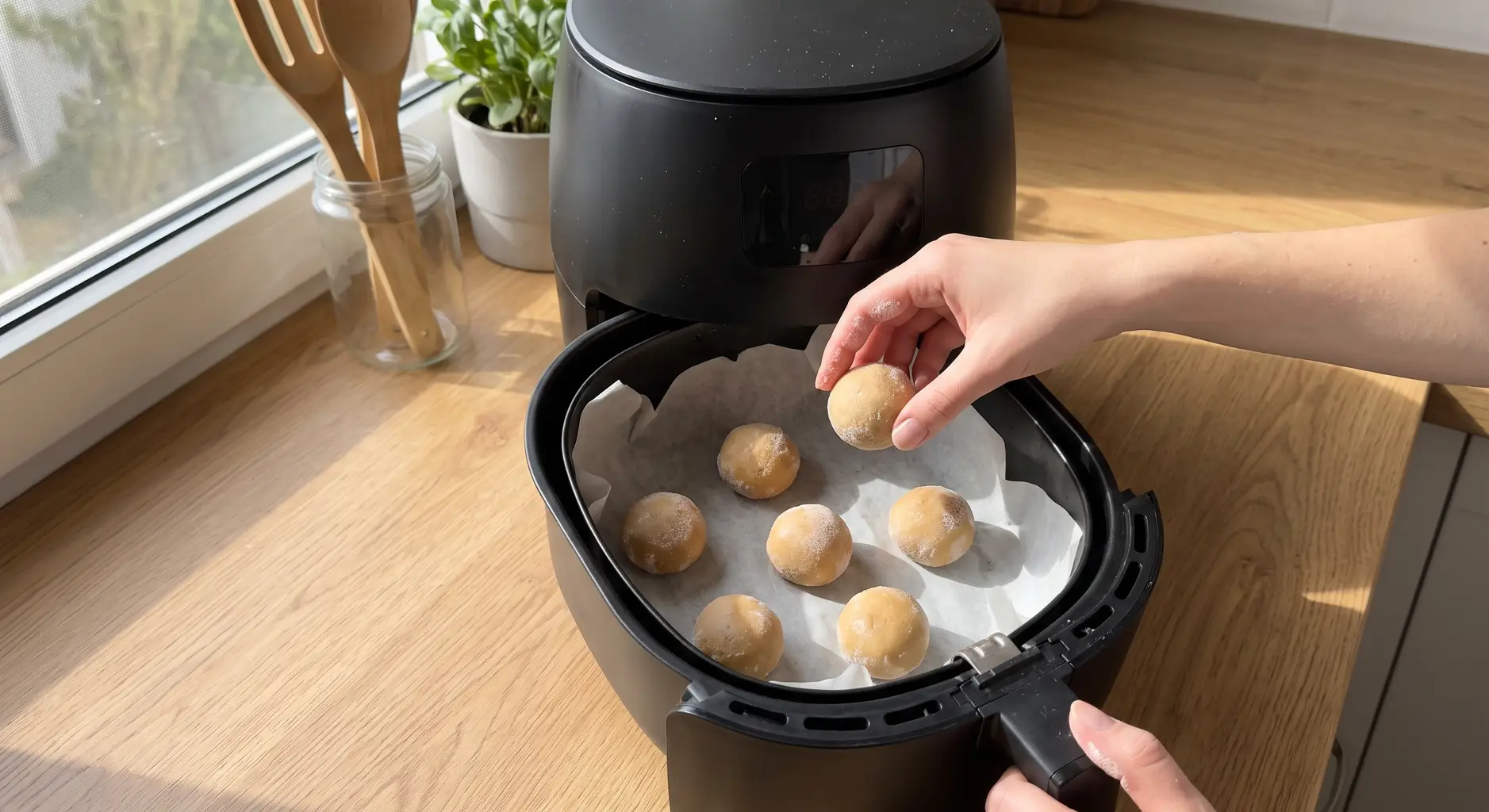
The pages ranking for this question give times from five minutes to fifteen for the same task, and the disagreement runs deeper than usual: under one of the top recipes, the site's own commenter reports needing double the published time at a higher temperature. That is not a rounding error. That is a page missing its variable.
The variable is mass. A frozen mini ball, a standard scoop, a store-bought puck and a bakery-size three tablespoon monster are different objects with different clocks, and any single number pretending to cover all four will be wrong for three of them. So this page is organized the way the physics is: times by size, one method, and a case I want to make properly along the way, which is that baking from frozen is not the compromise. It is the better cookie.
The short version: Straight from the freezer to the basket, no thawing, ever. A standard 1.5 tablespoon homemade ball bakes at 325°F for 9 to 11 minutes; store-bought frozen pucks run 320°F for 8 to 10; the big bakery-style balls drop to 310°F for 12 to 15 so the middle can catch up. Same rule every time: the temperature its recipe already uses, one to two extra minutes, on parchment cut to the basket floor and weighted by the dough. Pull at the first golden edges while centers look underdone, because 185°F inside is chewy and cookies finish on the parchment.
Why frozen bakes the better cookie, especially in a basket
A cookie's final shape is a race between two events: the outside setting, and the butter inside melting enough to let the dough flow. Whichever wins decides everything about the cookie.
- Room temperature dough flows first. Its butter is already soft, so the ball slumps and spreads wide before the surface sets, giving you a thinner, crispier, larger cookie.
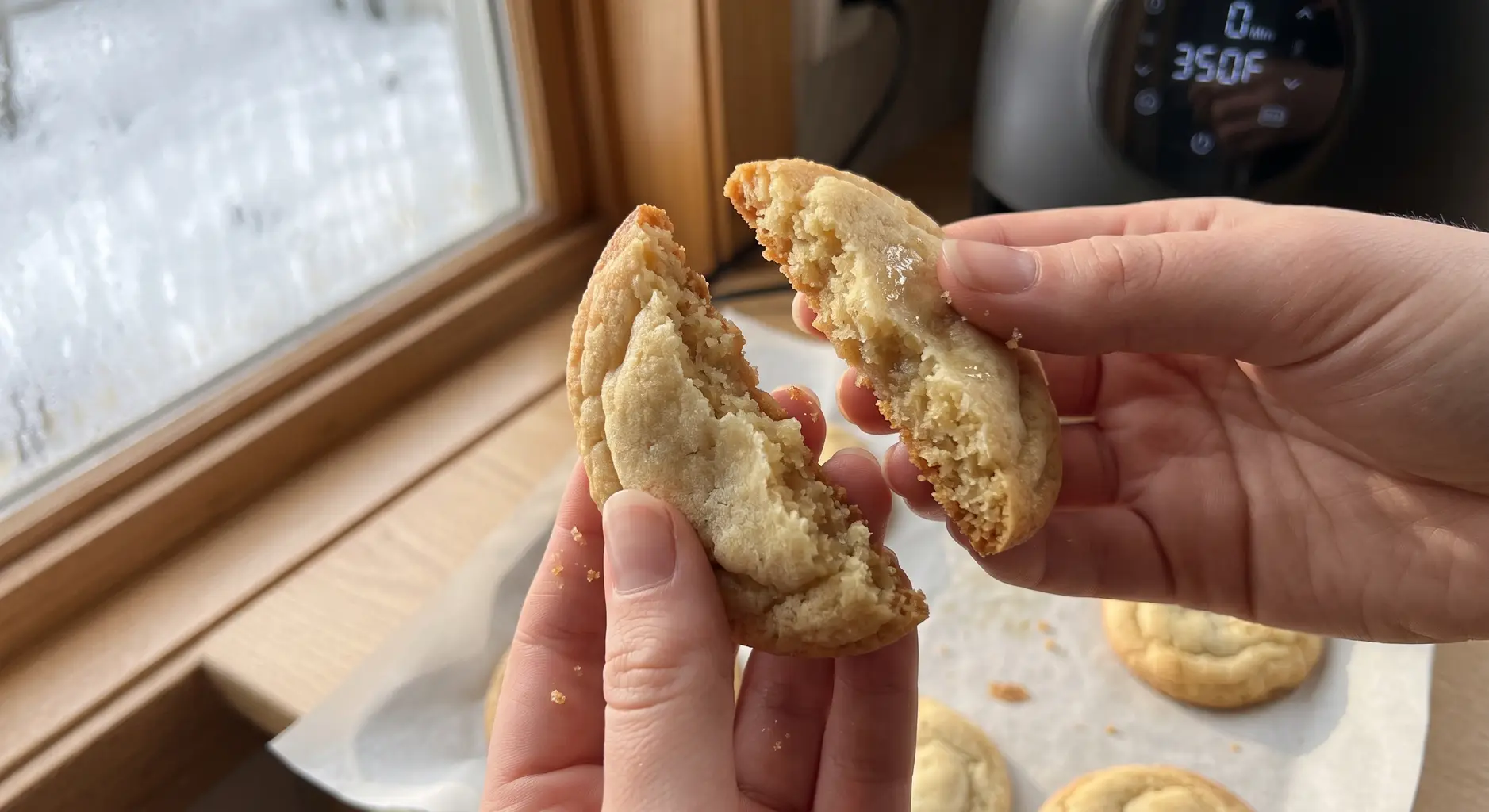
- Frozen dough sets first. The surface meets 325°F air immediately, but the cold core delays the butter melt by minutes. By the time the middle is warm enough to flow, the outside has already locked the shape. The result is a taller, denser, chewier cookie with a soft middle, which for most people is not a side effect. It is the goal.
- A basket amplifies the effect, because fast-moving air sets surfaces quicker than still oven air. The machine that gets blamed for being aggressive is, on this one job, doing precision work: maximum set outside, maximum protection inside. Frozen dough is effectively self-tenting.
This is why our cookie recipes all carry the same quiet advice to freeze the dough: the chocolate chip cookies, the sugar cookies and the peanut butter cookies all bake from frozen with one to two extra minutes, and all three come out slightly taller for it, as do the oatmeal cookies, the snickerdoodles and the loaded monster cookies. This page is the long version of that sentence, and the doughs themselves are in the cookies and bars collection.
Never thaw, and what thawing actually does
Every instinct from oven baking says frozen food should thaw first. For cookie dough the instinct is exactly backwards, and partial thawing is the worst state of all three:
Predictable
Uniform temperature through the ball, so the bake is repeatable. Add one to two minutes and everything else about the recipe holds.
The worst of both
A soft shell over a frozen core. The outside spreads and overbakes while the center lags, and no time adjustment fixes a ball that is two temperatures at once.
Just slower fresh dough
You waited an hour to bake the cookie you could have had in ten minutes, and it spreads flatter than the frozen one would have. Nothing was gained.
There is a food-safety bonus in the no-thaw rule too: dough never sits out collecting an afternoon at room temperature, it goes from freezer to 325°F in one motion. The counter never enters the story.
The times, by size and type
One method, one rule, and the clock set by mass. Sizes matter more than brands, and the check-at column matters more than either.
| What is in your freezer | Setting | Time | Check at |
|---|---|---|---|
| Homemade balls, 1.5 tablespoons (the standard scoop) | 325°F | 9 to 11 min | 8 min |
| Mini balls, 1 tablespoon | 325°F | 6 to 8 min | 5 min |
| Store-bought frozen pucks (Toll House and kin, about 1 oz) | 320°F | 8 to 10 min | 7 min |
| Bakery-style, 3 tablespoons and up | 310°F | 12 to 15 min | 11 min |
| Frozen baked cookies (reheating) | 300°F | 2 to 3 min | 2 min |
The big balls drop to 310°F rather than gaining more minutes at 325, because heat travels inward on a clock set by thickness, and thickness punishes impatience twice over: doubling a ball's size far more than doubles its center's journey. A lower dial lets the middle arrive before the outside overshoots. It is the same reasoning our whole baking side runs on, and the site-wide reference for internal temperatures is the baking chart. Converting some other recipe's oven instruction first? The air fryer calculator does the temperature translation, then this table adds the frozen minutes.
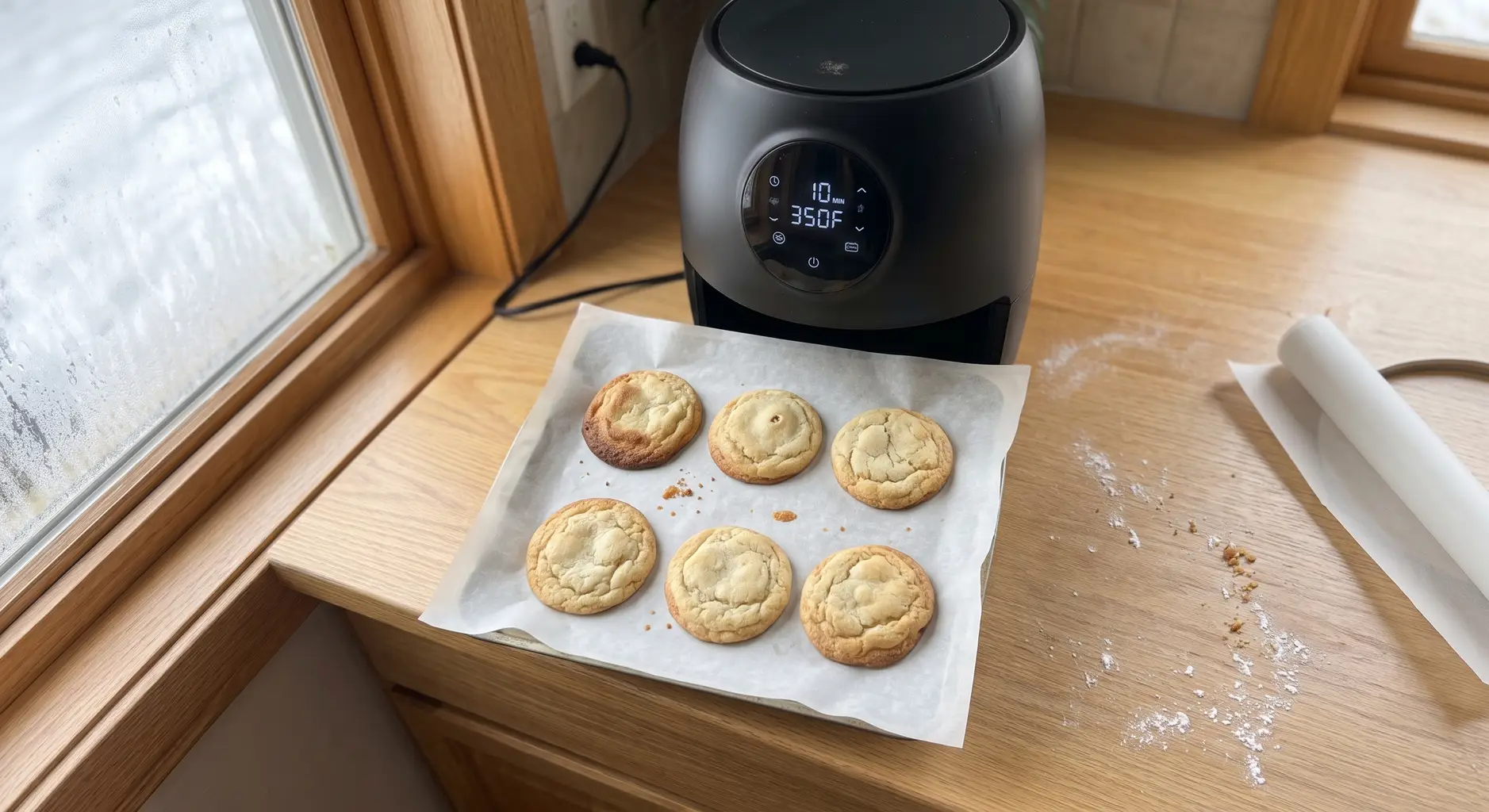
Doneness is the same doctrine as every cookie on this site: pull at the first golden edges while the centers still look soft and underdone, rest 3 minutes in the basket, and let carryover finish the set. The thermometer version is 185°F in the center for chewy and 200°F for crisp, and it is extra useful here, because a from-frozen center runs a few minutes behind what the surface is advertising.
One caveat about the numbers themselves. The figure on a machine's panel is a dial setting, not a measured air temperature, and how far the two drift apart varies by model. That is part of why published times for this cookie run from five minutes to fifteen: people are reading different dials. Treat the table as the starting point, then let the cookie correct you. If your machine finishes consistently early or late at these settings, move the dial in 10 degree steps rather than piling on minutes, and write the number that actually works on the freezer bag.
The method, start to finish
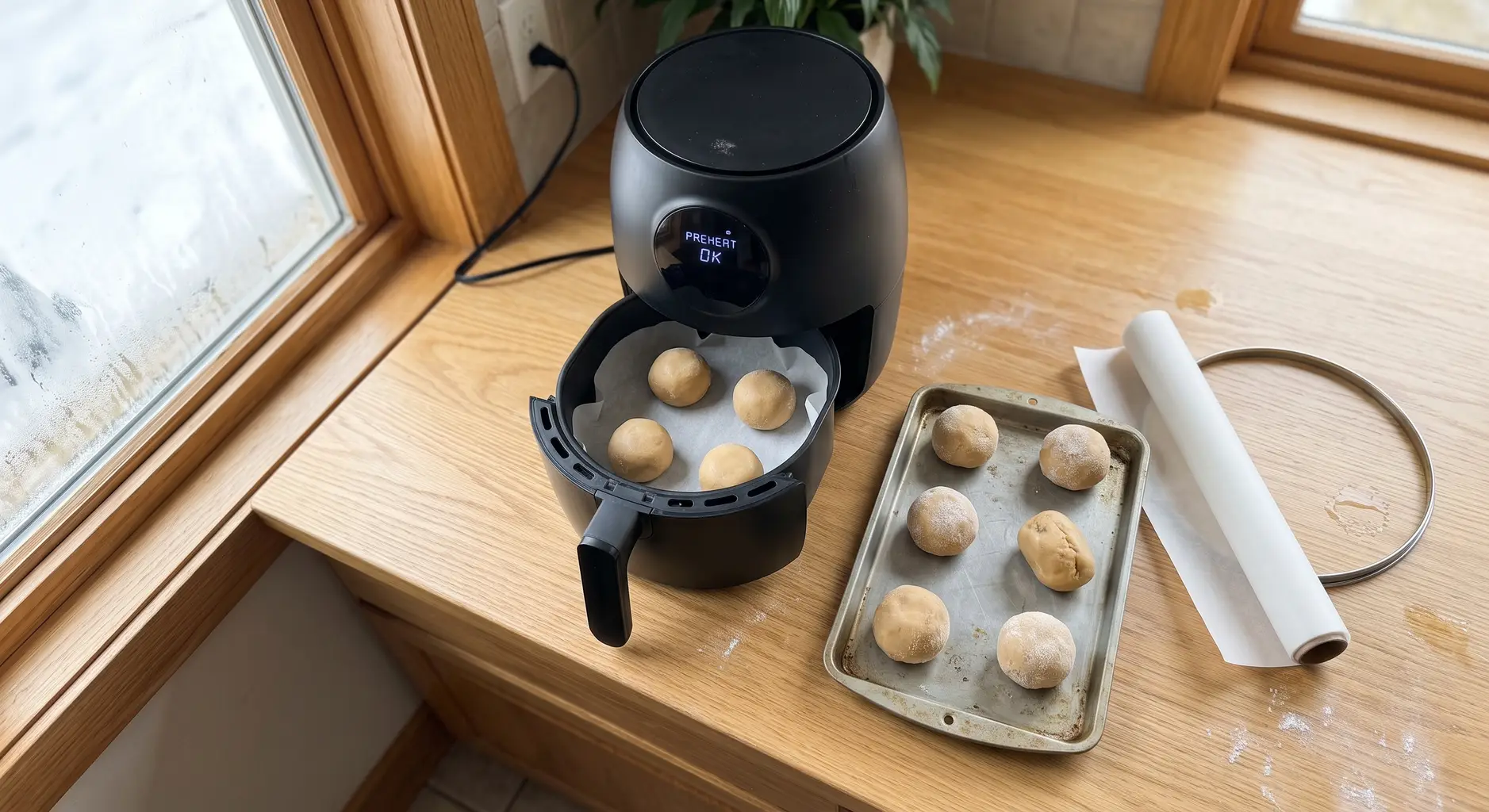
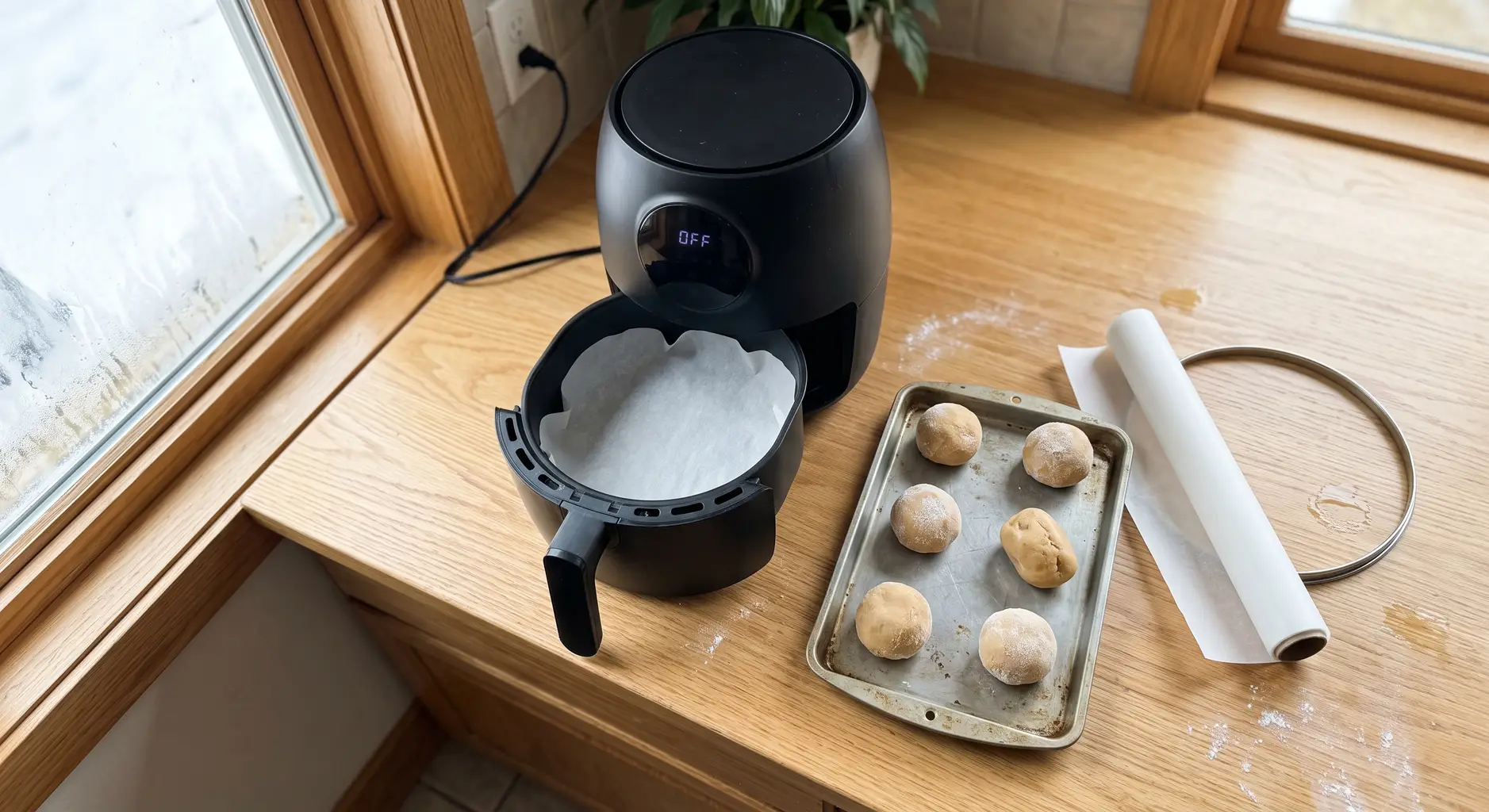
- Preheat to the table's temperature for 3 minutes. A frozen ball needs the surrounding air already working the moment it lands; a cold start adds unpredictable minutes. Whether you need to preheat covers why short bakes care most.
- Cut parchment to the basket floor and set the frozen balls on it, two inches apart, five or six per batch. The dough must weight the parchment before the basket closes, because an unweighted sheet lifts into the element: the foil and parchment rules are two minutes of reading and the only safety content this page needs.
- Do not flatten the balls, frozen or otherwise. The reduced spread is the feature you came for, and pressing a frozen ball flat mostly just cracks it.
- Bake to the table, checking at the check-at minute. Opening the drawer costs seconds, because the small cavity recovers heat almost instantly, a property the glossary files under recovery time.
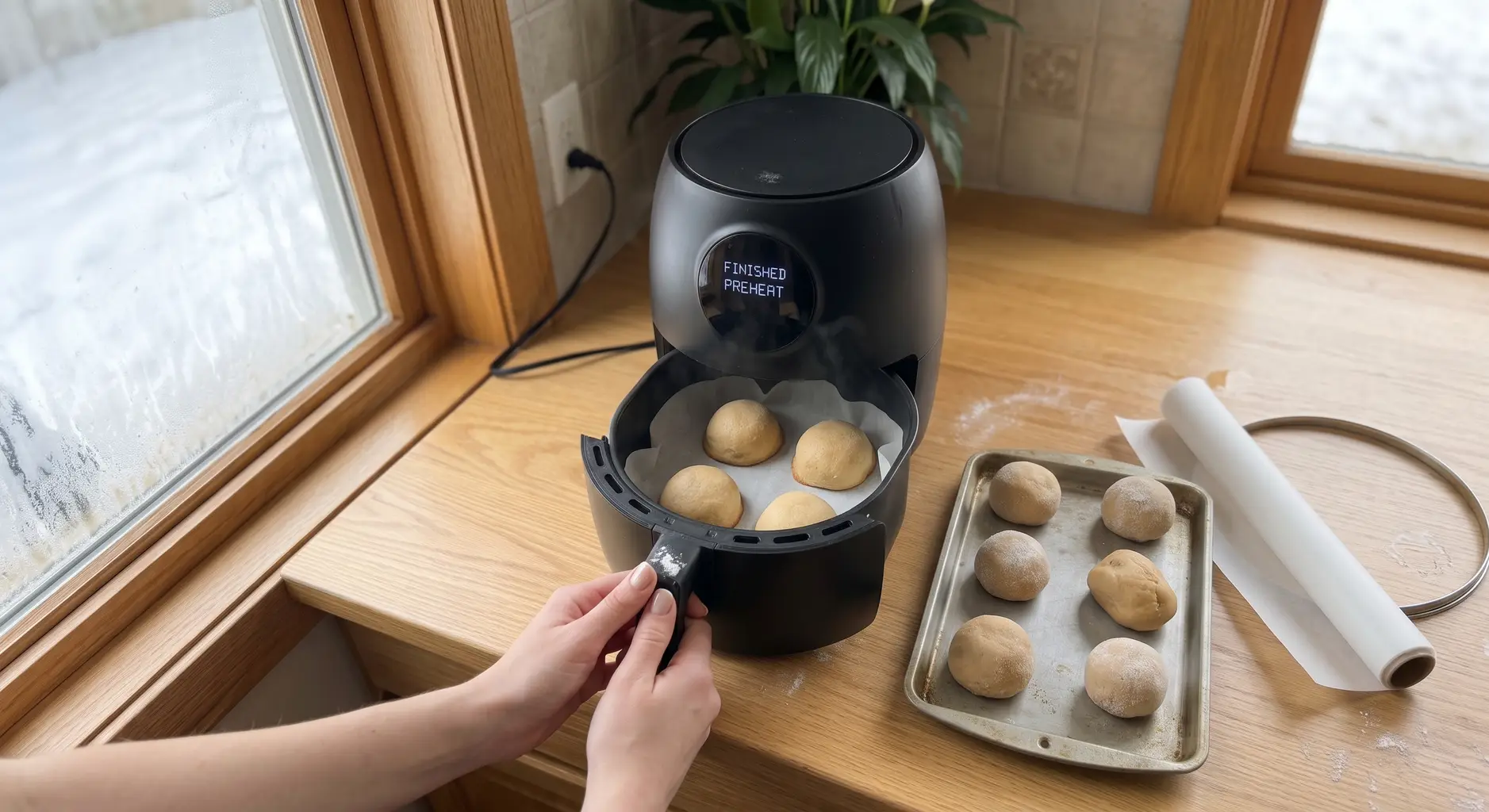
- Pull at golden edges and underdone centers, then rest 3 minutes in the basket. A from-frozen cookie that looks fully done in the machine will finish dry on the plate.
- Run later batches about a minute shorter. The machine is fully heat-soaked after round one, and no, it does not need to cool down between batches; a hot machine is a head start you account for, not a hazard you wait out.
- Rotate the parchment a half turn at the check if one corner browns first. That corner is your machine's hot spot, it is normal, and knowing where it lives improves every bake after this one.
Freezing your own dough so it bakes right later
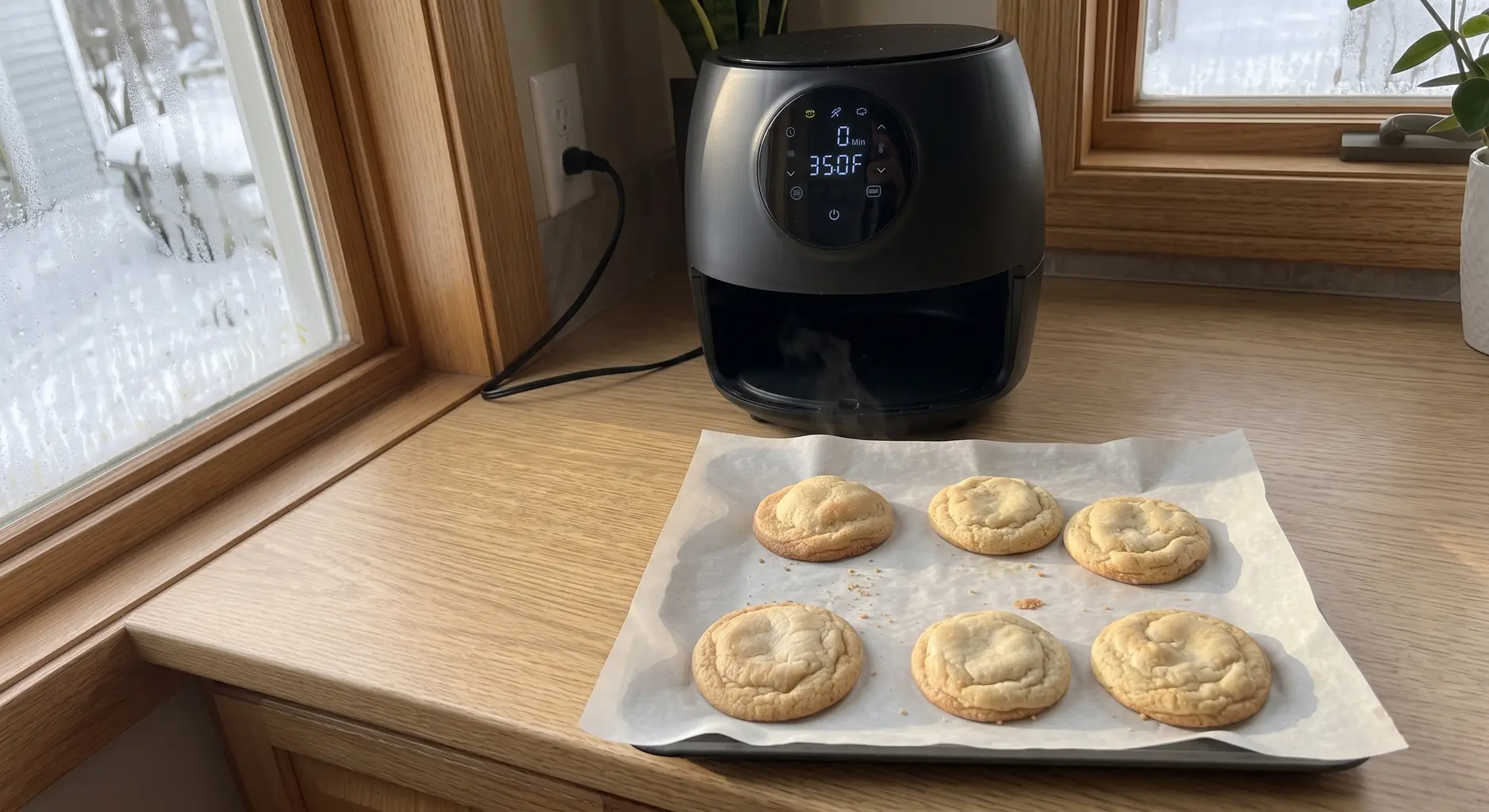
The store-bought pucks are fine. But the real prize of this technique is a freezer bag of your own dough, portioned on a good Sunday and drawn down two cookies at a time for months. A few rules make the difference between a bag of ready cookies and a bag of frost:
- Freeze on a tray first, then bag. Scoop the balls onto a parchment-lined tray, freeze solid for about two hours, then transfer to a bag. Bagged soft, they weld into one glacier; frozen first, they pour like marbles.
- Coatings go on before freezing. Cinnamon sugar, sparkling sugar, a press of flaky salt: coat the soft ball, because coating a frozen one is like sugaring a stone. Give month-old balls a quick refresh roll before baking if the coat has faded.
- Label the bag with the bake, not the date alone. "325 for 10" written on the bag in marker is the whole recipe six weeks from now, when you will otherwise be back here scrolling.
- Three months is the honest window. The dough stays safe beyond it, but butter slowly takes on freezer flavors and leavening quietly fades, so the cookies get flatter and duller. Small bags, steady rotation.
- Drop cookies freeze as balls; rolled doughs freeze as disks. Anything you scoop, freeze exactly as you would bake it. Cutout doughs freeze as flat disks to thaw and roll later, which is a different technique for a different day: the gingerbread cookies are the worked example, and thumbprints split the difference, freezing as shaped balls with the wells already pressed.
Portion math worth knowing: a standard batch makes about 24 balls, a batch bakes 5 or 6 per round, and a full bag is therefore a month of two-cookie evenings. If you want a different batch size to start with, the recipe scaler resizes any recipe on this site before it ever meets the scoop.
Refrigerated dough from the cooler aisle is its own subject, with its own formats and times by thickness, and it lives in the refrigerated cookie dough guide.
Fixing what goes wrong
| What you got | Why | Fix |
|---|---|---|
| Golden outside, raw core | Too big a ball at too high a heat. The center never got its minutes. | Big balls run 310°F, and the thermometer, 185°F center, settles it. |
| Burnt bottoms | Dough sat directly on the basket floor, or an oven temperature crept in. | Parchment under everything, and the table's settings, not the bag's oven number. |
| Cookies barely spread at all | Normal from frozen, to a point. Hockey pucks mean the dough was over-floured before it ever froze. | Enjoy the tall version, or thin the next batch's recipe, not the freezer's. |
| Spread flat despite being frozen | The balls half-thawed in a slow kitchen shuffle before baking. | Freezer to basket in one motion. The bag comes out after the preheat, not before. |
| Dry and hard by evening | Pulled when they looked fully done, so carryover finished them past done. | Underdone centers at the pull. Every time, from frozen or not. |
| Frost-flavored, stale-tasting cookies | Loose bagging, or a bag past its months. | Tray-freeze, squeeze the air out, three month rotation. |
| All welded into one sheet | Crowding. Even reduced spread is still spread. | Five or six per round, two inches apart. The batches are fast. |
Failures that follow you across different bakes, rather than just this one, are the department of the troubleshooting guide, and recurring scorch has its own page.
Baking two cookies at a time is precisely the job an oven is worst at and a basket is built for: no fifteen minute preheat, a cavity sized to the task, and pennies of electricity, which the running cost calculator will happily itemize against heating a full oven for a tray of two. The method behind all of it is how to bake in an air fryer, the shortcut-aisle sibling subjects live under the boxed cake mix guide, all four tools are in one place, and the scratch doughs worth stocking the freezer with are in the recipe index.
Frequently asked questions
QCan you put frozen cookie dough straight in an air fryer?
Yes, and straight is the whole technique: freezer to basket with no thawing at all. A standard 1.5 tablespoon ball bakes at 325F for 9 to 11 minutes on parchment cut to the basket floor, which is the fresh-dough time plus one to two minutes. The frozen center delays the butter's melt while the surface sets, so the cookie spreads less and bakes up taller and chewier than the same dough at room temperature. Pull at golden edges with soft-looking centers and rest 3 minutes in the basket.
QHow long does frozen cookie dough take in an air fryer?
It depends on mass, which is the variable the five-minute answers skip. Mini one-tablespoon balls take 6 to 8 minutes at 325F. Standard 1.5 tablespoon scoops take 9 to 11 at 325F. Store-bought frozen pucks run 8 to 10 at 320F. Bakery-style three-tablespoon balls need 12 to 15 minutes at a reduced 310F, because their centers are on a much longer clock than their surfaces. In every case, check two minutes before the window closes and pull at golden edges over underdone middles.
QShould I thaw cookie dough before air frying?
No, and partially thawed is the worst state of all. Fully frozen dough is one uniform temperature, so the bake is predictable: add a minute or two and everything holds. Half-thawed dough is a soft shell over a cold core, and the shell spreads and overbakes while the core lags, a mismatch no timer can fix. Fully thawed just recreates fresh dough after an hour of waiting, and it spreads flatter than the frozen ball would have. Take the bag out after the preheat, not before, and load the balls solid.
QWhy do frozen cookies spread less?
Because a cookie's shape is a race between the surface setting and the interior butter melting enough to let the dough flow, and freezing rigs the race. The surface of a frozen ball meets hot air immediately and starts setting, while the cold core postpones the butter melt by several minutes. By the time the inside is soft enough to slump, the outside has locked the shape in place. The result is taller, denser and chewier, and a basket's fast-moving air, which sets surfaces quicker than an oven, makes the effect stronger still.
QCan I air fry Toll House frozen cookie dough?
Yes. The frozen pre-portioned pucks bake at 320F for 8 to 10 minutes, straight from the bag, five or six per batch on parchment with two inches between them. Ignore the oven instructions on the packaging, which assume a machine with its element a foot away; a basket cooks a real 25 to 30 degrees harder at the same dial number, which is why the bag's temperature produces dark bottoms here. The same settings cover store-brand equivalents, because the pucks are all roughly the same one-ounce mass, and mass is what sets the time.
QWhat temperature is best for frozen cookie dough in an air fryer?
The temperature the dough's own recipe uses fresh, which for most drop cookies lands at 320 to 325F, with one exception: very large balls, three tablespoons and up, drop to 310F. Heat travels inward on a clock set by thickness, and a big frozen ball's center is so far behind its surface that extra minutes at full temperature just overshoot the outside. A lower dial lets both arrive together. What never works is raising the temperature to hurry the frozen center along; that only widens the gap the freeze created.
QHow do I freeze homemade cookie dough for the air fryer?
Scoop the finished dough into balls, set them on a parchment-lined tray, freeze solid for about two hours, then pour them into a freezer bag with the air squeezed out. The tray step is what keeps them as individual marbles instead of one welded glacier. Put coatings like cinnamon sugar on before freezing, since they will not stick to a frozen surface. Write the bake on the bag, 325 for 10 or whatever the dough calls for, and work through the bag within three months, before freezer flavors and fading leavening dull it.
QHow many frozen cookies can I bake at once?
Five or six standard balls in a 5 to 6 quart basket, spaced two inches apart. Frozen dough spreads less, but it still spreads, and crowded cookies weld at the joins and steam each other pale. The batch rhythm is faster than it sounds: the machine is fully heat-soaked after the first round, so each later batch runs about a minute shorter, and there is no need to cool the machine between rounds. Two dozen frozen balls is four batches and roughly forty minutes end to end, checks included.
QWhy are my frozen dough cookies raw in the middle?
The ball was too big for the temperature. A frozen center starts its bake minutes behind the surface, and on a large ball that head start is unrecoverable at 325F: the edges finish and begin overbaking while the core is still cold. Drop big balls to 310F and give them 12 to 15 minutes, and settle arguments with a thermometer, since 185F in the center is chewy and done. If standard-size balls are coming out raw-centered, your machine likely runs cool; add heat in 10 degree steps rather than minutes alone.
QDo frozen cookies taste as good as fresh-baked dough?
Within the first month or two, most people cannot tell the difference, and plenty prefer the from-frozen version for its taller, chewier build. Flavor develops slightly in the freezer at first, the same way refrigerated overnight dough deepens, because the flour hydrates and the sugars distribute. The decline starts later: past about three months, butter picks up freezer aromas and the leavening weakens, so cookies come out flatter and duller. The fix is rotation, not resignation: smaller bags, baked through steadily, always fresh in the ten-minute sense.
QCan I air fry frozen cookie dough without parchment?
Not advisedly. As the frozen ball warms, its butter softens before the dough sets, and that soft stage flows into the basket's perforations and bakes there, gluing the cookie down and leaving a scrubbing project behind. Parchment cut to the size of the basket floor solves it completely, with one safety rule: the dough goes on the parchment before the basket closes, because an unweighted sheet lifts into the heating element. Perforated parchment rounds sold for air fryers are ideal and cost almost nothing.
QCan I bake other frozen doughs the same way?
The rule generalizes to anything scooped: drop cookies of every flavor, frozen as balls, bake at their fresh temperature plus one to two minutes. It does not generalize to everything. Cutout and slice-and-bake doughs freeze as disks or logs and want partial thawing before shaping, laminated doughs like croissants are their own science, and frozen batters, brownies and cakes, need pans and different math entirely. For boxed and store-bought shortcuts beyond cookies, the times and temps live in our boxed cake mix guide.
Did the freezer earn its shelf?