
Air Fryer Donuts From Canned Biscuits: Glazed in 10 Minutes
This is the recipe the air fryer was quietly invented for: a can of biscuits, a bottle cap, and ten honest minutes between opening the refrigerator and licking glaze off a thumb. The pages that rank for it mostly agree on the method and then run the machine 20 to 45 degrees too hot, hand you a glaze with no ratio, and never mention the one rule that decides whether that glaze becomes a crackly shell or a puddle on the rack. This page runs 330°F like the biscuits it is made from, times the flip for the moment the dough can survive it, and treats the glaze window, warm but not hot, as the step it actually is.
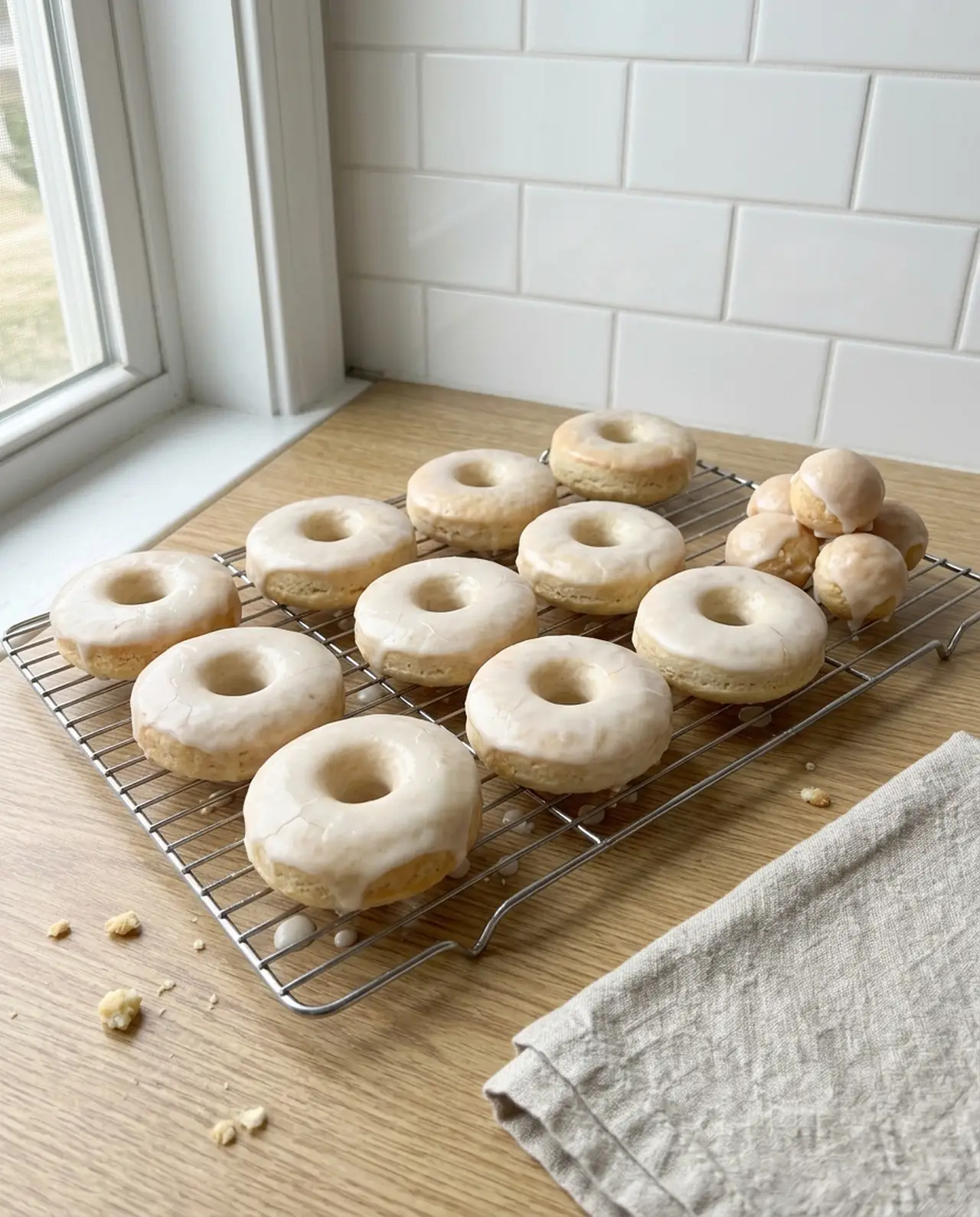
What’s on this page
The right can
Every recipe that ranks for this tells you to buy jumbo flaky biscuits, and it is the one place the whole genre goes wrong at the shelf. Flaky-layers dough is engineered to separate into sheets, which is glorious in a biscuit and a structural liability in a donut: cut a ring out of it and the layers telescope, the ring puffs unevenly, and the flip can shear a donut into two thin, sad halves along a lamination line.
Buy the regular homestyle or buttermilk can, 8 count. Unlaminated dough bakes into an even, tender, cake-donut crumb, holds its ring shape through the flip, and takes glaze on a smooth face instead of a shingled one. Grands work when you want donuts the size of your palm, with a minute added; the flaky can works if it is what you have, handled gently and flipped with a spatula rather than tongs. But if you are standing at the refrigerator case with a choice, homestyle is the donut can. This site has strong opinions about what that can is capable of, and the full range lives on the canned biscuits page, where this recipe first appeared as a two line variation and kept demanding its own page. The same 16 ounce can also becomes monkey bread if you quarter the biscuits instead of cutting rings out of them.
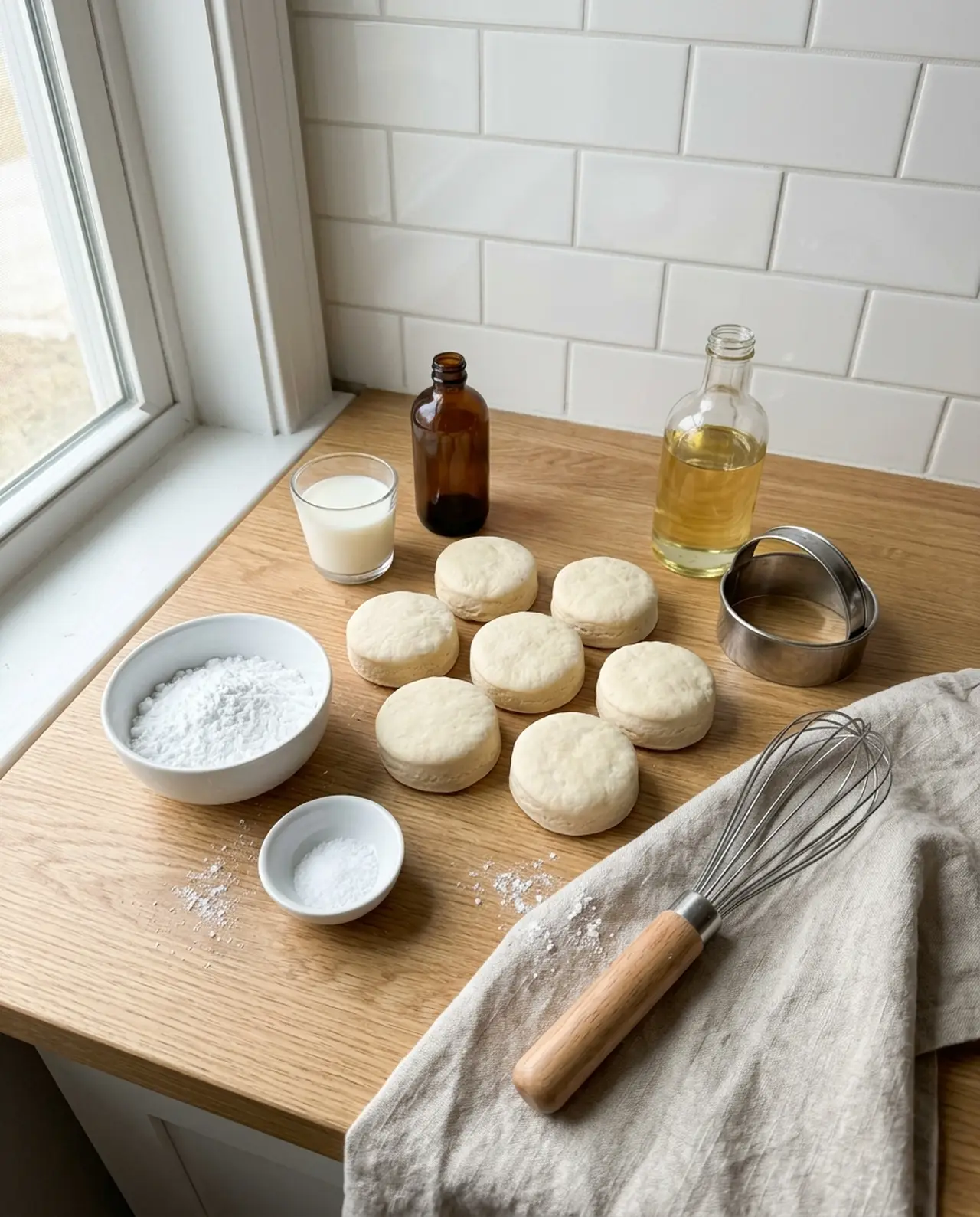
The honest ten minutes
Recipe titles love a number, so here is the arithmetic behind this one, with nothing hidden. Cutting the centers from eight biscuits: about two minutes, while the machine preheats. First batch of four donuts: 4 to 5 minutes. Glaze whisked while it cooks: no added time. Rest before dipping: 3 minutes. From opening the can to biting the first glazed donut is genuinely about ten minutes, and the title survives an audit.
The full can, both batches plus holes, runs closer to twenty. That is still a faster dessert than preheating an oven and a fraction of the fuss of a pot of frying oil, which is the actual comparison this recipe wins by a landslide: real fried donuts want a thermometer, a quart of oil, and a kitchen that smells like a fairground until Thursday. The basket wants a bottle cap. The whole cost-of-running argument is on the calculator page family, and dessert is where it is most lopsided.
Glaze physics: warm, not hot
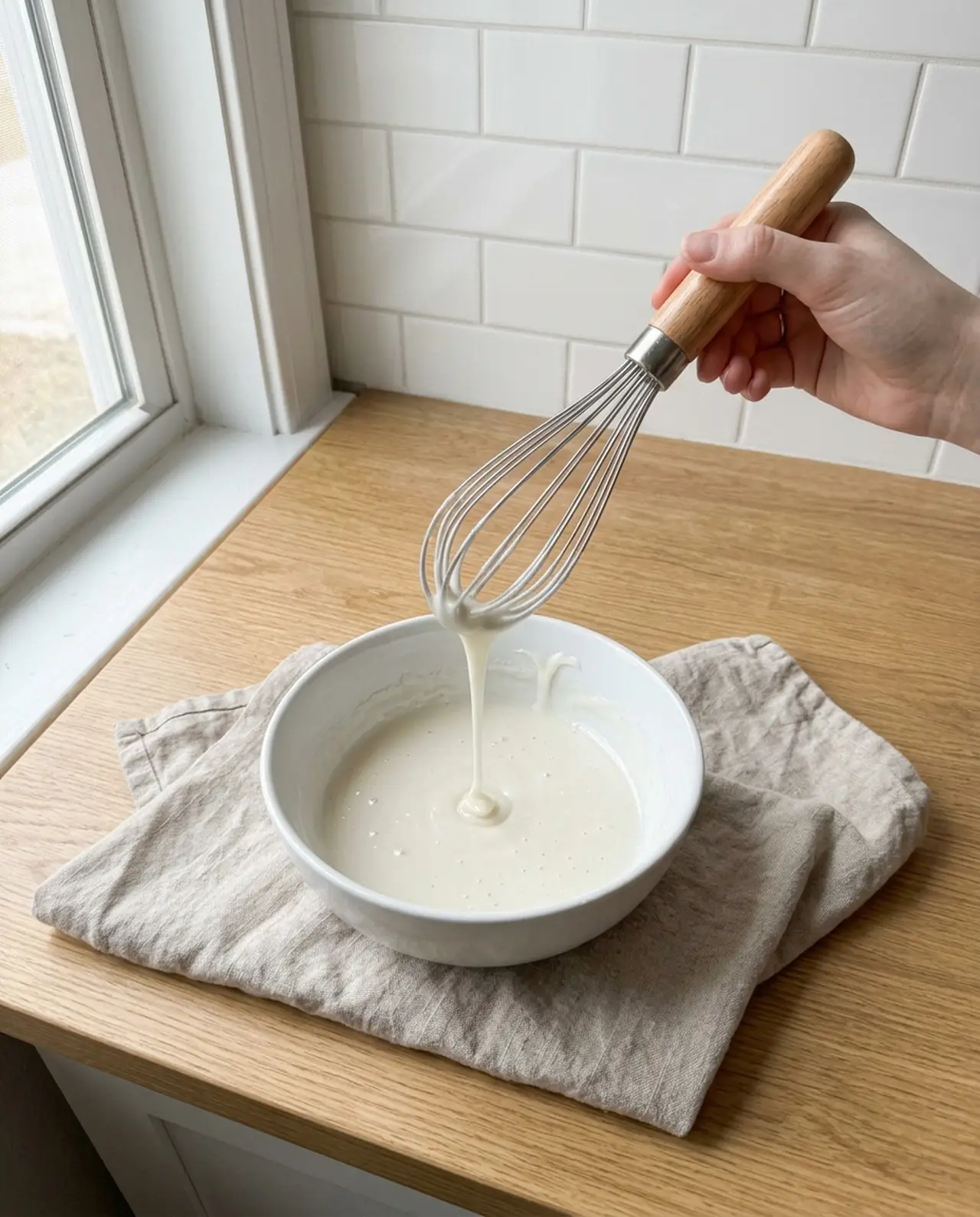
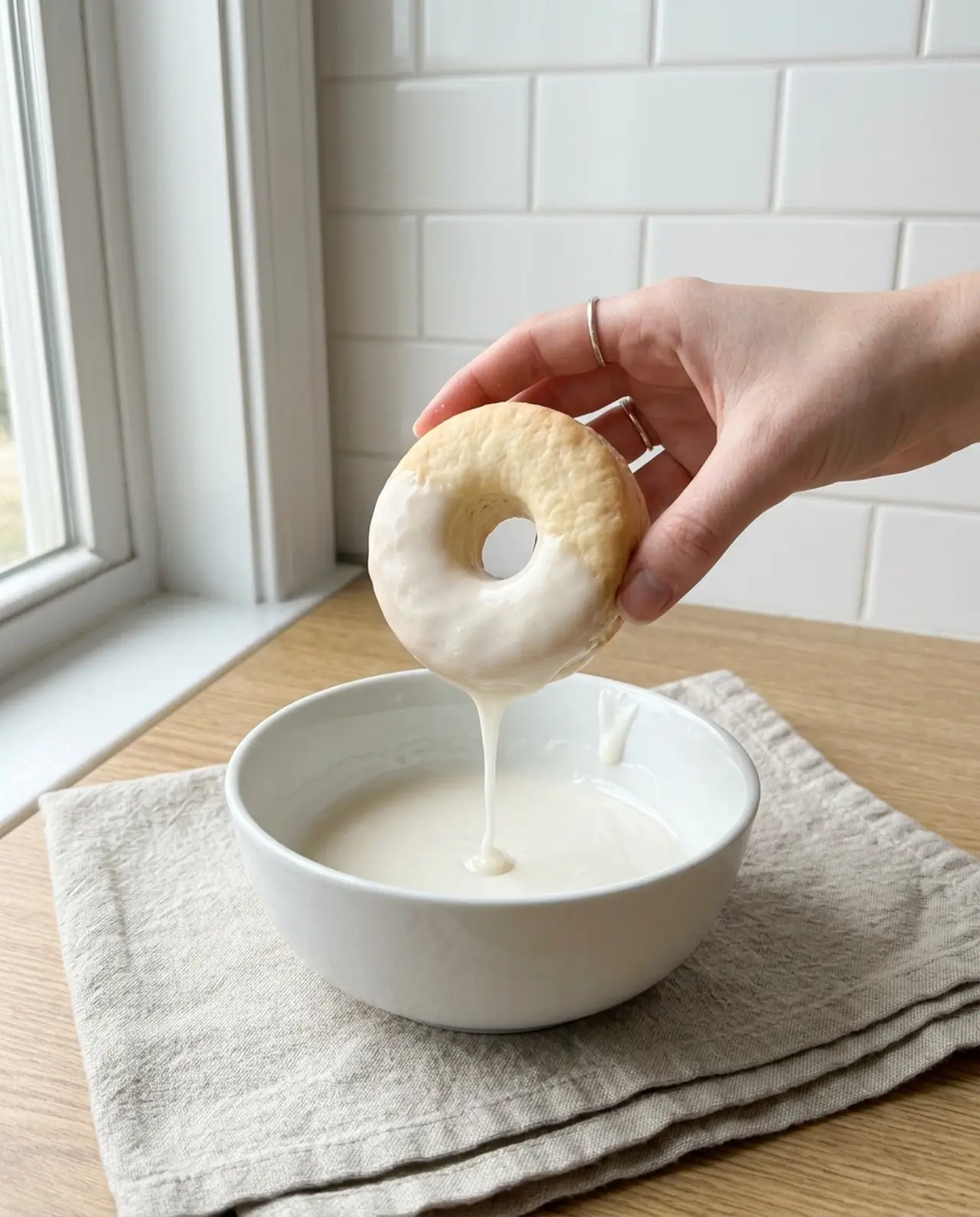
The glaze is three ingredients and one rule, and the ranking pages give you the ingredients without the rule. Powdered sugar, milk, vanilla, whisked thick enough to fall in a ribbon. The rule is about the donut, not the glaze: dip it warm, never hot.
Dip a donut straight from the basket and its surface heat melts the sugar out of the glaze; it turns translucent, slides to the low edge, and drips onto the rack, leaving a donut that looks varnished rather than glazed. Wait three to four minutes and the surface drops below the melting point of the glaze but stays warm enough to grip it, and the coat sets into the thin, crackly, slightly matte shell that a shop donut has. Wait too long, twenty minutes, and the glaze goes on thick and stays wet-looking instead of setting. Warm, not hot, not cold: it is the same discipline as icing the cinnamon rolls, and the same window that sets the shell on our yeasted air fryer glazed donuts. It costs three minutes of standing still.
For an opaque, bakery-white finish, dip twice: once, two minutes on the rack, once more. The first coat primes, the second shows.
Temperature and timing
The pages that rank for this run 350 to 375°F, and at those settings a thin ring of biscuit dough does exactly what you would guess: the outside leathers and browns while the ring, which was never thick enough to need rescuing, dries out on its way to done. Biscuit dough is happiest in the low 300s in a basket, a rule this site has tested from every direction on the straight biscuits, and cutting a hole in the middle does not change the dough's opinion.
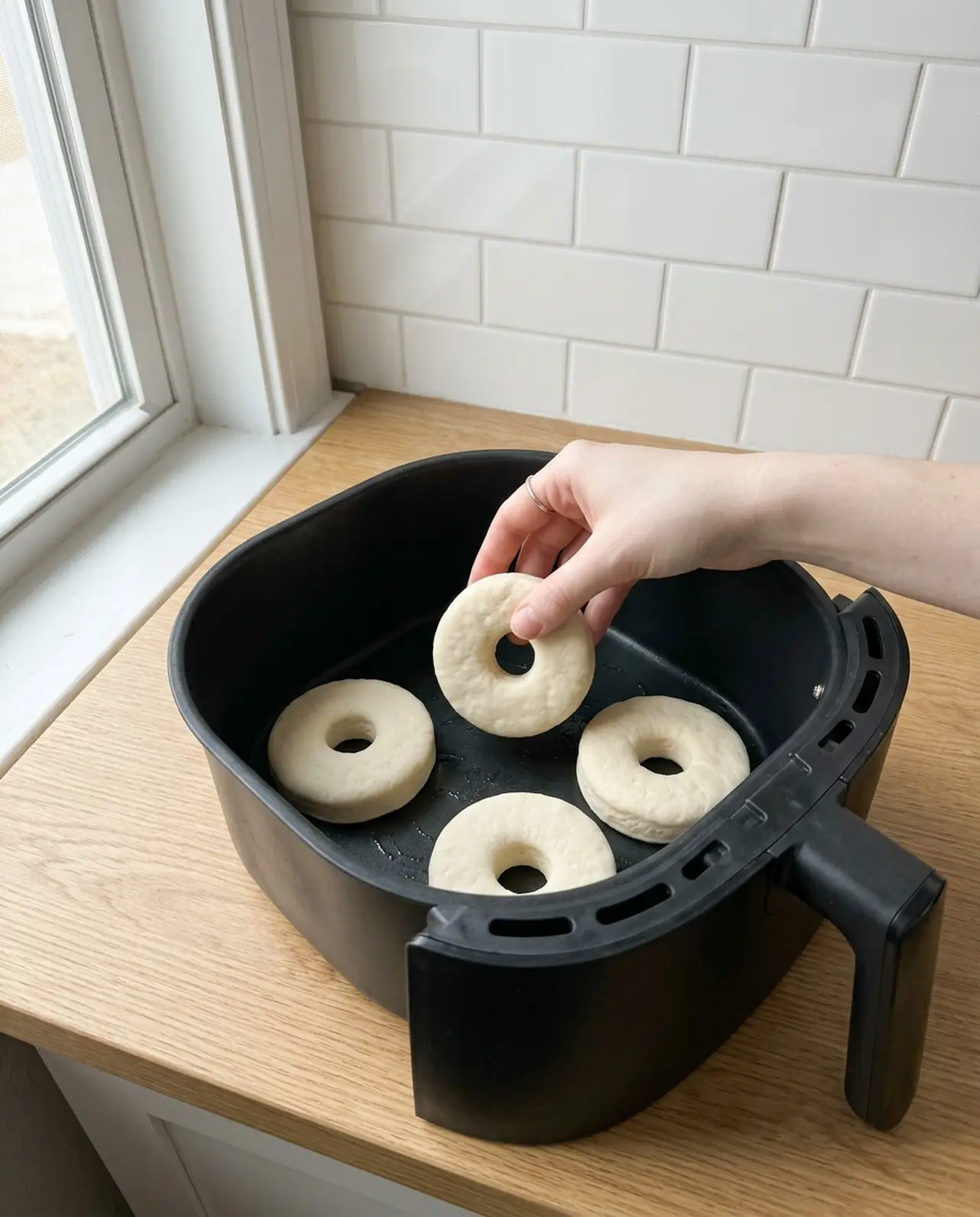
330°F, 4 to 5 minutes, one flip at minute 3, matching the parent recipe exactly. The flip timing is not arbitrary: earlier than the two-thirds mark the ring is still soft enough to dent and stretch, and one ranking page deserves credit for noticing that even while running too hot. Four donuts to a batch in a lightly oiled basket, no parchment, so the faces that will wear the glaze bake smooth against the floor. Preheat 3 minutes, because a thin ring spends half its short bake just warming a cold basket otherwise; the general rules are in do you need to preheat an air fryer for baking, and every setting on this site lives on the baking chart.
What done looks like
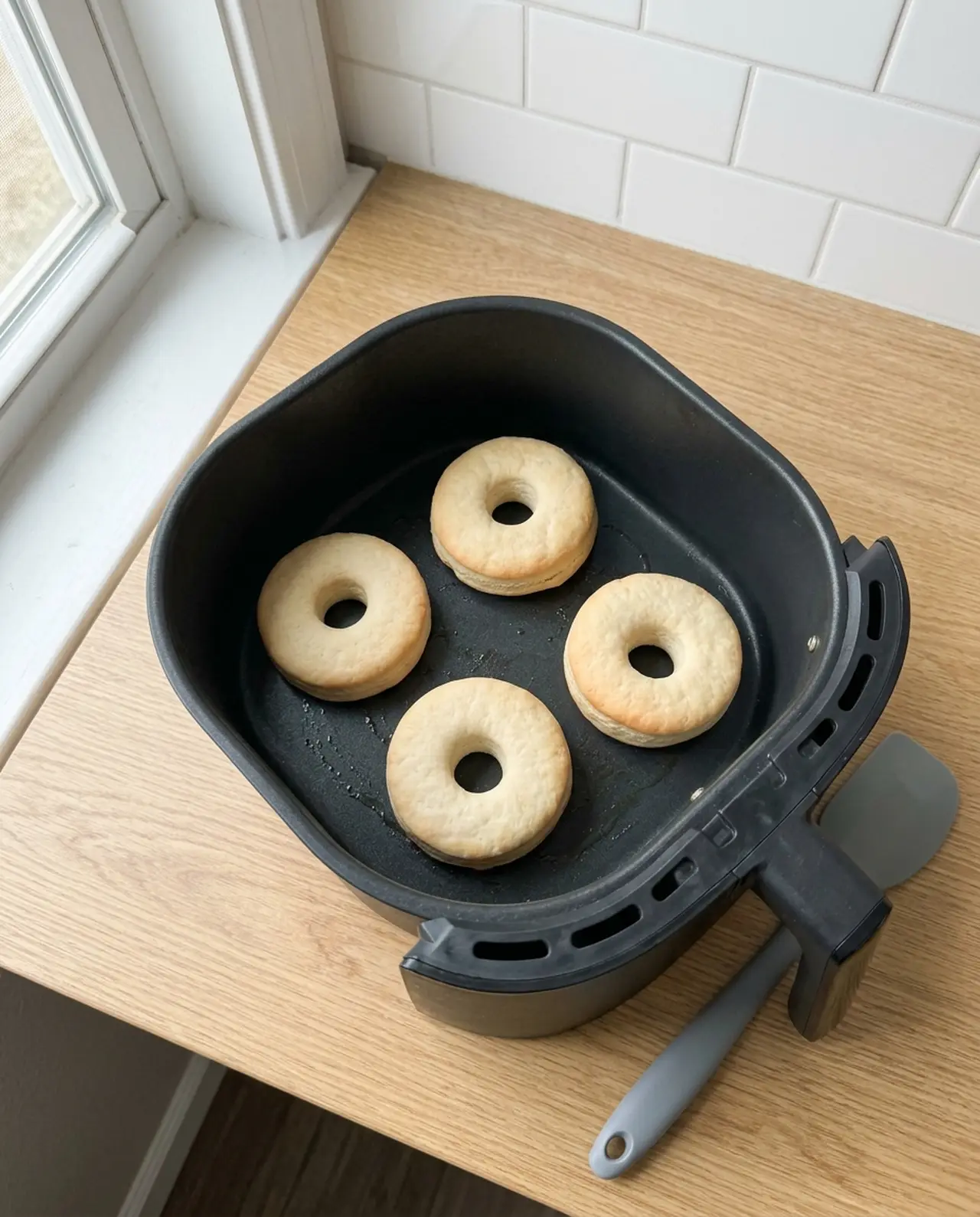
- Color: light golden on both faces, a shade paler than you think a donut should be. Glaze and cinnamon sugar both darken the look; the dough underneath should stop at gold.
- Spring: the ring springs back from a gentle press instead of holding a dent.
- The seam test: no wet dough visible in the cut edge of the hole, which is the thinnest and fastest-cooking cross-section you can check without sacrifice.
A ring this thin does not need a thermometer, which makes it the rare bake on this site excused from the probe. It needs the opposite discipline: the willingness to pull at light gold, because the deep bronze the fryer versions have comes from oil, and chasing it in a basket just makes a dry donut.
Ingredients
For 8 donuts and 8 holes
- 1 can (16 oz, 8 count) refrigerated homestyle or buttermilk biscuits
- 1 cup powdered sugar
- 2 tablespoons milk
- 1/2 teaspoon vanilla extract
- Pinch of fine salt
- Neutral oil for the basket
- Cinnamon sugar option: 3 tablespoons melted butter, 1/3 cup sugar, 2 teaspoons cinnamon
The salt is not optional in the glaze; without it, powdered sugar tastes like sweetness with no flavor attached. A 1 inch round cutter, the back of a large piping tip, or a clean soda bottle cap all cut the centers equally well. Any neutral oil will do for the basket; the two bottles actually worth owning are in best oils for an air fryer.
How to make them
- Preheat the air fryer at 330F for 3 minutes and lightly oil the basket floor.
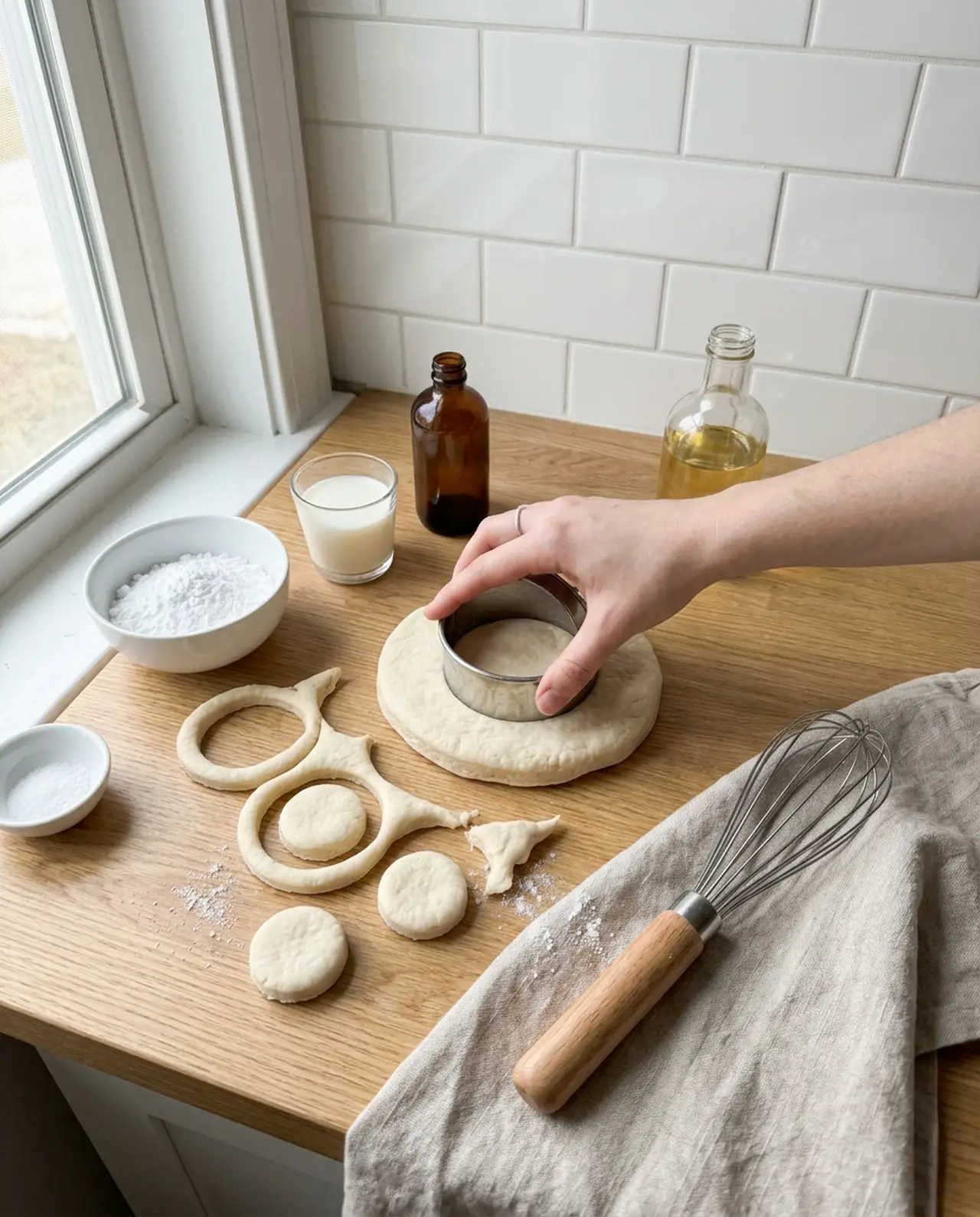
- Separate the biscuits and cut the center from each with a 1 inch cutter or a bottle cap. Set the holes aside; they are their own batch.
- Whisk the powdered sugar, milk, vanilla, and salt into a glaze thick enough to fall from the whisk in a ribbon.
- Arrange 4 rings in the basket with space between them and air fry at 330F for 4 to 5 minutes, flipping once at minute 3.
- Move the first batch to a rack and repeat with the remaining 4 rings.
- Cook the holes 3 minutes, shaking the basket once at minute 2 instead of flipping.
- Rest each batch 3 to 4 minutes, until warm but not hot to a fingertip.
- Dip the top face of each donut in the glaze, let the excess run off, and set them glaze-up on the rack 5 minutes to set. Dip twice for an opaque shell.
- Toss the holes in whatever is left in the glaze bowl, which is what the glaze bowl was always for.
The holes
Do not skip cutting real holes to make ring-shaped dents, and do not throw the centers in alongside the donuts. The holes are useful twice. Cooked separately, 3 minutes with a shake, they finish evenly on all sides like the little spheres they are. And cooked first, they are the smartest three minutes in the recipe: a tester batch that tells you whether your machine runs hot or cool before the actual donuts are on the line. If the holes come out deep brown at 3 minutes, drop 10 degrees for the rings. If they are pale, add a minute. Every air fryer is a little different, and the holes are how this recipe learns yours for free. If the holes are the part you actually came for, they get a full batch and a cinnamon sugar coat of their own on the air fryer donut holes page.
Fixing what goes wrong
| Problem | Cause | Fix |
|---|---|---|
| Glaze slid off and pooled | Dipped hot | The 3 to 4 minute rest; warm but not hot to a fingertip |
| Glaze thick and wet-looking | Dipped cold, or glaze too stiff | Dip in the warm window; thin the glaze with milk half a teaspoon at a time |
| Donut split into layers at the flip | Flaky-style can | Homestyle can next time; this time, flip with a spatula under the whole ring |
| Leathery, dark outside | Temperature above 350°F | 330°F; the deep bronze of a fried donut comes from oil, not heat |
| Doughy at the cut edge | Underbaked, or flipped too early and dented | Full 5 minutes, flip at minute 3 and not before |
| Rings stuck to the basket | Dry floor | A light wipe of oil before each batch; sugar residue from batch one burns, so wipe between batches too, per the burning guide |
Beyond the vanilla glaze
- Cinnamon sugar. The other canon: brush the warm donuts with melted butter and toss in cinnamon sugar. This one actually wants the donuts warmer than the glaze does, since the butter is the adhesive. The from-scratch version of the same finish is on the apple cider donuts page.
- Chocolate. Sift 2 tablespoons of cocoa into the glaze and add an extra teaspoon of milk. Sprinkles go on in the first minute, while it is tacky.
- Maple. Swap the milk for maple syrup and add a pinch more salt. Better than it has any right to be on a biscuit donut.
- Lemon. Milk out, lemon juice in, zest over the top. The sharpness argues well with the buttermilk can.
- Powdered sugar only. Tossed while barely warm, for the carnival finish that belongs to the same family as our funnel cake, beignets and air fried Oreos. The basket does the county fair better than the county fair admits.
Serving, storage, honesty
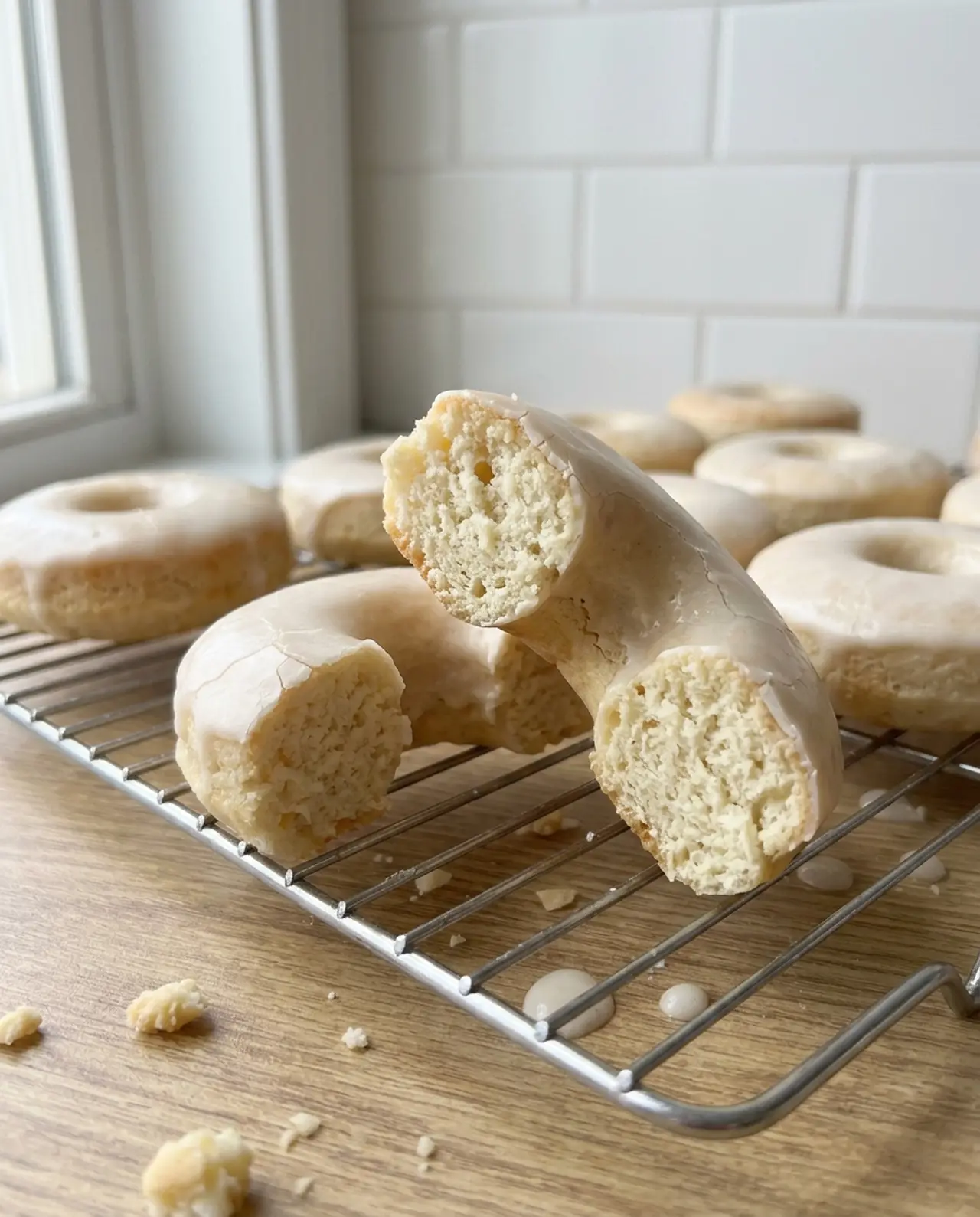
These are same-day donuts, and mostly same-hour donuts. Fresh and warm, they are a legitimately great fast dessert and an even better Saturday breakfast trick. What they are not is a bakery donut: the crumb is biscuit-tender rather than yeast-light, and pretending otherwise is how the genre earned its skeptics. For the from-scratch version with a proofed dough and a proper crumb, the yeasted glazed donuts do it the long way, and the vegan donuts land in between: mixed from scratch, but with no yeast and nothing to proof. The three recipes serve three different mornings.
Storage, such as it is: airtight at room temperature for a day, and the glaze will soften against the container. Revive unglazed donuts at 300°F for 2 minutes; glazed ones do not revive, they relocate. The honest move with a surplus is to have glazed fewer, kept the rest plain, and finished them fresh the next morning. The rest of the canned-dough shelf continues at refrigerated cookie dough and crescent rolls, and everything tested here is in the recipe index, with the technique pages under guides.
Frequently asked questions
QWhich canned biscuits make the best air fryer donuts?
Regular homestyle or buttermilk biscuits, not the flaky-layers style that most recipes call for. Laminated dough separates into sheets, which makes a ring that puffs unevenly and can split apart at the flip, while unlaminated dough bakes into an even, cake-like crumb that holds its shape and takes glaze on a smooth face. Grands work for oversized donuts with about a minute added. If flaky is what the refrigerator holds, it will still work; handle it gently and flip with a spatula.
QWhy does my glaze slide off the donuts?
Because the donut was hot. A fresh-from-the-basket surface melts the sugar structure out of the glaze, which turns translucent and runs to the rack, leaving a varnished look instead of a shell. Rest the donuts 3 to 4 minutes until they are warm but not hot to a fingertip, then dip; the coat will set crackly and slightly matte within 5 minutes. For an opaque bakery-white finish, dip once, wait 2 minutes, and dip again.
QWhat temperature is best for biscuit donuts in the air fryer?
330F for 4 to 5 minutes with one flip at minute 3. Most recipes run 350 to 375F, and a thin ring of biscuit dough at those temperatures leathers on the outside while it dries within, because there is no thick middle that needs the extra heat. Biscuit dough is happiest in the low 300s in a basket whether it is a whole biscuit or a ring, and the deep bronze color of a fried donut is an oil effect that higher air temperature cannot reproduce, only imitate badly.
QWhat do I do with the donut holes?
Cook them as their own batch, 3 minutes at 330F with a shake at minute 2 instead of a flip, and use them strategically: run the holes first as a tester, and their color at 3 minutes tells you whether your machine runs hot or cool before the real donuts go in. Then toss them in whatever glaze is left in the bowl. By tradition they are also the cook's private payment, eaten at the counter before anyone else knows the batch is done.
QCan I make these ahead for a party?
Only partly, and the split matters: bake ahead, glaze fresh. The rings can be air fried a few hours early and held plain at room temperature, then revived at 300F for 2 minutes and glazed in the warm window just before serving, which gets you a fresh-tasting donut with five minutes of day-of work. Fully glazed donuts held for hours soften, weep, and stick to whatever they touch. The can is also cheap enough that the truly relaxed party plan is a second can and a helper on bottle cap duty.
QHow do I store leftover biscuit donuts?
Airtight at room temperature for a day, with the understanding that these are same-day pastry and day two is a compromise. Unglazed donuts come back well at 300F for 2 minutes in the basket; glazed ones cannot be reheated without the shell melting, so eat those first. Freezing works only for plain baked rings, up to a month, revived from frozen at 300F for 3 to 4 minutes and glazed after. The better storage strategy is arithmetic: a can makes eight, and eight rarely needs storing.
Made it? Rate it.
It helps more people find the ten minutes that taste like a fairground.
Air Fryer Donuts From Canned Biscuits
Eight glazed donuts and eight holes from one homestyle can at 330°F, dipped in the warm-not-hot window so the glaze sets into a shell.
Ingredients
- 1 can (16 oz, 8 count) refrigerated homestyle or buttermilk biscuits
- 1 cup powdered sugar
- 2 tablespoons milk
- 1/2 teaspoon vanilla extract
- Pinch of fine salt
- Neutral oil for the basket
- Cinnamon sugar option: 3 tablespoons melted butter, 1/3 cup sugar, 2 teaspoons cinnamon
Instructions
- Preheat the air fryer at 330F for 3 minutes and lightly oil the basket floor.
- Separate the biscuits and cut the center from each with a 1 inch cutter or a bottle cap. Set the holes aside; they are their own batch.
- Whisk the powdered sugar, milk, vanilla, and salt into a glaze thick enough to fall from the whisk in a ribbon.
- Arrange 4 rings in the basket with space between them and air fry at 330F for 4 to 5 minutes, flipping once at minute 3.
- Move the first batch to a rack and repeat with the remaining 4 rings.
- Cook the holes 3 minutes, shaking the basket once at minute 2 instead of flipping.
- Rest each batch 3 to 4 minutes, until warm but not hot to a fingertip.
- Dip the top face of each donut in the glaze, let the excess run off, and set them glaze-up on the rack 5 minutes to set. Dip twice for an opaque shell.
- Toss the holes in whatever is left in the glaze bowl, which is what the glaze bowl was always for.

Sujata Thapa
Sujata bakes everything on this site in a 5.5 quart basket air fryer on a Kathmandu counter, then re-tests the keepers until the timings hold for anyone. The donut glaze rule cost her one varnished batch and one puddled rack, in that order, before the fingertip test settled it.