

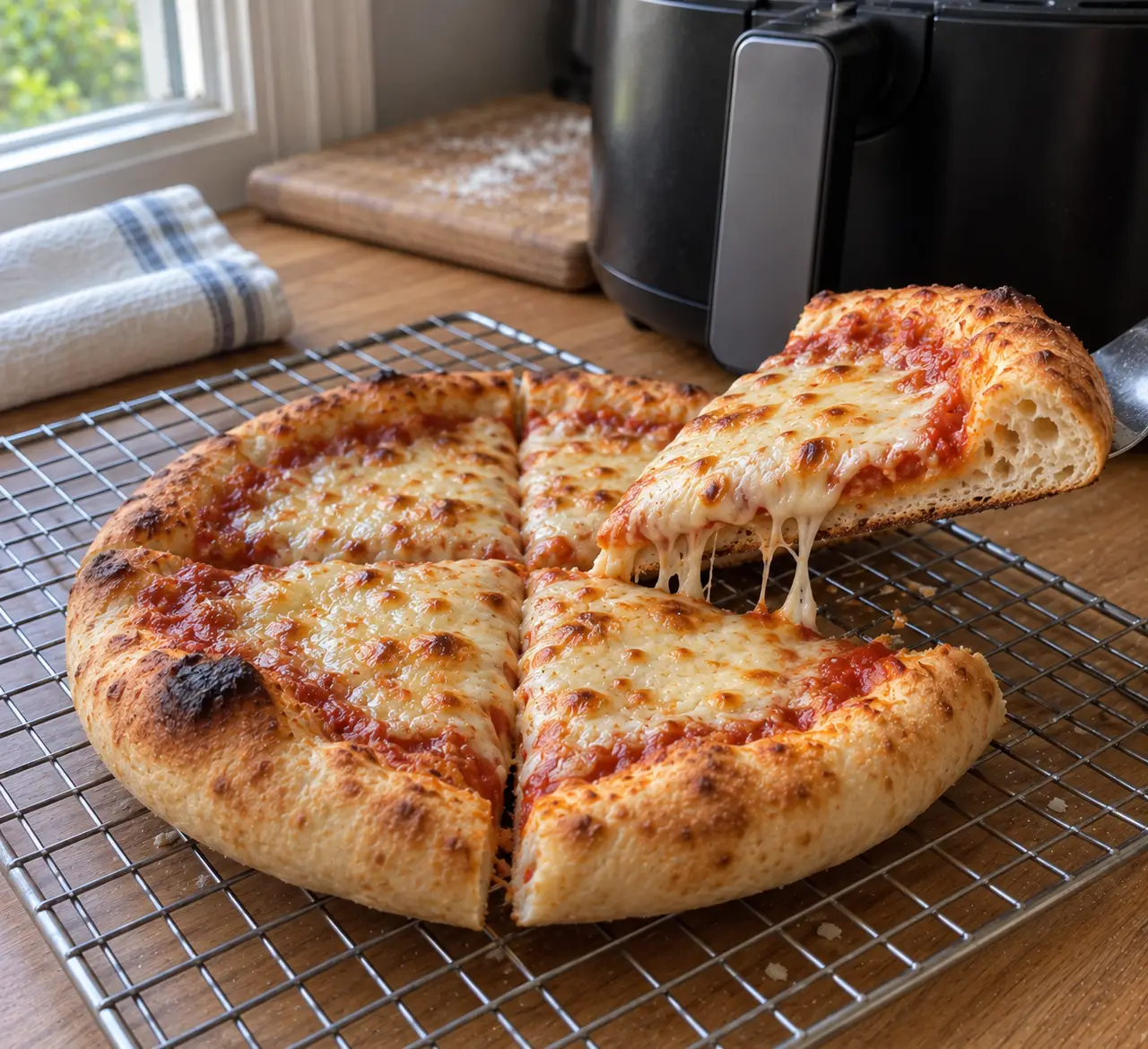
The first fresh-dough pizza I baked in the air fryer was assembled the way you assemble one for the oven: raw stretched dough, sauce, cheese, pepperoni, into the basket. Ninety seconds later the machine was eating the pepperoni. The fan had lifted two slices clean off the pie and pinned one against the heating element, where it became a small, expensive smell.
That failure is the whole education. An oven bakes with still, radiant heat, so raw dough and toppings can bake as one unit. An air fryer bakes with moving air, which is exactly why it makes the crispest crust of any countertop method, and exactly why the toppings cannot be aboard while the dough is still light enough to flap. The fix is a sequence, not a setting, and once you have the sequence, a personal pizza from cold start to cut slices takes about nine minutes.
Quick answer: Stretch a 140g ball of dough to 6.5 inches on parchment and par-bake it naked at 400°F for 4 minutes, flipping at minute 3. Then sauce, cheese and top the sturdy crust, and finish at 360°F for 4 to 6 minutes until the cheese bubbles and the rim hits 200°F. Naked crust hot, dressed crust gentler, toppings never on raw dough. This page covers fresh dough only; the boxed kind lives at the frozen pizza page.
Why fresh dough needs its own rules
Every method problem on this page traces to one physical difference between a frozen pizza and a fresh one. A frozen pizza is a rigid disc: its crust was already baked at the factory, its cheese is fused on, and the fan cannot bully it. Fresh dough is a wet, floppy, living thing that weighs almost nothing at the edges. So three rules replace the oven habits:
- The crust bakes before the toppings board. The par-bake turns the flap-prone raw disc into a rigid raft in 4 minutes. After that, the fan can do its worst.
- Parchment is the transfer system, not a liner preference. Stretched raw dough cannot be picked up and placed in a basket without disaster. Stretch it on a parchment square, lower the whole square in, and pull the parchment out at the flip, once the crust can stand on its own. The full liner law lives in the foil and parchment guide, including the rule this page depends on: parchment never goes in empty, because unweighted paper flies.
- Less sauce than your oven hand wants. The bake is short and the pie is small, so oven-quantity sauce has no time to concentrate and turns the middle soggy. Two tablespoons on a 6.5 inch pizza is the honest ceiling.
The naked par-bake
Four minutes at 400°F does three jobs at once:
It sets the structure
The disc goes in floppy on parchment and comes out a rigid raft that can hold sauce, survive the fan, and be lifted with bare hands.
It banks the browning
The Maillard browning on the underside happens now, at full heat, so the topped stage can run cooler without costing you a pale bottom.
The flip evens both faces
Flip at minute 3, pull the parchment, and give the top face its minute against the hot basket. A naked crust has two plain faces, so it flips legally under this site's flip rule. The moment toppings board, that right is revoked forever.
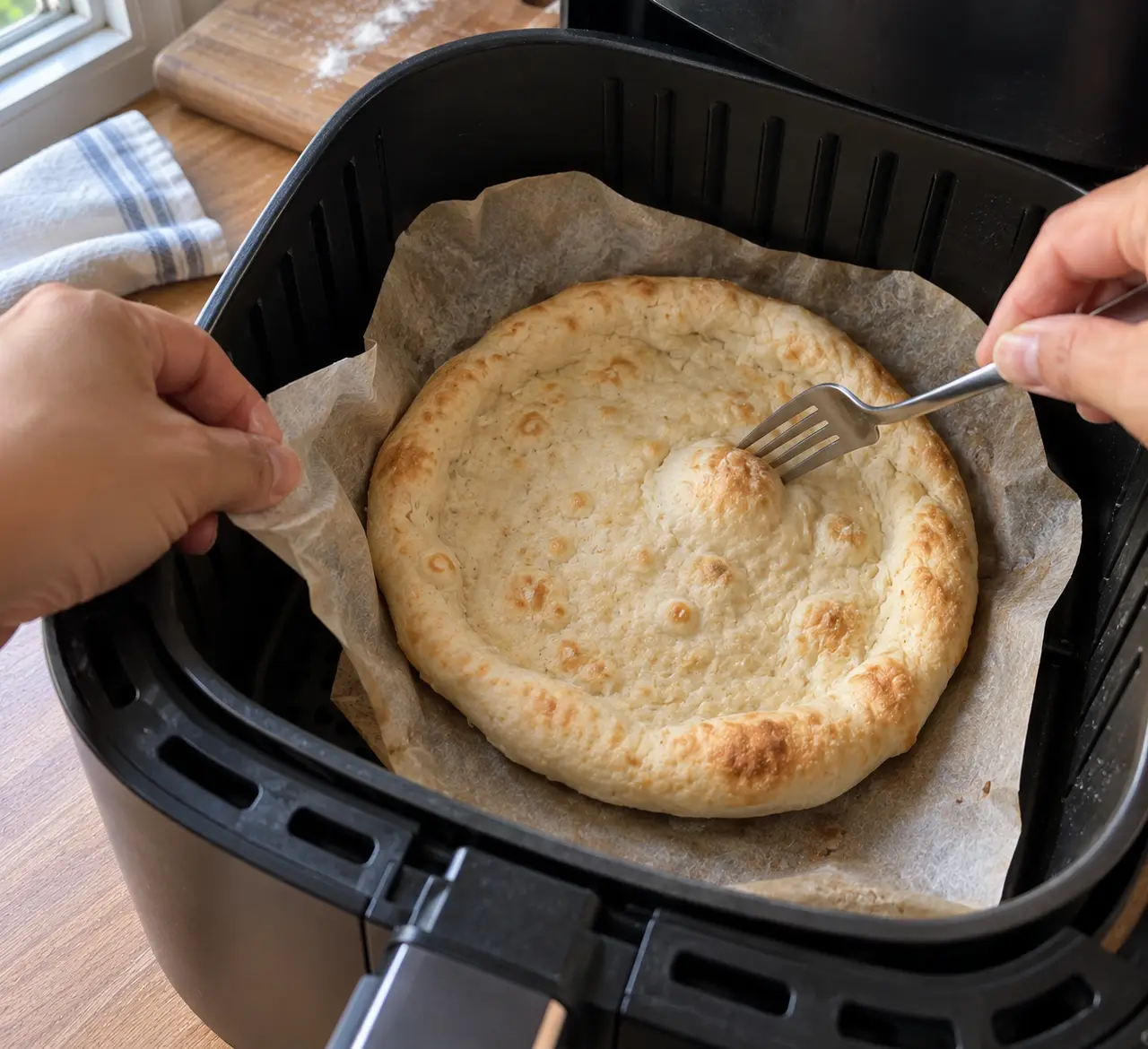
Expect the naked crust to bubble. Big blisters are good news, oven spring in fast forward, but a bubble the size of your palm will vault your toppings later. Pop the giants with a fork at the flip and leave the small ones for character.
Personal size on purpose
The basket sets the diameter, and the right response is to stop fighting it. A 6.5 inch round fits a 5 to 6 quart basket with clearance, and 140g of dough at that diameter gives you a thin middle with a real rim. This is not a consolation pizza; the personal pan format is a beloved genre that restaurants charge extra for, and the air fryer happens to be the ideal machine for it.
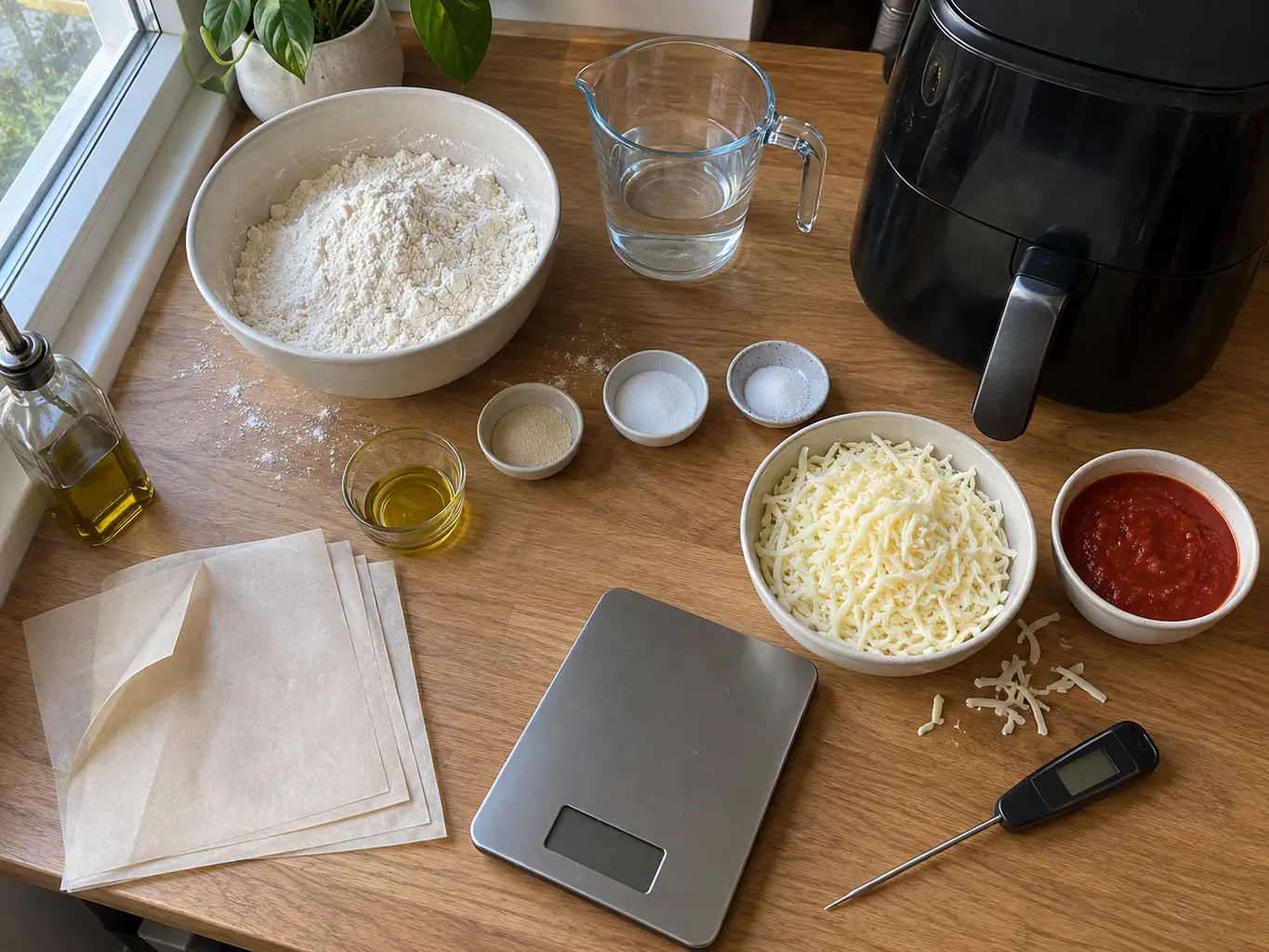
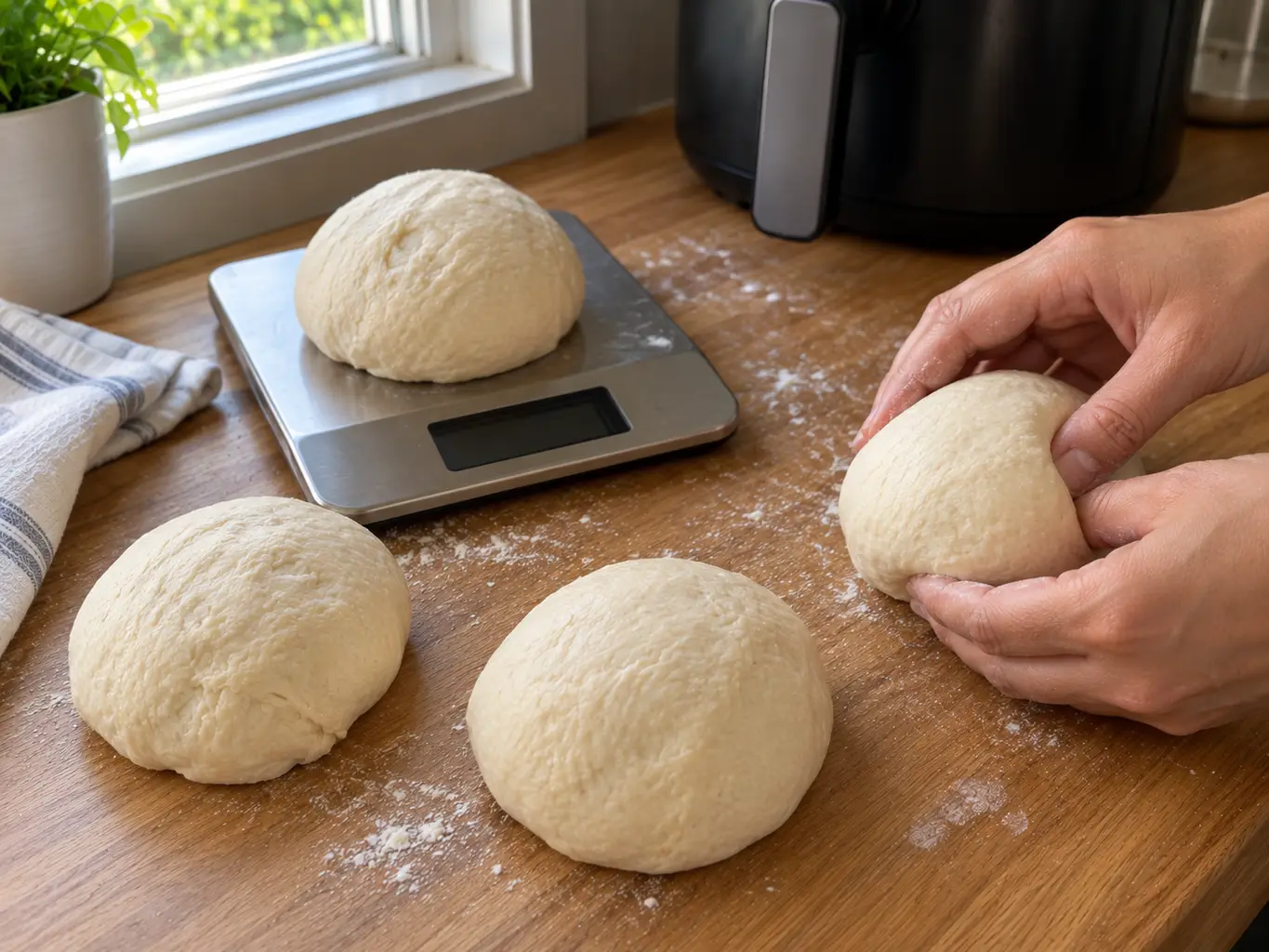
- Weigh, do not eyeball. 140g per ball. Heavier balls make deep-dish middles that outlast everyone's patience; lighter ones bake into crackers.
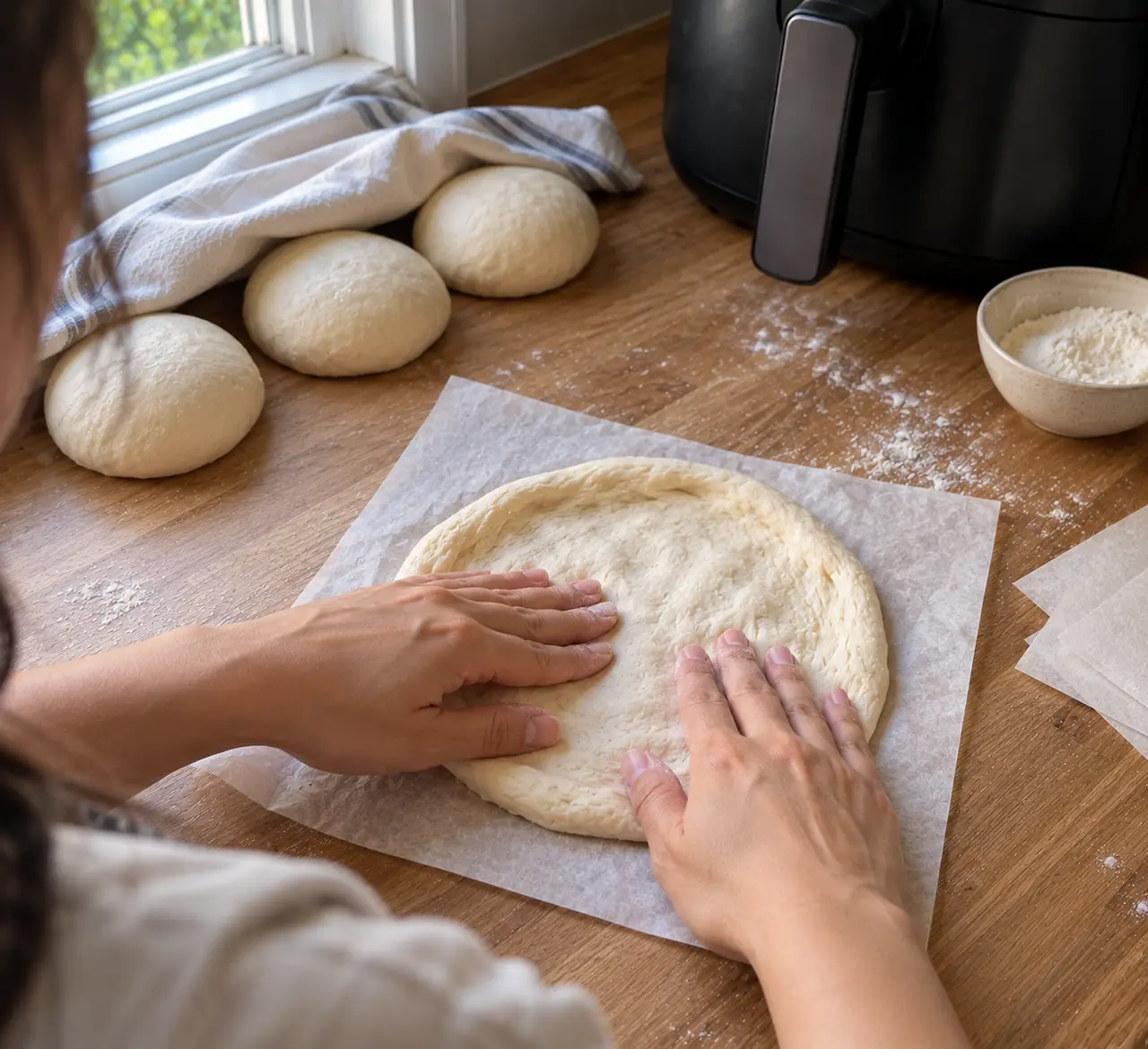
- Thin center, thick rim. Press from the middle outward and leave the outer half inch alone. The untouched rim becomes the puffy edge that makes it look like pizza instead of a topped flatbread.
- Pan pizza option: a 7 inch cake pan turns the same ball into a pan pizza with a fried bottom edge, if the pan fits your machine. Check yours against the pan size calculator before pizza night, not during. Oil the pan generously, press the dough in, and add 2 minutes to the par-bake.
Which dough: four honest options
| Dough | Per pizza | Verdict |
|---|---|---|
| This page's yeast dough | 140g ball | The best crust and the reason to be here. One hour of rising, most of it unattended |
| Store-bought fresh dough ball | Cut a 1 lb ball into 3 | Excellent shortcut. Rest cut pieces 20 minutes at room temperature or they snap back when stretched |
| Two-ingredient yogurt dough | 140g | Self-rising flour plus Greek yogurt, no yeast, no rise. Denser and slightly tangy, ready in 10 minutes, honest weeknight tool |
| Canned pizza dough | A third of the can | Works with the same par-bake. Sweeter and softer than real dough, follows the cold-dough rules of the crescent roll family |
All four take the identical par-bake-then-top sequence. The dough changes; the physics does not. And the fifth option nobody counts: a leftover naan is a pre-baked personal crust that skips the par-bake entirely, sauce it and run the topped stage as written.
How to make it
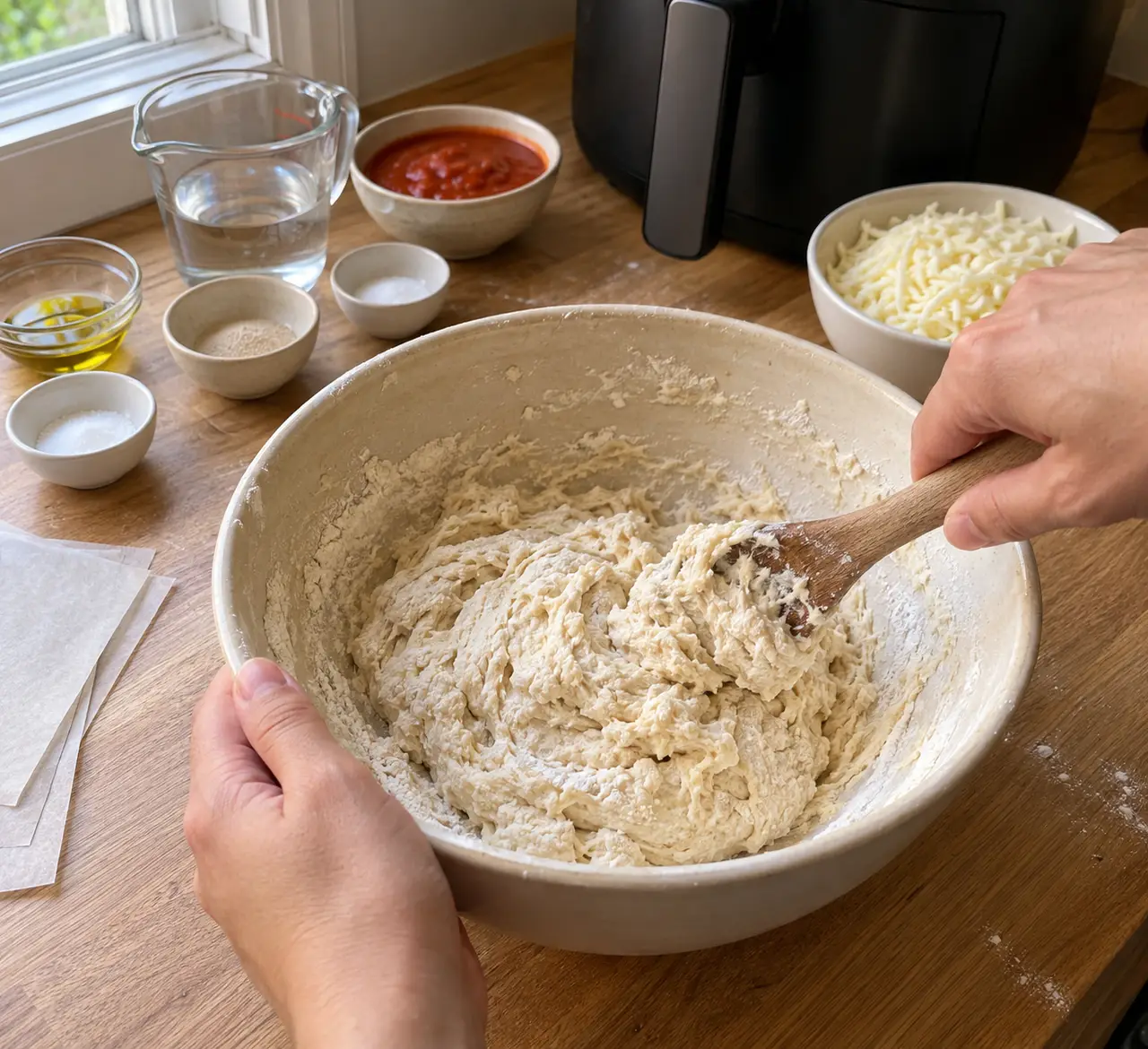
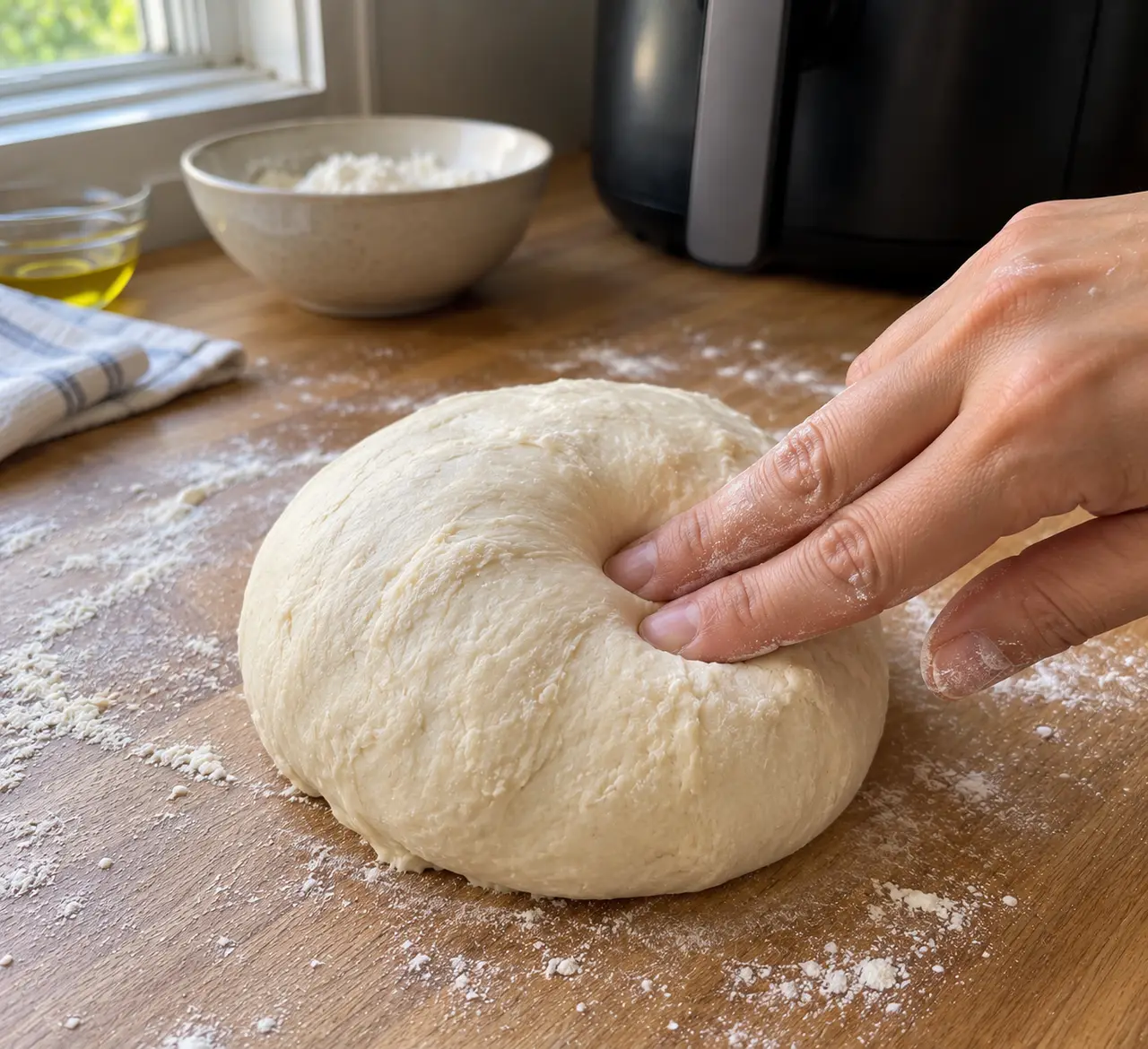
- Make the dough. Stir 2.5 cups flour, 1 teaspoon instant yeast, 1 teaspoon sugar and 1 teaspoon salt, then add 1 cup warm water and 1 tablespoon olive oil. Knead 8 minutes to smooth and elastic. This is a wetter dough than the breadsticks next door, and the tackiness is correct; wet doughs make open, blistered crusts, the same bargain the focaccia strikes.
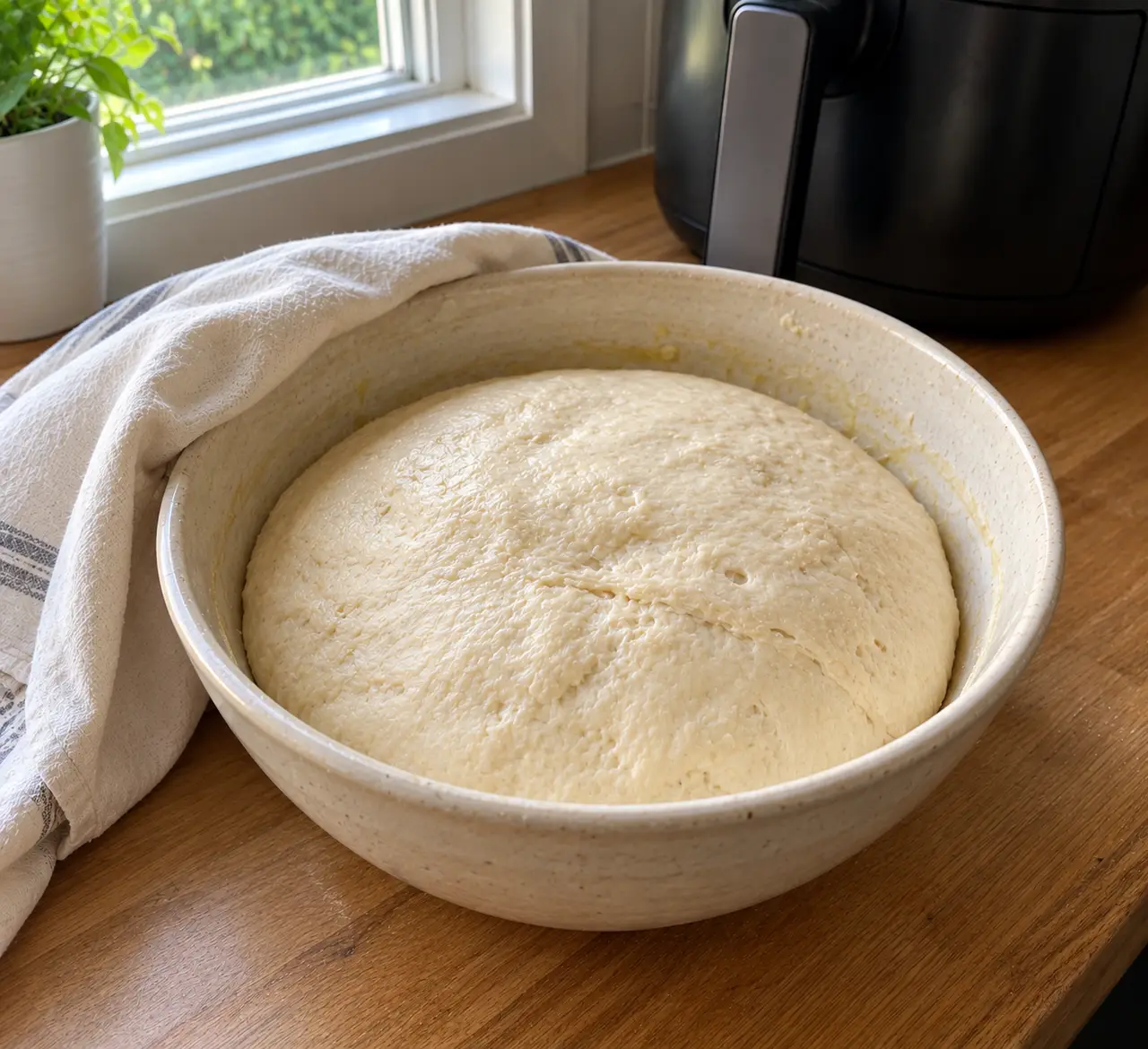
- Rise 1 hour covered, or about 40 minutes in the switched-off air fryer with a mug of just-boiled water beside the bowl, the proof box trick that runs this whole bread shelf.
- Divide into 4 balls, 140g each, and rest 10 minutes so they stretch without fighting back.
- Stretch each ball to 6.5 inches on its own parchment square, pressing from the center outward, leaving the outer half inch untouched for the rim. If it resists, walk away for five minutes; time beats force every time.
- Par-bake naked: lower dough and parchment into the basket, 400°F for 3 minutes. Flip the crust, pull the parchment out, and give it 1 more minute. It comes out rigid, blistered, and barely golden.
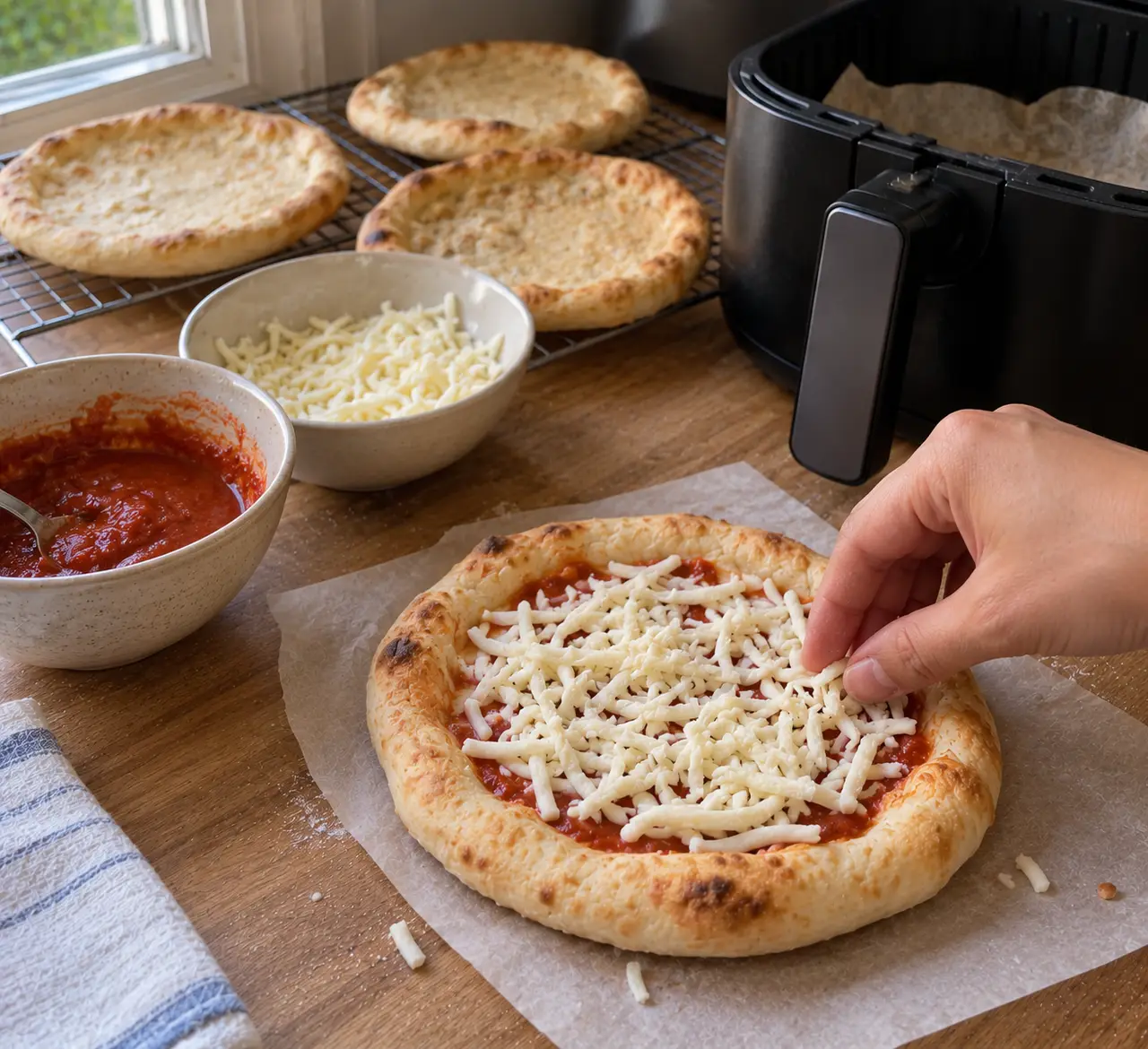
- Dress the raft: 2 tablespoons sauce spread thin, cheese to within a half inch of the edge, and toppings pressed gently into the cheese so the fan cannot claim them.
- Finish at 360°F for 4 to 6 minutes, until the cheese bubbles with brown spots and an instant-read thermometer in the rim says 200°F.
- Rest 2 minutes on a rack before cutting. The molten cheese needs the pause, and the crisp bottom stays crisp on a rack instead of steaming on a plate.
The two-temperature logic
Real pizza ovens run 700°F and home oven recipes call for 475 to 550°F, numbers your air fryer cannot reach. This is the same ceiling problem the naan page hit: the air fryer calculator converts oven recipes faithfully by dropping about 25 degrees, but it cannot convert a demand for heat that does not exist on your dial. The answer here is to split the job in two, and give each half the temperature it actually needs:
| Stage | Temp | Time | Why this number |
|---|---|---|---|
| Naked par-bake | 400°F, the ceiling | 3 min + 1 after flipping | Bread wants maximum heat, and with no cheese aboard there is nothing to burn |
| Topped finish | 360°F | 4 to 6 min | Cheese sits inches from the element; at 400°F it scorches before the sauce warms through |
Hot for the bread, gentler for the cheese. Run both stages at 400°F and you get scorched cheese on warm sauce; run both at 360°F and you get a pale, bready bottom. The split is the recipe. Every number on this site lives in the air fryer baking chart, and this is one of the few pages, with naan and pita, where a real preheat matters: 3 minutes at 400°F before the first crust, because a cold basket spends the whole par-bake catching up. The preheat guide keeps the full list of who preheats and who must not.
Topping rules for a machine with a fan
- Everything gets pressed into the cheese. The cheese is glue. A pepperoni slice resting on top is a pepperoni slice the fan owns; a pepperoni slice pressed in stays put and crisps at the edges.
- No loose leaves during the bake. Fresh basil, arugula, anything papery goes on after the basket opens, restaurant style. During the bake they are confetti.
- Wet toppings get blotted. Fresh mozzarella, pineapple, and jarred anything carry water the short bake cannot evaporate. Pat them dry or accept a damp middle.
- Shredded low-moisture mozzarella is the base layer, and it stops a half inch from the edge, because cheese that slides off the rim welds itself to the basket.
- Heavy hands lose. A 6.5 inch pizza carries a third of the toppings your oven pie does. Overloading steams the raft you just built, the crowding mistake wearing a different hat.
- Garlic lovers: the finishing move from the garlic bread page transfers whole, butter with grated garlic paste brushed on the rim in the last minute. Never raw minced garlic scattered on top, where the element turns it bitter.
The pizza night assembly line
One basket, four pizzas, and nobody waits long if you run it as a pipeline instead of a queue:
- Par-bake all four crusts first, back to back, about 4 minutes each. Stack the finished rafts on a rack. They hold happily for an hour, which means you can do this before anyone is hungry.
- Everyone dresses their own raft while the machine holds at 360°F. This is the step kids believe is the whole recipe, and the step that ends topping arguments forever.
- Finish pizzas one at a time, 4 to 6 minutes each. Eater one is eating while pizza two bakes, exactly how a pizzeria runs it. Second and later pies finish toward the early end on warmed metal.
- Round it out from the same machine: breadsticks or garlic knots from the spare dough if you made a double batch, soft pretzels if the crowd skews younger, and day-old bread becomes salad croutons while the crusts par-bake.
Troubleshooting
| What you got | Why | Fix |
|---|---|---|
| Toppings blew around, or worse | They boarded a raw crust. | Par-bake naked first, press everything into the cheese, loose leaves after the bake. |
| Soggy middle | Too much sauce, wet toppings, or a skipped par-bake. | 2 tablespoons sauce spread thin, blot the wet stuff, never top raw dough. |
| Burnt cheese, pale bottom | Topped stage ran at par-bake heat. | 400°F is for naked crust only; drop to 360°F once dressed. The burning guide covers the element-side logic. |
| Dough snapped back while stretching | Under-rested gluten. | Rest the balls 10 minutes, and any stubborn one 5 more. Time, not force. |
| Crust stuck or tore at the flip | Flipped too early, before the raft set. | Give it the full 3 minutes; it releases from the parchment when it is ready. |
| Giant dough bubble under the toppings | An unpopped par-bake blister. | Fork the palm-sized bubbles at the flip; keep the small ones. |
| Doughy rim on a browned pie | Rim too thick for the short bake, or pulled by looks. | 140g, thin center, and the thermometer call: 200°F in the rim. |
| One side always darker | A machine hot spot. | Rotate the pie half a turn when you add toppings. |
Recurring machine-side mysteries live in the troubleshooting guide. And if your pizza appetite outgrows four singles, the recipe scaler resizes the dough math for a double batch without your having to redo the arithmetic at 5 pm.
Storage and reheating
- The dough holds 3 days in the fridge after the first rise, in oiled zip bags, one ball per bag. Cold, slow-risen dough actually tastes better; this is pizzeria practice, not a compromise. Rest a cold ball 30 minutes before stretching.
- Freeze dough balls 3 months, thawed overnight in the fridge, then treated as cold dough above.
- Par-baked naked crusts are the real meal-prep move: bake all four rafts, cool, freeze flat in a bag for 2 months, and top-and-finish straight from frozen at 360°F, adding 1 to 2 minutes. A homemade frozen pizza with a better crust than the boxed kind.
- Leftover slices reheat at 350°F for 3 to 4 minutes, which re-crisps the bottom the way no microwave ever has. This alone justifies the machine's counter space.
Frequently asked questions
QCan you put raw pizza dough in an air fryer?
Yes, with two rules: the raw dough rides in on a parchment square, because a stretched disc cannot be hand-placed into a basket, and it bakes naked before any toppings go on. Par-bake at 400°F for 4 minutes, flipping at minute 3 and pulling the parchment, then sauce and top the rigid crust and finish at 360°F for 4 to 6 minutes.
QHow long does fresh dough pizza take in an air fryer?
About 9 minutes per personal pizza: a 4 minute naked par-bake at 400°F, a minute to dress it, and 4 to 6 minutes topped at 360°F, done when the cheese bubbles and the rim reads 200°F inside. The dough itself takes an hour of mostly unattended rising, or 10 minutes if you use the no-yeast yogurt version.
QWhy do you par-bake the crust before adding toppings?
Because the fan that makes an air fryer good at crusts will physically move toppings sitting on raw dough, lifting pepperoni into the heating element, and because raw dough under sauce steams instead of baking. Four naked minutes turn the floppy disc into a rigid raft that holds its cargo and browns underneath. It is the single non-negotiable step in air fryer pizza.
QWhat temperature is best for pizza in an air fryer?
Two temperatures, not one: 400°F for the naked crust, where maximum heat builds browning with nothing aboard to burn, then 360°F once topped, because cheese inches from the element scorches at 400°F before the sauce warms. Pizza oven numbers like 475°F and up simply do not exist on an air fryer dial, and the two-stage split is how the machine compensates.
QHow much dough do I need per air fryer pizza?
140 grams, about 5 ounces, stretched to a 6.5 inch round for a standard 5 to 6 quart basket. A store-bought 1 pound dough ball cuts into three pizzas. Heavier balls give you a thick, doughy middle the short bake cannot cook through; lighter ones bake into crackers. A kitchen scale settles it in five seconds.
QWhy is my air fryer pizza soggy in the middle?
Almost always sauce volume. A 6.5 inch pizza on a 5 minute topped bake handles about 2 tablespoons of sauce spread thin; oven quantities have no time to concentrate and soak the center instead. The other culprits are wet toppings that needed blotting, fresh mozzarella especially, and a skipped par-bake, which puts steaming raw dough under everything.
QDo you flip pizza in an air fryer?
Only while the crust is naked. At minute 3 of the par-bake, flip the bare crust and pull the parchment so both faces meet direct heat, which a naked crust with two plain faces can do legally. Once sauce and cheese board, flipping is over forever, and the topped stage runs untouched apart from a half-turn rotation if your machine browns one side faster.
QCan I make air fryer pizza dough without yeast?
Yes. Mix 1 cup self-rising flour with 3/4 cup thick Greek yogurt into a shaggy dough, knead 2 minutes, and use 140g per pizza with the same par-bake sequence. It is denser and faintly tangy compared to yeast dough, but it goes from bowl to pizza in 10 minutes with no rise, which makes it the honest Tuesday option.
QCan I par-bake pizza crusts ahead of time?
Yes, and it is the best make-ahead move on this page. Par-bake the naked crusts, cool them on a rack, and either hold them an hour on the counter for tonight or freeze them flat in a bag for 2 months. Top a frozen raft straight from the freezer and finish at 360°F, adding 1 to 2 minutes. You have built a better frozen pizza than the store sells.
Never overbake again
Get our one-page times & temps cheat sheet, plus a new tested recipe each week.
No spam · unsubscribe anytime