

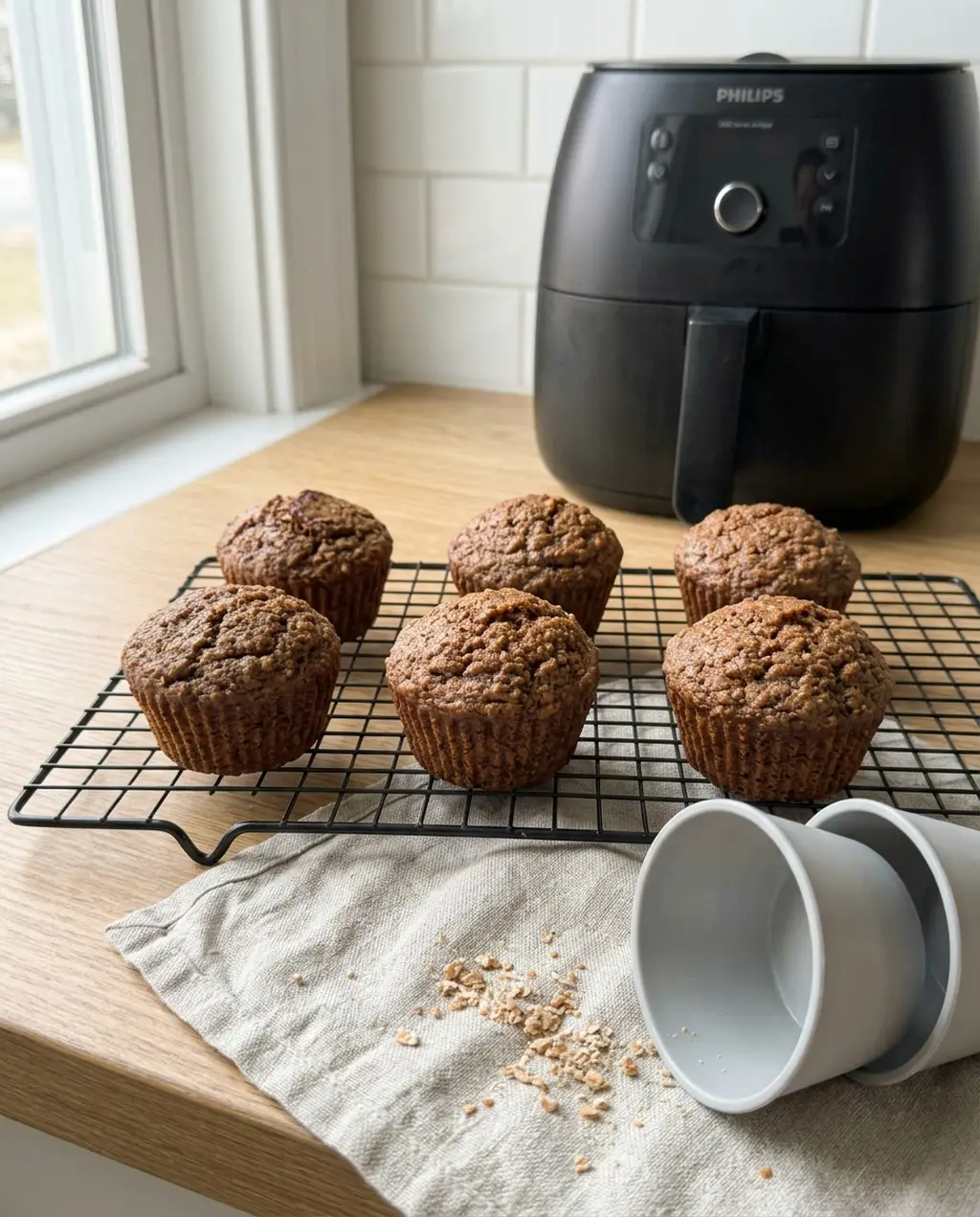
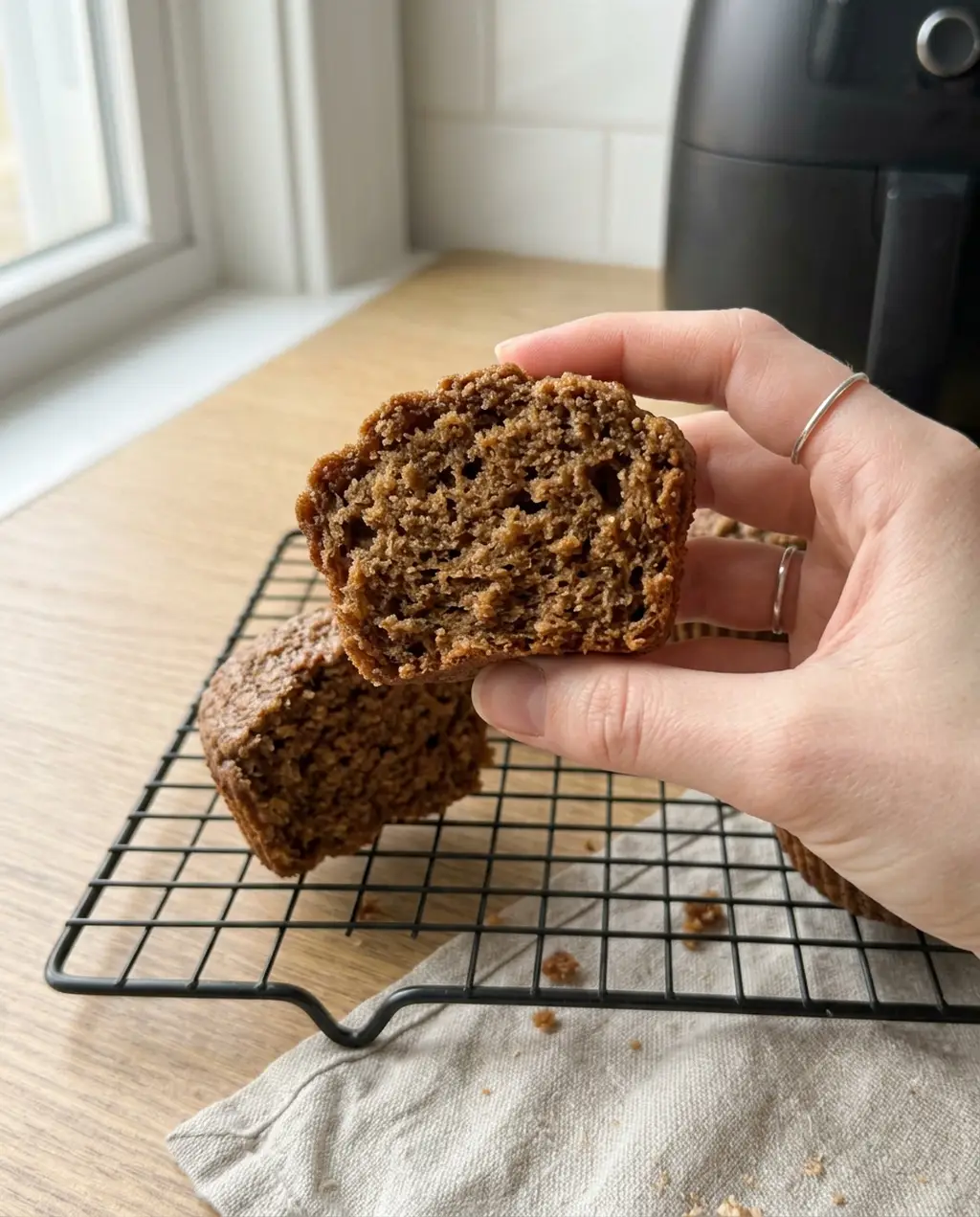
The bran muffin is the only muffin that gets ordered with an apology. People talk about it the way they talk about flossing, and that is entirely the fault of the dense, damp, brown bricks that most recipes produce, the kind that sit in your hand like a regret. It does not have to be that muffin. Made properly, a bran muffin is closer to gingerbread with a spine: dark from molasses, moist for days, coarse in the pleasant way brown bread is coarse, and hearty without ever once being heavy.
The air fryer angle is not a gimmick here, and I will make the case plainly: this recipe was the one that convinced my house the machine had earned its counter space at breakfast. Not because a basket bakes a better muffin than an oven, but because of what it does to the arithmetic of the week, which is covered in the batter section below. First, the physics of the brick.
Quick answer: Stir 1 cup of wheat bran into 1 cup of buttermilk and let it soak 15 minutes before anything else happens. Build the batter, fold instead of stir, and bake in silicone cups at 320°F for 12 to 14 minutes, no preheat, until a toothpick comes out clean and the center reads about 200°F. The batter keeps in the fridge up to 5 days, so you can bake two fresh muffins tomorrow morning in the time the kettle takes.
Why bran muffins bake up dense
Bran is the wheat kernel's overcoat, and it does two things to a batter, both of them rude. First, it is a sponge: dry bran can drink well over half its weight in liquid, and it takes its time doing it. Tip dry bran into a batter and bake immediately, and the bran does its drinking during the bake, pulling moisture out of the crumb around it. The result reads as dry and dense at the same time, which is a strange trick, and every disappointing bran muffin you have eaten pulled it.
Second, bran is sharp. Those little flakes are stiff and edged, and as you stir they physically cut the gluten strands the flour is trying to build, the same reason 100 percent whole wheat bread runs shorter and squatter than white. A little cutting is fine, and it is part of why the texture is tender. But a batter that gets stirred hard, on top of bran that is still rigid because nobody soaked it, ends up with no structure at all, and no structure means no rise, and no rise is a brick.
So the two fixes write themselves: soften the bran before it enters the batter, and handle the flour like it bruises. Neither costs skill. Both cost about fifteen minutes of doing something else while a bowl sits on the counter.
The fifteen-minute soak
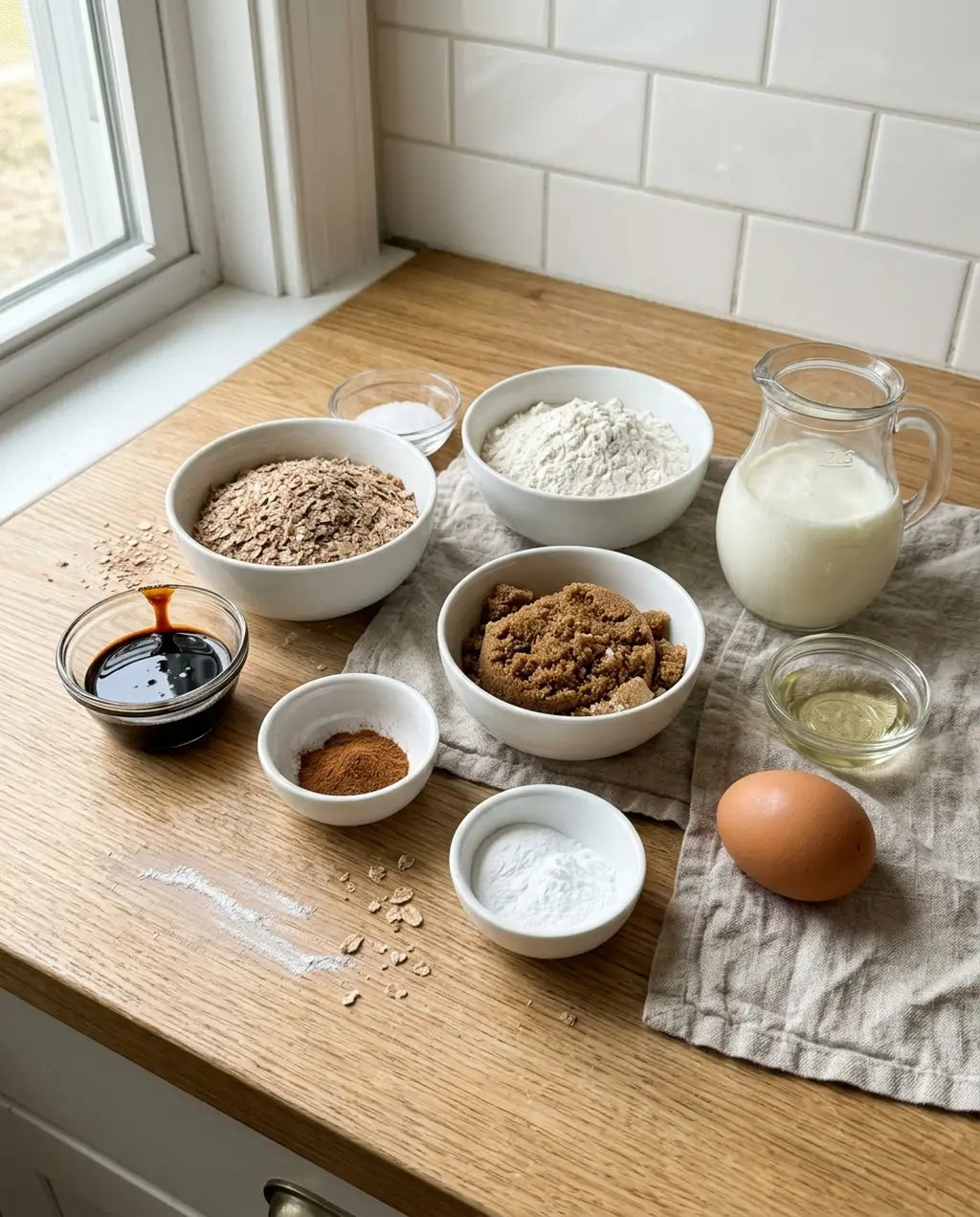
Stir the bran into the buttermilk first, before any other ingredient, and walk away for 15 minutes. It is the same buttermilk soak the lemon poppy seed muffins give their seeds, for the same reason: a dry, hard ingredient behaves once it has had a drink. When you come back it will have thickened into something like a coarse porridge, and that transformation is most of the recipe:
The bran drinks early
Fully hydrated bran has nothing left to steal from the crumb in the basket. The moisture stays where you put it, which is why these keep soft for days.
The edges go soft
Soaked bran bends instead of cutting, so the batter keeps enough gluten to dome. Hearty texture, none of the sawdust.
The acid wakes the soda
Buttermilk's acidity is what the baking soda is waiting for. The pairing gives a taller rise than milk, and the tang stands up to molasses.
No buttermilk in the house? Stir 1 tablespoon of lemon juice or vinegar into a cup of milk and give it 5 minutes. It is the same fix the banana bread leans on, and it works because the acid is the point, not the brand of carton.
Real bran or bran cereal
Recipes are cagey about this, so here it is straight: they are different ingredients that make the same muffin at different settings.
| Bran | Amount | Soak | Verdict |
|---|---|---|---|
| Wheat bran (bagged, near the flour) | 1 cup | 15 min | The best texture and flavor, and the cheapest per batch. This page's default |
| Bran twig cereal (All-Bran, Fiber One) | 1 1/2 cups | 20 min | Works well. Twigs are compressed, so they need the longer soak and bring their own sweetness |
| Bran flake cereal | Skip it | Collapses into papery flecks. Fine in a lunchbox, wrong for this job | |
| Oat bran | 1 cup | 10 min | Softer, milder cousin. Makes a more tender, less brown muffin; reduce the soak |
Whichever you use, the molasses is not negotiable. It is the flavor people remember bran muffins having, it keeps the crumb moist for days, and its bitterness keeps the sugar honest. Swapping it for honey makes a paler, sweeter muffin that tastes like it is missing something, because it is.
Batter that keeps all week
Somewhere in nearly every American family's recipe box is a card for six-week bran muffins: a bucket of batter kept in the refrigerator, baked off a few at a time for weeks. The idea is from an era of church cookbooks, and it survived because it is genuinely brilliant. It also never quite made sense with an oven, because preheating a full-size oven for 25 minutes to bake two muffins is the least efficient act in home cooking.
An air fryer deletes that objection. No preheat, 13 minutes, two cups in the basket while the coffee brews. Which means the old trick finally works the way its inventors imagined: mix once on Sunday, bake fresh every morning. A cold-batter muffin bakes a little less domed than a day-one muffin and takes about a minute longer, and in exchange you get a warm, fresh-baked breakfast on a Wednesday for ninety seconds of effort. I hold my batter 5 days and have never once had it last that long for the right reason.
The classic recipes stretch the batter to six weeks. Chemically the soda does hold on in thick, cold batter, but I will not promise you six weeks of peak muffin; by day 5 mine bake slightly flatter and darker, and that is the honest boundary I will put my name on.
Ingredients
Makes 10 muffins
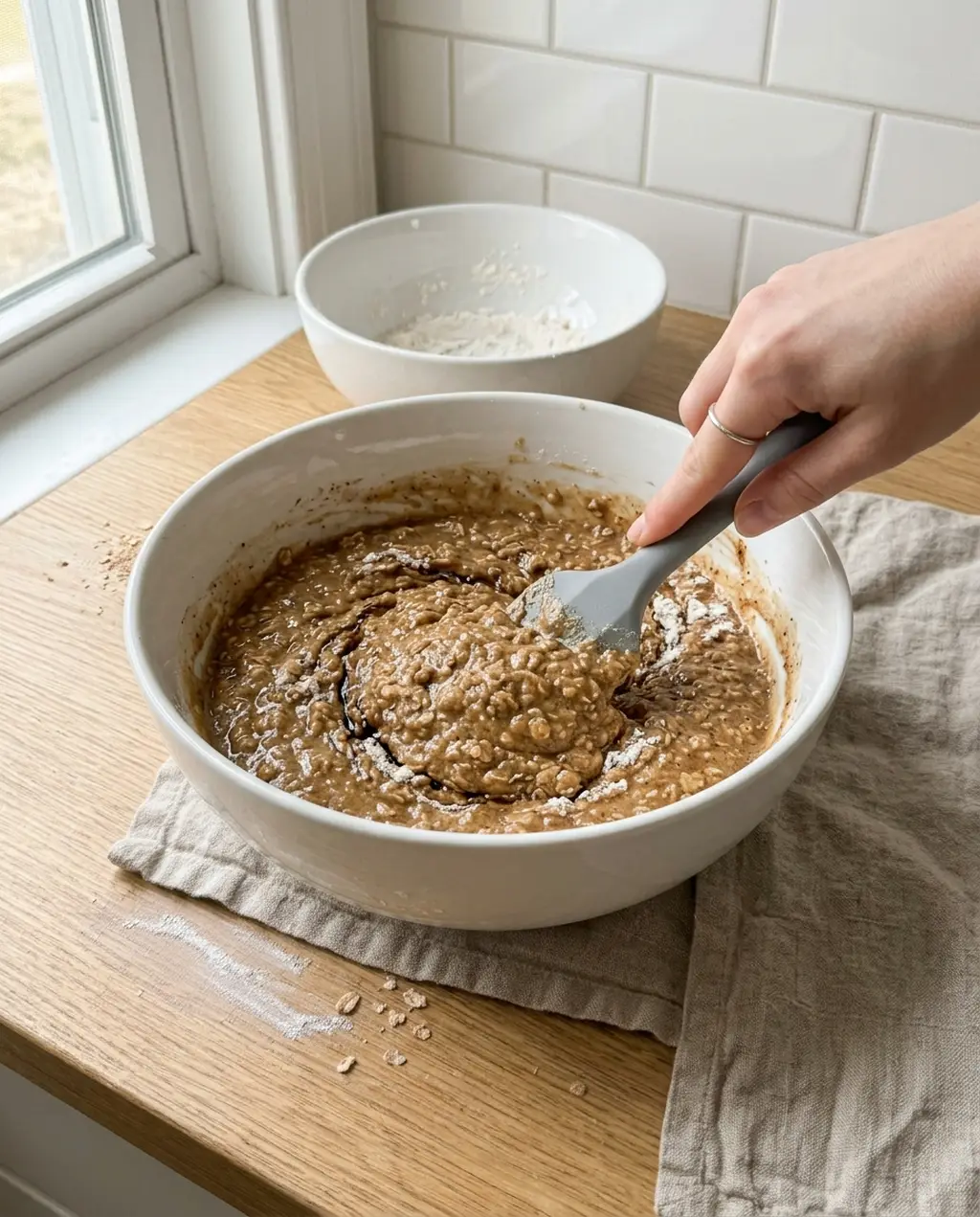
- 1 cup (60g) wheat bran, the loose flaky kind
- 1 cup (240ml) buttermilk
- 1 large egg
- 1/3 cup (113g) molasses
- 1/4 cup (50g) packed brown sugar
- 1/4 cup (60ml) neutral oil
- 1 teaspoon vanilla extract
- 1 cup (125g) all-purpose flour
- 1 teaspoon baking soda, 1/2 teaspoon baking powder
- 1/2 teaspoon fine salt, 1 teaspoon cinnamon
- Optional: 3/4 cup raisins, tossed in flour
Use unsulphured molasses, not blackstrap, which is bitter enough to bully the whole batch. Oil beats butter here: butter's water content firms up a bran crumb as it cools, and these muffins are about staying soft on day three. Add-ins that behave: raisins, chopped dates, walnuts, or a coarse sugar sprinkle on top. Toss fruit in a spoonful of the measured flour so it grips the batter instead of sinking. Want the raisins plump? Our morning glory muffins soak theirs in reclaimed pineapple juice first, and a few minutes in warm buttermilk does the same job here.
How to make them
- Soak first, always: stir the bran into the buttermilk and let it sit 15 minutes, until thick and porridge-like. Use the time to measure everything else.
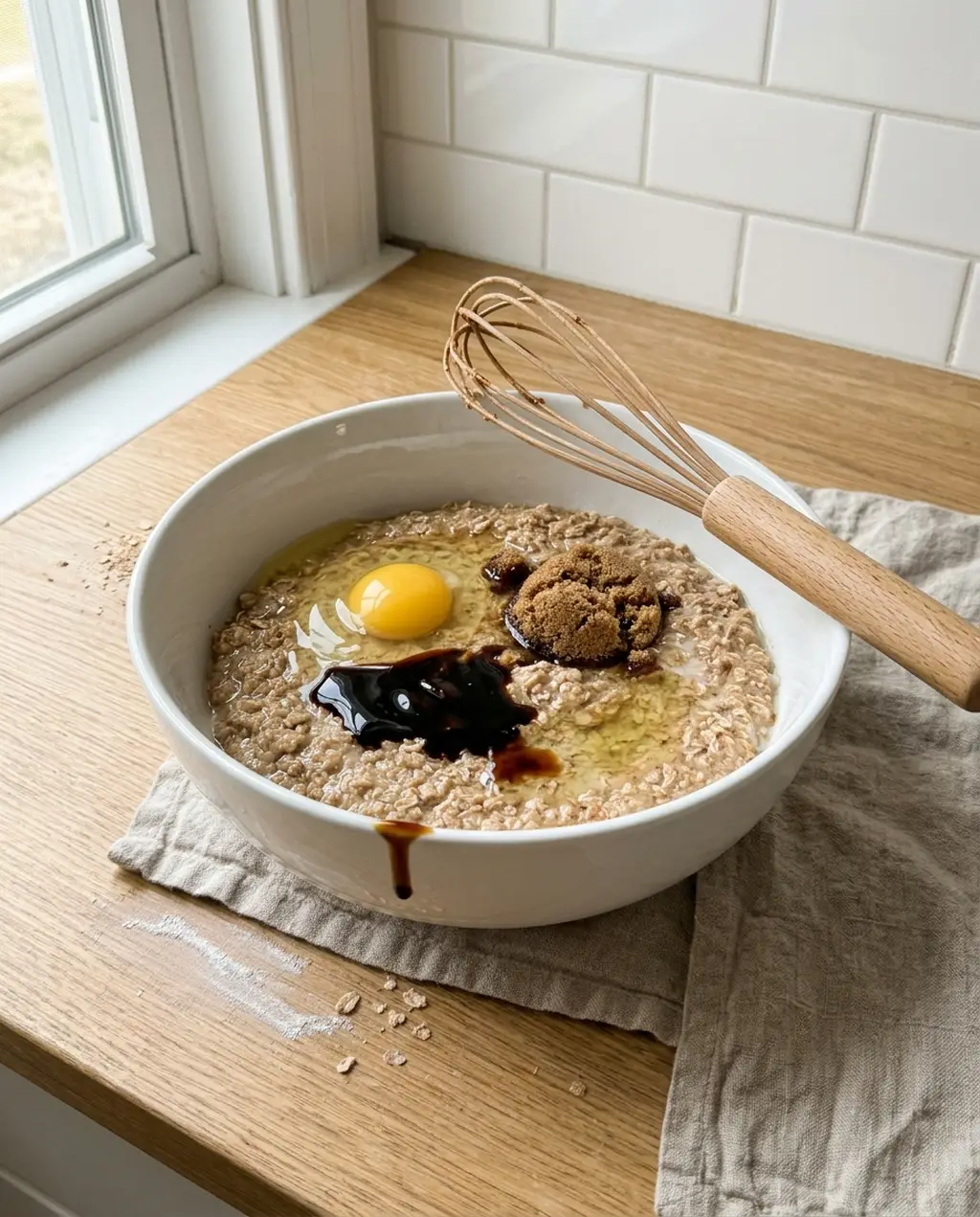
- Build the wet bowl: whisk the egg, molasses, brown sugar, oil and vanilla straight into the soaked bran until even.
- Whisk the dry bowl: flour, baking soda, baking powder, salt and cinnamon, whisked so the leavening is not hiding in one clump.
- Fold, count your strokes. Dry into wet, about 12 folds, stopping the moment no dry streaks remain. Lumps are correct. A smooth bran batter is an overworked bran batter, the same rule that guards every quick bread on this site against baking up dry.
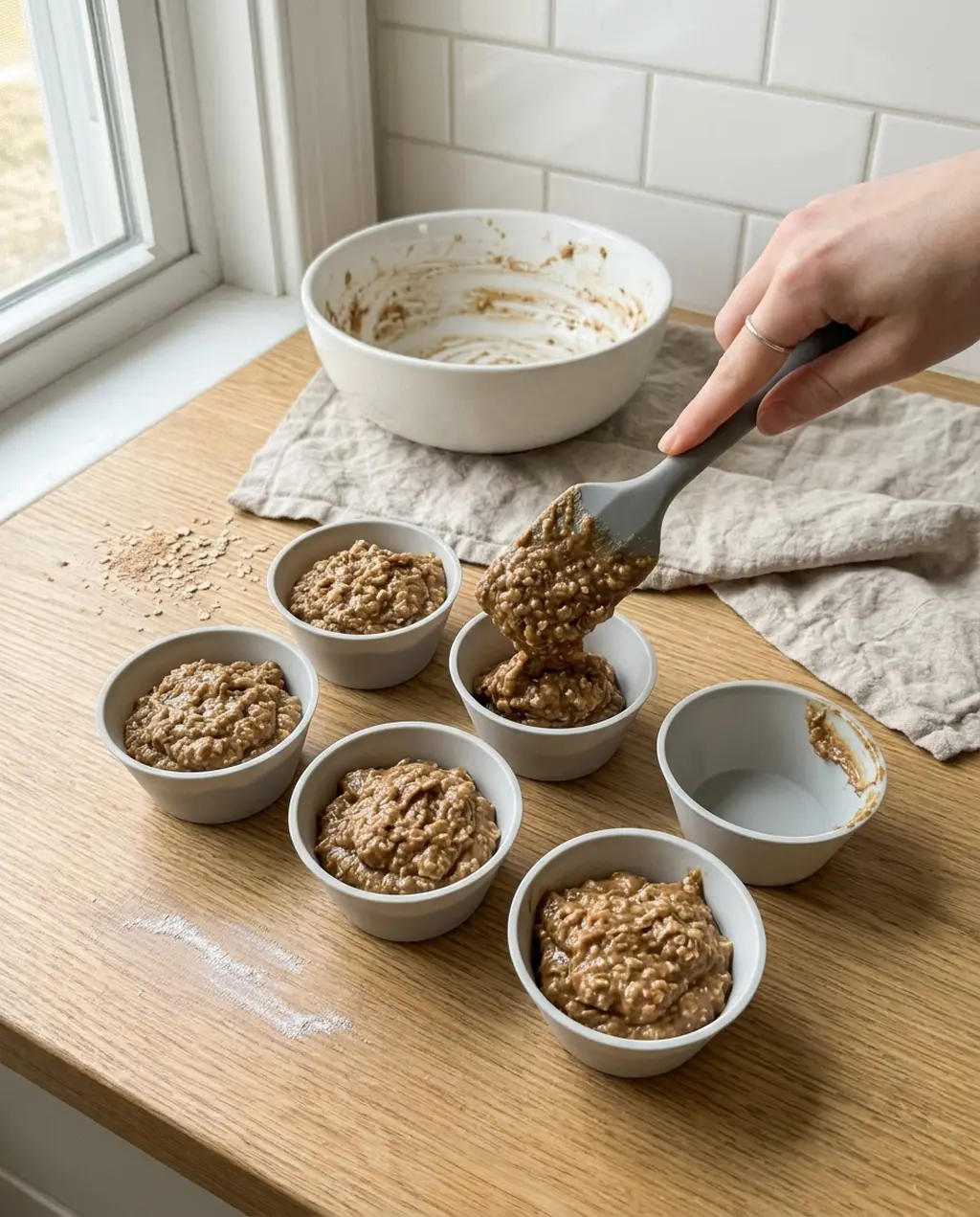
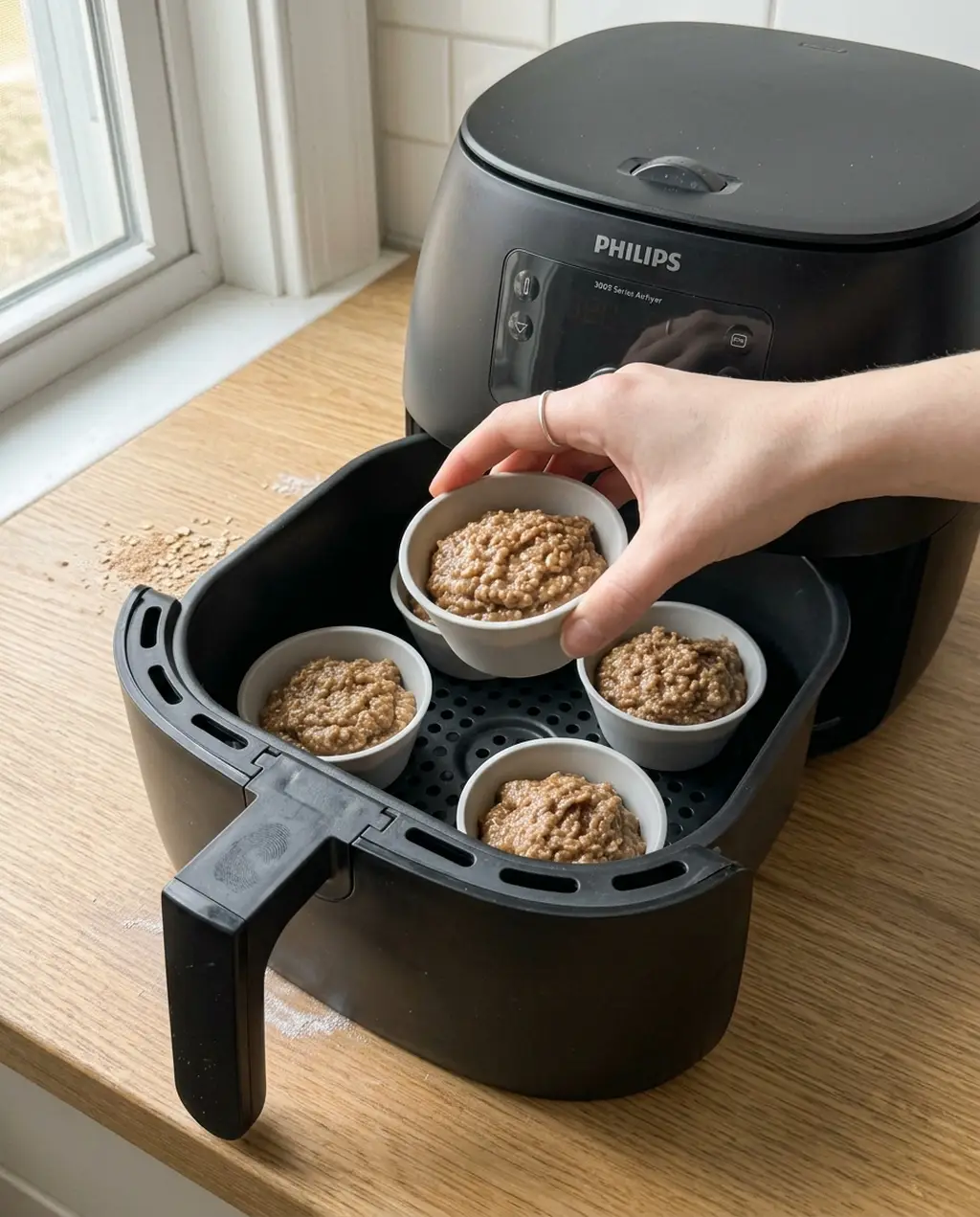
- Fill silicone cups three-quarters full. This batter rises more than it looks like it will. Set 4 to 6 cups in the basket with air between them; crowded cups steam each other's sides pale.
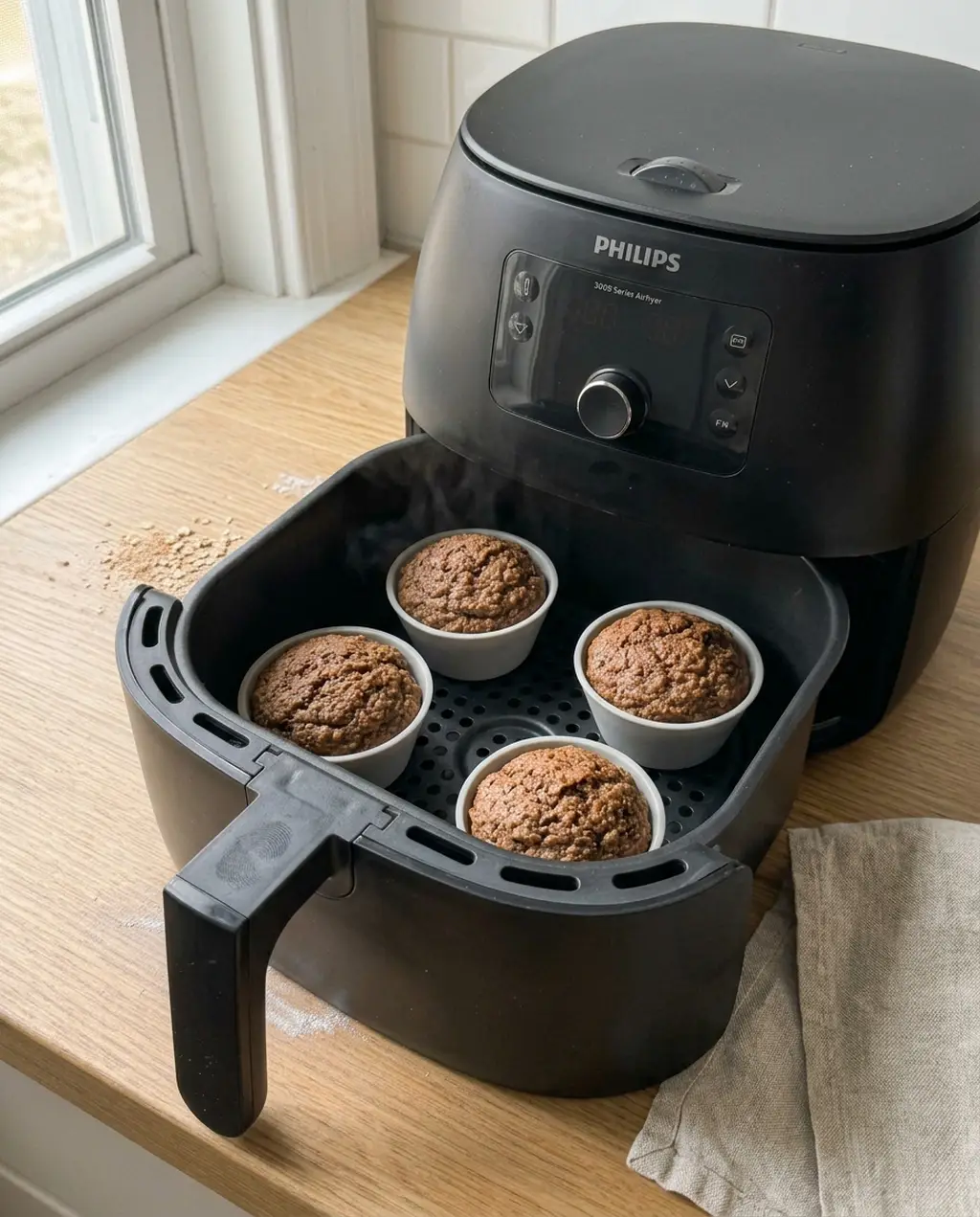
- Air fry at 320°F for 12 to 14 minutes, no preheat. Muffin batter and a cold start get along fine, and skipping the preheat is part of what makes the morning math work; the full ruling is in the preheat guide.
- Call them done by the middle, not the top: domed, springy, toothpick clean, about 200°F in the center on an instant-read thermometer.
- Rest 5 minutes in the cups. Bran keeps drinking as it cools, and a muffin turned out too hot leaves its bottom behind. Then bake the next round; a warm machine runs about a minute faster.
Baking for a crowd or halving for one? The recipe scaler redoes the measurements without the 7 am fractions, and the batch stays 4 to 6 cups per round regardless, so a double batch is simply more rounds.
Cups, liners and batch math
- Silicone cups are the whole infrastructure. They stand upright on the bare basket floor, nothing flies, nothing sticks, and a set costs less than a bag of bran. The care rules live in the silicone molds guide.
- Paper liners alone are a no. Empty paper is a kite in a fan, per the liner rules, and even filled, bare papers bake soggy sides. Want the bakery look? Seat a paper inside each silicone cup.
- A muffin tin is the wrong tool even if one technically fits your basket, because a solid pan blocks the airflow underneath and bakes pale, gummy bottoms. Cups let air own every side.
- Batch math: 4 to 6 cups per round in a 5 to 6 quart basket, 10 muffins total, so plan on two rounds. Round two starts in a warm machine and finishes early; check it at 11 minutes. Baking minis for a lunchbox or jumbos for a bakery case changes the numbers, and mini vs jumbo muffins has the settings for each size.
Doneness
| The signal | What it means |
|---|---|
| Tops domed and dry but the muffin sighs when pressed | 2 more minutes. Molasses batter looks finished before it is |
| Springy dome, toothpick with moist crumbs, 200°F center | Done. Rest 5 minutes in the cups and turn out |
| Toothpick drags wet batter | Not close. 2 minutes, then recheck; do not trust color on a batter this dark |
The center keeps climbing a few degrees after the pull, the usual carryover, which is why 200°F at the probe finishes at a fully set crumb. Underdone bran muffins do not just taste raw; they collapse into gum as they cool, and no amount of extra resting rescues them.
Troubleshooting
| What you got | Why | Fix |
|---|---|---|
| Dense, heavy pucks | Dry bran went straight in, or the batter got stirred smooth. | The 15-minute soak, then 12 folds and hands off. This row is the whole page |
| Dry by day two | Overbaked past clean-toothpick, or the molasses got cut. | Pull at 200°F, keep the molasses, and store airtight; the wider rules are in the dry bakes guide |
| Burnt crowns, wet middles | Baked at an oven-converted 350°F-plus. | 320°F. Molasses browns early and the element is close; chronic scorchers live in the burning guide |
| Flat tops | Old baking soda, or batter stirred after resting. | Soda loses its will after 6 months open; fold cold rested batter once, gently, never a re-stir |
| Raisins on the bottom | They went in naked. | Toss them in a spoonful of the flour first so the batter can grip them |
| Bitter, harsh edge | Blackstrap molasses. | Unsulphured only. Blackstrap is a supplement wearing a syrup label |
| Pale, steamed sides | Cups touching, or a solid pan under them. | Air between cups, cups straight on the basket, two rounds instead of one crowd |
| Stuck to the cups | Turned out hot. | The 5-minute rest is release time; silicone lets go on its own once the steam relaxes |
Mysteries that follow you across recipes belong to the troubleshooting guide, and if you are converting your grandmother's oven card instead of using mine, run her 375°F through the air fryer calculator and it will land you at the same 25-to-30-degree drop this page bakes at.
Storage and reheating
- Counter: 3 days airtight, and thanks to the soak and the molasses they are arguably better on day two, once the flavors settle in.
- Fridge, as batter: the move. Up to 5 days covered; bake cold with 1 extra minute and do not re-stir, just scoop.
- Freezer, baked: 3 months, wrapped once cool. Reheat from frozen at 300°F for 3 to 4 minutes; a 20-second microwave works but returns a damp top the basket does not.
- Revive a day-three muffin at 300°F for 2 minutes and it comes back like round one, the same low-and-brief revival the whole muffin shelf uses.
If this one earns a place in the rotation, its siblings run on the same soak-and-fold logic: the banana muffins are the sweeter crowd-pleaser, the carrot muffins hide a vegetable with more grace, the blueberry muffins show what a rested batter does for a dome, the corn muffins bring the cornbread side of the breakfast table, and the zucchini bread and pumpkin bread take the same quick-bread rules loaf-shaped. Every muffin, donut and scone on the site is gathered on the pastries and morning bakes page, the rest of the lighter table lives in healthy air fryer recipes, and if you are brand new to baking in a basket, start with how to bake in an air fryer before the muffin ambitions scale up.
Frequently asked questions
QHow long do bran muffins take in an air fryer?
12 to 14 minutes at 320°F for standard silicone cups filled three-quarters full, with no preheat. They are done when the tops are domed and springy, a toothpick comes out clean and the center reads about 200°F. Later batches in a warm machine finish about a minute faster, and cold batter straight from the fridge takes about a minute longer.
QWhat temperature do you bake bran muffins at in an air fryer?
320°F. Oven bran muffin recipes run 375 to 400°F, but molasses and brown sugar brown fast, and in a basket the heating element sits inches from the muffin tops. At 350°F and above the crowns darken before the middles set. 320°F lets the center catch up to the crust, which is the whole game with a batter this heavy.
QWhy are my bran muffins dense and heavy?
Almost always one of three things. The bran went in dry, so it drank the batter's moisture in the basket instead of before it; soak it in the buttermilk for 15 minutes first. Or the batter was stirred smooth, which builds gluten; fold about 12 strokes and stop. Or the recipe leans on too much bran for its flour; one cup of each is the ratio that stays light.
QCan I use All-Bran cereal instead of wheat bran?
Yes. Swap in 1 1/2 cups of bran twig cereal such as All-Bran or Fiber One and stretch the soak to 20 minutes, because the twigs are compressed and take longer to soften. Bran flake cereals are the weak option; they collapse into papery flecks and lose the coarse texture that makes a bran muffin worth eating.
QCan bran muffin batter be made ahead?
Yes, and it is the best trick in this recipe. Covered in the fridge, the batter keeps up to 5 days, and the classic refrigerator versions of this idea stretch even further. Bake cold cups straight from the bowl with about 1 extra minute. Two fresh muffins in the basket each morning beats a dozen going stale on the counter.
QCan you use paper muffin liners in an air fryer?
Not on their own. An empty or lightly loaded paper liner is a kite in the fan and ends up against the element. Batter-filled papers stay put but bake soggy sides. Silicone cups are the right tool: they stand up on the bare basket, release cleanly and last for years. If you like the look of papers, seat one inside each silicone cup.
QAre bran muffins healthy?
Healthier than most muffins, honestly framed. Each one carries about 3g of fiber from real wheat bran plus a short ingredient list you control, and at about 175 calories it is a reasonable breakfast. It is still a muffin: the molasses and brown sugar that make it taste good are sugar. Cutting the sugar below what is written costs texture as well as sweetness, because sugar holds moisture.
QHow do you know when a bran muffin is done?
Trust the thermometer over the clock: about 200°F in the center of a middle muffin, or a toothpick with moist crumbs but no wet batter. The tops on a dark molasses batter look done early, which is the trap. Underbaked bran muffins collapse into gummy pucks as they cool, so when in doubt give them one more minute.
QCan you freeze bran muffins?
Yes, better than most muffins, because all that soaked bran holds moisture through the freeze. Cool completely, freeze on a tray, then bag for up to 3 months. Reheat straight from frozen at 300°F for 3 to 4 minutes and they come back soft in the middle with a lightly re-crisped top. The batter-in-the-fridge route still beats reheating if you are eating them within the week.
Never overbake again
Get our one-page times & temps cheat sheet, plus a new tested recipe each week.
No spam · unsubscribe anytime