

Pumpkin is a water delivery system
Our pumpkin bread page states the fact plainly: pumpkin puree is roughly 90 percent water, wetter than mashed banana, and every pumpkin bake on this site is really a plan for where that water goes. A deep loaf can absorb it across a 32 minute bake. A muffin cannot; the bake is half as long, the cups are small, and free liquid that the flour never absorbs pools toward the center and sets into the dense, damp band that gets pumpkin muffins called gummy. Worse, the amount of free water varies by brand and even by can, which is why the same recipe works one week and fails the next.
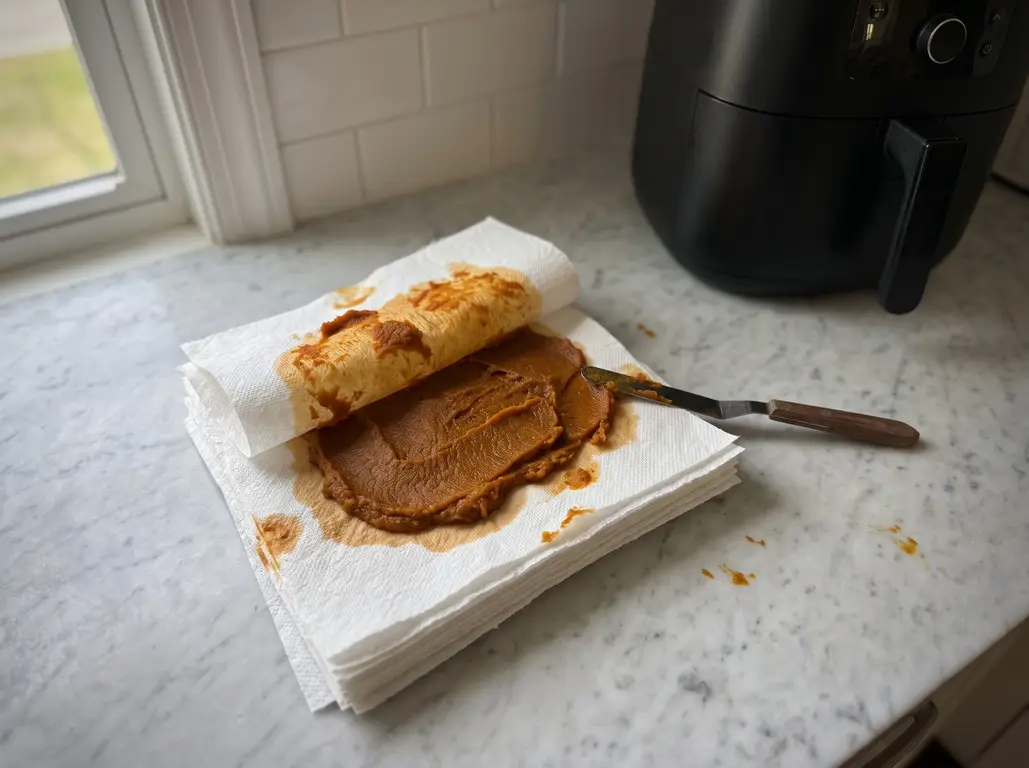
The fix costs ten unattended minutes: blot the puree. Spread it half an inch thick on a triple layer of paper towels, press another layer on top, and walk away while you measure the dry ingredients. The towels pull out the loose water and leave the pumpkin solids, flavor and color behind, and the batter that gets built on blotted puree bakes through in the muffin's short window. It is the same discipline the muffin shelf already runs on wetter passengers, the pressed pineapple in the morning glory muffins and the wrung squash in the zucchini bread, pointed at the one vegetable everyone assumes is ready straight from the can.
The two cans, and the one to buy
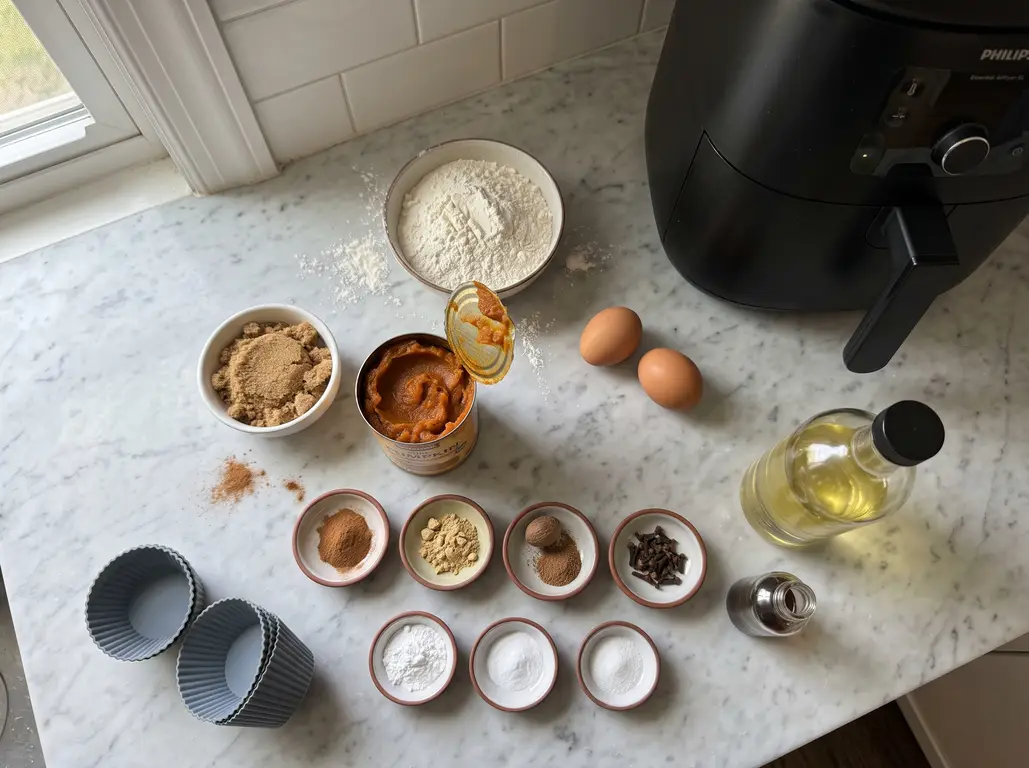
The canned aisle sets a small trap: pumpkin puree and pumpkin pie filling sit side by side in nearly identical cans. Puree is one ingredient, cooked pumpkin. Pie filling is pumpkin plus syrup, salt and spices, pre-sweetened for a pie recipe from the label's back panel, and stirred into this batter it doubles the sugar and adds liquid no blot can chase. The can you want says 100 percent pure pumpkin. Fresh roasted pumpkin is a lovely upgrade with one extra step, an hour in a towel-lined sieve before the blot, the same treatment the pumpkin pie prescribes, because home puree runs looser than the factory kind.
Real spice, not just cinnamon
Pumpkin itself is mild; the flavor everyone calls pumpkin is mostly the spices riding with it, which is why skimping there produces an orange muffin that tastes beige. This recipe blooms nothing and hides nothing: cinnamon forward, backed by ginger, nutmeg and a strict eighth teaspoon of cloves, which is the blend where each spice registers and none of them shouts. Two teaspoons of store-bought pumpkin pie spice substitute cleanly if the cabinet is bare. Brown sugar does the rest of the flavor work, and oil rather than butter keeps the crumb moist into day three, the same day-two insurance the chocolate chip muffins carry for the same reason.
Cups, the rest, and the crackle top
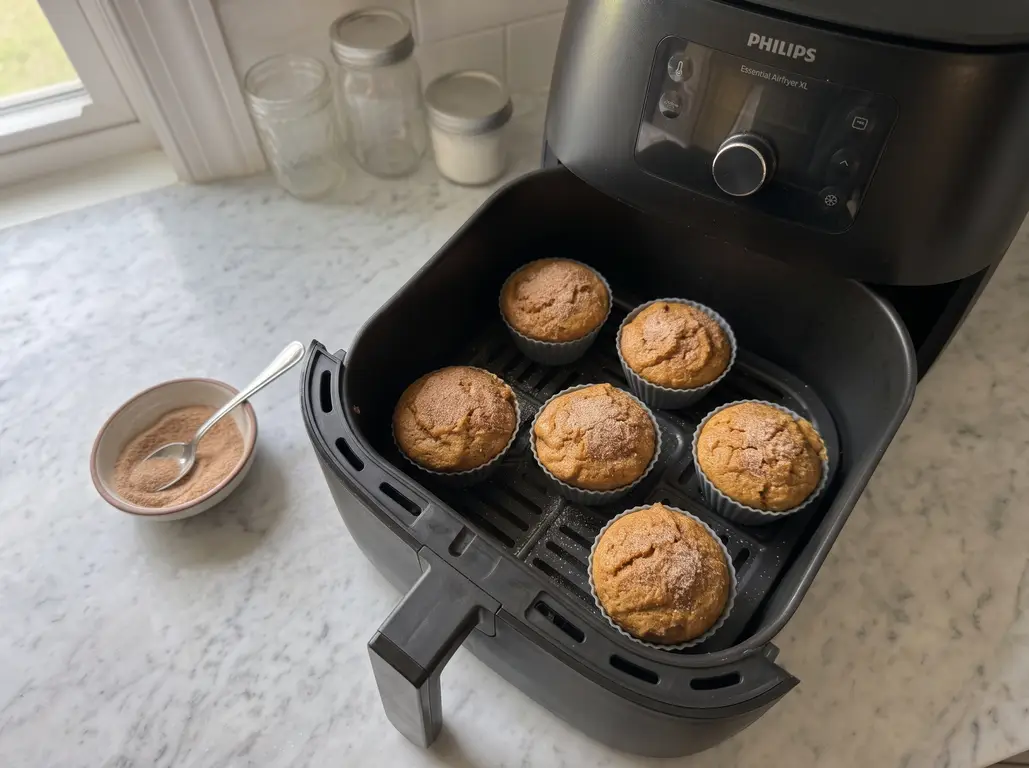
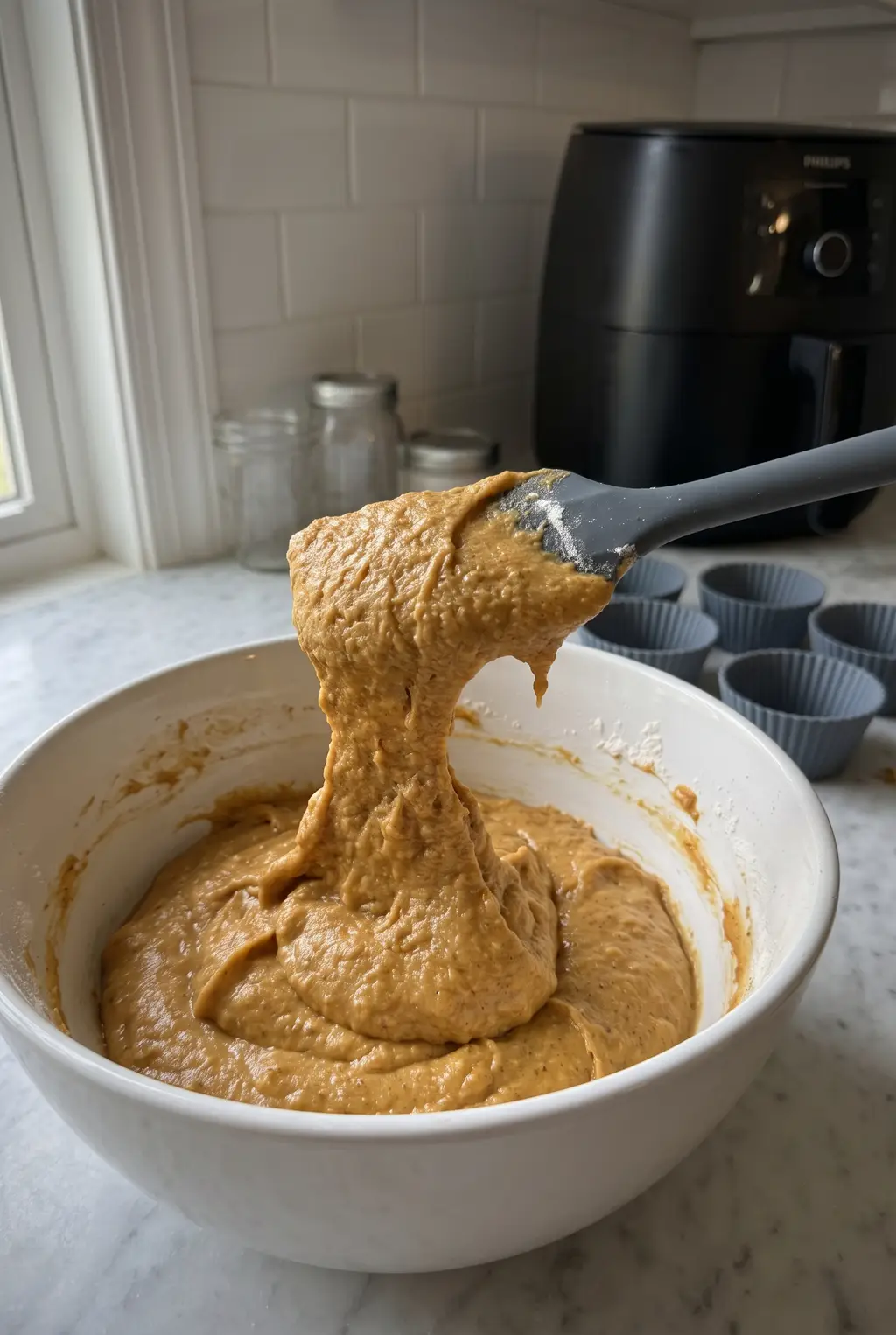
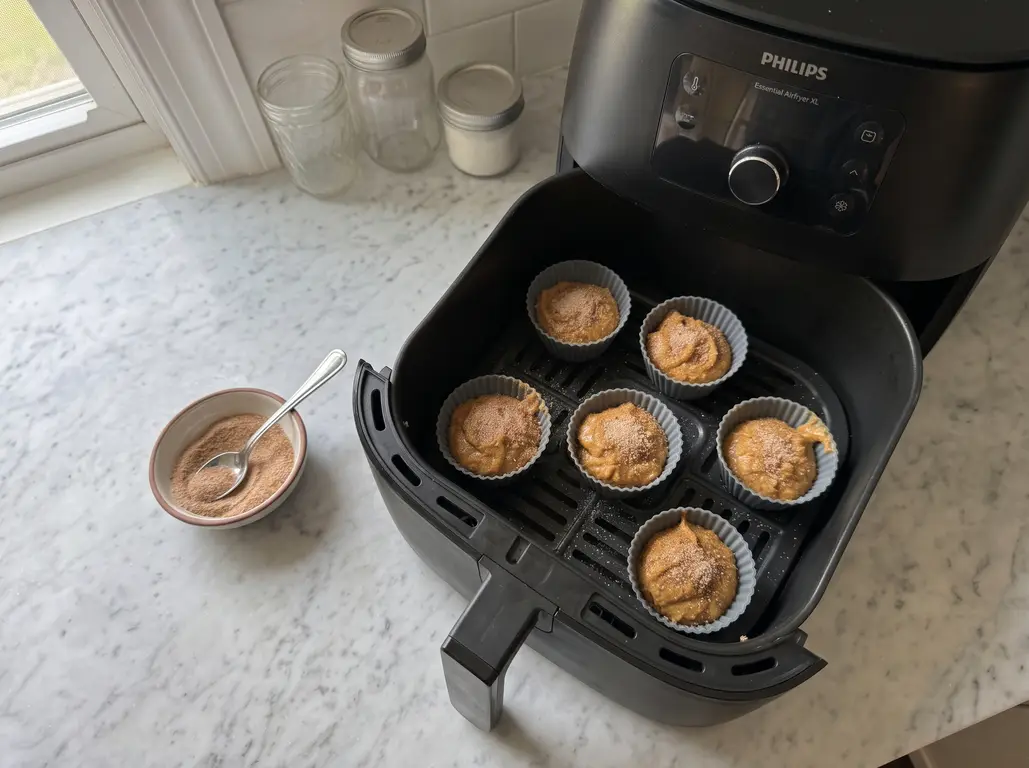
The mechanics are the house muffin method, unchanged. Freestanding silicone cups, six at a time, directly on the basket floor; paper cases alone slump under a heavy batter in the fan, and a metal tin blocks the airflow the machine cooks with, the full physics live in the silicone molds guide. Fold to the last streak of flour and stop, then rest the batter 15 minutes while the machine preheats; the flour hydrates, the batter thickens, and the crowns bake noticeably taller, the same rest the blueberry muffins built their domes on. Last, the topping: a generous sprinkle of cinnamon sugar on each raw top bakes into a thin, crackly lid that does what a glaze would without the wait. Fill three-quarters, no further; a wet batter climbs modestly, and the sugar top needs a rim to stop against.
Done is 200°F, not a toothpick
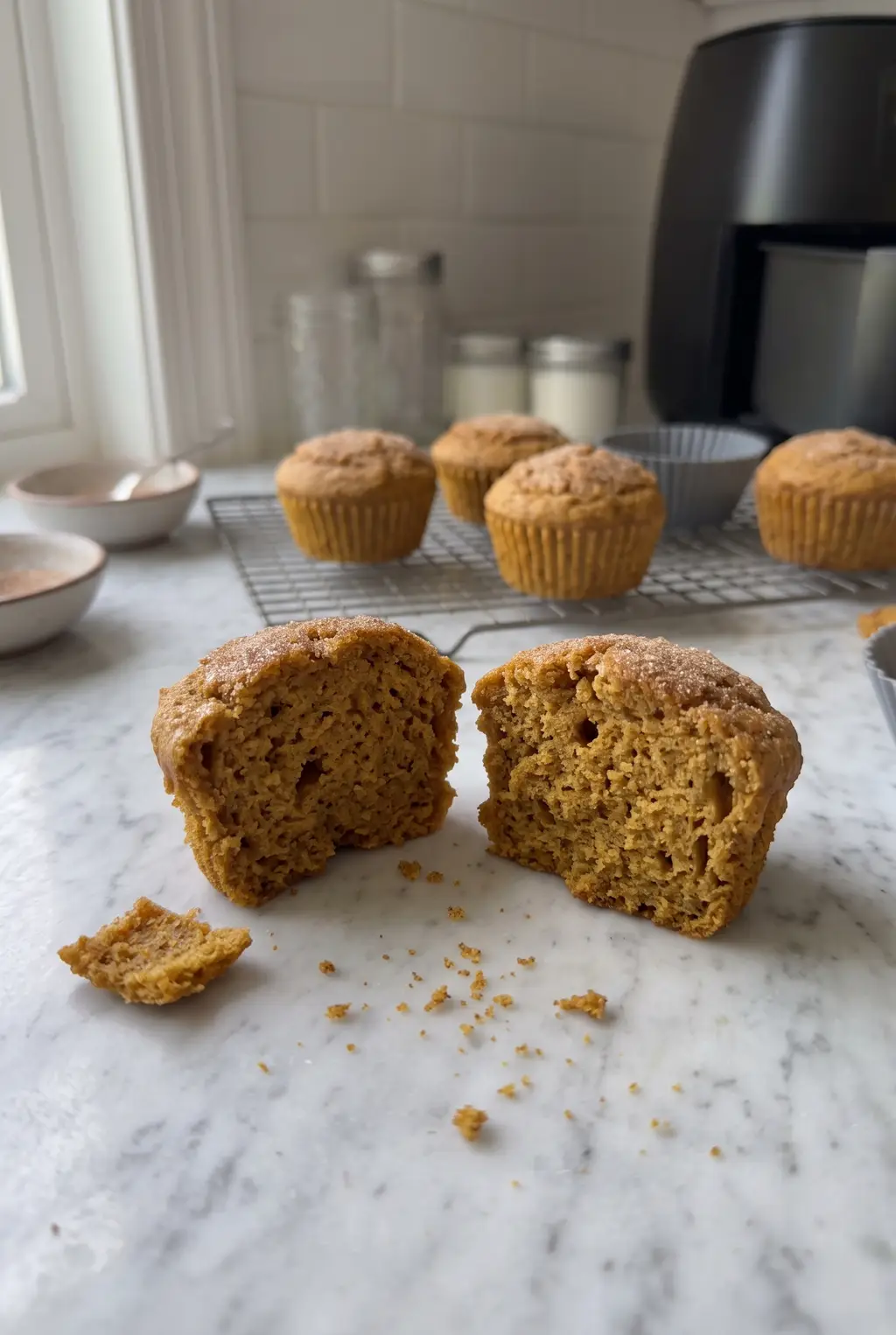
The toothpick test fails this muffin in the expensive direction. A pick pushed through moist pumpkin crumb comes out damp even when the muffin is fully baked, so the baker adds minutes, the edges dry out, the top goes past amber, and the verdict is still called gummy, when the only gummy thing was the evidence. The reliable reading is 200 to 205°F on a thermometer in the center of the middle muffin, the same number the banana muffins and the whole wet-batter shelf finish at. Corroborate with the spring test, a dome that refills immediately after a gentle press, and with your nose: done pumpkin muffins smell like spice, underdone ones still smell like batter. At 320°F the number arrives in 14 to 16 minutes; oven recipes at 375 would convert to about 350 through the air fryer calculator, and the last step down is the wet-batter tax recorded across the baking chart.
Ingredients
For 12 muffins
- 1 cup canned pumpkin puree, not pie filling, blotted (see step 1)
- 1 3/4 cups (219g) all-purpose flour
- 2 teaspoons baking powder and 1/2 teaspoon baking soda
- 1/2 teaspoon fine salt
- 1 1/2 teaspoons cinnamon, 1/2 teaspoon ground ginger, 1/4 teaspoon nutmeg, 1/8 teaspoon cloves
- 2 large eggs
- 3/4 cup (150g) packed brown sugar
- 1/2 cup (120ml) neutral oil
- 1 teaspoon vanilla extract
- Topping: 2 tablespoons granulated sugar mixed with 1/2 teaspoon cinnamon
- 12 silicone baking cups
One 15 ounce can holds nearly 2 cups, so a single can covers this recipe with enough left for a batch of pumpkin cookies, which take half a cup. Measure the cup after blotting, not before.
How to make them
- Spread the pumpkin puree about half an inch thick on a triple layer of paper towels, press a second layer on top, and let it sit 10 minutes while you measure everything else. Peel it off with a spatula; a surprising amount of water stays behind.
- Whisk the flour, baking powder, baking soda, salt and spices in a large bowl.
- In a second bowl, whisk the eggs, brown sugar, oil and vanilla until smooth and glossy, then whisk in the blotted pumpkin.
- Fold the wet into the dry just until the last streak of flour disappears, and not one turn further. Rest the batter 15 minutes; it thickens visibly while the air fryer preheats at 320F for 3 minutes.
- Fill 6 silicone cups three-quarters full, set them on the basket floor with air between them, and sprinkle the tops generously with the cinnamon sugar.
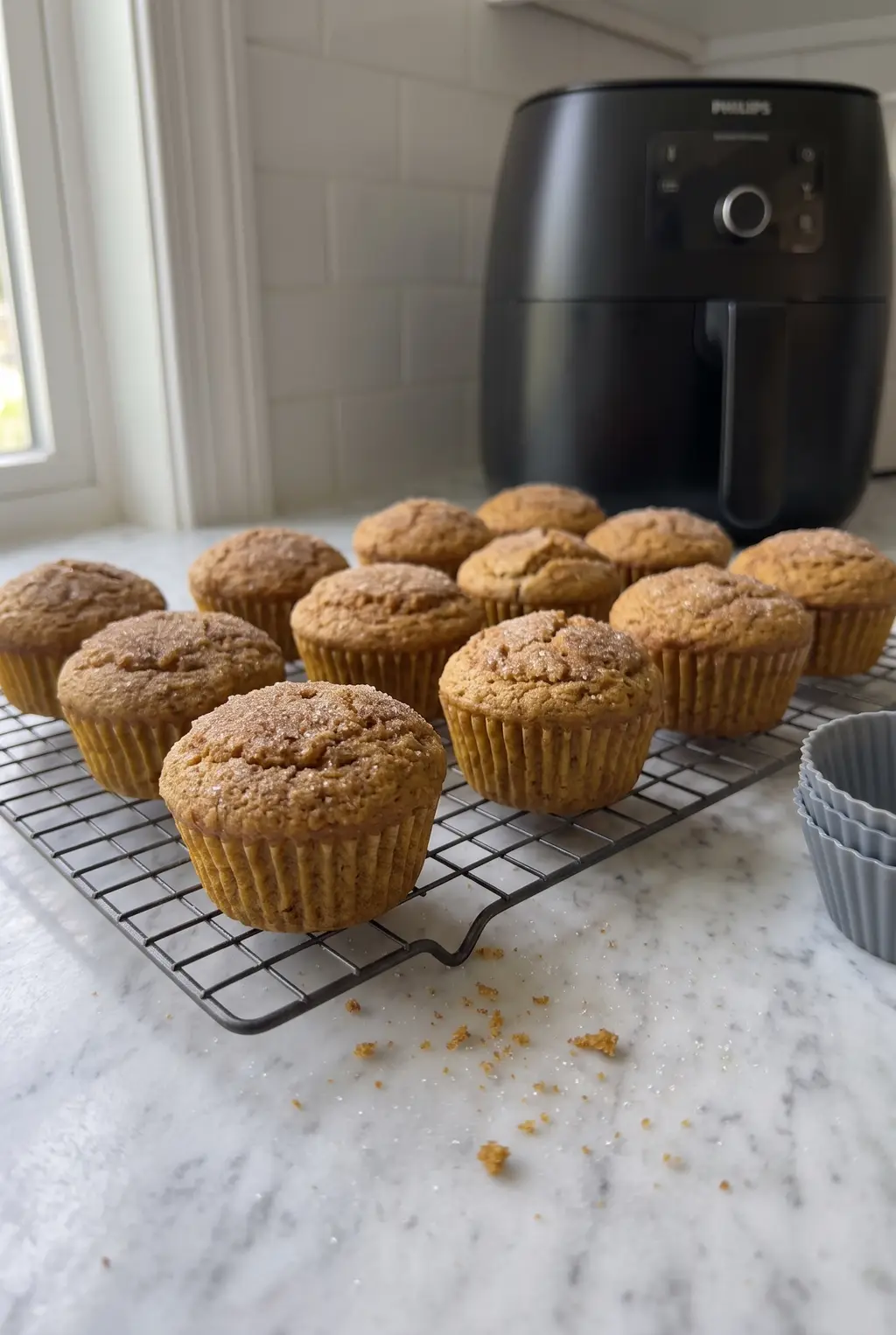
- Air fry at 320F for 14 to 16 minutes, until the domes are deep amber-gold and spring back from a gentle press.
- Confirm 200 to 205F on a thermometer in the center of the middle muffin; on this batter the toothpick is not a reliable witness.
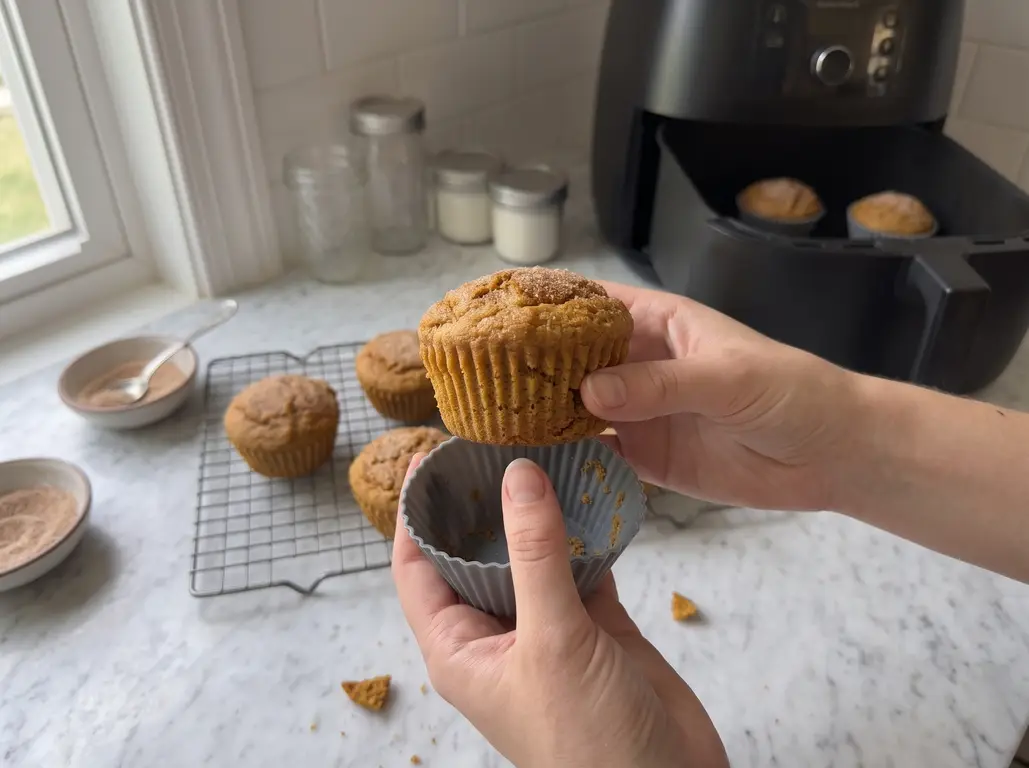
- Cool the cups 5 minutes, push the muffins out from underneath, and bake the second batch about a minute shorter in the already-warm machine.
The 2-ingredient cake mix version, honestly
The recipe half the internet ranks for this keyword is a can of pumpkin stirred into a box of spice cake mix, and no honest pumpkin muffin page pretends it does not exist. It works, and it is a different muffin: the puree stands in for the eggs and oil the box expected, so the crumb lands dense and fudgy rather than fluffy, closer to a snack cake, and children file no complaints. Run it in the basket at 320°F for 12 to 15 minutes in silicone cups, to the same 200°F center, and skip the blot; the hack needs all of the can's moisture to wet the dry mix. The rest of the boxed-mix rules, the rest, the fill line and the brand quirks, live on the boxed muffin mix page. The scratch recipe above costs about twelve more minutes of work and repays them in crumb; the box costs a can opener.
Variations
- Chocolate chip: 3/4 cup folded in with the last strokes. Pumpkin and chocolate is the argument nobody loses.
- Streusel top: swap the cinnamon sugar for a rubbed crumb of 3 tablespoons each flour and brown sugar with 1 1/2 tablespoons cold butter. At 320°F it toasts instead of scorching.
- Pepitas: a scatter of raw pumpkin seeds pressed onto the sugared tops, where they roast in place.
- Cream cheese ribbon: a scant teaspoon of sweetened cream cheese swirled into each cup, the shortcut cousin of the danish filling from the cheese danish.
- Mini muffins: 310°F for 8 to 10 minutes, per the size rules in mini vs jumbo muffins.
- Doubling for a crowd: the recipe scaler handles the math; the baking still happens six cups at a time.
Fixing what goes wrong
| Problem | Cause | Fix |
|---|---|---|
| Gummy, damp center band | Unblotted puree, or pulled by toothpick verdicts | The 10 minute blot, and 200°F on a thermometer |
| Dry edges, still called raw | Extra minutes chasing a clean toothpick | The pick reads wet on done pumpkin crumb; trust the number |
| Tops browned before the middle set | 350°F on a sugared, wet batter | 320°F, the wet-batter lane; the burning guide covers hot-running machines |
| Muffins taste flat | Spice skimped, or old jars | The full four-spice blend, and cloves that still smell like cloves |
| Sticky, over-sweet, dark muffins | Pie filling instead of puree | 100 percent pure pumpkin, one ingredient on the label |
| Flat tops | Skipped the 15 minute rest, or thin unblotted batter | The rest thickens, the blot firms; both are dome fuel |
| Paper cases slumped sideways | Paper alone in a fan | Silicone cups, with paper liners inside if you want the look; deeper mysteries live in the troubleshooting guide |
Storage and freezing
Pumpkin muffins exhale moisture as they sit, more than any muffin on this shelf except the morning glory, so the storage trick is a paper towel under and over them in the airtight container, swapped if it dampens. Three days at room temperature, and genuinely better on day two once the spices settle in. Frozen, they are the fall breakfast program: wrapped individually they keep 3 months and revive at 300°F for 4 to 5 minutes in the basket, crackle top included. If your bakes trend dry before day two regardless of recipe, the machine-side suspects are in how to avoid dry air fryer bakes, and the pumpkin shelf continues one door over with the pumpkin bread, the pumpkin pie and the pumpkin cheesecake. Every other muffin on the site is on the pastries and morning bakes page.
Frequently asked questions
QWhat temperature do you bake pumpkin muffins in an air fryer?
320°F for 14 to 16 minutes, six silicone cups at a time in a basket preheated 3 minutes, until a thermometer reads 200 to 205°F in the center muffin. The recipes running 350°F inherit that number from ovens, and in a basket it browns the sugared tops minutes before the wet middle sets. 320°F is the lane every heavy, wet batter on this site's muffin shelf drives in, and the second batch runs about a minute faster in the warm machine.
QWhy are my pumpkin muffins gummy or wet in the middle?
Water, from two directions. Pumpkin puree is roughly 90 percent water and varies by brand, so an unblotted cup can carry several extra tablespoons of liquid the flour never absorbs; ten minutes pressed between paper towels removes it before it can become pudding. The second direction is the clock: a toothpick dragged through moist pumpkin crumb reads wet even when the muffin is done, so bakers keep adding minutes, dry the edges, and still call the center raw. Bake to 200°F on a thermometer instead.
QCan I use pumpkin pie filling instead of pumpkin puree?
No, and the two cans are neighbors on purpose, which is the trap. Puree is nothing but cooked pumpkin; pie filling is pumpkin plus syrup, spices and salt, already sweetened for a different recipe. Use it here and the batter carries double sugar and unknowable extra liquid, which bakes into a sticky, over-browned muffin no adjustment can rescue. The label to look for says 100 percent pure pumpkin, one ingredient.
QHow do I make the 2-ingredient cake mix pumpkin muffins in an air fryer?
Stir one 15 ounce can of pumpkin puree into one box of spice cake mix, nothing else, and bake in silicone cups at 320°F for 12 to 15 minutes to a 200°F center. It is a real shortcut and an honest trade: the crumb lands dense and fudgy rather than fluffy, because the puree replaces the eggs and oil the box expected. Skip the blot for this version; the hack needs every drop of the can's moisture to wet the mix.
QCan I use paper liners instead of silicone cups?
Not alone. This batter is heavy with puree, and a freestanding paper case slumps sideways under it in the fan before the crumb sets. Silicone cups hold the shape, survive the airflow, and release with one push from underneath after a 5 minute cool; if you want the bakery look, drop a paper liner inside each silicone cup and it rides along legally. A metal muffin tin is the worst option in a basket, because it blocks the airflow underneath that the machine cooks with.
QCan I use fresh pumpkin instead of canned?
Yes, with one extra discipline. Roast and mash a sugar pumpkin, then drain the puree in a towel-lined sieve for an hour, the same treatment our pumpkin pie gives fresh puree, because home-roasted pumpkin runs looser and wetter than the canned kind. After the drain, blot and measure exactly as written. Fresh tastes a shade brighter; canned is more consistent batch to batch, which is why it is the default here.
QHow do you store pumpkin muffins, and do they freeze?
Airtight at room temperature for 3 days with a paper towel under and over them to catch the moisture pumpkin keeps exhaling, a trick that matters more on this muffin than most. They freeze wrapped individually for 3 months and come back at 300°F for 4 to 5 minutes in the basket, which also revives the cinnamon sugar top. Like most loaded muffins they are genuinely better on day two, once the spices have settled into the crumb.
Made it? Rate it.
Never overbake again
Get our one-page times & temps cheat sheet, plus a new tested recipe each week.
No spam · unsubscribe anytime