

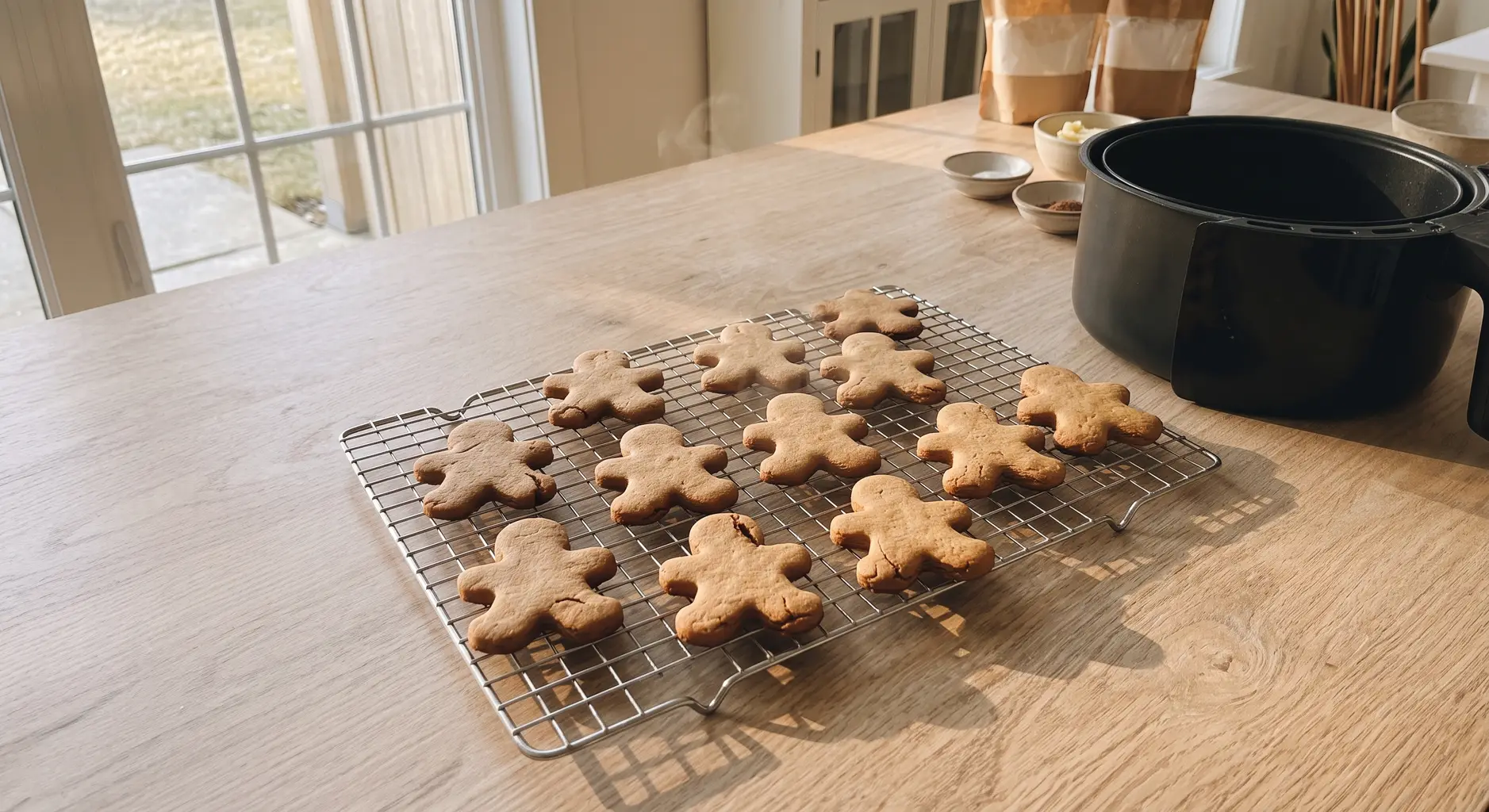
In my house the gingerbread argument is generational. My husband wants snap, the kind of cookie you could tap on the table like a coin. The kids want the soft ones that bend before they break. For years I baked one batch and disappointed half the table. If the machine is new to you, how to bake in an air fryer covers the ground rules this recipe assumes.
Then I noticed something while running batches through the air fryer, which bakes six cookies at a time whether you like it or not: two batches from the same bowl of dough came out as completely different cookies, because one was rolled thinner and stayed in two minutes longer. The air fryer's small batches, the thing that looks like its weakness, is actually the fix for the argument. One dough, half rolled thin for the snappers, half rolled thick for the soft camp, everyone quiet at last.
Quick answer: One dough, baked at 325°F on parchment. For snappy gingerbread, roll 3/16 inch thick and bake 9 to 10 minutes, until the edges darken a shade. For soft gingerbread, roll 5/16 inch thick and bake 7 to 8 minutes, pulling them while the centers still look slightly underdone. Chill the dough 30 minutes before rolling, and always cut more than you think fits, because the basket takes 5 or 6 men at a time.
The texture dial: snap or soft
Recipes for this cookie treat texture like fate. It is not. It is three levers, and once you know them you can set the dial anywhere you like.
Thickness
Thin cookies dry through completely and snap. Thick ones keep a moist middle that stays bendy. This is the biggest lever, which is why the recipe gives two rolling thicknesses instead of one.
Minutes
Gingerbread hardens as it cools, so the difference between soft and snappy is about two minutes in the basket. Err short. You can always crisp a soft cookie with another minute, but a dried-out one is gone.
Storage
Molasses pulls moisture from the air, so these cookies drift softer in a sealed container over days. Snappers stay snappy stored with a loose lid. Soft ones stay soft sealed airtight, with a slice of bread in the container doing the humidifying.
| You want | Roll to | Bake at 325°F | Pull when | Store |
|---|---|---|---|---|
| Snap | 3/16 inch | 9 to 10 min | Edges a shade darker, tops fully matte | Loose lid |
| Classic | 1/4 inch | 8 to 9 min | Tops matte, edges set | Airtight |
| Soft | 5/16 inch | 7 to 8 min | Centers look faintly underdone | Airtight with a bread slice |
All three come from the same bowl. Roll half the dough at one thickness and half at the other, and the family argument is over. The hardening as they cool is carryover at work, so judge in the basket by look, never by feel.
What the air fryer does to gingerbread men
Published temperatures for this cookie run from 330°F to 370°F, and the high end is how you get gingerbread men with burnt hands. Two things about the machine matter here.
The fan attacks thin extremities first. A gingerbread man is a cookie with four skinny limbs and a fat torso, which is exactly the wrong shape for convection. Moving hot air wraps around the arms and legs and finishes them minutes before the body. At 370°F the hands scorch while the belly is still raw. At 325°F the gap narrows enough that the whole man finishes together. If your machine browns unevenly anyway, it has a hot spot, and turning the parchment halfway fixes most of it. Persistent scorching is a machine issue, covered in how to prevent burning in an air fryer.
The fan also lifts parchment. A sheet of parchment with three light cookies on it is a kite. Cut the parchment to fit the basket with an inch of margin all around, never up the walls, and anchor it with the cookies themselves, spaced an inch apart. Do not run parchment in an empty preheating basket. The full rules are in can you use foil or parchment paper in an air fryer.
And one honest note on cutter size: a 5 inch gingerbread man fits three to a basket. A 2.5 to 3 inch cutter fits five or six, bakes more evenly, and gets a batch of 24 done in four rounds instead of eight. Small men are the right men for this machine.
Molasses: the one label mistake that ruins the batch
Molasses is the soul of gingerbread. It is also the one shelf in the baking aisle where grabbing the wrong jar genuinely wrecks the cookie, and almost no air fryer recipe warns you.
- Buy unsulphured molasses. The standard baking jar, Grandma's Original being the common one in US stores. Sweet, dark, warm. This is what the recipe means.
- Do not buy blackstrap. It sits on the same shelf in a nearly identical jar. Blackstrap is the residue of the third boiling, intensely bitter and salty, and a full third-cup of it makes cookies taste like burnt coffee grounds. It is a health-food ingredient, not a baking one.
- Out of molasses? Dark corn syrup plus a teaspoon of brown sugar gets you the texture with less depth. Honey and maple both work but bake up as noticeably different cookies. Golden syrup makes it a British ginger biscuit, which is not a complaint.
Molasses is also why gingerbread behaves unlike other cookies over time. It is hygroscopic, meaning it pulls moisture from the air, which is why these cookies soften in a sealed container and why the storage column exists in the texture table above.
The spices, and the pepper trick
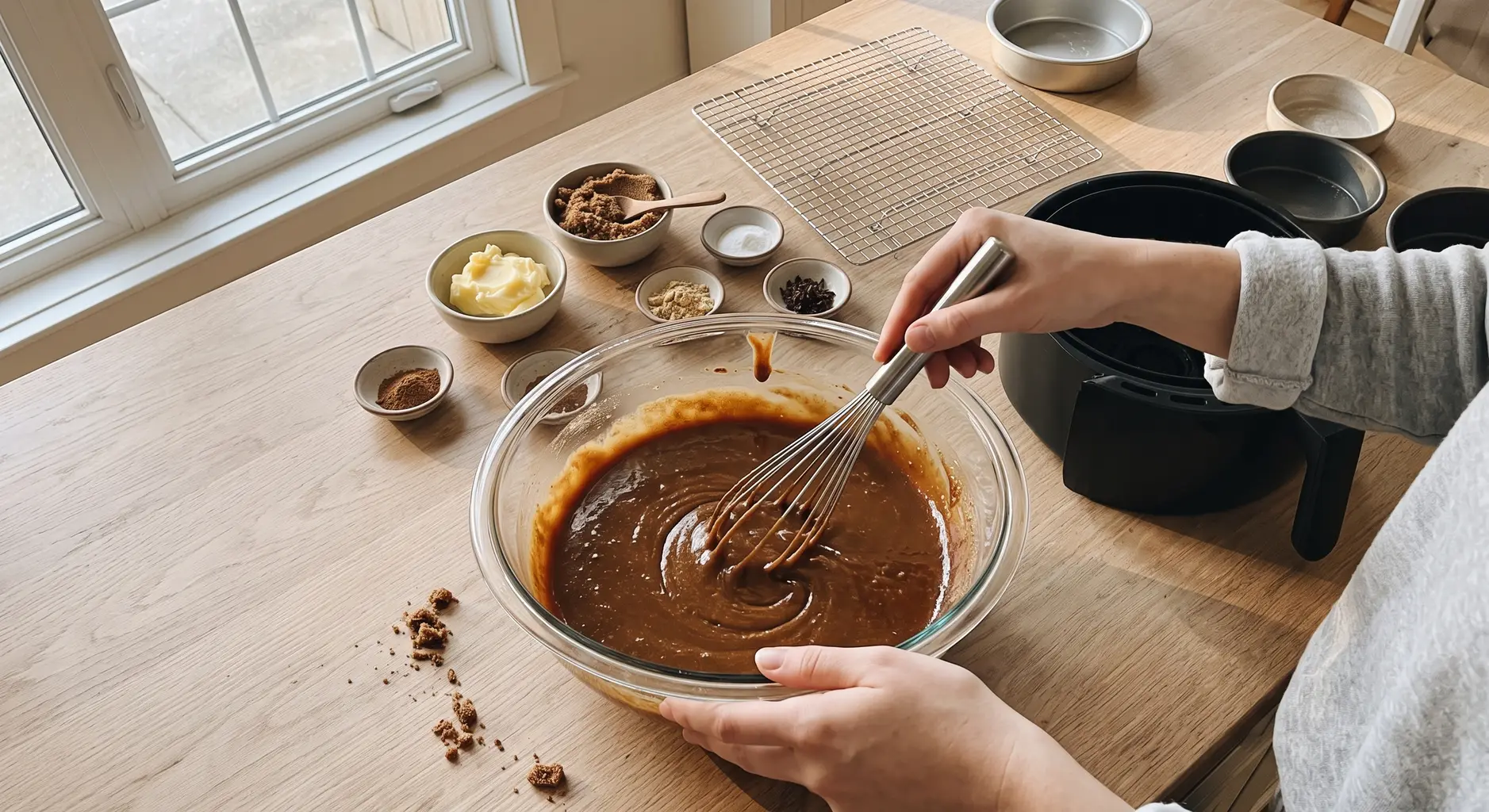
Ground ginger does the shouting, cinnamon fills the middle, cloves put a floor under it. That trio is non-negotiable. Two upgrades from my kitchen:
- A pinch of black pepper. An eighth of a teaspoon. Nobody will identify it and everybody will notice the cookie tastes warmer. Old European gingerbread recipes did this for centuries before we all got polite about it.
- A teaspoon of grated fresh ginger alongside the ground. Ground ginger and fresh ginger are almost different spices, one warm and one bright, and using both gives the cookie a top note the jar alone cannot. Optional, worth it.
Check your ground ginger's age while you are there. A jar older than a year has faded, and gingerbread made with tired ginger tastes like brown sugar cookies wearing a costume.
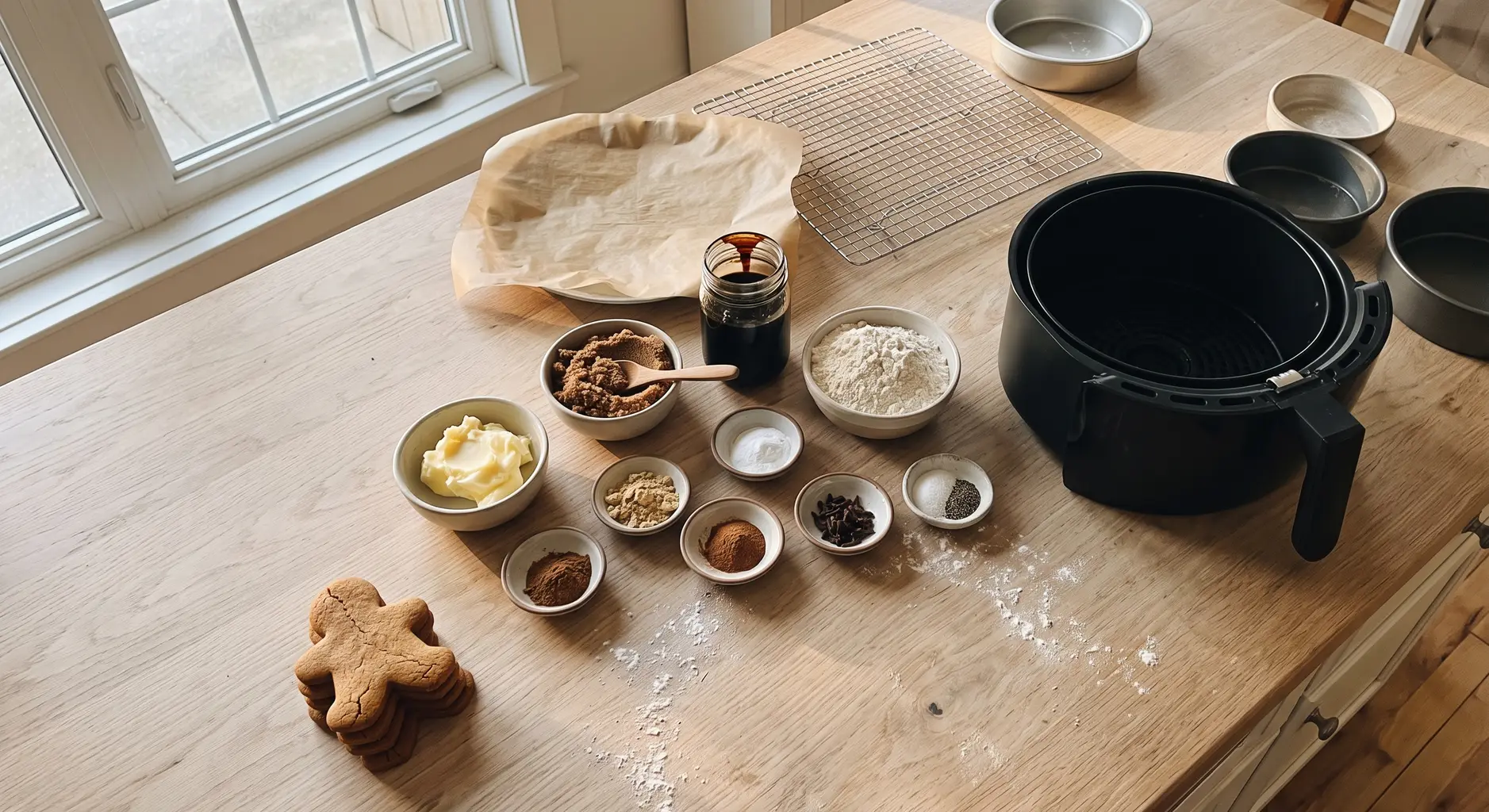
Ingredients
The dough
- 6 tablespoons (85g) unsalted butter, softened
- 1/3 cup (67g) packed dark brown sugar
- 1/3 cup (100g) unsulphured molasses
- 1 large egg yolk
- 2 cups (250g) all-purpose flour
- 3/4 teaspoon baking soda
- 2 teaspoons ground ginger
- 1 teaspoon cinnamon
- 1/4 teaspoon ground cloves
- 1/4 teaspoon fine salt
- 1/8 teaspoon black pepper
- Optional: 1 teaspoon grated fresh ginger
Simple icing
- 1 cup (120g) powdered sugar, sifted
- 4 to 5 teaspoons milk
- 1/4 teaspoon vanilla extract
Two choices worth explaining. The yolk instead of a whole egg: this is a half-size batch scaled for air fryer rounds, and a whole egg makes it cakey and puffy. The yolk brings richness without the lift. Dark brown sugar: more molasses in the sugar means deeper flavor and a softer default, same reasoning as the shortbread butter, the dominant ingredient deserves the upgrade. Doubling for a cookie swap? The recipe scaler does the math, and use 1 whole egg rather than 2 yolks at double size.
How to make them
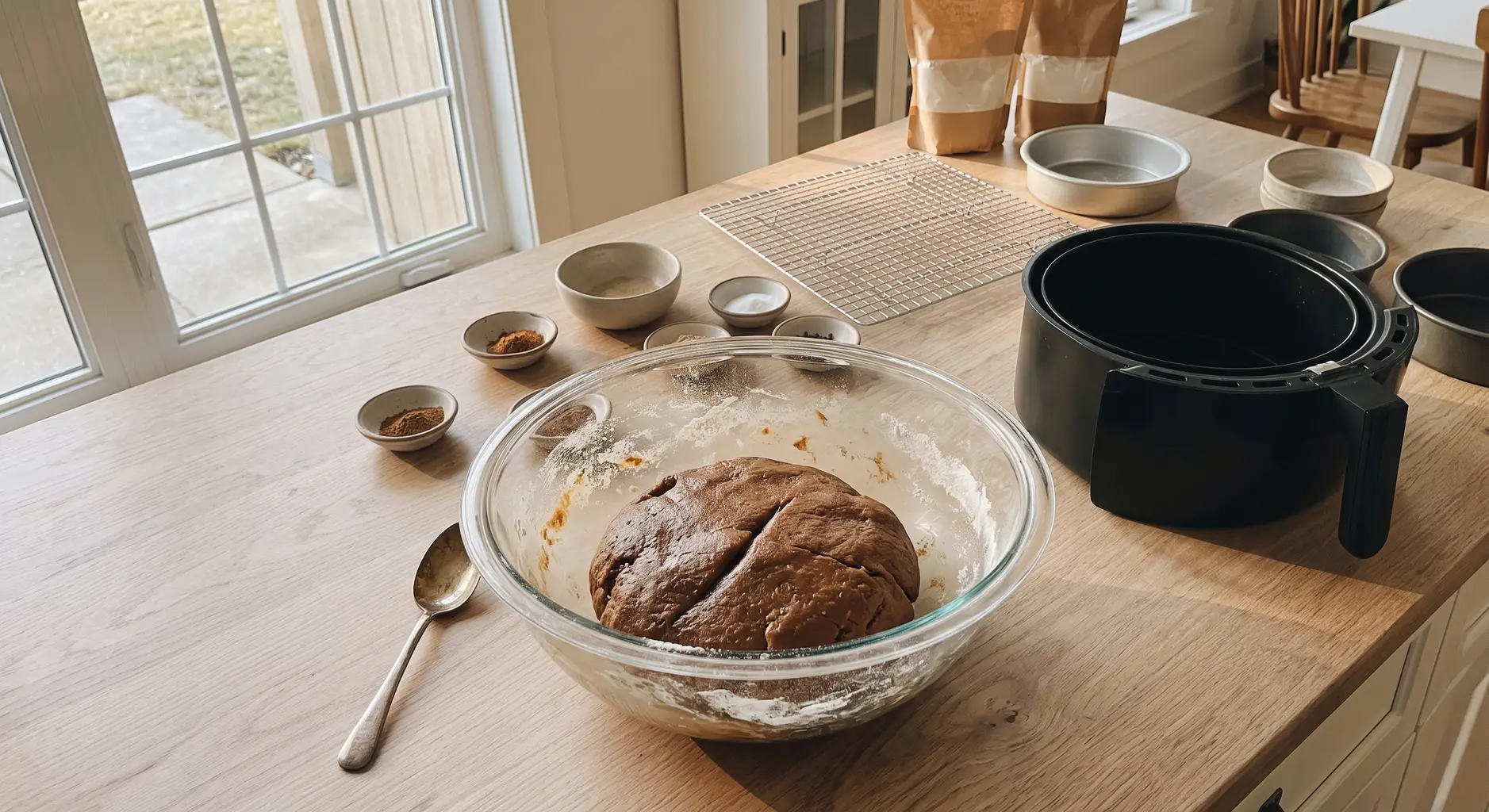
- Cream the butter and brown sugar for 2 minutes until smooth and slightly lightened. Proper creaming matters less here than in a drop cookie, since we are not chasing puff, but the sugar should no longer feel coarse.
- Beat in the molasses, yolk and fresh ginger if using. It will look curdled. Keep going, the flour fixes it.
- Whisk the flour, baking soda, spices, salt and pepper in a second bowl, then add to the wet in two goes, mixing just until no dry streaks remain. The dough will be soft and slightly sticky.
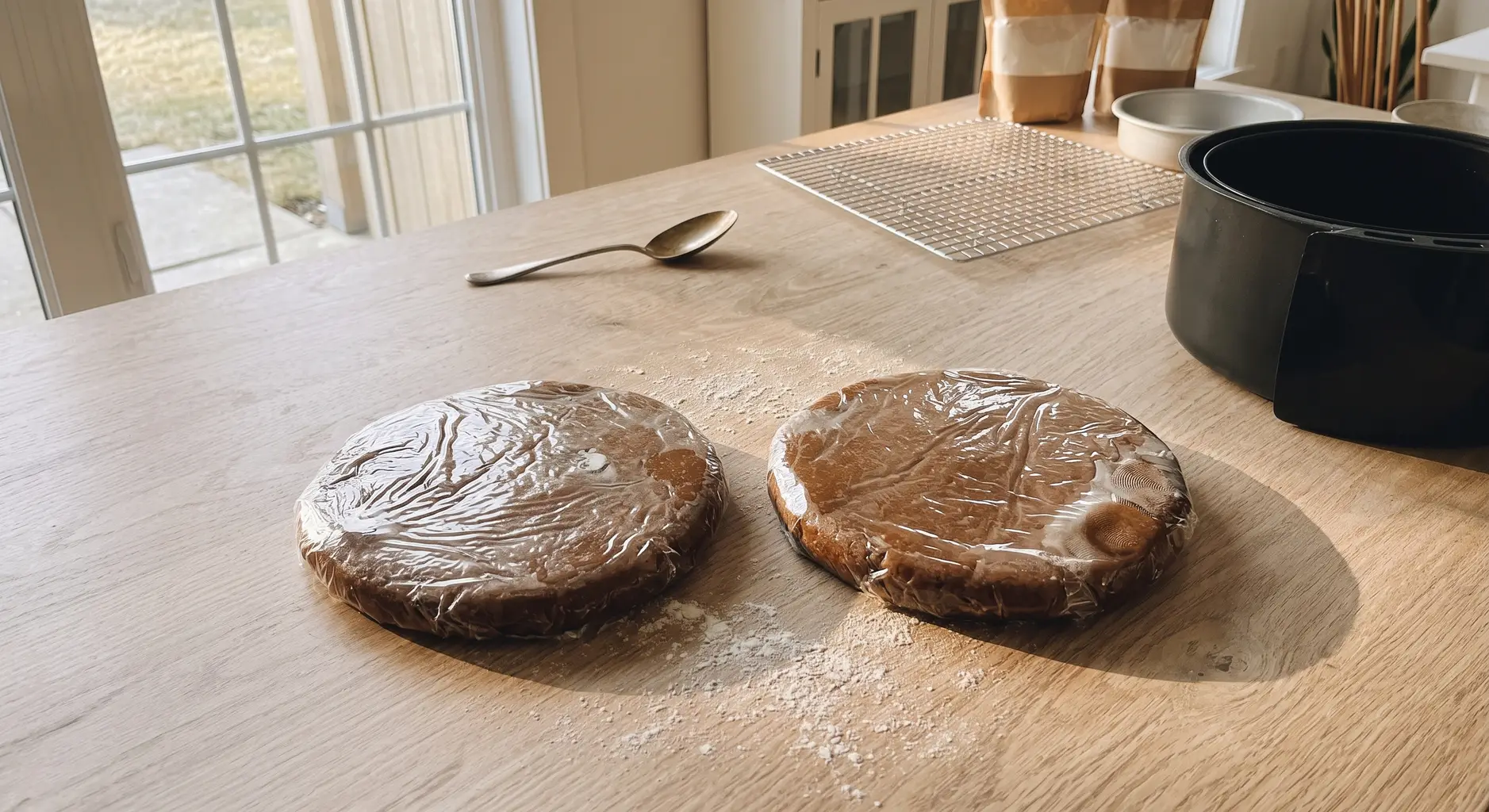
- Chill 30 minutes, pressed into two flat disks and wrapped. Flat disks chill through in half the time a ball takes. This chill is about workability and clean cut edges: warm gingerbread dough is glue, cold gingerbread dough is leather, and leather cuts sharp shapes that survive the move to the basket.
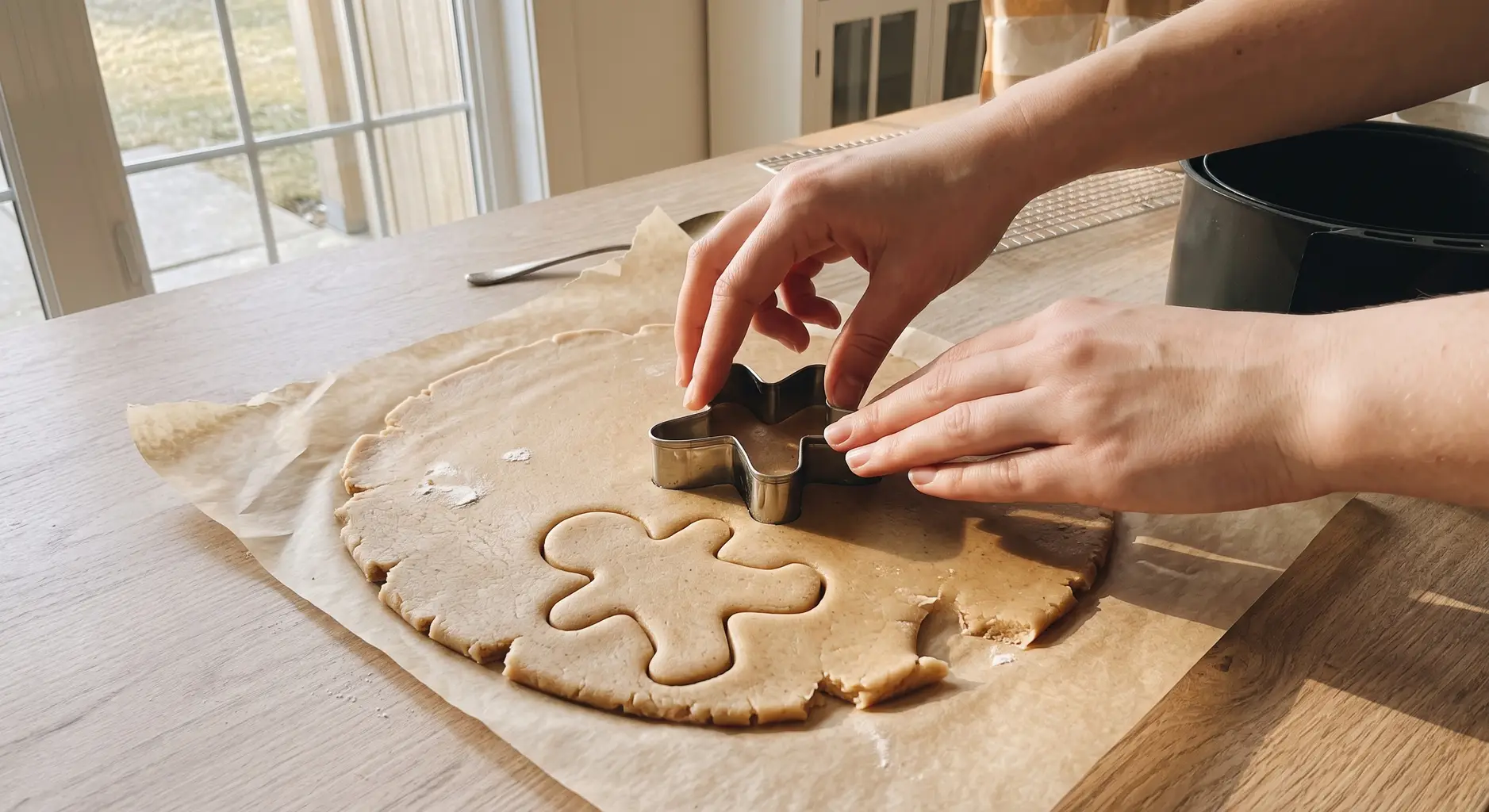
- Roll between two sheets of parchment, one disk at 3/16 inch for snap, one at 5/16 inch for soft, or both at 1/4 inch for the classic. Rolling between parchment means no bench flour, and extra flour is one of the ways gingerbread goes tough and pale.
- Cut shapes and space them out. A 2.5 to 3 inch cutter, shapes an inch apart on basket-sized parchment. Reroll scraps up to twice, chilling 5 minutes between rerolls if the dough warms.
- Preheat the air fryer to 325°F for 3 minutes. A short bake needs the machine already at temperature or the first batch bakes differently from the rest. The general rule is in do you need to preheat an air fryer for baking.
- Bake by the texture table: 9 to 10 minutes for thin snappers, 7 to 8 for thick soft ones, turning the parchment 180 degrees at the halfway point if your machine bakes unevenly.
- Rest 3 minutes on the parchment before moving. They come out floppy and firm up fast. Sliding the whole parchment sheet out keeps the men's limbs attached.
- Cool completely on a rack before icing. Completely means it: icing on a warm cookie turns to glaze and slides off the edges.
Decorating without melting the icing
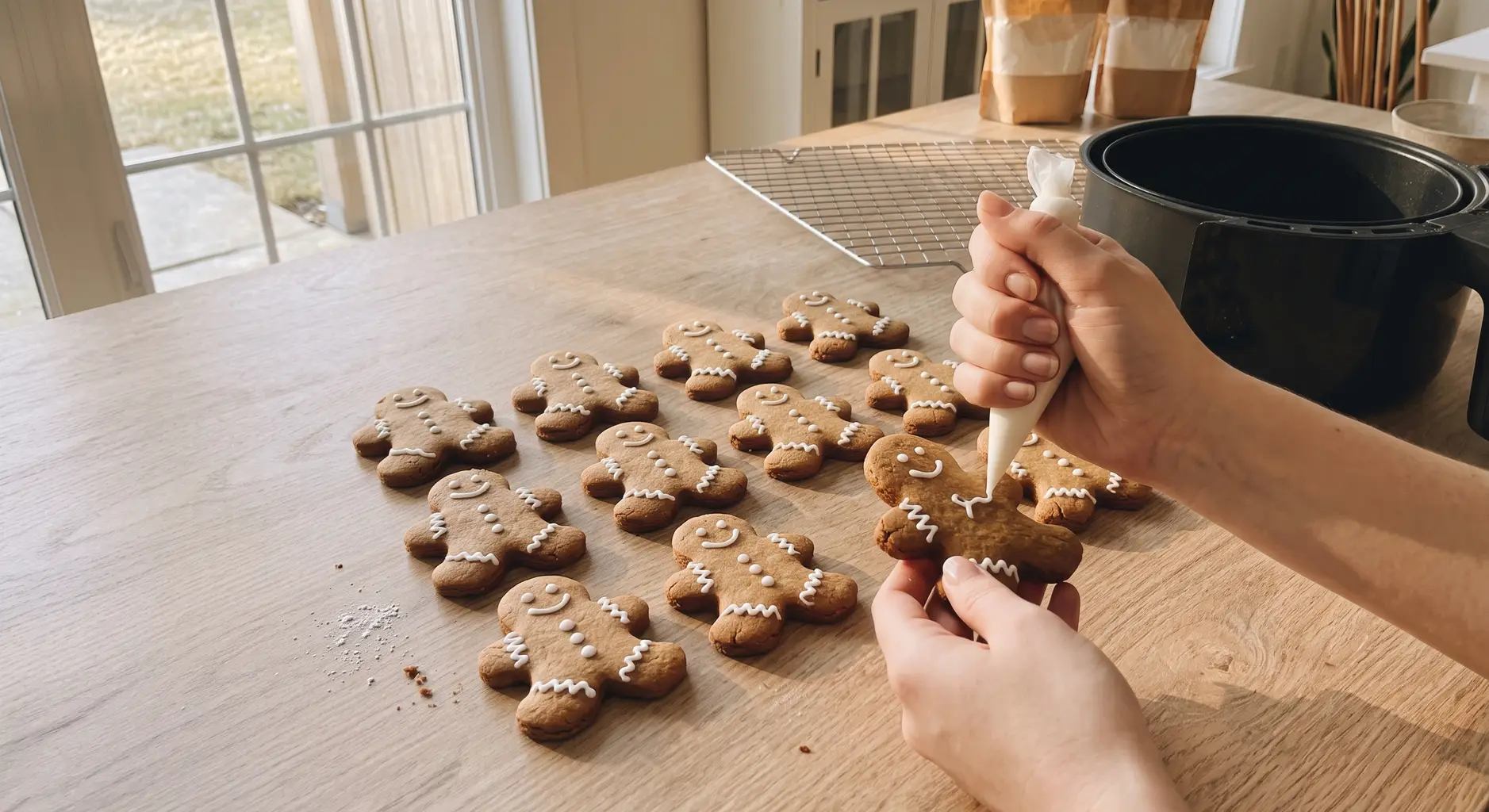
Whisk the powdered sugar, milk and vanilla to a thick, pipeable paste. It should ribbon off the whisk and hold a line for a few seconds. Too thin, add sugar a spoon at a time. Too stiff, drops of milk.
A zip-top bag with a tiny corner snipped does everything a piping bag does here: faces, buttons, zigzag sweaters. Let iced cookies sit 30 to 45 minutes for the icing to set before stacking, and if you are gifting them, overnight.
Three rules learned the annoying way:
- Fully cool cookies only. Warm gingerbread melts the sugar and the lines bleed.
- Ice after all batches are done, not batch by batch, so the decorating happens once with one bag.
- Snappers take icing better than soft cookies. The moisture in a soft cookie slowly matte-ifies glossy icing overnight. It still tastes right, but for gift boxes, ice the thin ones.
Troubleshooting
| What you got | Why | Fix |
|---|---|---|
| Men lost their shape, edges blurred | Dough went in warm, so the butter melted before the cookie set. | Chill 30 minutes, and rechill 5 minutes after rerolling. Cold shapes hold. |
| Burnt hands and feet, raw middle | Temperature too high for a limbed shape under a fan. | 325°F, smaller cutters, and turn the parchment at halfway. |
| Puffy, cakey cookies | Too much leavening or a whole egg in a half batch. | This recipe already runs low soda and yolk-only. If they still puff, press the cutouts gently flatter before baking. |
| Tough and dry | Too much bench flour worked in during rolling, or overbaked. | Roll between parchment sheets, no loose flour, and pull on time. |
| Wanted snap, got soft | Rolled too thick or pulled too early. Molasses cookies also soften in a sealed container. | Roll 3/16 inch, take the full 10 minutes, store with a loose lid. A 2 minute return to a 300°F basket re-crisps a soft batch. |
| Wanted soft, got rocks | Overbaked thin cookies, and cooling finished the job. | Roll thicker, pull at 7 minutes while centers look underdone. Rescue hard cookies by sealing them overnight with a slice of bread. |
| Bitter, harsh aftertaste | Blackstrap molasses. | Unsulphured baking molasses only. There is no rescuing a blackstrap batch. |
| Parchment lifted into the element | Oversized sheet, or paper in the basket during preheat. | Cut it smaller than the basket floor and anchor it with cookies before the fan starts. |
| First batch fine, later batches darker | The basket base holds heat and each batch starts hotter. | Rest the open basket 2 minutes between batches, and trust the color cues over the clock. |
If every bake in your machine runs hot or uneven regardless of recipe, start with the air fryer baking troubleshooting guide. And every temperature on this site is collected in the air fryer baking chart, with the air fryer calculator handling any oven recipe you want to convert, your grandmother's gingerbread included: drop about 25 degrees and start checking at two thirds of her time.
Make ahead and storage
- Dough ahead: the wrapped disks keep 3 days in the fridge or 3 months frozen. Thaw frozen dough overnight in the fridge, it rolls better than fresh. The general rules for chilled dough are in refrigerated cookie dough.
- Cut shapes ahead: freeze cutouts flat on a tray, then bag. Bake from frozen at 325°F plus 1 to 2 minutes, the same way frozen cookie dough behaves generally. This is the December weeknight trick: dough made in November, warm gingerbread men in twelve minutes flat.
- Baked, un-iced: 1 week at room temperature, storage lid per the texture table. 3 months frozen.
- Iced: 4 to 5 days, in single layers separated by parchment once the icing has fully set.
- Gift boxes: pack snappers, ice them the day before, and tuck the box somewhere cool. Soft cookies travel worse and sweat under plastic wrap.
These share a holiday plate naturally with the air fryer shortbread cookies, which want an even cooler machine, plus sugar cookies for the decorators, chocolate chip and peanut butter for the traditionalists, oatmeal cookies, jam thumbprints, snickerdoodles and biscotti, which keeps longest of the lot, to round the tin. The whole shelf sits in the air fryer cookies and bars collection. A batch of candied walnuts fills the gaps in the box, and if the holiday morning needs a centerpiece, air fryer cinnamon rolls are the answer while the first cookie batch chills.
Frequently asked questions
QHow long do you cook gingerbread cookies in an air fryer?
7 to 10 minutes at 325°F, and the spread is the texture dial: 9 to 10 minutes for thin, snappy cookies rolled 3/16 inch, 7 to 8 minutes for soft ones rolled 5/16 inch. Published recipes range from 330°F to 370°F, and the hot end is why so many gingerbread men come out with scorched arms. The fan finishes thin limbs minutes before thick torsos, and 325°F narrows that gap enough for the whole cookie to finish together.
QHow do I make gingerbread soft instead of crunchy?
Roll thicker, bake shorter, store sealed. Cookies rolled 5/16 inch and pulled at 7 to 8 minutes, while the centers still look slightly underdone, stay bendy once cool. Then keep them airtight with a slice of sandwich bread in the container: molasses pulls moisture from the bread and the cookies stay soft for days. For crunchy, do the opposite on all three counts.
QWhat molasses should I use for gingerbread?
Unsulphured baking molasses, the standard grocery jar such as Grandma's Original. Do not use blackstrap, which sits on the same shelf in a similar jar: it is the bitter, salty residue of the third boiling, and a third-cup of it makes the whole batch taste like burnt coffee. If the jar says blackstrap anywhere, put it back.
QWhy did my gingerbread men lose their shape?
The dough was too warm when it hit the heat, so the butter melted before the structure set and the edges slumped. Chill the dough 30 minutes before rolling, work in two disks so one stays cold, and give rerolled scraps 5 minutes back in the fridge. Cold, firm cutouts go into the basket holding their edges and come out the same way.
QWhy are my gingerbread cookies puffy and cakey?
Too much leavening or too much egg for the batch size. This recipe runs deliberately low baking soda and uses only a yolk, because a whole egg in a half batch bakes up like little cakes. If a dough still puffs on you, press the cutouts slightly flatter before baking and drop the soda by a quarter teaspoon next time.
QWhy are the arms and legs burnt but the middle raw?
That is the air fryer fan finding the thin parts first. Convection wraps hot air around skinny limbs and finishes them minutes ahead of the thick torso, and the higher the temperature the worse the gap. Bake at 325°F rather than 350°F or above, use smaller cutters in the 2.5 to 3 inch range, and rotate the parchment 180 degrees at the halfway mark.
QCan I bake gingerbread cutouts from frozen?
Yes, and it is the best version of this recipe for December. Freeze the cut shapes flat on a tray, bag them, and bake straight from frozen at 325°F with 1 to 2 extra minutes. Frozen cutouts hold their edges even better than chilled ones, and the dough itself also freezes for 3 months as wrapped disks.
QWhen can I ice gingerbread cookies?
Only when the cookies are completely cool, which takes a good 20 to 30 minutes on a rack. Icing touching any warmth thins to a glaze and runs off the edges. Ice after all batches are baked, let decorated cookies set 30 to 45 minutes before stacking, and give gift-box cookies overnight. Thin, crisp cookies hold glossy icing best.
QCan I use a gingerbread box mix in the air fryer?
Yes. Make the mix per its cutout-cookie directions, chill it the same 30 minutes, and bake at 325°F for 7 to 9 minutes instead of the oven instructions. Box doughs usually run softer, so the chill matters even more. A teaspoon of extra ground ginger and the pinch of black pepper wake a box mix up considerably.
Never overbake again
Get our one-page times & temps cheat sheet, plus a new tested recipe each week.
No spam · unsubscribe anytime