
Air Fryer Garlic Knots: Chewy Centers, Buttery Crust
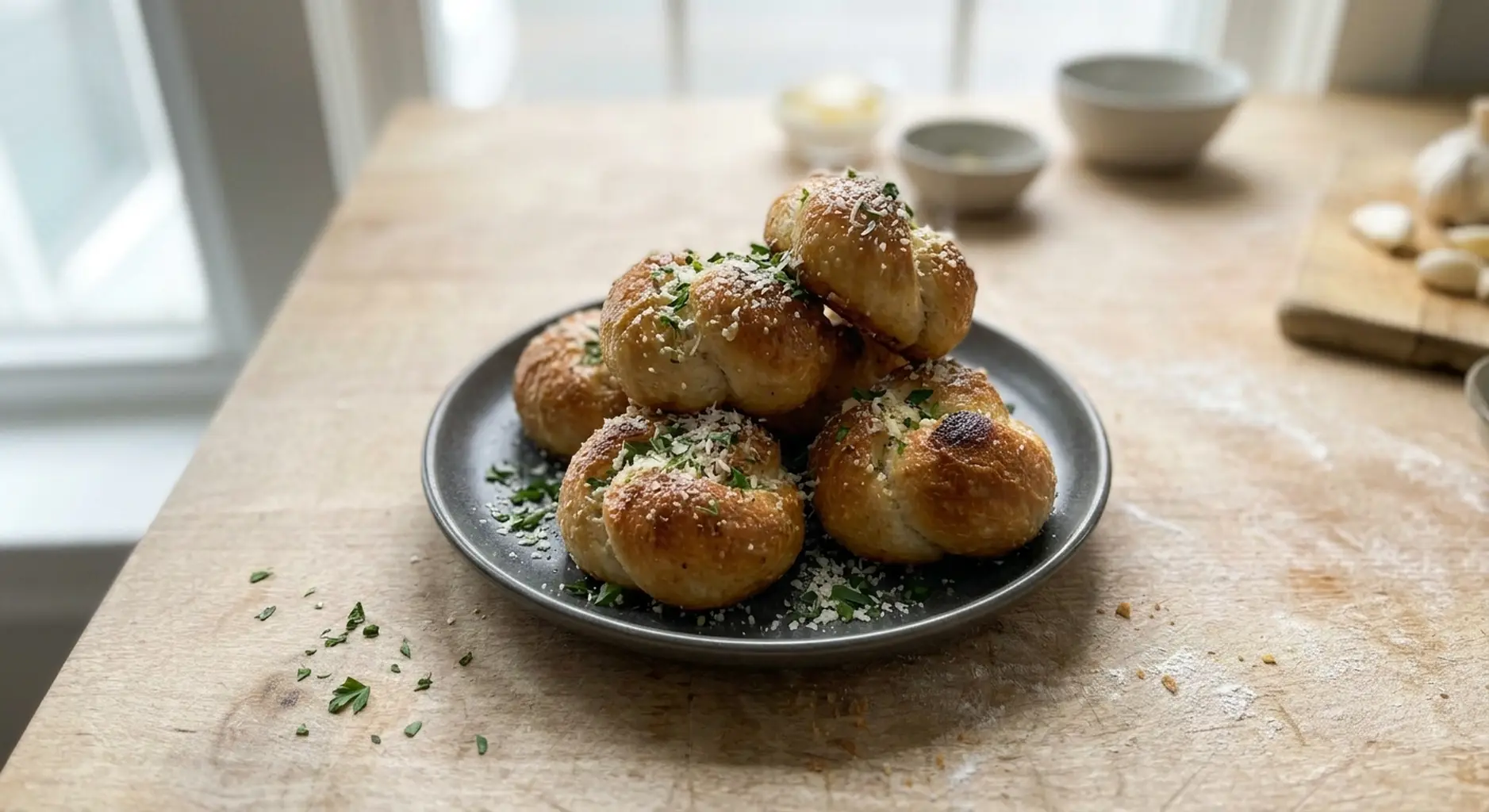
A garlic knot is a doubled-over rope of bread dough, which makes it the thickest thing most people ever put in a basket, and the reason so many come out golden on the outside and gummy in the middle. The fix is not more time at a high temperature. It is 330°F, a loosely tied knot, and two butters doing two different jobs: a seasoned one brushed on before the bake, and a fresh garlic one the hot knots get tossed in after, because raw garlic that rides through the airstream comes out bitter. Twelve knots from one pound of pizza dough, 8 to 10 minutes a batch, no oven anywhere.

What’s on this page
Why knots fight the air fryer
Most air fryer recipes are thin things: cookies, fries, a single layer of something. A garlic knot is the opposite. You take a rope of dough that is already three quarters of an inch thick and then you tie it in a knot, which stacks dough on top of dough. The center of a tied knot can be an inch and a half of raw bread with a crust forming around it on all sides.
An air fryer browns faster than an oven at the same setting because the fan strips away the layer of cool, moist air that normally insulates food. That is exactly what you want for soft pretzels and it is exactly the problem here. Run knots at the 400°F that oven recipes call for and the crust finishes in six minutes while the middle is still dough. The recipes that tell you 400°F for 6 to 7 minutes are describing knots that look perfect and eat gummy.
So this recipe slows the outside down instead of rushing the inside. At 330°F the crust sets late enough for heat to reach the core, and the knot gets what a knot is supposed to have: a thin, buttery, golden crust you can dent with a thumb, wrapped around a center that pulls and chews like the inside of a good loaf.
The dough decides the chew
The keyword in a garlic knot is chew, and chew comes from gluten. That means pizza dough, a lean bread dough with real gluten development, not crescent dough, which is laminated with fat specifically so it will NOT chew. Crescent knots work, they are just a different pastry: flaky, rich, and gone in one bite. If that is what you want, drop the temperature to 300°F and pull them at 5 to 6 minutes. For the knot a pizzeria would hand you, use one of these:
| Dough | Temp | Time | What you get |
|---|---|---|---|
| Store-bought pizza dough, 1 lb ball | 330°F | 8 to 10 min | The real thing. Chewy, wheaty, browns evenly |
| Homemade pizza dough, risen | 330°F | 8 to 10 min | Same, slightly lighter if your dough is slack |
| Canned pizza crust (13 oz tube) | 330°F | 7 to 9 min | Softer chew, sweeter, ties easily |
| Crescent dough sheet | 300°F | 5 to 6 min | Flaky and buttery, no chew. A different snack |
| Frozen pre-baked knots | 350°F | 4 to 6 min | Reheating, not baking. Butter them after |
One thing every version needs: warm dough. A dough ball straight from the refrigerator is tight, snaps back when you roll it, and ties into a hard little fist that bakes dense. Give it 30 minutes on the counter. The ropes roll out in one pass and the knots stay open. The same half hour of patience fixes cinnamon rolls, and for the same reason.
Rolling your own dough is its own short project, and the one that behaves best in a basket lives on the air fryer pizza dough page. Half a ball left over? Stretch it thin, top it, and you have a better dinner than a frozen pizza, in about the same time.
Tie them loose
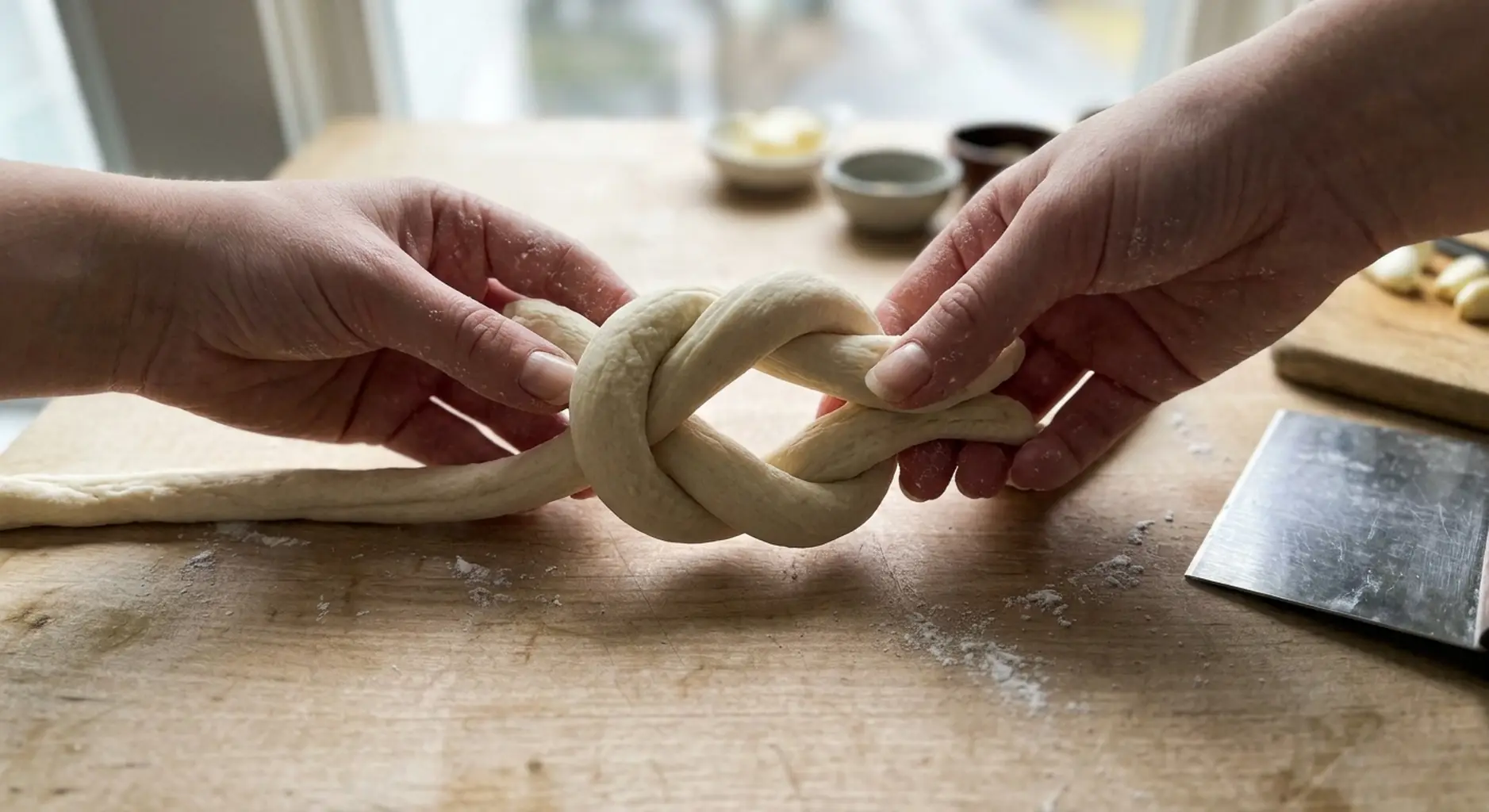
Nobody tells you how tight to tie a garlic knot, and it matters more than the brand of dough. A knot pulled snug looks neater on the board, but dough rises in the basket, and a tight knot has nowhere to go. The strands press into each other, the center compacts, and you bake a dense little knuckle instead of a roll. Tied loose, the knot opens as it springs, heat gets into the gaps, and every strand keeps its own surface.
The tie, in three moves:
- Roll a strip into a rope about 7 inches long and as thick as your thumb.
- Tie one overhand knot in the middle, the way you would start tying a shoelace, and stop there. Leave a visible gap in the loop. If you can see daylight through the knot, it is right.
- Tuck the two tails under the knot. They fuse in the bake and the top stays smooth.
If a rope tears while you roll it, the dough is still too cold or you are rolling with flat palms. Use your fingers, light pressure, and let the rope lengthen over two or three passes instead of forcing it in one.
Two butters, two jobs
Here is where most recipes quietly contradict each other. Some brush garlic butter on before air frying, some after, and none of them say why. The answer is that both are right and both are wrong, because two different things are being buttered.
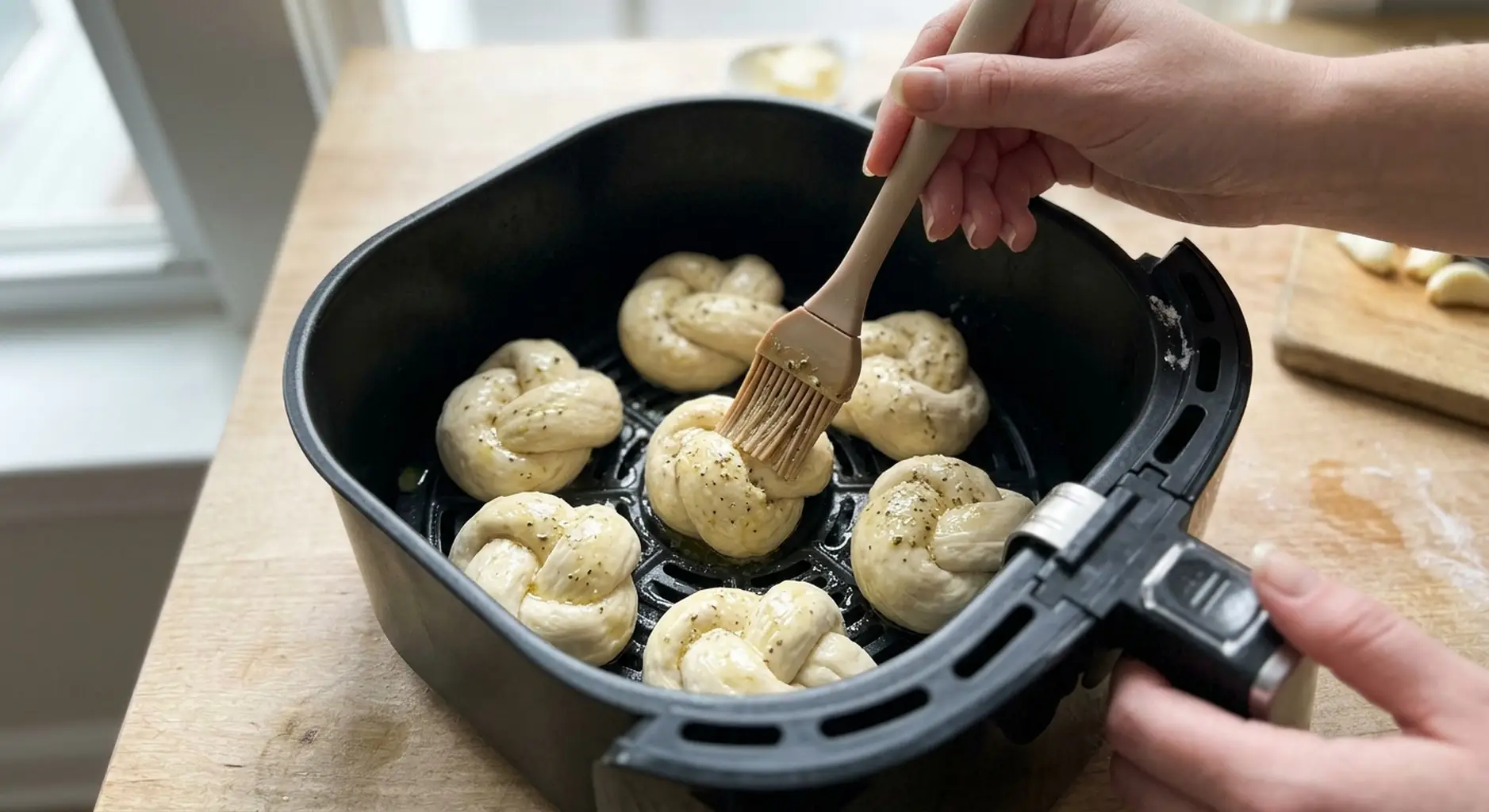
Before the bake: seasoned butter, no fresh garlic. Butter brushed on raw dough is there for browning and crust flavor. Garlic powder, Italian seasoning, and salt survive the airstream fine. Fresh minced garlic does not. Those little pieces sit on the surface directly in the fan's path, and by minute six they are dark, acrid, and bitter. It is the same mechanism that burns loose seasoning on anything in a basket, which we cover in how to prevent burning in an air fryer: small, dry, exposed particles cook far faster than the food under them.
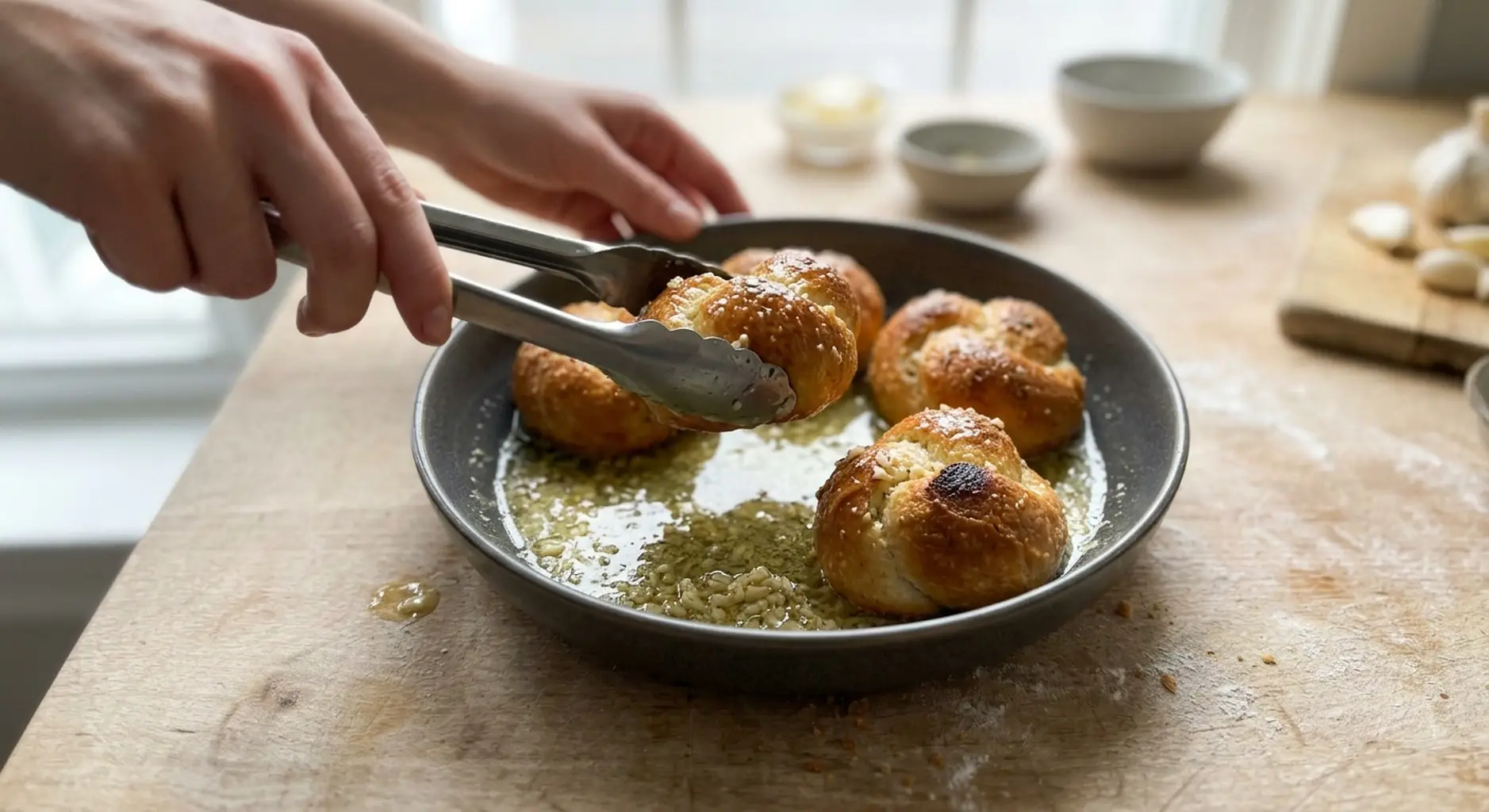
After the bake: the fresh garlic butter. Melt butter with minced fresh garlic while the knots cook, and the garlic softens into the fat without ever browning. The moment the knots come out, toss them in it. The hot bread drinks the butter, the raw-garlic heat stays bright instead of bitter, and the crust goes glossy. This after-toss is what a pizzeria does, and it is the entire difference between knots that taste like garlic and knots that taste like a garlic-scented crouton. Mince the cloves fine, or grate them on a microplane so the garlic melts into the fat instead of sitting in it, which is the rule the garlic bread page runs on.
Strong opinion, held loosely: tongs and a bowl beat a brush for the after-butter. Dunking coats the creases inside the knot where a brush cannot reach.
Temperature and timing
Oven garlic knots bake at 400°F for 12 to 14 minutes. Our oven-to-air-fryer calculator converts that to roughly 375°F and 9 to 11 minutes, and for a flat or open food that conversion is where you would start. A knot is neither flat nor open, so we go a step further down: 330°F for 8 to 10 minutes, the same slow-the-crust logic this site uses for anything with a thick, doughy middle. The extra 45 degrees of headroom is what lets the center catch up.
Lid down, hands off
Knots puff and set. Do not open the basket before minute 6; the spring is still happening and the crust is not fixed yet.
The flip
Turn each knot over. The tops brown first in a basket, so the flip trades faces and evens the color for the final stretch.
Check, then pull
Deep golden all over, 195 to 200°F in the fattest center. Pale but hot inside means one more minute, not a higher temp.
Batch of 6 at a time in a 5 to 6 quart basket, a finger of space between knots. They kiss when they rise, and a little kiss is fine, but knots packed shoulder to shoulder steam each other's sides and stay pale where they touch. The full settings for everything else this site bakes live on the air fryer baking chart.
Skip the preheat debate for this one: knots want a preheated basket. Dough hitting a cold basket spreads and slumps before the spring starts, and you lose the tall, round shape. Three minutes at 330°F while you tie is enough. The general rule for when preheating matters and when it does not is in do you need to preheat an air fryer for baking.
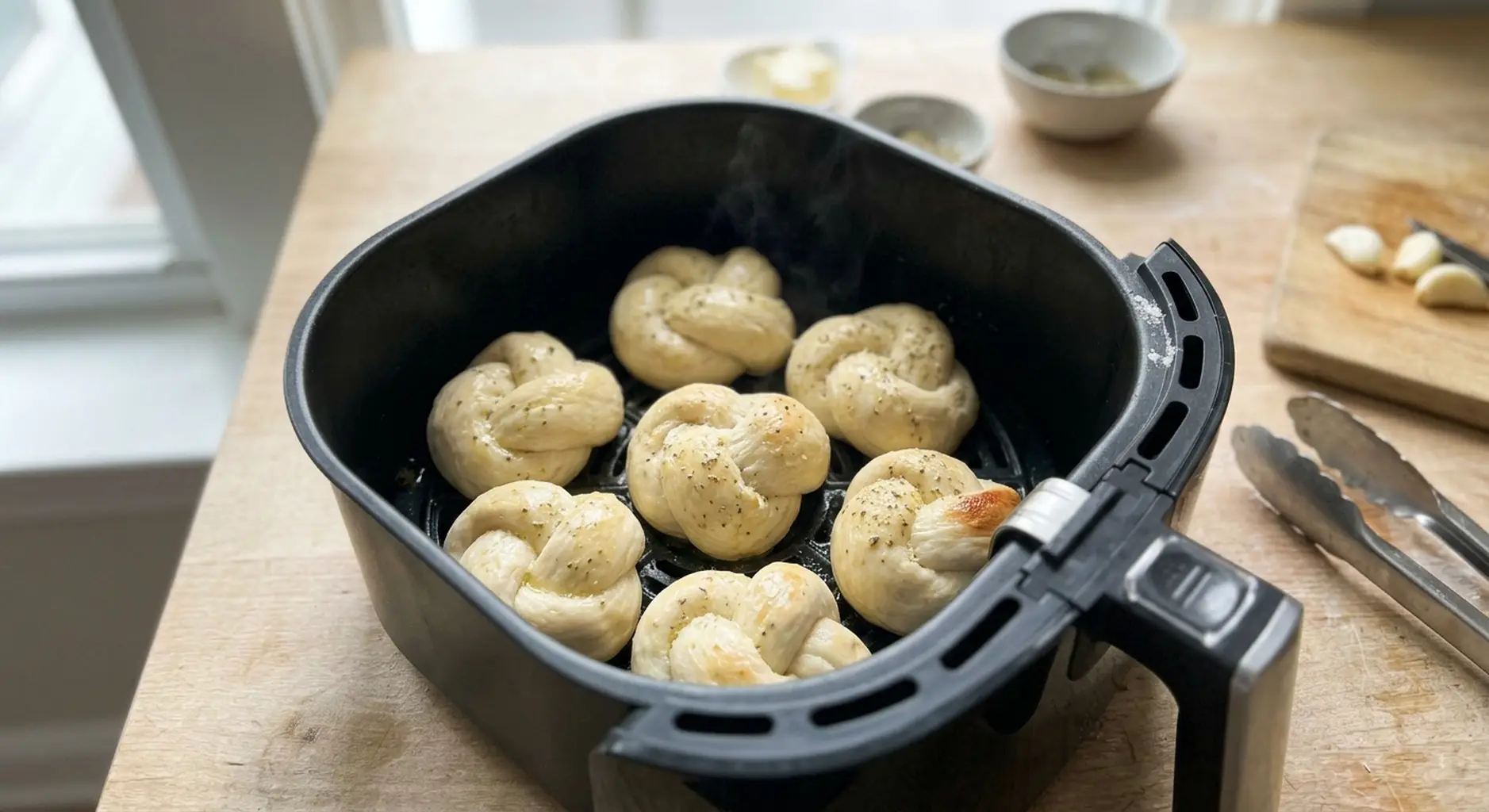
What done looks like
Color lies a little at 330°F, because a knot can reach a handsome gold while the deepest fold is still at 180°F and pasty. Three checks, in order of trust:
- Temperature. An instant-read thermometer in the fattest knot’s center should read 195 to 200°F, the same window that calls the dinner rolls done. Lean bread dough is fully baked there. Under 190°F, give the batch another minute and check again.
- Weight. A done knot feels light for its size when you lift it. A gummy one sits heavy in the hand.
- The tear test. Sacrifice one: tear it open. The crumb should be open and springy with visible strands, not shiny or damp. You were going to eat one anyway.
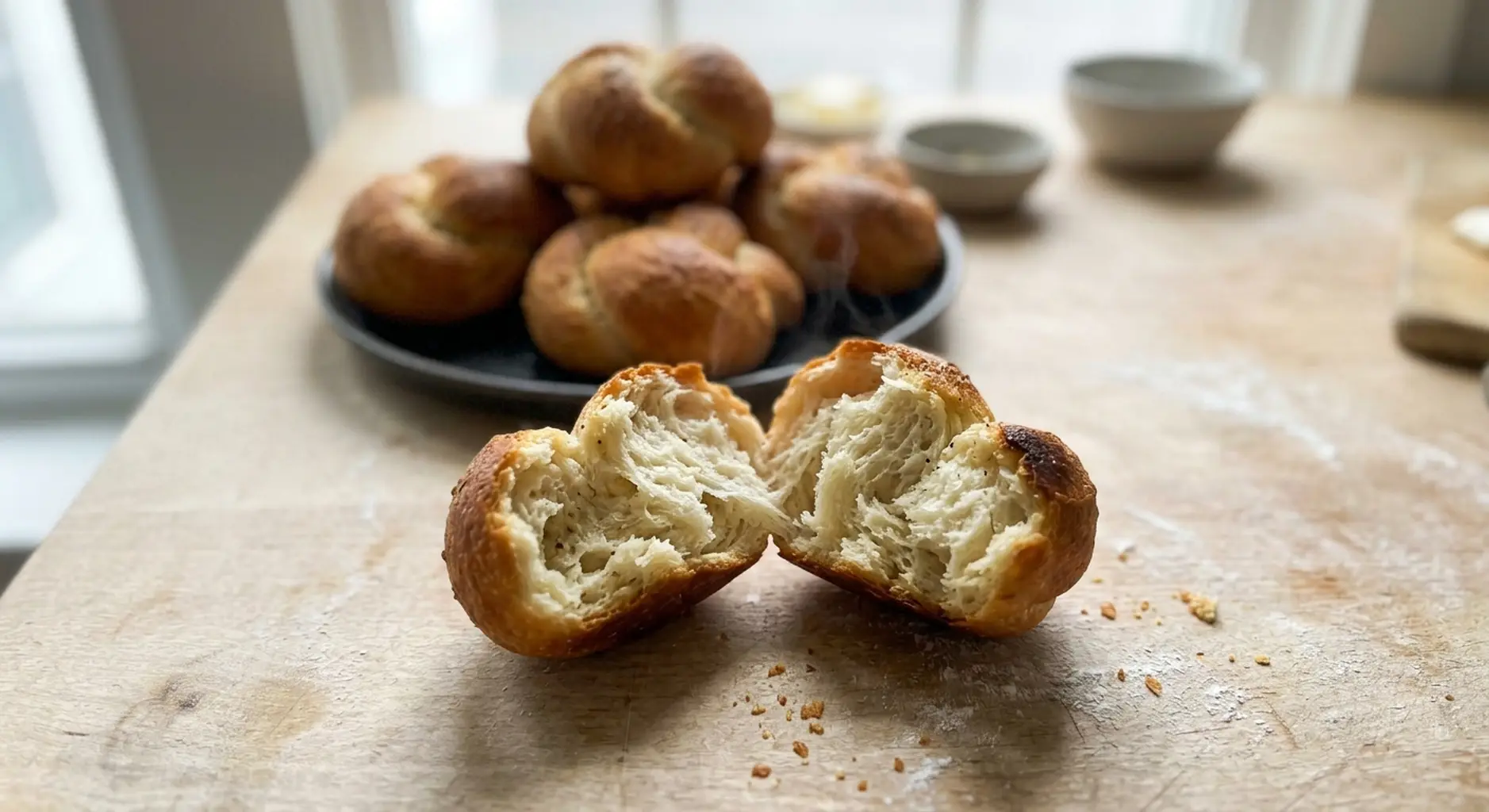
Err toward the early side of the window. Knots carry-over cook for a minute out of the basket, and the after-butter softens the crust further. An overbaked knot is not ruined, it is just drier, and the rescue for that lives in how to avoid dry air fryer bakes.
Ingredients
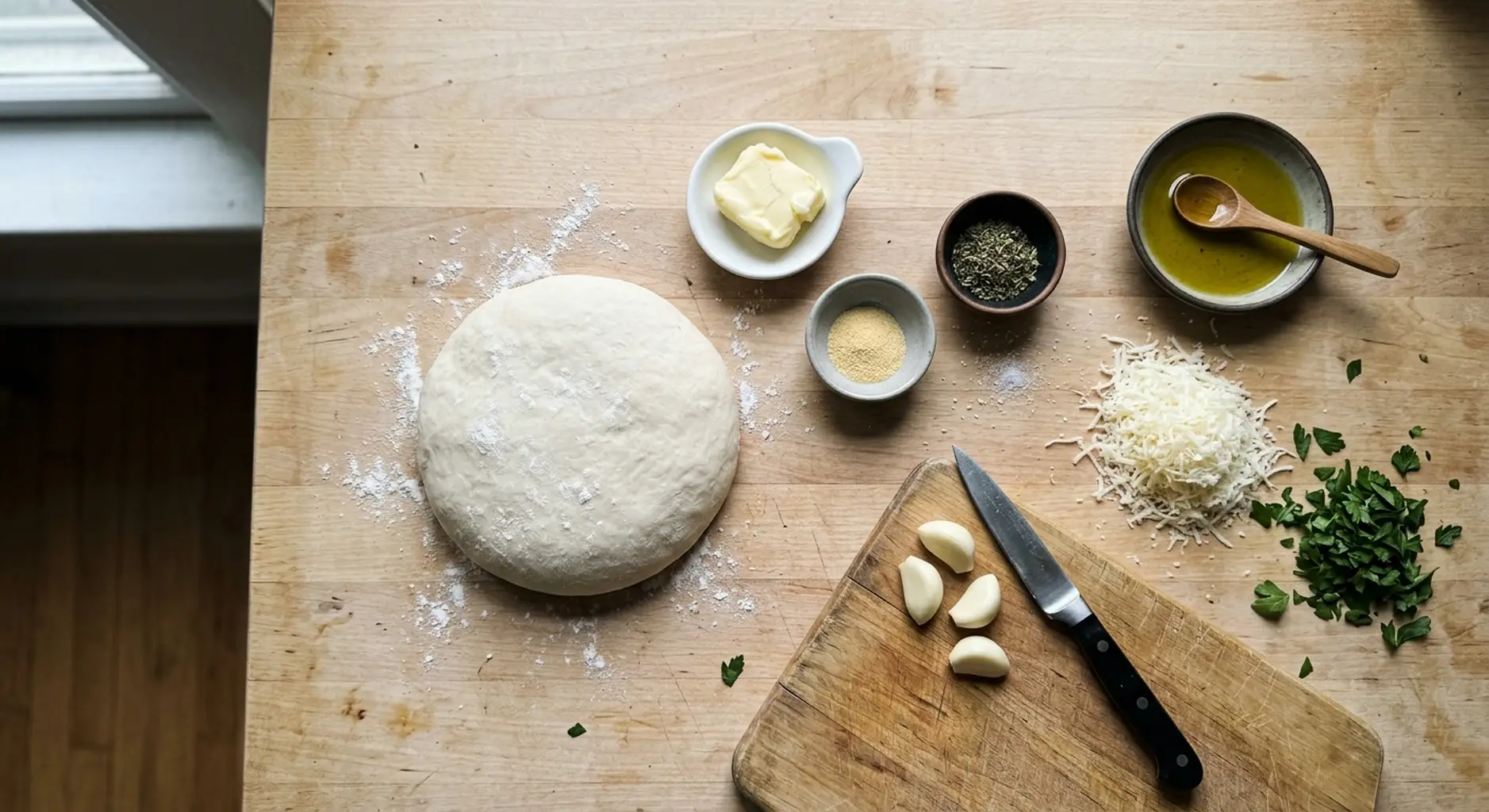
For 12 knots
- 1 lb pizza dough, store-bought or homemade
- 4 tablespoons unsalted butter, divided
- 1 teaspoon garlic powder
- ½ teaspoon Italian seasoning
- ¼ teaspoon fine salt
- 3 cloves fresh garlic, finely minced
- 2 tablespoons grated Parmesan
- 1 tablespoon chopped fresh parsley
- Olive oil for the basket
Feeding two instead of a crowd? The recipe scaler halves this cleanly; six knots is one batch and one bowl.
How to make them
- Let refrigerated dough rest at room temperature for 30 minutes so it rolls without snapping back.
- Melt the butter and divide it between two bowls. Stir the garlic powder, Italian seasoning, and salt into one. Stir the minced fresh garlic into the other and set it aside.
- Preheat the air fryer at 330F for 3 minutes while you shape.
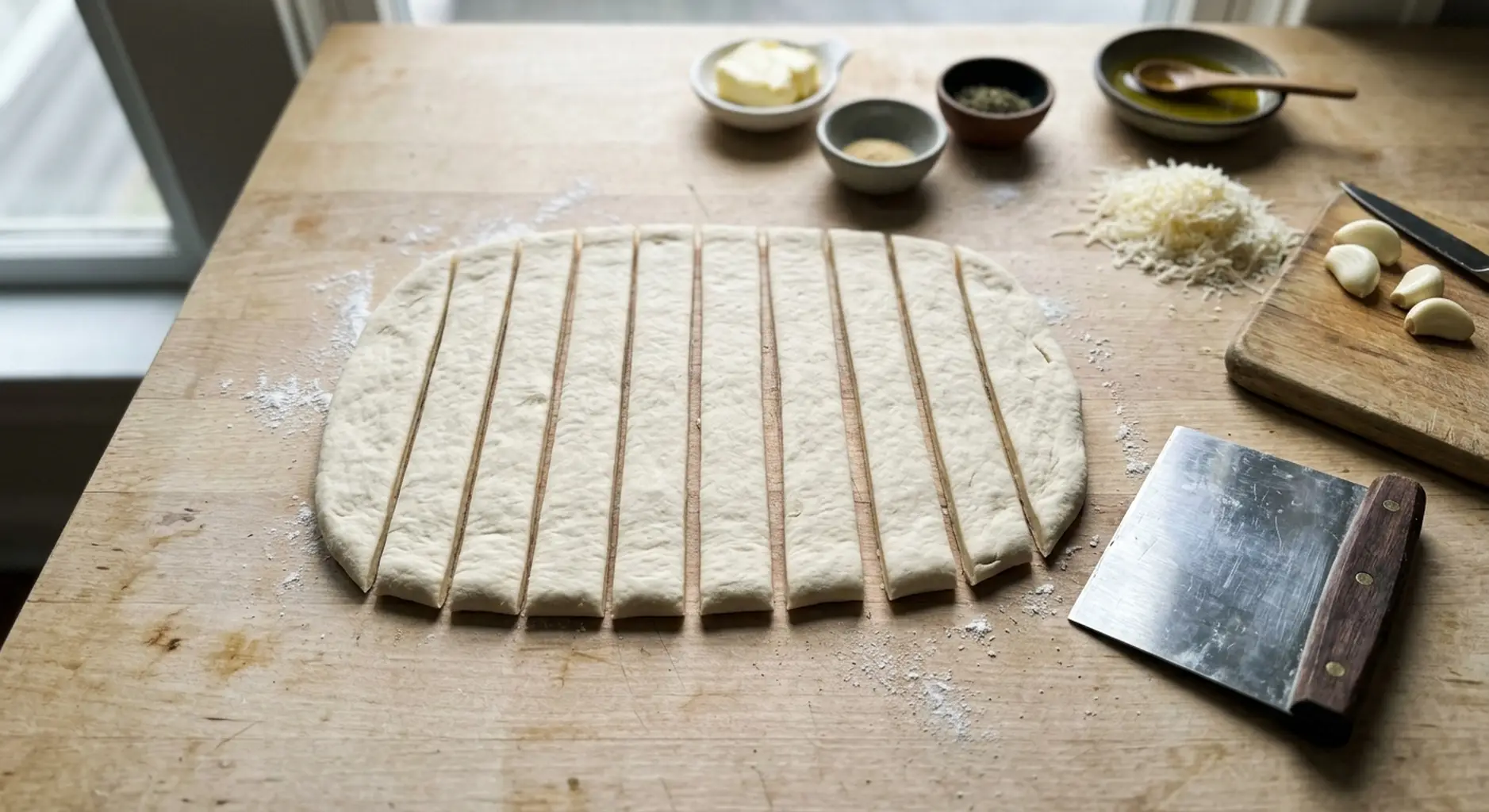
- Press the dough into a rough 12 by 7 inch rectangle and cut it into 12 strips about 1 inch wide.
- Roll each strip into a 7 inch rope and tie one loose overhand knot, tucking the ends underneath.
- Lightly oil the basket. Arrange 6 knots with a finger of space between them and brush the tops with the seasoned butter.
- Air fry at 330F for 8 to 10 minutes, flipping the knots at the 6 minute mark, until deep golden.
- Check the fattest knot: 195 to 200F in the center means done. Give a pale batch 1 to 2 minutes more.
- Repeat with the remaining knots, then toss all of them, hot, in the fresh garlic butter.
- Shower with Parmesan and parsley and serve warm.
Fixing what goes wrong
| Problem | Cause | Fix |
|---|---|---|
| Golden outside, gummy inside | Temperature too high, or knots tied fat | 330°F, ropes no thicker than a thumb, verify 195°F at the center |
| Bitter, dark garlic flecks | Fresh garlic went on before the bake | Powder before, fresh garlic only in the after-toss |
| Dense, tight crumb | Knots tied snug, or cold dough | Rest the dough 30 minutes, tie loose enough to see through |
| Pale, doughy undersides | No flip | Turn every knot at minute 6 |
| Knots fused into a slab | Overcrowded basket | Six per batch, a finger of space, run two batches |
| Stuck to the basket | Bare metal, no fat | A light wipe of olive oil before loading; skip parchment, it blocks the airflow that browns the base |
Serving, storage, leftovers
Warm marinara for dipping is the classic and it earns its place; the acid cuts the butter. Knots also sit naturally next to anything saucy you have going, and a batch alongside soup is a full dinner nobody complains about. If they land well, the same dough and the same butter-after logic turn into air fryer breadsticks, which are the shape built for dunking.
Storage: airtight at room temperature up to 2 days. Refrigeration stales bread faster, so skip it unless your kitchen runs hot. Freeze baked, unbuttered knots up to 3 months and reheat from frozen at 350°F for 4 to 6 minutes, then toss in fresh garlic butter as if just baked; nobody will know. Reheat leftovers at 330°F for 2 to 3 minutes rather than the microwave, which turns the crust to leather.
And knots that have gone properly stale are not garbage, they are a head start: cube them and follow the air fryer croutons method for garlic croutons that already come pre-seasoned.
More basket bread projects live in the recipe index, and the technique library, from foil questions to burn prevention, is collected under guides.
Frequently asked questions
QCan I use crescent or biscuit dough instead of pizza dough?
You can, and they work, but you are making a different snack. Crescent and biscuit doughs are built on fat layers, so they bake flaky and tender with no chew. Drop to 300F and pull them at 5 to 6 minutes, because the sugars and butter in those doughs brown much faster than lean pizza dough. For the chewy pizzeria-style knot, pizza dough is the only dough that gets there.
QWhy does the fresh garlic go on after cooking instead of before?
Minced garlic on the surface of the dough sits directly in the fan's airstream, and by the end of the bake it is scorched and bitter. Garlic powder handles the heat, so it seasons the pre-bake butter. The fresh garlic melts into the second bowl of butter off the heat, and the hot knots get tossed in it after baking, which keeps the garlic flavor bright and raw-edged the way a pizzeria knot tastes.
QDo I need to preheat, and can I line the basket with parchment?
Preheat for this one, 3 minutes at 330F. Raw dough on cold metal slumps before it springs, and the knots bake flatter. Skip parchment: it blocks airflow to the base of the knots, which is the side already struggling to brown. A light wipe of olive oil on the basket does the release job without the airflow cost. The longer answer on liners is in the foil and parchment guide.
QMy knots are golden outside but doughy in the middle. What went wrong?
Almost always one of three things: the temperature was set above 350F so the crust finished long before the center, the ropes were rolled thicker than a thumb so the knot core was too deep for heat to reach, or the knots were tied tight so the strands compacted into a dense mass. Bake at 330F, keep ropes slim, tie loose, and confirm 195 to 200F in the center of the fattest knot before pulling the batch.
QCan I make garlic knots ahead for a party?
Yes, two ways. Tie the knots, cover them on a tray, and refrigerate up to a day, then bake straight from the fridge adding 1 to 2 minutes. Or bake them fully, freeze unbuttered up to 3 months, and reheat from frozen at 350F for 4 to 6 minutes before tossing in fresh garlic butter. The second way tastes closer to just-baked than most people expect, because the butter goes on at the last moment either way.
QHow many knots fit in one batch?
Six in a standard 5 to 6 quart basket, with a finger of space between them. They will touch a little as they rise and that is fine, but a crowded basket steams the sides that face each other and you get pale seams and a longer bake. Twelve knots is two batches; the second batch often runs about a minute faster because the machine is fully saturated with heat.
Made it? Rate it.
It helps more people find a knot that is actually chewy in the middle.
Air Fryer Garlic Knots
Twelve chewy-centered knots from one pound of pizza dough. Loose ties, 330°F, seasoned butter before, fresh garlic butter after.
Ingredients
- 1 lb pizza dough, store-bought or homemade
- 4 tablespoons unsalted butter, divided
- 1 teaspoon garlic powder
- ½ teaspoon Italian seasoning
- ¼ teaspoon fine salt
- 3 cloves fresh garlic, finely minced
- 2 tablespoons grated Parmesan
- 1 tablespoon chopped fresh parsley
- Olive oil for the basket
Instructions
- Let refrigerated dough rest at room temperature for 30 minutes so it rolls without snapping back.
- Melt the butter and divide it between two bowls. Stir the garlic powder, Italian seasoning, and salt into one. Stir the minced fresh garlic into the other and set it aside.
- Preheat the air fryer at 330F for 3 minutes while you shape.
- Press the dough into a rough 12 by 7 inch rectangle and cut it into 12 strips about 1 inch wide.
- Roll each strip into a 7 inch rope and tie one loose overhand knot, tucking the ends underneath.
- Lightly oil the basket. Arrange 6 knots with a finger of space between them and brush the tops with the seasoned butter.
- Air fry at 330F for 8 to 10 minutes, flipping the knots at the 6 minute mark, until deep golden.
- Check the fattest knot: 195 to 200F in the center means done. Give a pale batch 1 to 2 minutes more.
- Repeat with the remaining knots, then toss all of them, hot, in the fresh garlic butter.
- Shower with Parmesan and parsley and serve warm.