

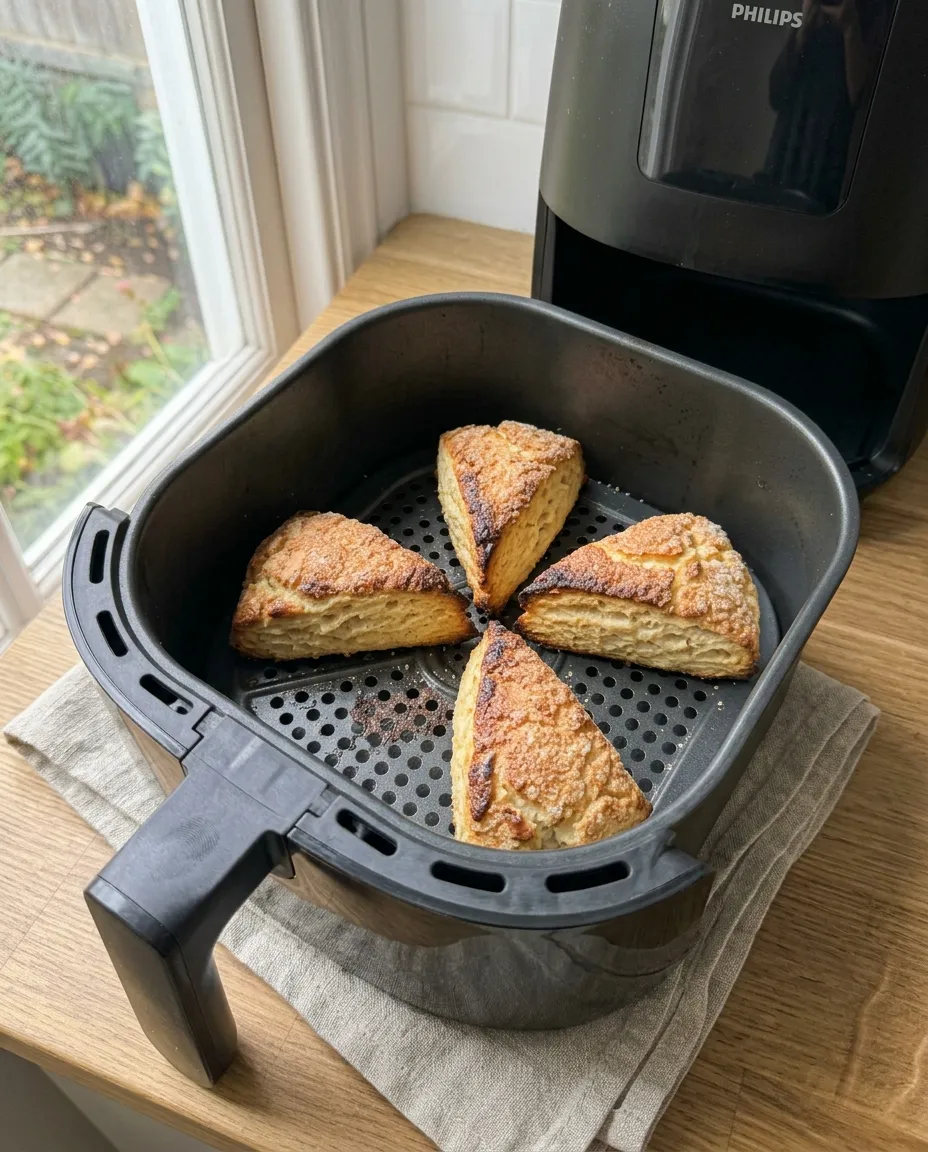
Scones were the bake that taught me my hands were the problem. My first batches were handsome and heavy, little sweet bricks, and I blamed the recipe, the flour, and at one low point the weather. Then a baker friend watched me make a batch and said nothing until the end, when she asked how many times I thought I had touched the dough. I had no idea. That was the answer.
Scones are the most arithmetic bake on this site: cold fat plus minimal handling equals tender, and every degree the butter warms and every extra squeeze of the dough subtracts from the result. The air fryer turns out to be a fine scone oven, quick and eager, but the machine only bakes what your hands hand it. So most of this page happens before the basket.
Quick answer: Grate frozen butter into the dry ingredients on a box grater, stir in cold cream and egg within a strict touch budget, pat one 7 inch disc, and cut 8 wedges so every scone has two cut faces that bake crumbly. Freeze the wedges 15 minutes, brush cream on the tops only, never the cut sides, and bake at 340°F for 11 to 13 minutes, spaced apart, until deep gold on top and 200°F inside.
Wedge or round: pick your country
Half the scone results on the internet are British and half are American, and they are describing two related but different objects, which is why the instructions never quite agree:
| American wedge | British round | |
|---|---|---|
| Shape | Triangles cut from a disc | Circles stamped with a cutter |
| Dough | Richer: cream, egg, more sugar | Leaner and taller, milk-based, barely sweet |
| Texture | Crumbly edges, dense-tender middle | Fluffy, made for splitting and loading |
| Waste | Zero: eight cuts, no scraps | Scraps get re-rolled, and re-rolled dough toughens |
This recipe commits to the wedge, and not out of patriotism: the keyword's crumbly edges literally live on the wedge's two cut faces, which crisp in the moving air, and cutting wedges means no scraps, no re-rolling, and no second-generation tough scones. If you want the British experience anyway, stamp 2.5 inch rounds, press straight down without twisting the cutter, which seals the edge and stunts the rise, and accept that the re-rolled stragglers are for the cook.
Grate the butter frozen
Every scone recipe says cold butter. This one says frozen, and grated, because the standard instruction, cut cold butter into the flour until it resembles coarse crumbs, is a skill test hiding inside a recipe, and warm-handed people fail it in slow motion as the butter softens under their fingers.
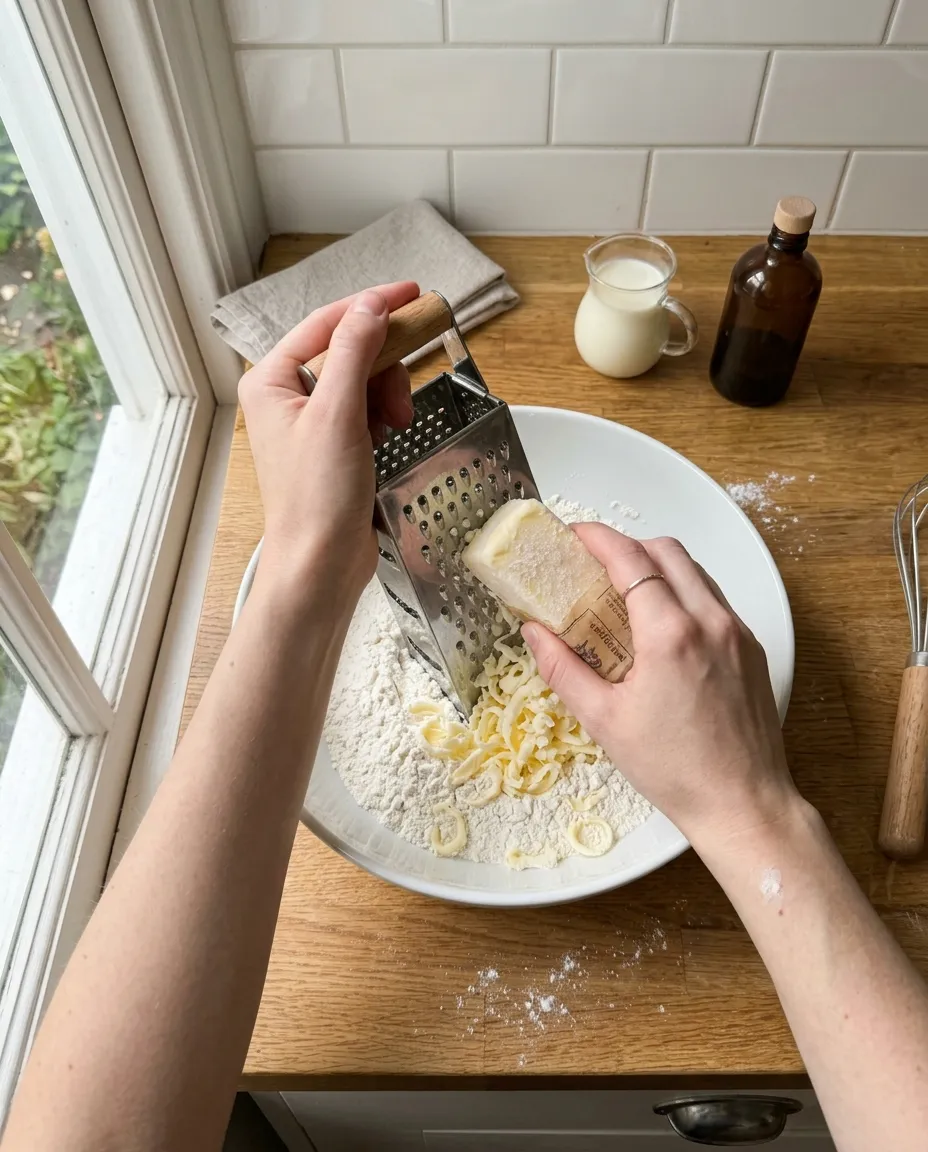
- Freeze the stick solid, then grate it on the coarse side of the box grater straight into the dry ingredients, the same grater side that shreds the zucchini for the zucchini bread all August. Thirty seconds of grating produces perfectly even butter shreds with no cutting in, no pastry blender, and no hand contact worth counting.
- Toss the shreds through the flour with a fork, just to coat and distribute. Do not rub them in; the whole point is that they stay discrete.
- Why the cold matters: those butter pieces melt in the heat and leave tender pockets in the crumb, which is where crumbliness comes from. Butter that softened into the flour beforehand makes a uniform, dense, cookie-like crumb instead. Cold fat is the difference between a scone and a sweet hockey puck, and frozen grated fat makes cold foolproof.
- The liquid is cold too: cream and egg straight from the fridge, for the same reason.
The touch budget
Flour plus liquid plus agitation equals gluten, and gluten is wonderful in the crusty loaf and fatal in a scone. Since "do not overwork" is advice nobody can measure, here is the version you can count:
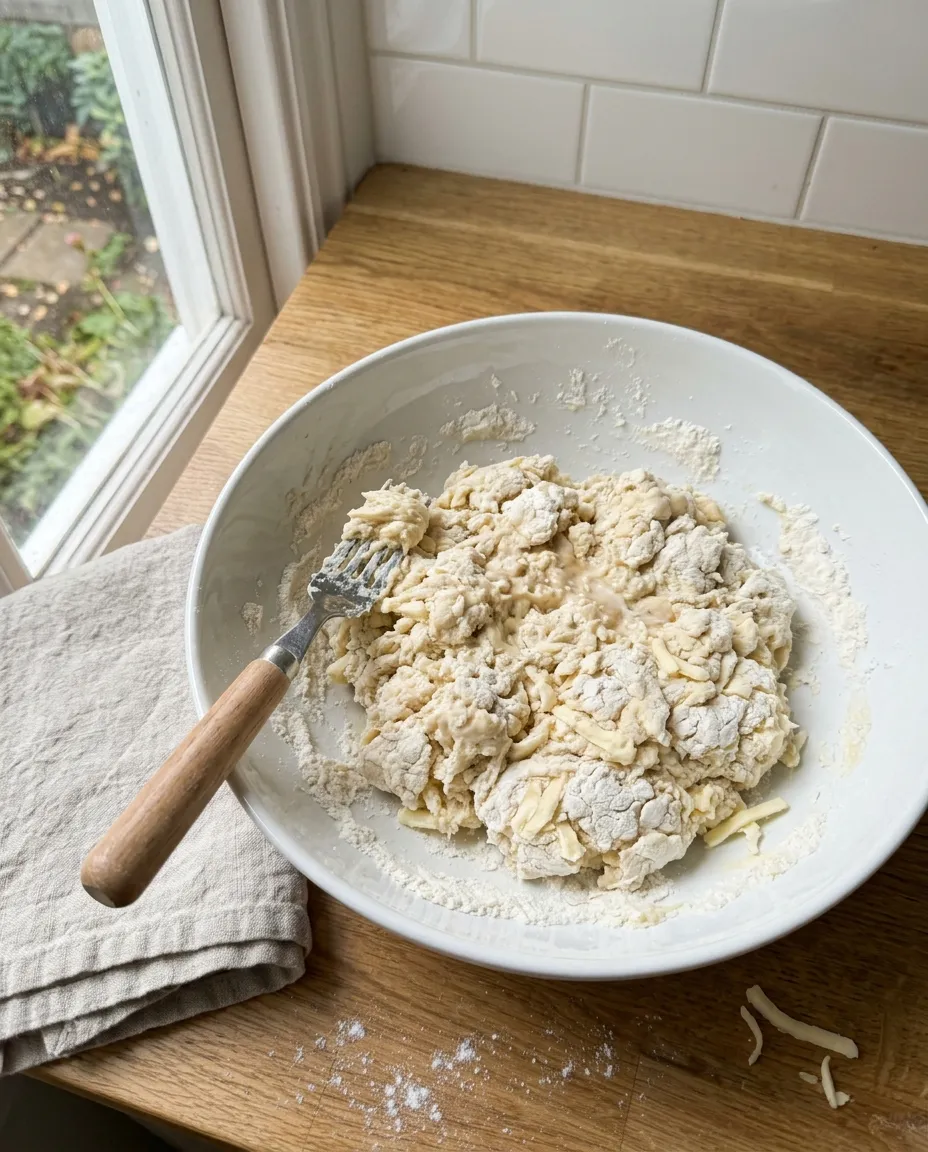
- Stir the liquid in with a fork, about 12 strokes, stopping at a shaggy, raggedy mess with dry patches. It should look unfinished. It is not; the next step finishes it.
- Fold the mass over itself in the bowl 3 times, no more, pressing gently with the heel of your hand. The folds pick up the dry patches and, as a bonus, stack a few crude layers into the dough.
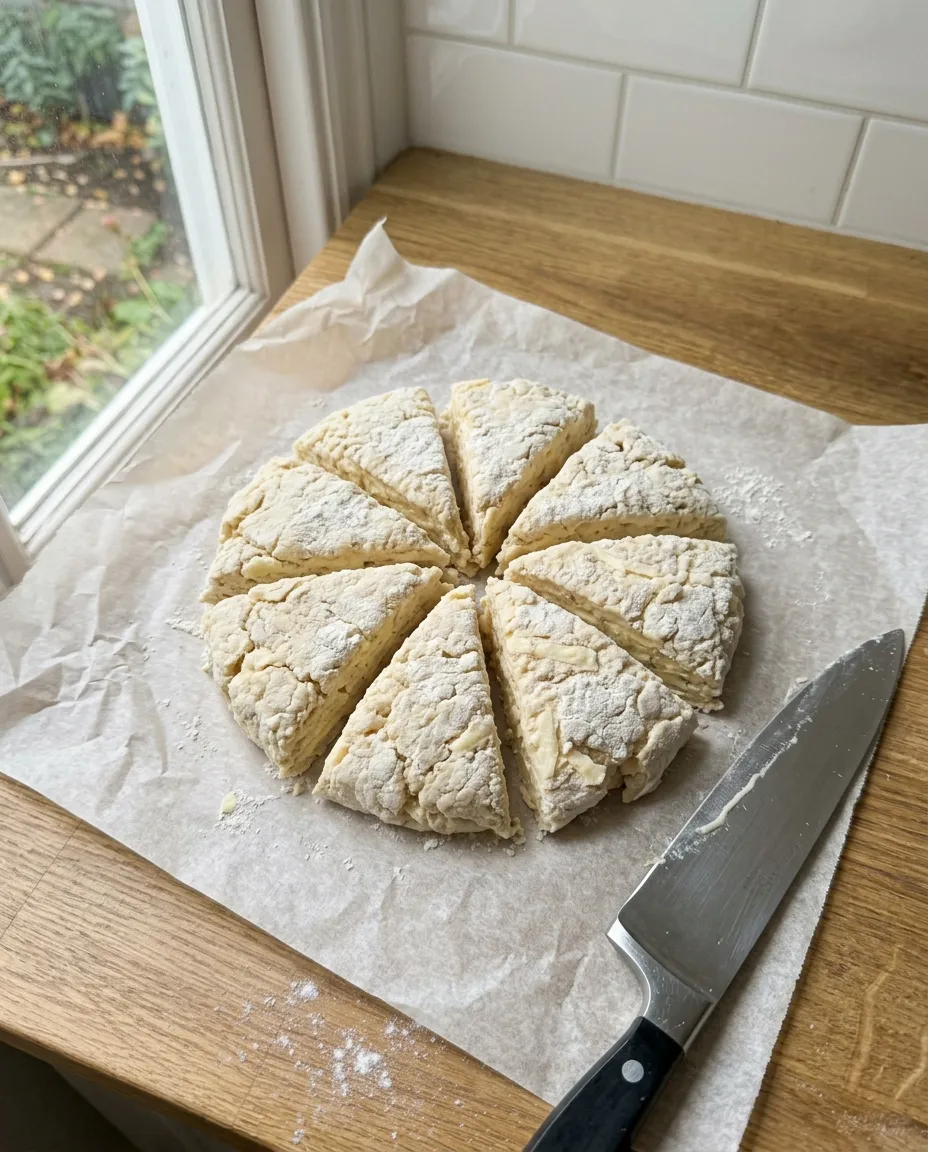
- Pat, once, into a 7 inch disc on parchment. No rolling pin, no rerolling, no perfecting the edges. Cracked, rustic sides bake into character.
- Cut 8 wedges with a big knife, pressing straight down. Done. From liquid to cut wedges, your hands touched the dough perhaps twenty times, and that number is the recipe.
The freezer rest, and the wash rule
Two small disciplines between cutting and baking, both cheap, both load-bearing:
- Fifteen minutes in the freezer for the cut wedges. The same logic as the churros' freezer set: the patting and cutting warmed the butter's surface, and the freezer re-hardens it so the wedges hold their corners and the butter pockets survive to do their tender work. Cold dough into hot air is the whole scone religion in five words.
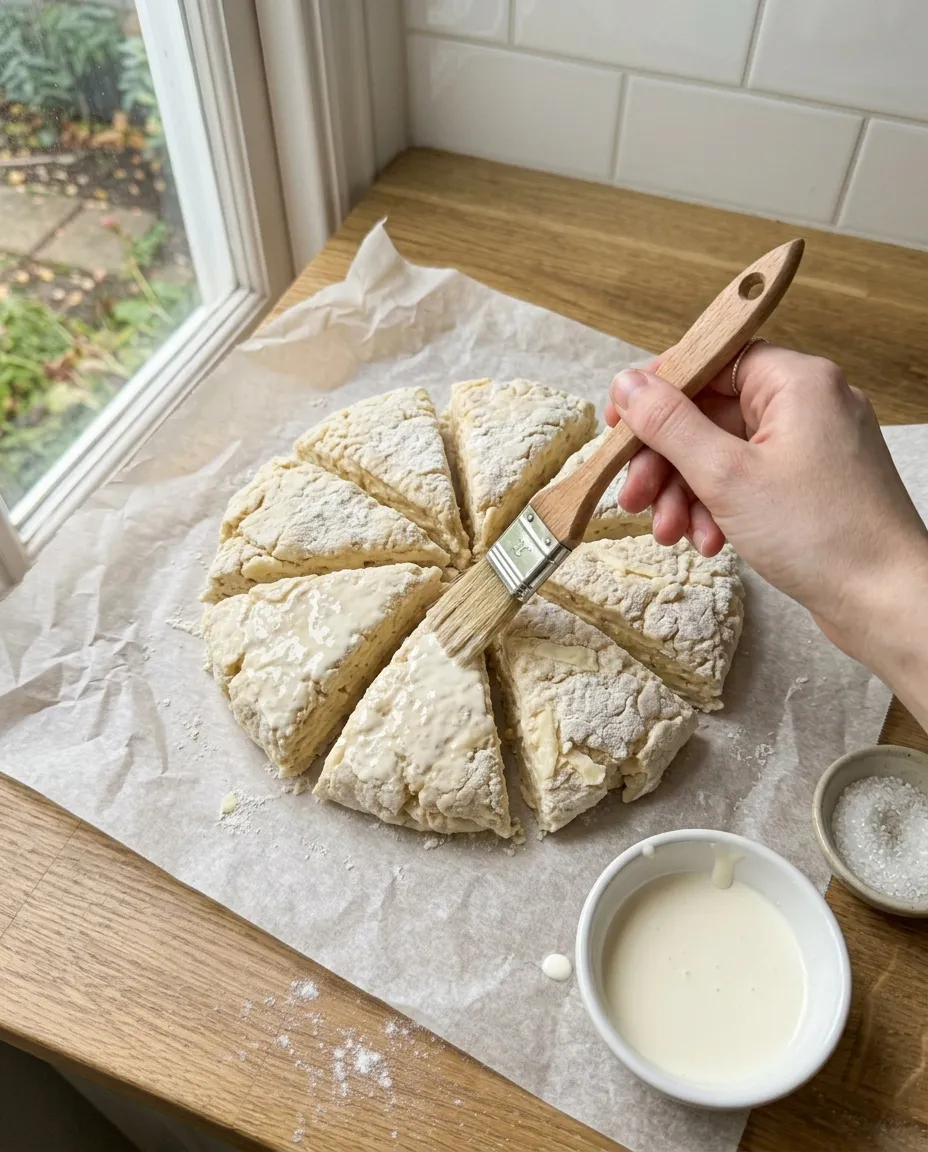
- Brush cream on the tops only, never the cut sides. The wash gives the crown its deep gold gloss, but painted over the cut faces it glues the layered edges shut, and sealed edges cannot puff apart in the heat. The sides stay naked; that is where the rise breathes and the crumble forms. This is the single most common invisible mistake in scone baking, and no basket or oven can undo it.
How to make them
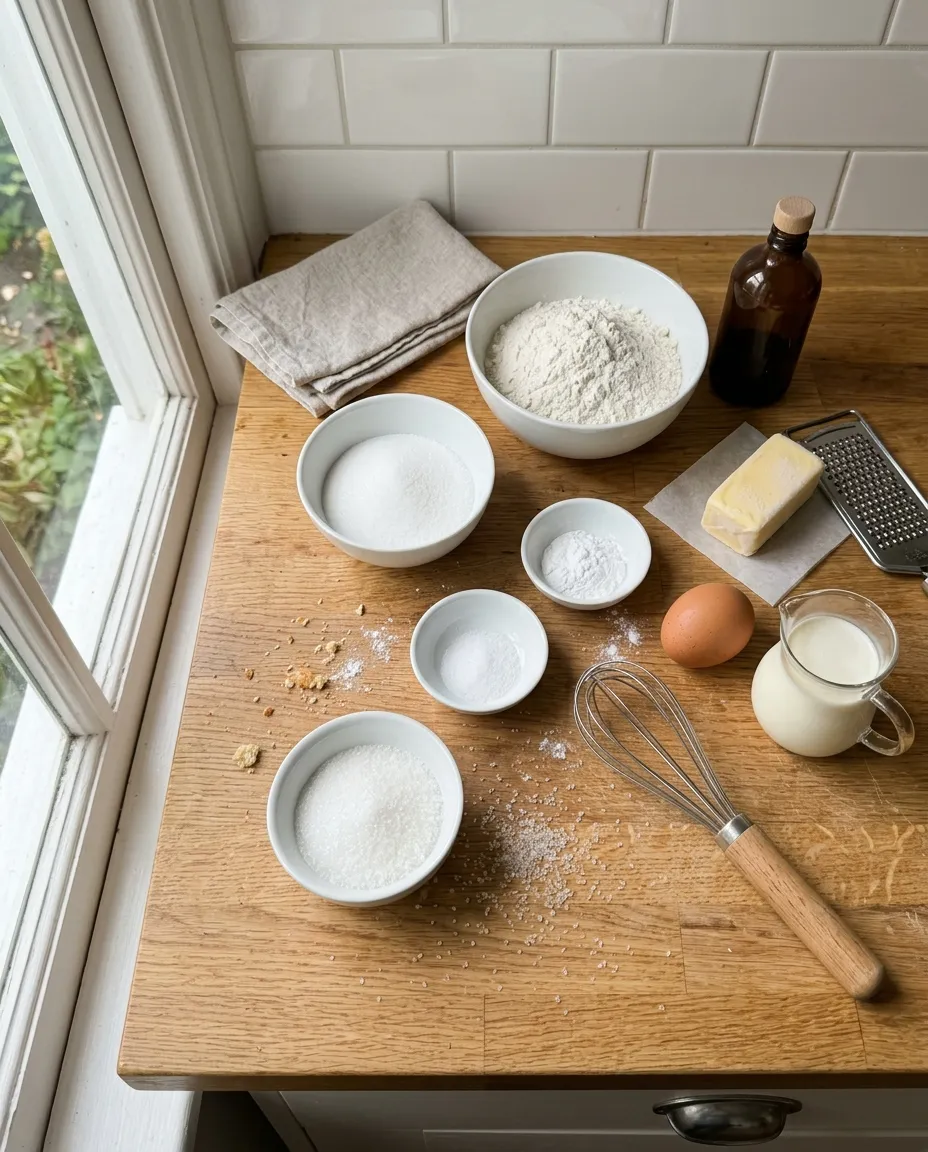
- Whisk the dry: 2 cups flour, 1/4 cup sugar, 1 tablespoon baking powder, 1/2 teaspoon salt.
- Grate in 6 tablespoons of frozen butter and toss through with a fork.
- Whisk 1 cold egg with 1/2 cup cold heavy cream and 1 teaspoon vanilla, pour over, and spend the touch budget: 12 stirs, 3 folds, 1 pat into a 7 inch disc on parchment.
- Fold in add-ins, if using, at the shaggy stage: 3/4 cup of berries, chips, or dried fruit, counted inside the same budget.
- Cut 8 wedges, straight down, and separate them slightly on the parchment.
- Freeze 15 minutes, wedges and parchment together, while the kettle goes on.
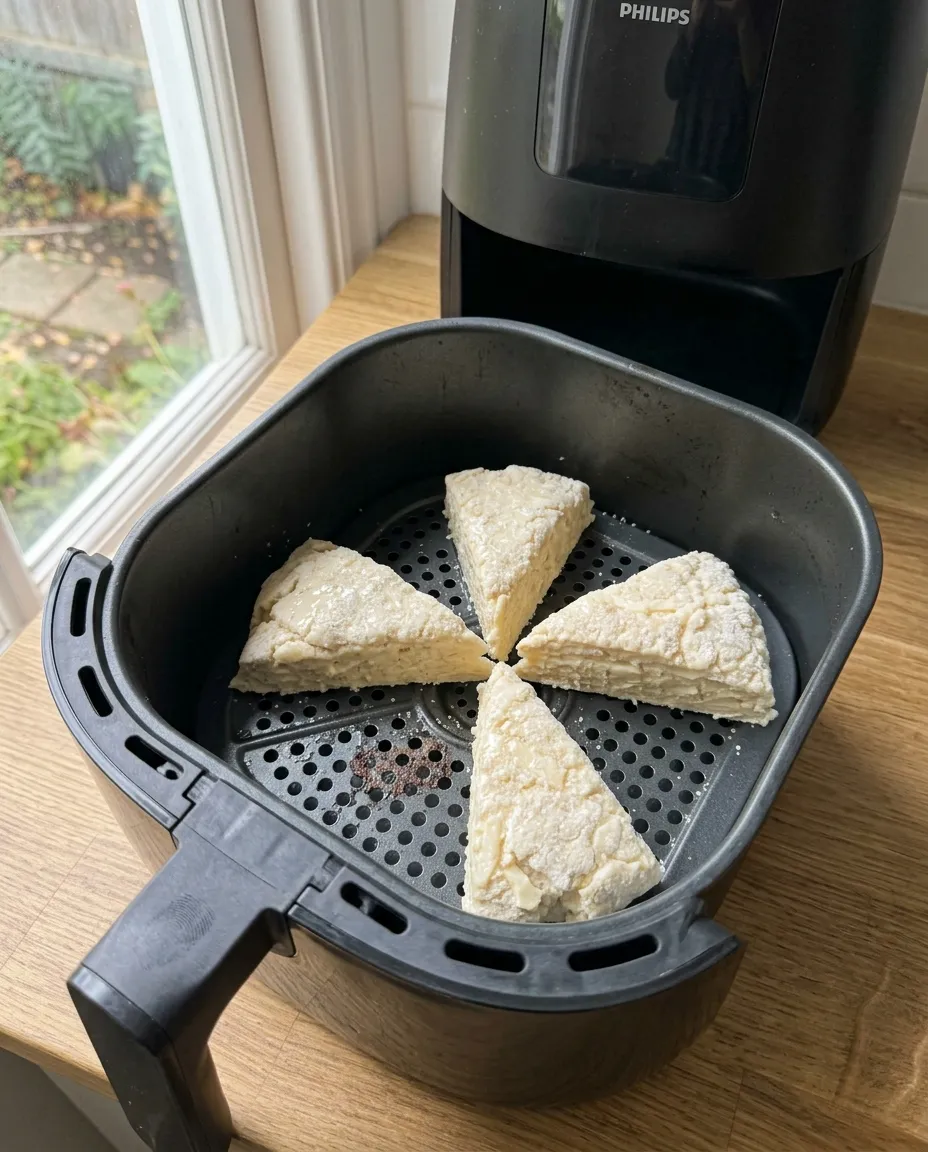
- Brush the tops only with cream, never the cut sides, and sprinkle with coarse sugar. Slide the wedges off the parchment onto the lightly greased basket and bake at 340°F for 11 to 13 minutes, 4 at a time, an inch apart, no preheat.
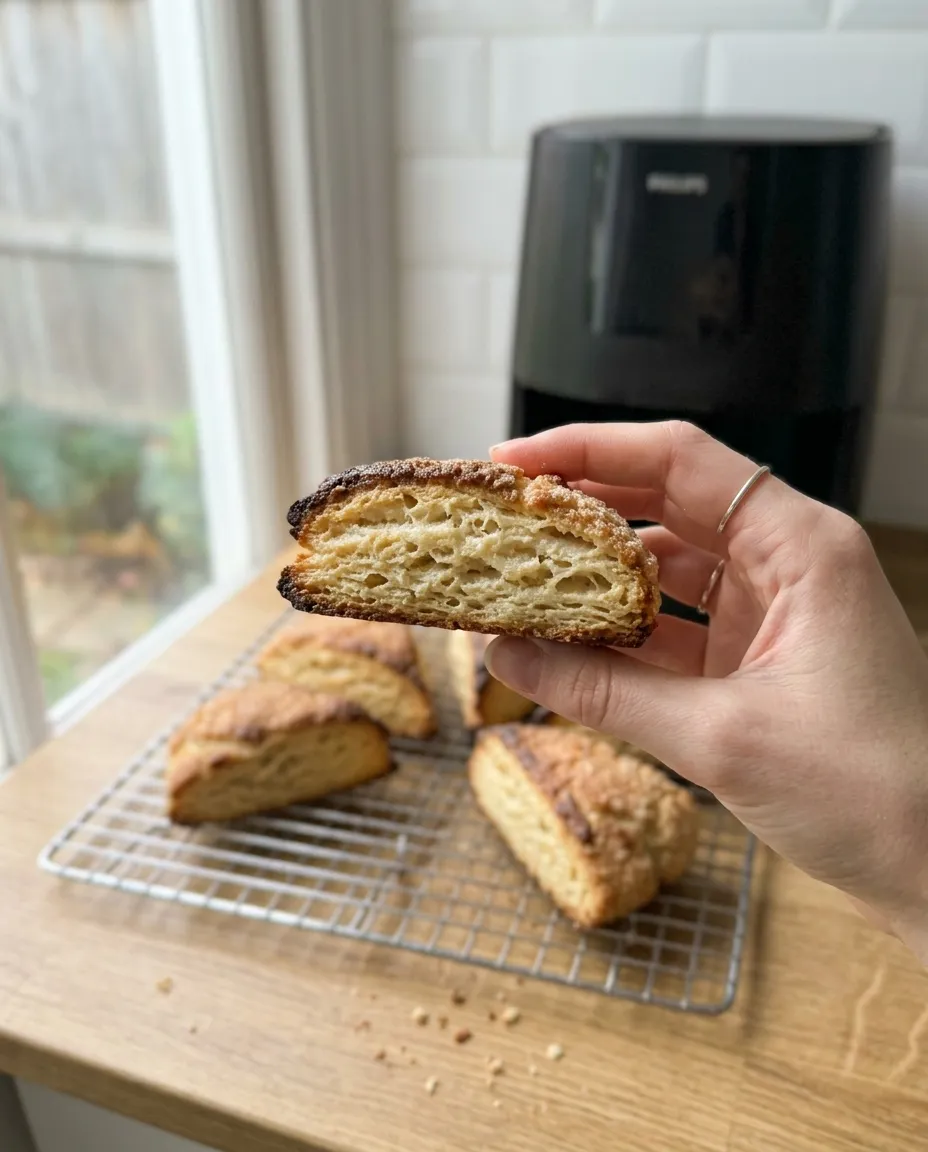
- Pull at deep gold and 200°F at the thick end of a wedge, rest 5 minutes on a rack, and serve warm, which is not optional so much as the entire point of homemade.
Temperature, spacing, doneness
Oven scone recipes run hot, 400°F and up, and the air fryer calculator would faithfully hand you about 375°F. This page bakes at 340°F anyway, the same deliberate step below the conversion that quick bread loaves like the pumpkin bread take, because a sugared, cream-washed crown sits close to a top element, and at 375°F the tops finish their browning minutes before the thick middles finish their baking. Gentler heat lets the two finish together. The site-wide settings live in the air fryer baking chart, and this bake skips the preheat per the preheat guide.
- Space the wedges an inch apart. Scones are the anti-dinner-rolls: the rolls touch on purpose to stay soft-sided, and scones separate on purpose so the moving air can crisp every cut face. Same machine, opposite seating chart, both correct.
- Doneness is a number plus a color: deep gold crown, and 200°F on an instant-read thermometer in the thick end. A pale-topped scone pulled early eats doughy at the point of the wedge, and the color alone lies when the machine has a hot spot.
- Batch two runs a minute faster on warmed metal, per the standing rule.
The cream question, answered for Americans
If you are serving these to anyone who has been to Britain, the topping conversation will happen, so here is the briefing. Clotted cream is thick, faintly cooked-tasting cream with the texture of soft butter, traditional, glorious, and nearly unbuyable in most American grocery stores. The 10 minute stand-in that has fooled my most scone-opinionated friend: whip 1/2 cup heavy cream with 2 tablespoons of mascarpone and a teaspoon of powdered sugar to stiff, spoonable peaks. Then jam, good and tart, raspberry by house rule.
Whether the cream or the jam goes on first is a genuine regional dispute in England, Devon says cream first, Cornwall says jam first, and the only wrong answer at your table is skipping the warm scone underneath. Split it by hand, never with a knife; a broken face holds more of everything, which is the crumbly edge paying rent.
Troubleshooting
| What you got | Why | Fix |
|---|---|---|
| Heavy, dense bricks | The touch budget was exceeded, or the butter warmed to paste. | 12 stirs, 3 folds, 1 pat, and frozen grated butter that never meets your palms. The wider overmixing rule lives in the dry bakes guide. |
| Scones did not rise | Cut sides sealed by wash, a twisted cutter, or tired baking powder. | Wash tops only, cut straight down, and test old powder in hot water; it should fizz with enthusiasm. |
| Spread flat, lost their corners | Warm dough went into the machine. | The 15 minute freezer rest, every time. |
| Dark tops, doughy centers | Oven-conversion temperature under a top element. | 340°F, and the thermometer's 200°F at the thick end. The burning guide covers machines that scorch anyway. |
| Uniform, cookie-like crumb | The butter was rubbed in fully instead of left in shreds. | Toss the grated shreds with a fork and stop. Discrete butter is future crumble. |
| Berries bled purple streaks | Fresh berries crushed during folding. | Frozen berries, unthawed, folded in at the shaggy stage; they hold their shape through the budget. |
| Bottoms pale while tops browned | Parchment blocked the underside. | Slide the parchment out from under the frozen wedges and bake them straight on the lightly greased basket; the freezer made them rigid enough to move. The liner guide has the full rules. |
| Second batch darker | Warmed basket head start. | Minus one minute, and keep the waiting wedges in the freezer, not on the counter. |
Recurring cross-recipe mysteries belong to the troubleshooting guide.
Variations
- Blueberry: 3/4 cup frozen blueberries, unthawed, plus the flour-toss trick from the lemon bread and the blueberry muffins so they hang in the crumb.
- Lemon: rub a lemon's zest into the sugar before whisking the dry, the sugar-rub doctrine doing scone duty, and drizzle the cooled scones with that page's glaze, thinned by a teaspoon.
- Cheddar chive, sugar cut to 1 tablespoon: 3/4 cup sharp cheddar and 2 tablespoons chives, and suddenly it is a soup-night bread. This variation sits closest to the biscuit border: the family distinction, for the record, is that biscuits laminate flaky layers for splitting, while scones carry a richer, crumblier, egg-and-sugar crumb. Cousins, not twins.
- Cranberry orange: dried cranberries plus orange zest in the sugar, the holiday standard for a reason.
- Chocolate chunk: 3/4 cup chopped dark chocolate, and serve these slightly warm so the chunks are still molten at the middle.
- Doubling for a crowd: the recipe scaler handles the math for two discs; bake in relays of four and hold the waiting wedges in the freezer, where they only improve.
Storage and make-ahead
- Day of: scones peak warm and hold acceptably 24 hours in a container. They are not a Wednesday bake for Sunday.
- Revive day-two scones at 320°F for 3 minutes, which returns most of the crumble and all of the warm.
- The real move is raw: cut wedges freeze solid on their parchment, then keep 2 months bagged. Bake from frozen at 340°F, adding 2 to 3 minutes, washed and sugared straight from the bag, the same bake-from-solid logic that makes frozen cookie dough worth keeping. Warm fresh scones for one, on demand, in fifteen minutes, is the quiet luxury of this recipe.
- Baked scones freeze 2 months too, and re-warm from frozen at 320°F for 5 to 6 minutes, a rung below fresh-from-raw but far above sad.
Frequently asked questions
QHow long do scones take in an air fryer?
11 to 13 minutes at 340°F, baked four at a time an inch apart after a 15 minute freezer rest, done when the tops are deep gold and the thick end reads 200°F inside. Frozen raw wedges from the make-ahead stash take 2 to 3 minutes longer straight from the bag. Start to finish with fresh dough is about 45 minutes, most of it hands-off.
QWhat is the difference between British and American scones?
British scones are tall, round, barely sweet, milk-based, stamped with a cutter, and built as a vehicle for jam and clotted cream. American scones are richer wedges, made with cream, egg and more sugar, with crumbly cut edges and a denser, more tender middle, and add-ins baked inside. This recipe is the American wedge, partly for texture and partly because cutting wedges leaves no scraps to re-roll into tough seconds.
QWhy do you grate frozen butter for scones?
Because grating solves the two ways cold butter goes wrong: it produces perfectly even small pieces in thirty seconds with no skill required, and it keeps warm hands off the fat entirely. Those discrete cold shreds melt during the bake and leave little tender pockets through the crumb, which is where a scone's crumble comes from. Butter that softened into the flour beforehand bakes into a uniform, dense, cookie-like crumb instead.
QWhy are my scones heavy and dense?
Overworked dough or warm butter, and usually both together. Every stir past shaggy builds gluten, so count instead of guessing: about 12 fork stirs, 3 folds, one pat into a disc, and cut. And keep the fat frozen and grated so it stays in discrete pieces. A scone dough that looks slightly unfinished and raggedy going into the freezer is exactly right; smooth, satiny scone dough is a brick announcing itself.
QWhy didn't my scones rise?
Three usual suspects. The cut sides got brushed with cream or egg wash, which glues the edges shut so they cannot puff apart; wash the tops only. A round cutter was twisted on the way down, which seals the edge the same way; press straight down. Or the baking powder is stale; a teaspoon in hot water should fizz immediately, and a quiet fizz means new powder before anything else gets blamed.
QWhy chill scones before baking?
Patting and cutting warms the butter at the dough's surface, and warm-buttered wedges slump and spread before the crumb sets, losing their corners and their lift. Fifteen minutes in the freezer re-hardens the butter so the wedges hold their shape and the butter pockets survive to melt inside the crumb where they belong. Cold dough into hot air is the rule, and it costs exactly one cup of tea's worth of waiting.
QWhat is clotted cream and what can I substitute?
Clotted cream is slowly heated, cooled cream with a thick, silky, almost-butter texture, the traditional British scone topping, and it is hard to find in most American stores. The convincing 10 minute substitute: whip 1/2 cup heavy cream with 2 tablespoons mascarpone and a teaspoon of powdered sugar to stiff, spoonable peaks. Serve with tart jam, and let the table fight about which goes on first.
QCan you make scone dough ahead of time?
Yes, and the freezer is the best version of this recipe. Cut the wedges, freeze them solid on their parchment, and bag them for up to 2 months. They bake straight from frozen at 340°F with 2 to 3 extra minutes, washed and sugared from the bag, and taste identical to fresh-made. Two or three warm scones on a random Tuesday morning, twelve minutes after the idea occurs, is what the stash is for.
QHow do you store scones and keep them from drying out?
Scones are a same-day bake at their best and a 24 hour bake at their acceptable, stored airtight once fully cool. Revive day-two scones at 320°F for 3 minutes, which restores the warm crumble almost completely. Beyond that, freeze baked scones for 2 months and re-warm from frozen at 320°F for 5 to 6 minutes, though the raw frozen wedge baked fresh beats the thawed baked scone every time.
Never overbake again
Get our one-page times & temps cheat sheet, plus a new tested recipe each week.
No spam · unsubscribe anytime