
Air Fryer Morning Glory Muffins: Loaded and Actually Filling
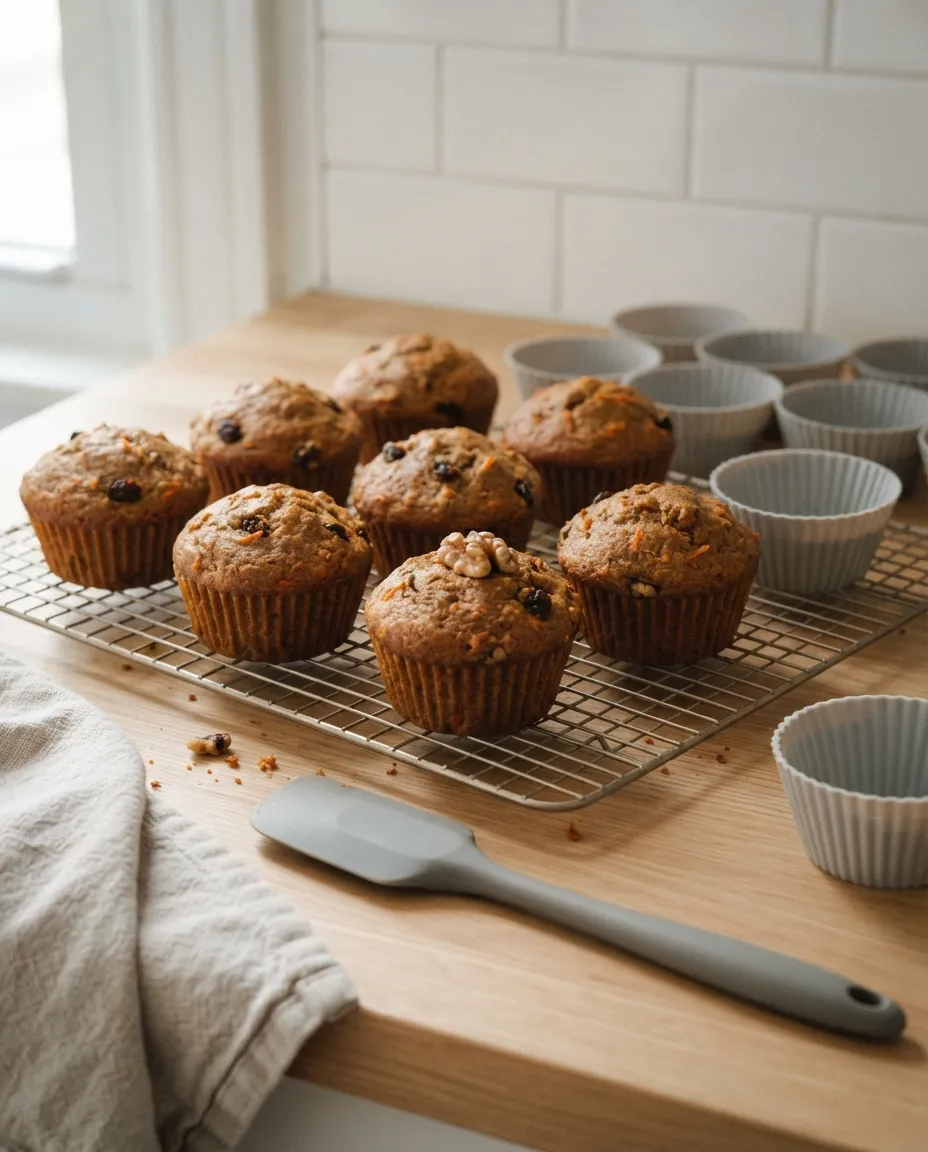
A morning glory muffin carries carrot, apple, pineapple, raisins, coconut and walnuts in one crumb, which is why people love it and why it fails so often: that is a produce drawer's worth of water walking into a small batter. Bake it like a plain muffin and you get the famous gummy middle, sunken and damp, done on the outside and pudding at the core. This page manages the water on purpose, presses the pineapple nearly dry and hands its juice to the raisins, then bakes at 320 degrees, the slow lane every loaded batter on this site rides in, until a thermometer, never a toothpick, says 200 inside. The result is the rare muffin that means it: dense with actual food, moist for days, and heavy enough in the hand to be honest breakfast instead of round cake.
What’s on this page
- What loaded means, and where this muffin comes from
- The water budget, balanced by a trade
- The actually-filling audit
- Cups, cases, and why silicone changes the clock
- Temperature and timing
- Done is a number, not a toothpick
- Ingredients
- How to make them
- The swap rules
- Storage, and a week of breakfasts
- Fixing what goes wrong
- Frequently asked questions
What loaded means, and where this muffin comes from
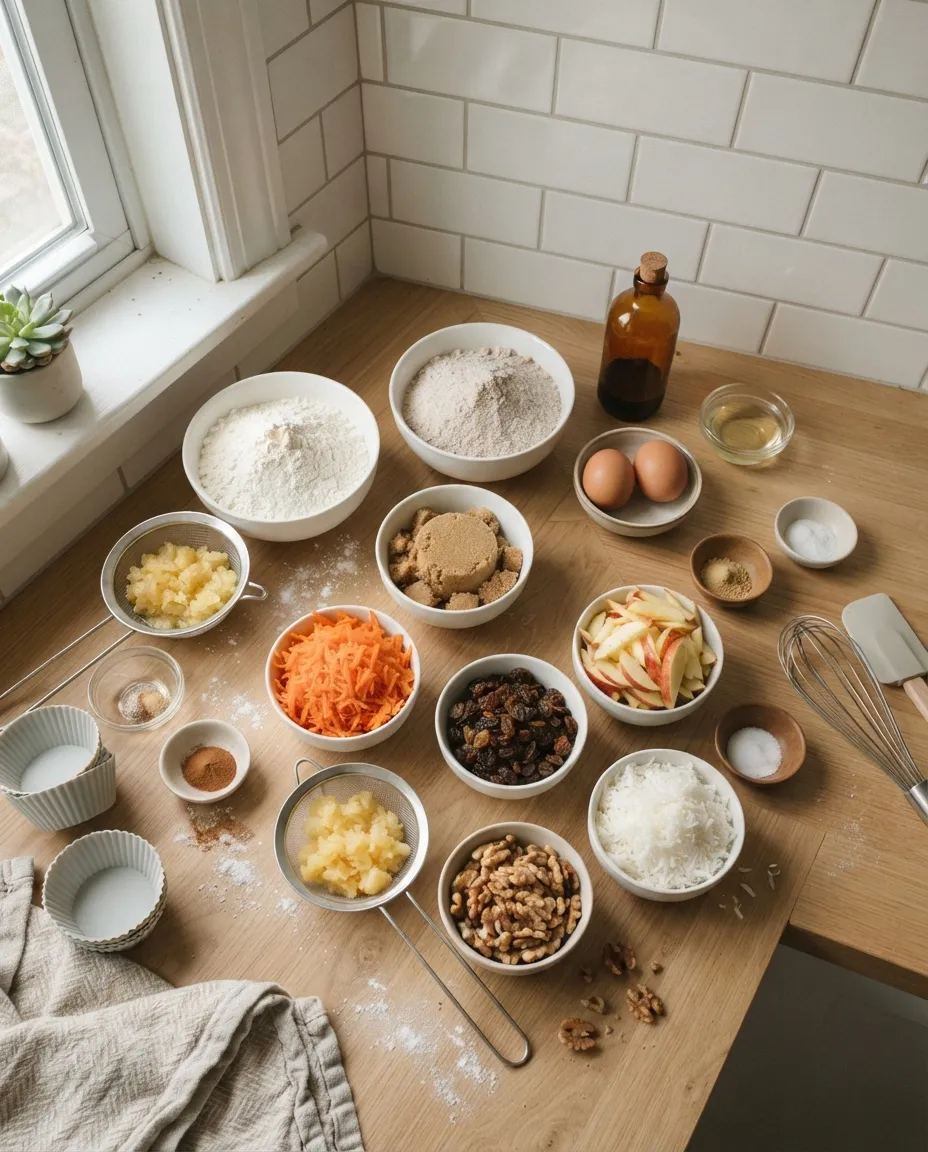
The morning glory muffin has a birth certificate: 1978, the Morning Glory Cafe on Nantucket, where Pam McKinstry folded her island's whole pantry into one muffin and accidentally wrote a classic that Gourmet magazine later canonized. The formula has six passengers riding one spiced batter: grated carrot for body, grated apple for perfume, crushed pineapple for tang, raisins for chew, coconut for fat and fragrance, walnuts for the argument at the end of each bite. Nothing on this site's shelf carries more actual food per muffin, and the closest relatives, our carrot muffins and the carrot cake in its Sunday clothes, are what this recipe looks like before the rest of the passengers board.
The load is the point and the load is the problem. Every one of those six is either wet or busy soaking up what is wet, and a batter that has to set around all of them behaves differently from a plain one: it rises less, bakes slower, and lies to a toothpick. The rest of this page is the management plan.
The water budget, balanced by a trade
This is the same discipline that runs our zucchini bread, where the grated squash gets wrung to a measured half cup, applied to a wetter suspect list, and the diced apples in our apple cake get drained in a sieve for the same reason. Carrot behaves; grated fine, it holds its water until the bake and releases it slowly into the crumb, which is where moisture belongs. Apple mostly behaves. Crushed pineapple does not behave. Straight from the can it is fruit floating in syrup, and spooned into a batter it delivers a tablespoon of free liquid per muffin, which is the whole gummy-middle problem wearing a lei.
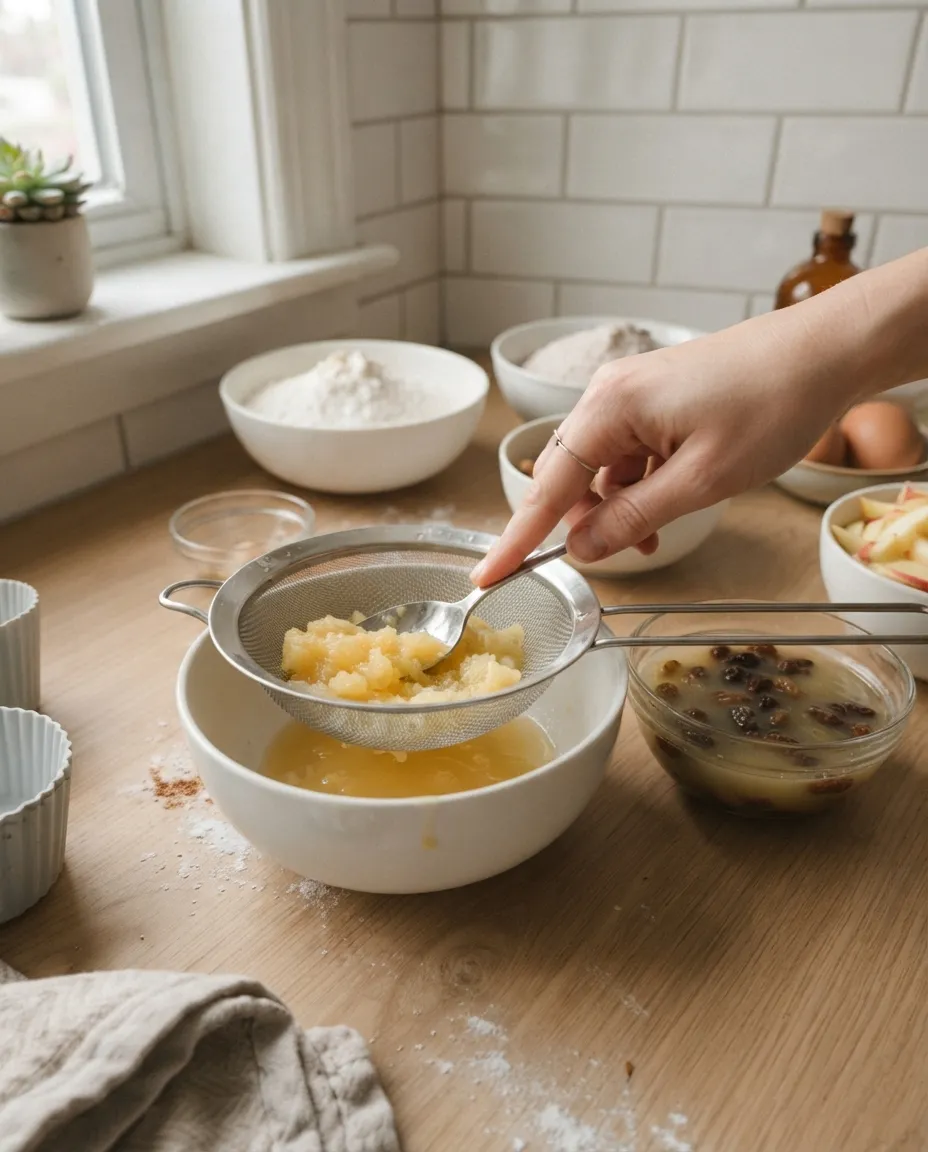
So the pineapple pays a toll: pressed in a sieve with the back of a spoon until it stops dripping, which takes 30 seconds and removes about a third of a cup of juice. And here is the trade that makes this recipe better instead of just drier: the raisins drink what the pineapple gave up. Soak them in the pressed-out juice while you build the batter and they arrive plump, pineapple-sweetened, and unable to do the raisin crime of leeching moisture out of the surrounding crumb. The water leaves the place it would do harm and reports to the place it does good. Nothing is wasted, and the ledger closes balanced.
The actually-filling audit
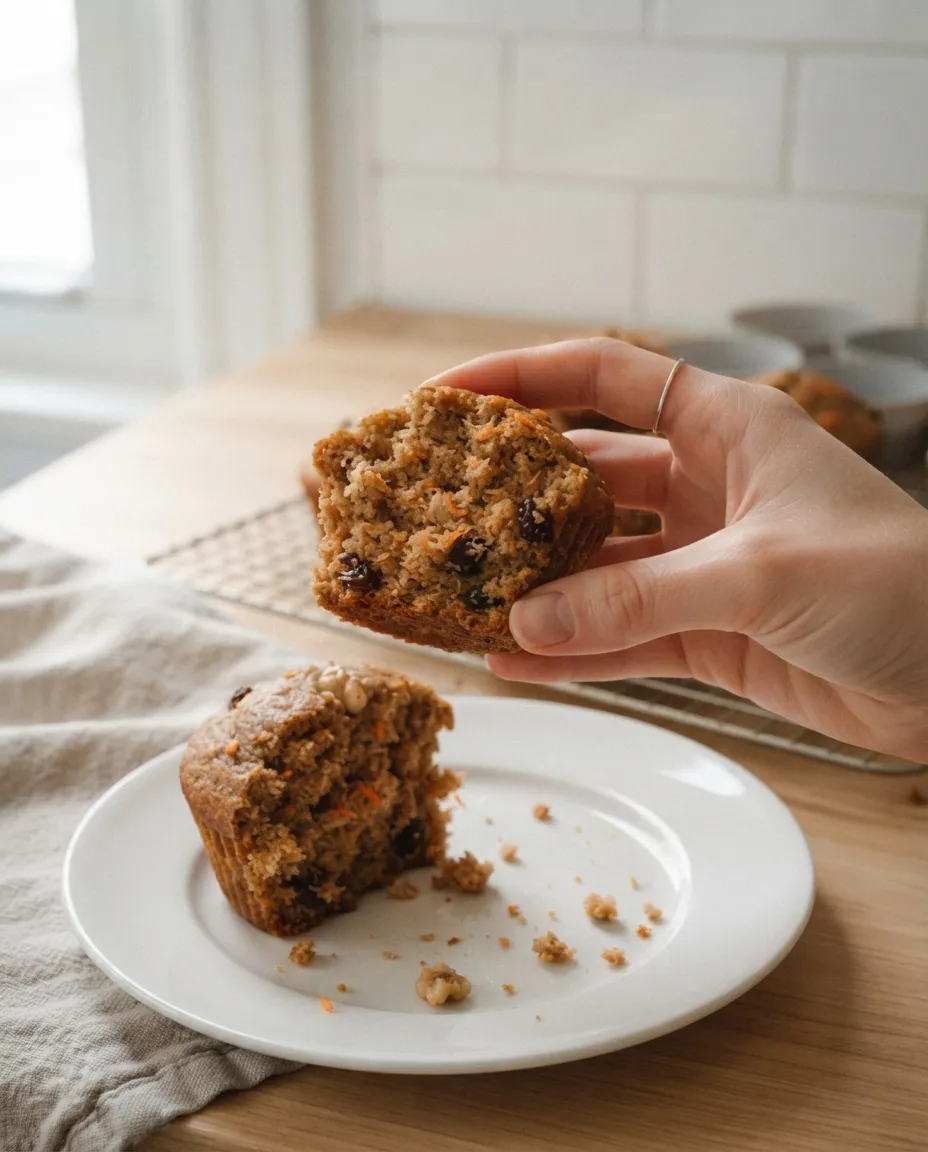
The title makes a claim, so here are its receipts. Each muffin carries roughly a half carrot, a chunk of apple, a spoonful of pineapple, a small handful of raisins, walnuts and coconut, and a flour blend that is nearly half whole wheat. That works out to about 4 grams of fiber and 5 grams of protein alongside the fat from nuts and coconut, which is the combination that actually holds a stomach until lunch. A bakery morning glory manages the same trick with size, 500 calories of it; this one does it at about 280 by being dense with food instead of large with crumb. It will not out-fill the bacon and eggs, but it beats any plain muffin on the shelf, and it beats a granola bar while tasting like a bakery instead of a wrapper.
Cups, cases, and why silicone changes the clock
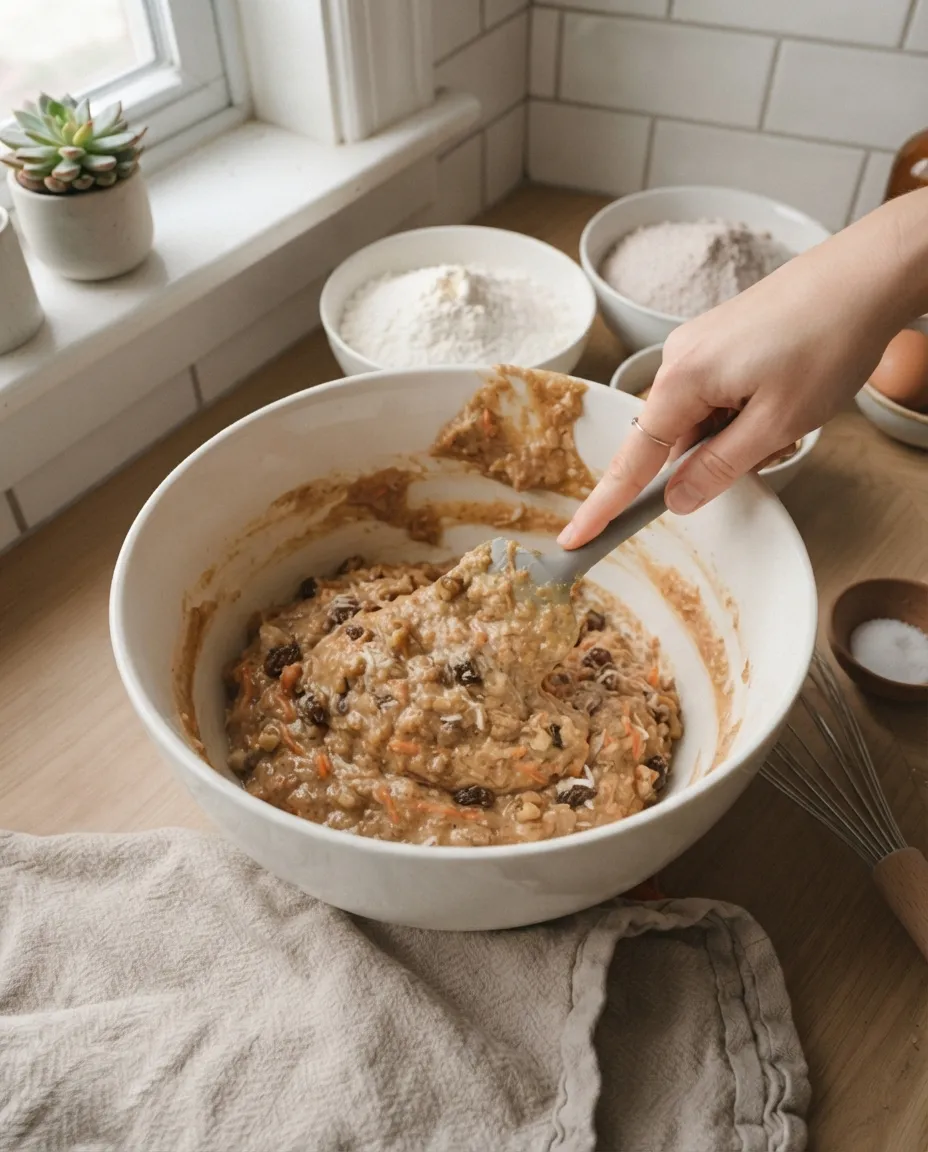
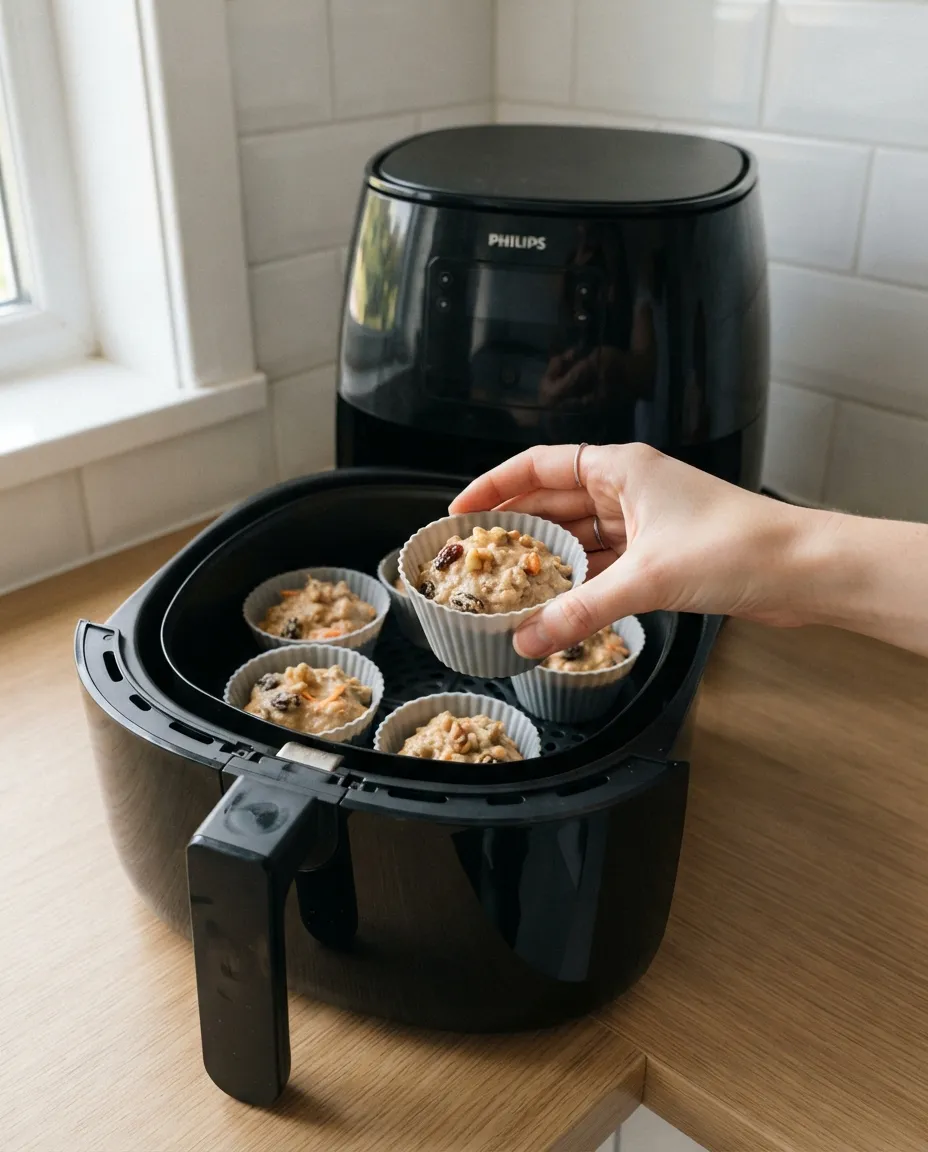
Bake these in silicone baking cups, six at a time, set directly on the basket floor. Paper cases alone slump under a batter this heavy, a metal tin blocks the airflow that makes the machine work, and silicone holds the shape while releasing the muffin with a single push from underneath. The one honest cost is time: silicone resists heat, so batter inside it warms gently and the clock runs a few minutes longer than paper would, a trade explained in full in using silicone molds in an air fryer. Fill the cups to their shoulder, about three quarters, which is a notch fuller than a plain muffin gets; a loaded batter climbs less, so you can afford the head start.
Temperature and timing
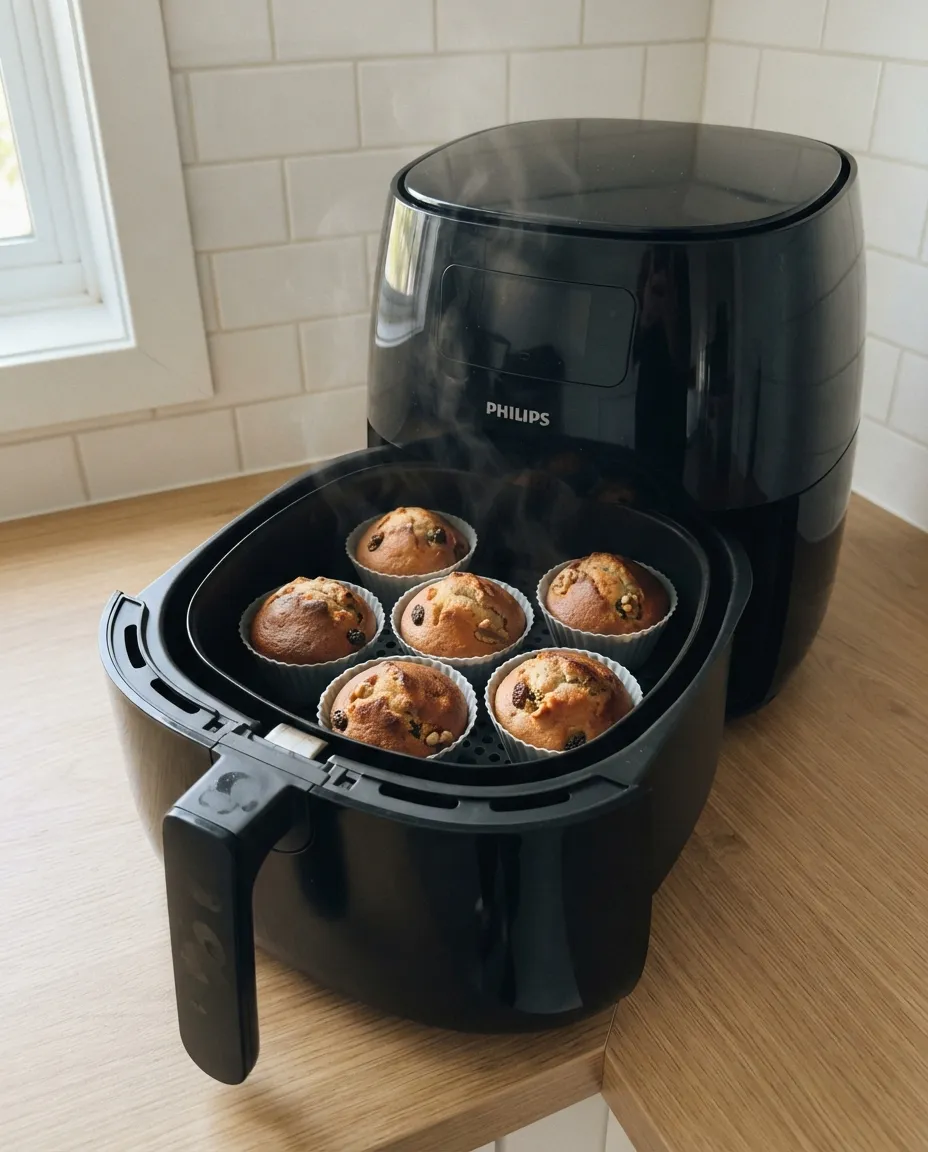
320°F for 15 to 18 minutes, six cups at a time, preheated 3 minutes. The one air fryer conversion floating around the ranking pages says 350°F for 10 minutes and change nothing else, and that is exactly how a loaded muffin fails: brown sugar, carrot and pineapple all brown early, so at 350 the tops finish their color by minute 8 while the wet center is barely halfway, and the machine gets blamed for what the thermostat did. 320°F is the same speed limit our banana muffins and bran muffins obey for the same reason, held a few minutes longer because this batter carries more cargo. Batch two runs about a minute faster in the warm machine.
Oven versions of this muffin bake at 375°F; our air fryer calculator would land the basket at 350, and the last step down is the loaded-batter tax, the same one every wet, sugary bake on the baking chart pays. The preheat matters because silicone already slows the start; the general case is in do you need to preheat an air fryer for baking.
Done is a number, not a toothpick
The toothpick test fails this muffin twice. Stab a morning glory and the pick will drag through a shred of apple or a plumped raisin and come out damp from perfectly cooked fruit, sending you back for minutes you did not need; or it will slip through a rare clean channel and come out dry while the crumb next door is still batter. Loaded crumb cannot be read with a stick. A thermometer reads 200 to 205°F in the center of the middle muffin, and that number does not care what it touched on the way in. Back it up with the spring test, a gentle press on the dome that fills back immediately, and by the fact that a done muffin smells like cinnamon while an underdone one still smells like batter.
Ingredients
For 12 muffins
- 1 cup all-purpose flour and 3/4 cup whole wheat flour
- 1 1/2 teaspoons cinnamon, 1/2 teaspoon ground ginger, 1/2 teaspoon fine salt
- 1 teaspoon baking soda
- 2 large eggs
- 1/2 cup neutral oil
- 1/2 cup packed brown sugar plus 2 tablespoons
- 1 teaspoon vanilla extract
- 1 1/2 cups finely grated carrot, about 2 large, not squeezed
- 1 medium apple, grated, skin on
- 1/2 cup canned crushed pineapple, pressed in a sieve until it stops dripping, juice reserved
- 1/2 cup raisins, soaked in the reserved pineapple juice
- 1/2 cup chopped walnuts and 1/3 cup shredded coconut
- 12 silicone baking cups
Grate the carrot on the fine holes, not the coarse ones. Coarse shreds stay toothy at this temperature and read as raw carrot in a finished muffin.
How to make them
- Press the crushed pineapple in a sieve with the back of a spoon until it stops dripping, and soak the raisins in the pressed-out juice.
- Whisk both flours, the cinnamon, ginger, salt and baking soda in a large bowl.
- In a second bowl, whisk the eggs, oil, brown sugar and vanilla until smooth and glossy.
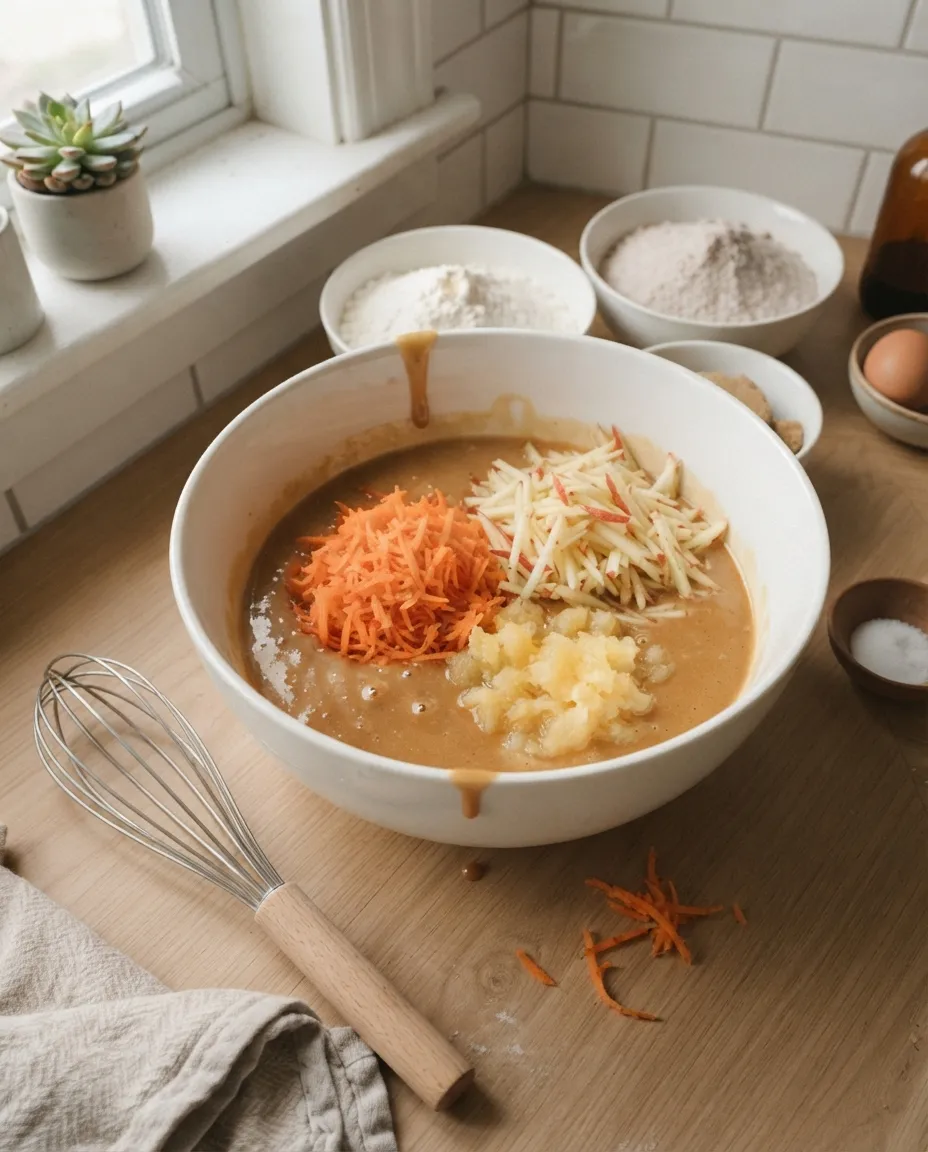
- Stir the grated carrot, grated apple and pressed pineapple into the wet bowl.
- Fold the wet mixture into the dry until the last streak of flour disappears, then fold in the drained raisins, walnuts and coconut. The batter will be thick; it is supposed to be.
- Rest the batter 15 minutes while the air fryer preheats at 320F for 3 minutes; the whole wheat drinks in that window and the crumb turns tender for it.
- Fill 6 silicone cups to their shoulder, about three quarters full, and set them directly on the basket floor with a little air between them.
- Air fry at 320F for 15 to 18 minutes, until the domes are deep gold and spring back from a gentle press.
- Confirm 200 to 205F on a thermometer in the center muffin, then cool the cups 5 minutes before pushing the muffins out from underneath.
- Bake the second batch about a minute shorter, and cool on a rack; the crumb finishes setting as the steam leaves.
The swap rules
| Passenger | Swap that works | The rule it obeys |
|---|---|---|
| Walnuts | Pecans, or sunflower seeds for nut-free | Like for like on fat and crunch, same 1/2 cup |
| Raisins | Chopped dates, dried cranberries | Still soak them in the pineapple juice; dry fruit steals from the crumb otherwise |
| Coconut | Rolled oats, same 1/3 cup | Both are dry passengers; a straight trade |
| Pineapple | More grated apple, pressed the same way | The press is not optional whoever rides in this seat |
| Whole wheat flour | All all-purpose | Softer crumb, slightly less filling, 2 minutes less resting |
| Not swappable | The carrot, the eggs, the rest | The carrot is the muffin, and the rest is the architecture holding six passengers up |
Storage, and a week of breakfasts
Loaded muffins age better than plain ones, and these are genuinely better on day two, once the fruit has finished sharing itself with the crumb. Airtight at room temperature they hold 3 days, with a paper towel under and over them to catch the moisture the fruit keeps exhaling; that trick matters more here than on any other muffin on this site. Past day three the refrigerator buys two more days at a small cost in tenderness, repaid in full by 8 seconds in a warm palm or 2 minutes at 300°F in the basket, which revives them better than any microwave. Frozen, they are the whole thesis: a dozen wrapped individually is two weeks of grab-and-go breakfasts, thawed overnight on the counter or brought back from frozen at 300°F for 4 to 5 minutes. The same make-a-batch logic runs the banana bread and pumpkin bread one shelf over, and if your bakes ever trend dry before day three, the machine-side causes live in how to avoid dry air fryer bakes. Everything tested is indexed at the recipe index, with the technique pages under guides.
Fixing what goes wrong
| Problem | Cause | Fix |
|---|---|---|
| Gummy, sunken middle | Unpressed pineapple, or 350°F browning the top early | Press until the dripping stops, 320°F, and trust the thermometer over the color |
| Toothpick keeps reading wet | It is hitting cooked fruit, not raw batter | Thermometer, 200 to 205°F center; the stick cannot testify in this muffin |
| Dense as a hockey puck | Overmixed after the flour went in | Fold to the last streak and stop; the rest stirs itself in with the add-ins |
| Raw carrot crunch in the crumb | Coarse grater | Fine holes only; coarse shreds need oven time this bake does not have |
| Domes pale, muffins done | Silicone shading the sides at a modest temperature | Normal here; color comes from the top only, and 200°F inside outranks a tan |
| Muffins stuck in the cups | Pushed out while hot | Five minutes of patience, then one press from underneath; more rescues in troubleshooting air fryer baking |
Frequently asked questions
QWhat temperature do you bake morning glory muffins in an air fryer?
320F for 15 to 18 minutes, six silicone cups at a time in a basket preheated 3 minutes, until a thermometer reads 200 to 205F in the center muffin. The advice to run muffins at 350F for 10 minutes works for plain batters and fails loaded ones: brown sugar, carrot and pineapple all brown early, so the tops finish their color while the wet middle is half raw. At 320F the color and the center arrive together. The second batch runs about a minute faster in the already-warm machine.
QWhy are my morning glory muffins gummy in the middle?
Almost always the pineapple. Canned crushed pineapple is fruit floating in syrup, and unpressed it delivers about a tablespoon of free liquid per muffin, which settles into the center and bakes into gum no timer can fix. Press it in a sieve until it stops dripping, and soak the raisins in the pressed-out juice so it is not wasted. The second culprit is temperature: at 350F the top sets and browns early, traps the steam, and the middle steams instead of baking. 320F and a 200F center reading solve both.
QWhy does the toothpick test not work on these muffins?
Because the crumb is full of cooked fruit that reads as wet. A pick dragged through a shred of apple, a plumped raisin or a pocket of pineapple comes out damp and glossy even when the batter around it is perfectly baked, so the test sends you back for minutes that dry the muffin out. The reliable reading is temperature: 200 to 205F on a probe in the center of the middle muffin means done regardless of what the probe touched on the way in. Back it up with a dome that springs back from a gentle press.
QCan I use paper liners instead of silicone cups?
Not alone. This batter is heavy with fruit and nuts, and a freestanding paper case slumps sideways in the basket before the crumb can set, giving you a muffin shaped like its own accident. Silicone cups hold the shape, survive the fan, and release with one push from underneath after a 5 minute cool. If you like the bakery look, drop a paper liner inside each silicone cup and the paper rides along legally. A metal muffin tin is the worst option in a basket machine, since it blocks the airflow underneath that the whole appliance depends on.
QCan I make morning glory muffins ahead and freeze them?
They are practically designed for it. Cool the muffins completely, wrap them individually, and freeze up to 3 months; the loaded crumb thaws moist because the fruit keeps lending water back as it warms. Thaw overnight on the counter, or bring one back from frozen at 300F for 4 to 5 minutes in the basket, which restores the top's slight crust as a bonus. At room temperature they keep 3 days airtight with a paper towel above and below, and they genuinely taste better on day two, once the six passengers have settled in together.
QWhat can I substitute in morning glory muffins?
Almost every passenger has an understudy: pecans or sunflower seeds for the walnuts, chopped dates or dried cranberries for the raisins, rolled oats for the coconut, and extra grated apple for the pineapple, pressed just as hard, since whatever rides in that seat pays the water toll. Whole wheat flour can go all-purpose for a softer, slightly less filling crumb. The two things that cannot leave are the carrot, which is the muffin's identity, and the pressing-and-soaking routine, which is what keeps a loaded batter from becoming a wet one.
Made it? Rate it.
It helps more people find the muffin that holds them until lunch.
Air Fryer Morning Glory Muffins
A dozen loaded muffins with the water budget balanced: pineapple pressed dry, raisins plumped in its juice, and a 320°F bake in silicone cups to a 200°F center.
Ingredients
- 1 cup all-purpose flour and 3/4 cup whole wheat flour
- 1 1/2 teaspoons cinnamon, 1/2 teaspoon ground ginger, 1/2 teaspoon fine salt
- 1 teaspoon baking soda
- 2 large eggs
- 1/2 cup neutral oil
- 1/2 cup packed brown sugar plus 2 tablespoons
- 1 teaspoon vanilla extract
- 1 1/2 cups finely grated carrot, about 2 large, not squeezed
- 1 medium apple, grated, skin on
- 1/2 cup canned crushed pineapple, pressed in a sieve until it stops dripping, juice reserved
- 1/2 cup raisins, soaked in the reserved pineapple juice
- 1/2 cup chopped walnuts and 1/3 cup shredded coconut
- 12 silicone baking cups
Instructions
- Press the crushed pineapple in a sieve with the back of a spoon until it stops dripping, and soak the raisins in the pressed-out juice.
- Whisk both flours, the cinnamon, ginger, salt and baking soda in a large bowl.
- In a second bowl, whisk the eggs, oil, brown sugar and vanilla until smooth and glossy.
- Stir the grated carrot, grated apple and pressed pineapple into the wet bowl.
- Fold the wet mixture into the dry until the last streak of flour disappears, then fold in the drained raisins, walnuts and coconut. The batter will be thick; it is supposed to be.
- Rest the batter 15 minutes while the air fryer preheats at 320F for 3 minutes; the whole wheat drinks in that window and the crumb turns tender for it.
- Fill 6 silicone cups to their shoulder, about three quarters full, and set them directly on the basket floor with a little air between them.
- Air fry at 320F for 15 to 18 minutes, until the domes are deep gold and spring back from a gentle press.
- Confirm 200 to 205F on a thermometer in the center muffin, then cool the cups 5 minutes before pushing the muffins out from underneath.
- Bake the second batch about a minute shorter, and cool on a rack; the crumb finishes setting as the steam leaves.

Sujata Thapa
Sujata bakes everything on this site in a 5.5 quart basket air fryer on a Kathmandu counter, then re-tests the keepers until the timings hold for anyone. The raisin-and-pineapple-juice trade was discovered while staring guiltily at a third of a cup of pressed-out juice she could not bring herself to pour down the sink.