
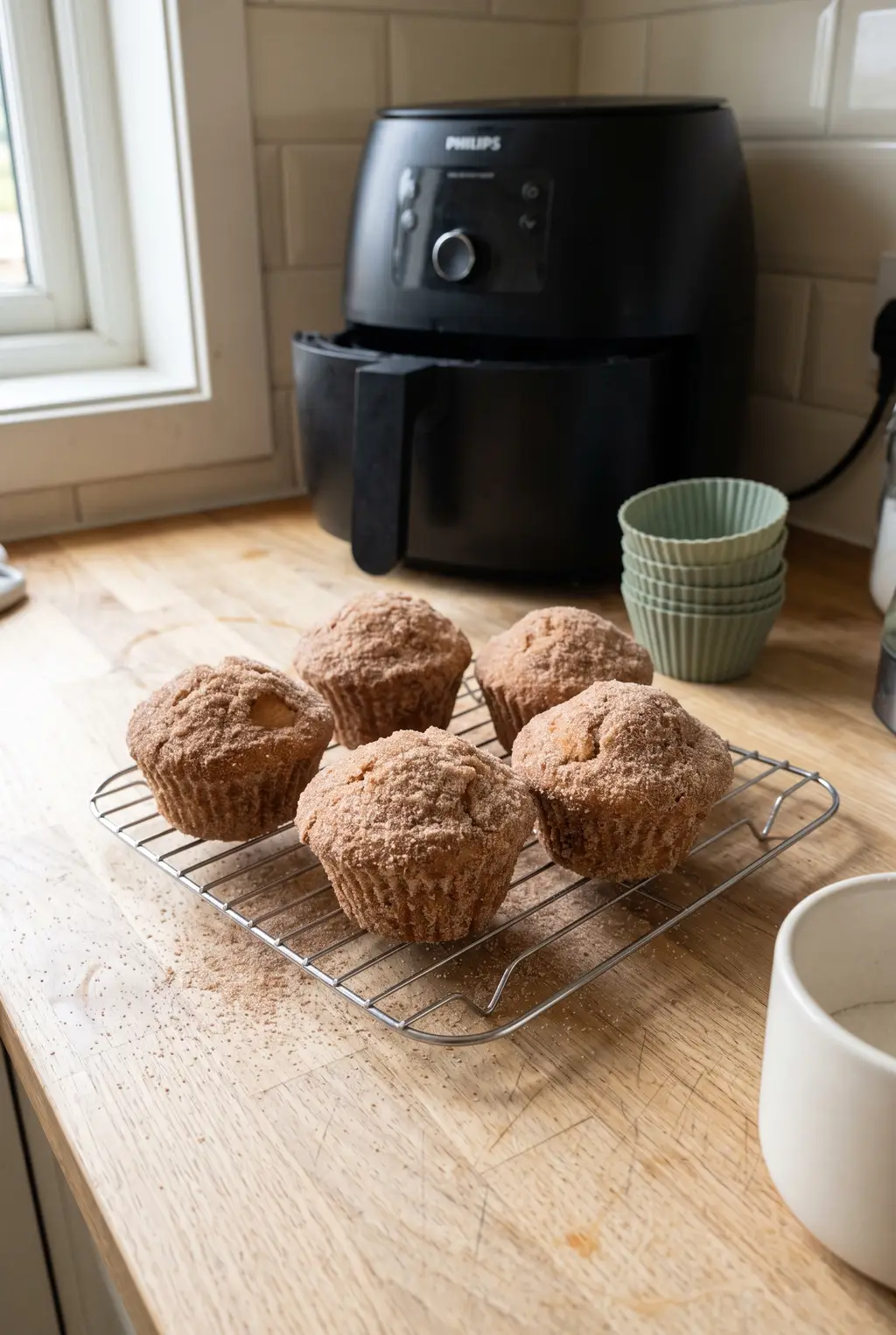
The first time I made donut muffins, years ago in an oven, I understood the genre instantly: it is a loophole. You get the flavor of a fried cake donut, nutmeg crumb, butter, a jacket of cinnamon sugar, without frying anything, and the muffin format means nobody can accuse you of making donuts on a Tuesday. When the air fryer arrived I assumed it would simply do the same job faster. It does the job better, and the reason is a two minute trick I found by accident and now refuse to bake these without.
But first the keyword needs untangling, because the search results for cinnamon muffins are a flea market. If you want spiraled yeasted rolls with icing, you want the cinnamon rolls. If you want cinnamon with fruit doing half the work, the muffin shelf has blueberry and banana waiting. This page is the pure article: cinnamon as the entire point, delivered twice, once as a ribbon through the crumb and once as the sparkling coat on the outside. It is the muffin aisle's answer to the donut holes and shares a spice rack with the apple cider donuts, and all three share more DNA than any of them admits.
Quick answer: Make a buttermilk batter scented with nutmeg, the spice that reads as donut, layer it into silicone cups with a thick cinnamon paste ribbon in the middle, and bake at 320F for 13 to 15 minutes to a 205F center. Pop the muffins out of their cups and run them naked in the basket at 340F for 2 minutes to crisp the walls. Cool 10 minutes, then dip each muffin in melted butter and roll in cinnamon sugar. Butter first, always; the butter is the glue.
What makes a muffin taste like a donut, and it is not the sugar
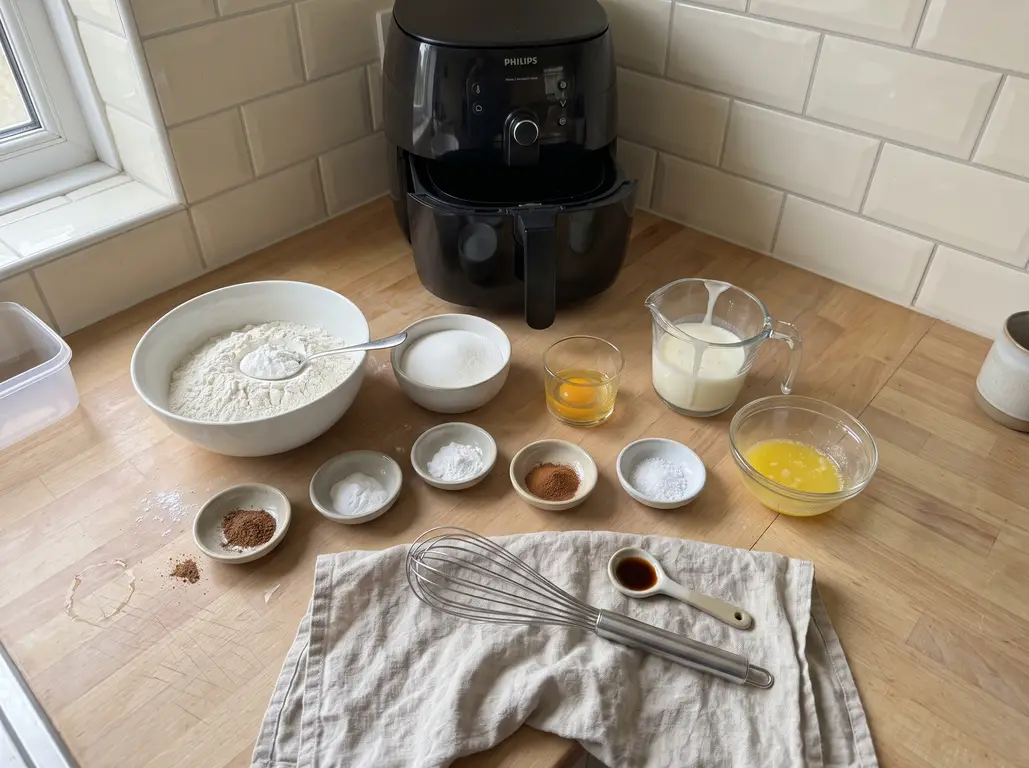
Cake donuts have a flavor signature your brain can name blindfolded, and the surprise is that most of it comes from one spice used with restraint: nutmeg. Old-fashioned donut batter has carried it for a century, which is why a plain muffin rolled in cinnamon sugar tastes like a muffin in costume while a nutmeg-scented one tastes like the donut shop. This recipe uses a half teaspoon, present but not nameable, plus buttermilk for the slight tang cake donuts pick up from their traditional doughs, an extra yolk for tenderness, and a spoonful of cornstarch cut into the flour so the crumb lands closer to cake-donut soft than to bready. None of these moves are visible in the finished muffin, and all of them are audible in the first bite, which is the best kind of ingredient list.
The swirl that refuses to sink
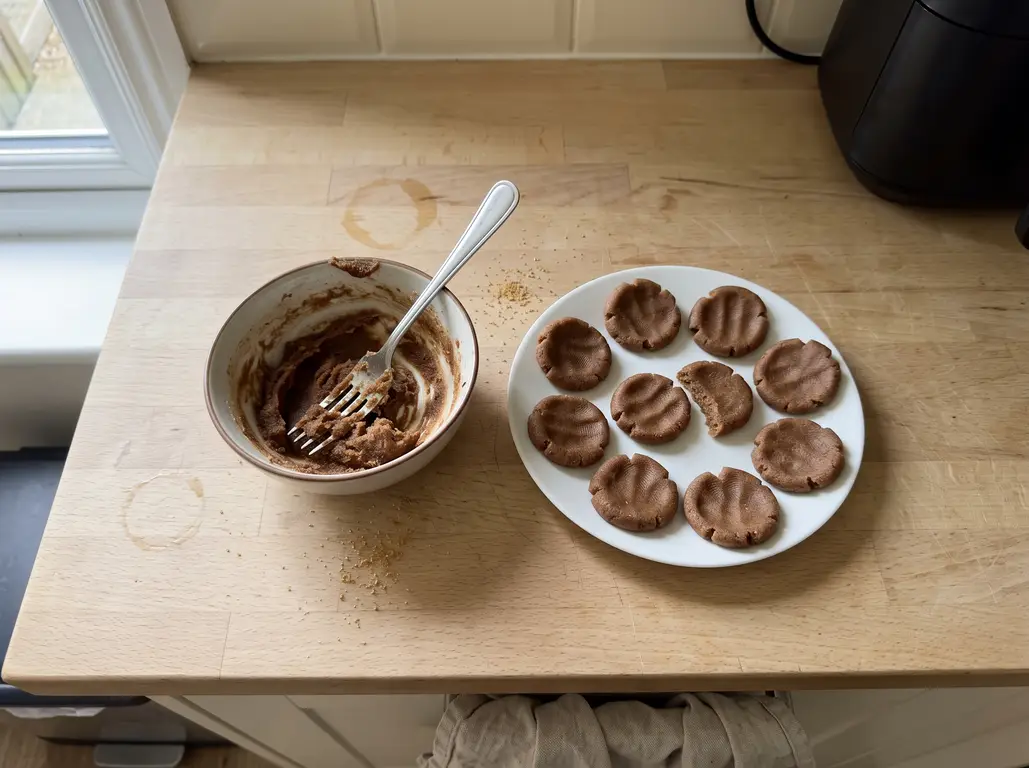
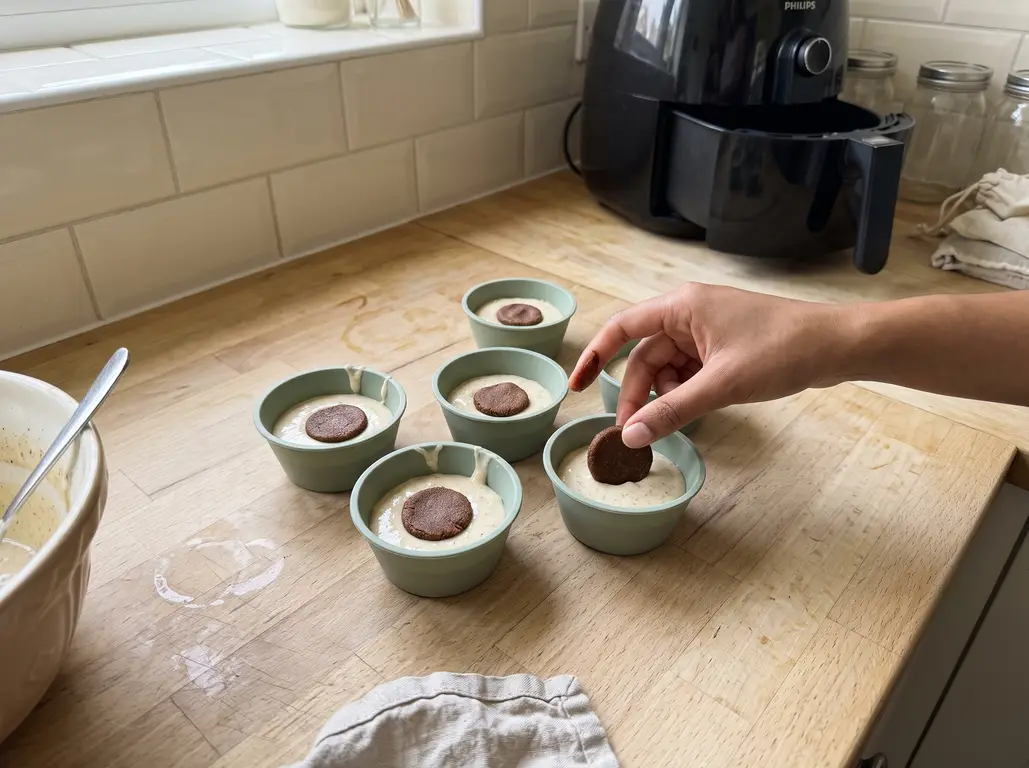
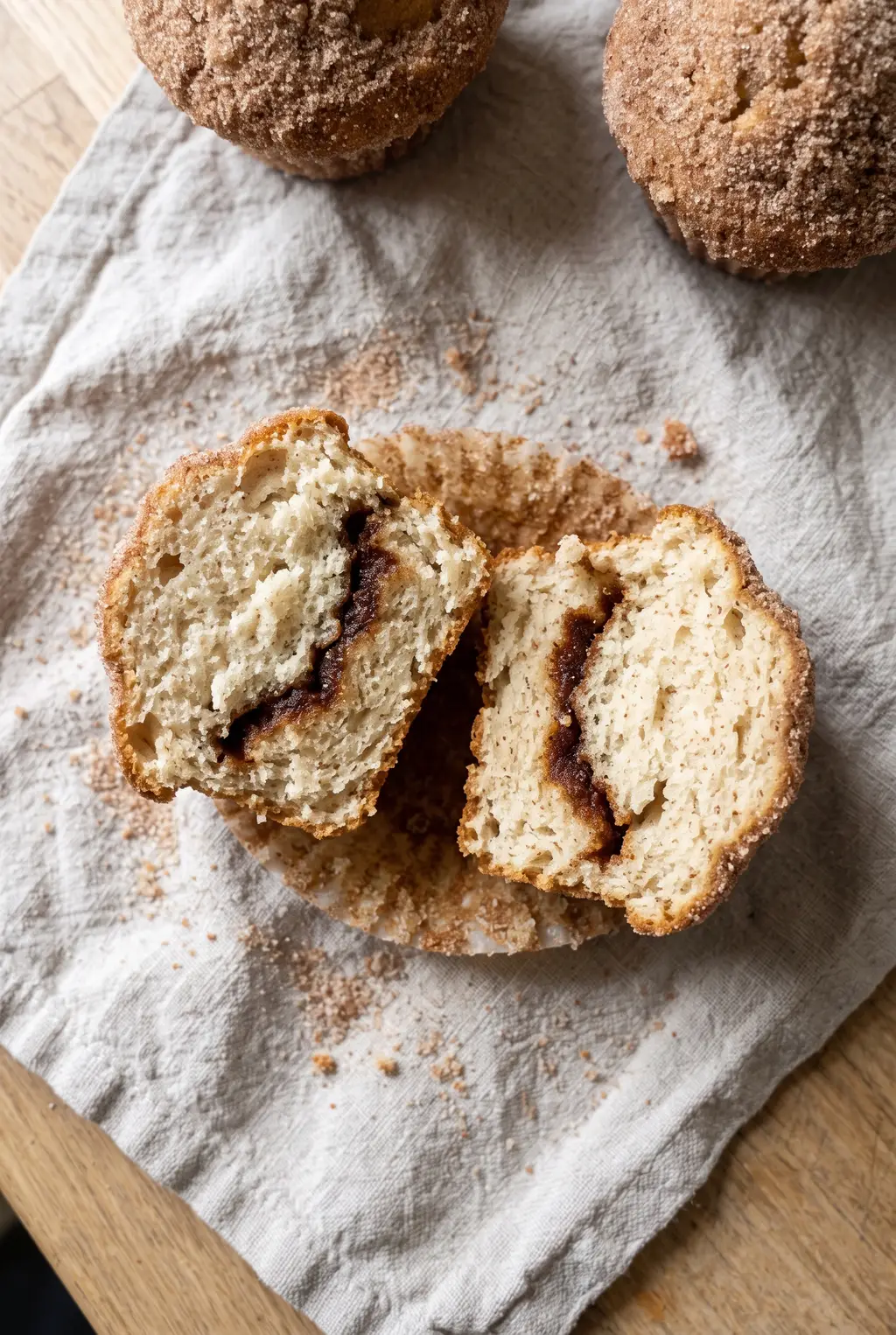
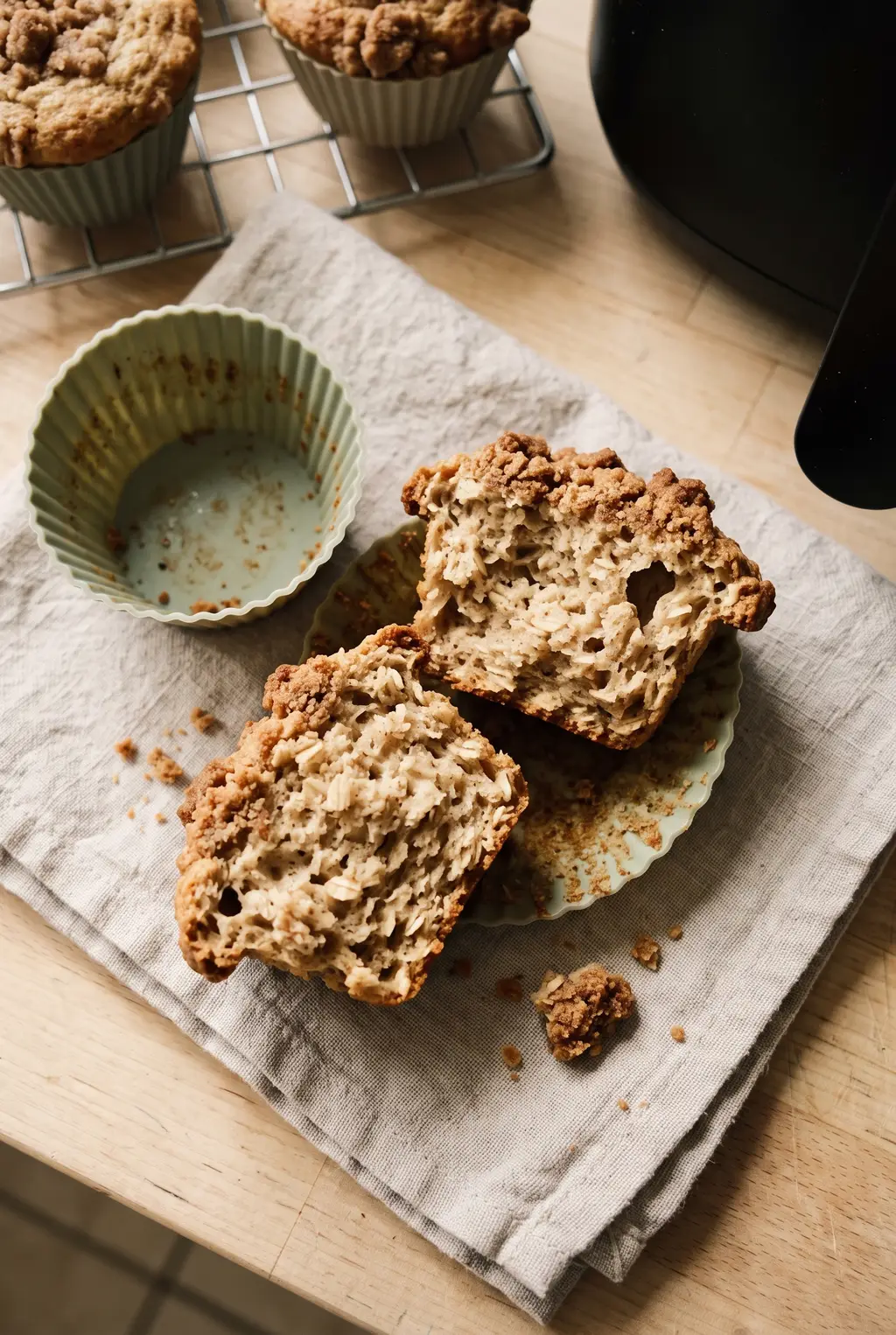
Most donut muffin recipes leave the interior plain and let the coating do all the talking, and the ones that attempt a swirl usually commit the classic error: loose cinnamon sugar layered into batter, which melts into syrup, sinks, and welds itself to the cup floor. The fix is to give the swirl structure. Mash soft butter, brown sugar, cinnamon, and a tablespoon of flour into a thick paste; the butter carries the flavor, the flour raises the paste's viscosity so it stays where it is put, and the brown sugar melts into a ribbon instead of a leak. Layer it like a secret: half the batter into the cups, a flattened coin of paste in each center, remaining batter on top. In the bake the coin softens into a spiral-adjacent ribbon with edges that caramelize faintly against the crumb, and every muffin splits open to a stripe that looks intentional, because for once it was.
The bake, house rules, briefly
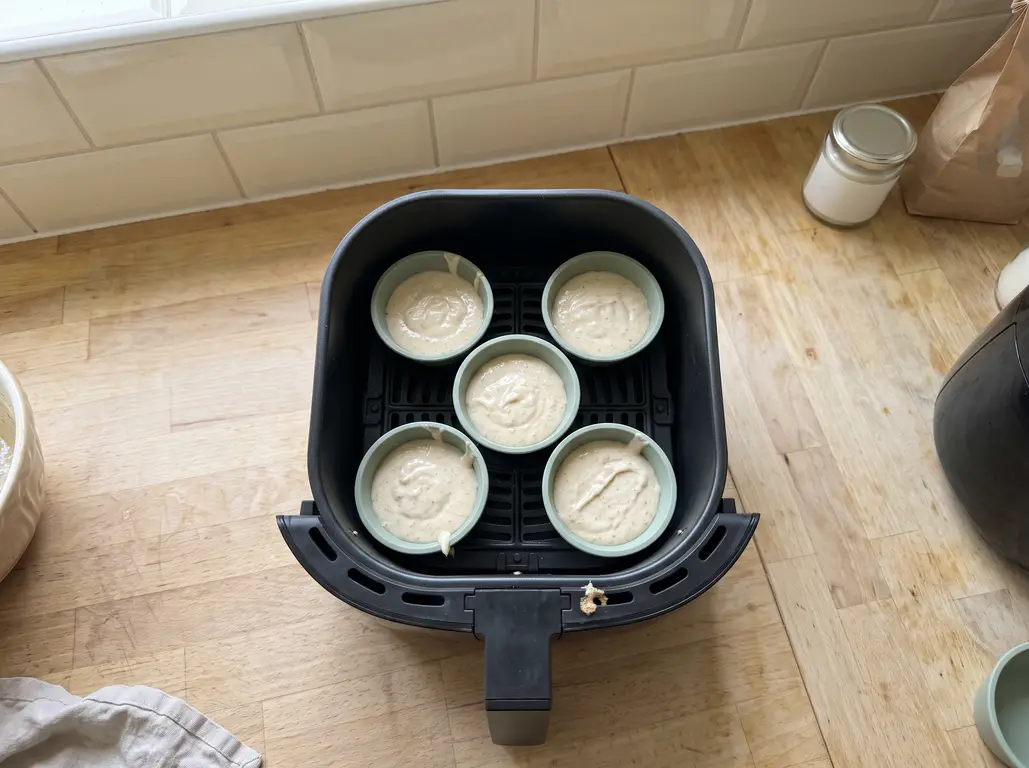
The schedule follows this site's standing muffin doctrine, compressed here to a paragraph. Rigid silicone cups, four or five per batch, filled two-thirds full to leave the swirl headroom, per the silicone molds guide; skip paper liners entirely for these, since the whole exterior gets dipped later and a liner scars the canvas. 320F rather than an oven recipe's 350F, the close-element discount the air fryer calculator applies to any converted recipe. Thirteen to fifteen minutes, cups rotated a half turn at minute 8 in machines with a known hot corner, and done means 205F on an instant-read probe slid in beside the swirl, not through it, because the molten ribbon reads hot and lies in the other direction for once. Carryover closes the gap on the rack, the second batch runs a minute quick, and the whole tested lineup lives in the baking chart.
The dip: butter first, and the trick that makes the machine version better
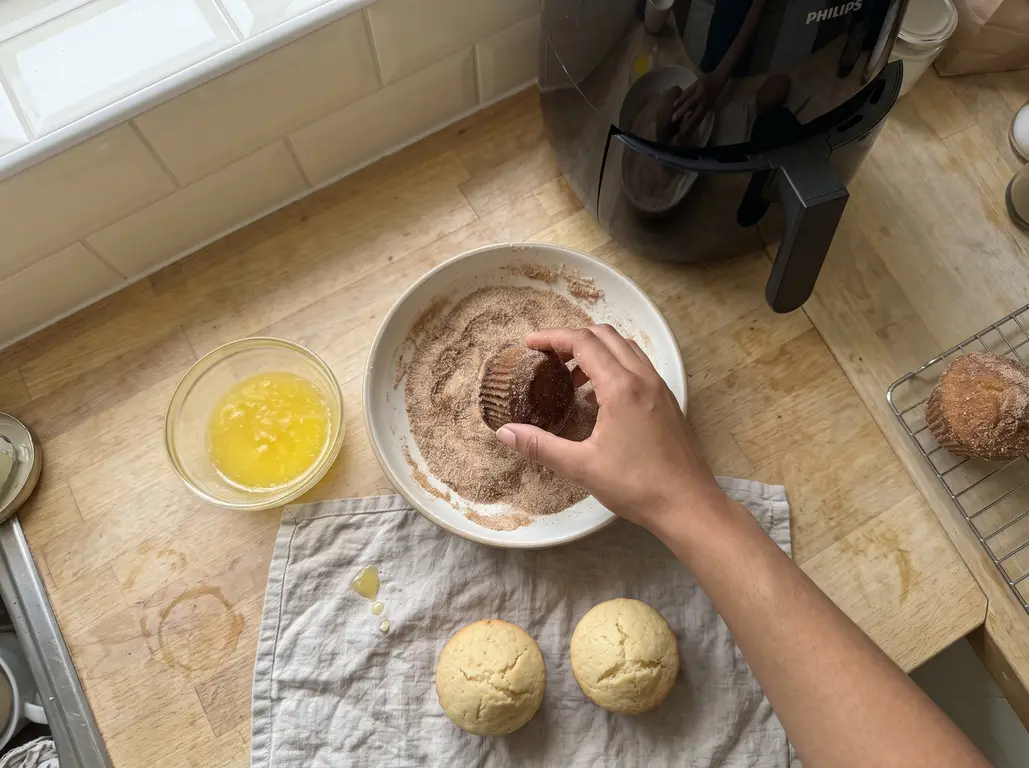
Here is the accident that became doctrine. The first time I decupped these muffins to fix their pale silicone walls, running the naked muffins two minutes at 340F the way this site finishes every cup-baked crumb, I dipped them afterward as usual and noticed the coating behaved differently: it stayed crisp. A muffin wall straight from silicone is soft and faintly steamy, and butter plus sugar on a steamy surface slowly dissolves into damp sweetness by the second hour. A wall that has spent two minutes in direct moving air is dry and lightly bronzed, and the same dip sits on it like a shell. The oven versions of this recipe cannot do this without heating a whole oven twice. The basket does it in the time it takes to melt the butter.
The dip itself follows the coating law this site wrote for the churros and the glazed donuts: butter first, sugar second, no exceptions, because sugar needs glue and butter is the glue. Work in the warm window, about 10 minutes out of the machine, when the crumb is cool enough to handle and warm enough to drink a little butter at the surface. Roll the whole muffin, top, walls, and floor, through melted butter, let the excess drip a beat, then roll through cinnamon sugar with a spoon assisting the shoulders. Greedy households double-dip, butter and sugar again, for a coat with actual crunch, and history records no complaints. If the coating ever slides off in patches, the butter cooled too far between steps; twenty seconds of rewarming fixes the glue.
Variations, and the rest of the shelf
The base is a stage that accepts other acts: a half cup of small-diced apple, blotted and flour-tossed, turns these into apple donut muffins that borrow from the apple muffins without breaking the coating; mini chocolate chips work if you halve the swirl so the two sweetnesses do not argue; and swapping the coating's cinnamon for pumpkin pie spice in October, the way the pumpkin muffins lean, is legal in every state. Bakers chasing the cinnamon-sugar flavor in cookie form should meet the snickerdoodles, the same jacket on a chewier body, while the cinnamon-forward cluster also runs through the monkey bread and the coffee cake next door. For scale, the batter halves cleanly for the households the small batch guide was written for, and the unfrosted, undipped muffins freeze for 2 months, thawing and decupping and dipping later as if fresh, which means the coating never has to meet a freezer. The wider muffin bench, chocolate chip and corn included, lives one shelf over, and the machine's full report card is the can-and-cannot-bake rankings.
Frequently asked questions
QCan you make cinnamon muffins in an air fryer?
Yes, and the donut-muffin genre actually improves in the machine. Bake a nutmeg-and-buttermilk batter in rigid silicone cups at 320F for 13 to 15 minutes to a 205F center, then use the basket's advantage: pop the muffins out of their cups and run them naked for 2 minutes at 340F, which dries and bronzes the walls so the butter-and-cinnamon-sugar dip stays crisp instead of going damp. An oven cannot do that finishing step without a second full heat-up.
QWhat makes donut muffins taste like donuts?
Nutmeg, mostly. Old-fashioned cake donut batter has carried a small dose of nutmeg for generations, and that spice is the flavor your memory files under donut shop. A half teaspoon in the batter, too little to name and impossible to miss, does more than any amount of coating. Buttermilk adds the faint tang of traditional donut doughs, an extra egg yolk and a spoonful of cornstarch soften the crumb toward cake-donut tenderness, and the butter dip supplies the fried richness.
QWhy did my cinnamon swirl sink to the bottom?
Because loose cinnamon sugar layered into batter melts into a dense syrup that sinks and glues itself to the cup floor. Give the swirl structure: mash soft butter, brown sugar, cinnamon, and a tablespoon of flour into a thick paste, and set a flattened coin of it between two layers of batter in each cup. The flour raises the paste's viscosity so it holds position, and it bakes into a defined ribbon with lightly caramelized edges instead of leaking out the bottom.
QHow do you get cinnamon sugar to stick to muffins?
Butter first, sugar second, in that order every time, because dry sugar has nothing to hold onto without a layer of glue. Dip the whole muffin in melted butter, let the excess drip for a beat, then roll it through the cinnamon sugar. Work while the muffins are warm, about 10 minutes out of the machine, so the surface accepts the butter. If the coating slides off in patches, the butter cooled and thickened between steps; rewarm it for twenty seconds and continue. Double-dip for a thicker shell.
QShould I use paper liners for donut muffins?
No, and this recipe is the strongest case against them on the muffin shelf. The entire exterior of a donut muffin gets dipped in butter and rolled in cinnamon sugar, and a liner leaves the walls ridged, papery, and impossible to coat evenly. Bake in rigid silicone cups with nothing inside them, release the muffins fully, crisp the naked walls with the 2 minute decup finish, and every surface of the muffin becomes coating territory, which is the entire point of the genre.
QWhat temperature do you bake muffins in an air fryer?
320F for 13 to 15 minutes in standard silicone cups. Oven donut muffin recipes run 350F, but the air fryer's element sits close above the crowns and its moving air delivers heat harder at the same dial number, so the direct conversion scorches tops before centers finish. At 320F everything lands together. Verify with a probe reading 205F pushed in beside the swirl rather than through it, since the molten cinnamon ribbon runs hotter than the crumb around it.
QCan I make these ahead or freeze them?
Yes, with one rule: freeze naked, dip fresh. The baked, undipped muffins freeze airtight for 2 months and lose nothing; the coating, by contrast, dissolves into dampness in any container that traps moisture, freezer or otherwise. Thaw the muffins, warm them 3 minutes at 320F in the basket, which doubles as a fresh decup crisping, then dip in butter and roll in cinnamon sugar as if just baked. Dipped leftovers keep a day at room temperature and are honestly best eaten before that question arises.
QWhy are my muffins dense instead of tender?
Overmixing is the usual culprit: once the flour meets the buttermilk, every extra stroke builds gluten and trades tenderness for chew. Fold until the last streak disappears and stop. The recipe's cornstarch and extra yolk both push the crumb toward cake-donut softness, so if density persists, check the baking powder's age and your flour measurement, since a packed cup adds a quiet extra quarter cup. Room temperature egg and buttermilk also blend with fewer strokes than cold ones.
QCan I skip the swirl or the dip?
Either, though not both, or you have baked plain muffins with good posture. Skipping the swirl gives you the classic donut muffin, all coating, and saves five minutes; skipping the dip and keeping the swirl gives you a tidy lunchbox muffin with a cinnamon heart and no sugar on your fingers. For the dipless version, brush the tops with the melted butter anyway and sprinkle a pinch of the cinnamon sugar over each while warm, which keeps a whisper of the coating's character at a fraction of the mess.
Never overbake again
Get our one-page times & temps cheat sheet, plus a new tested recipe each week.
No spam · unsubscribe anytime