

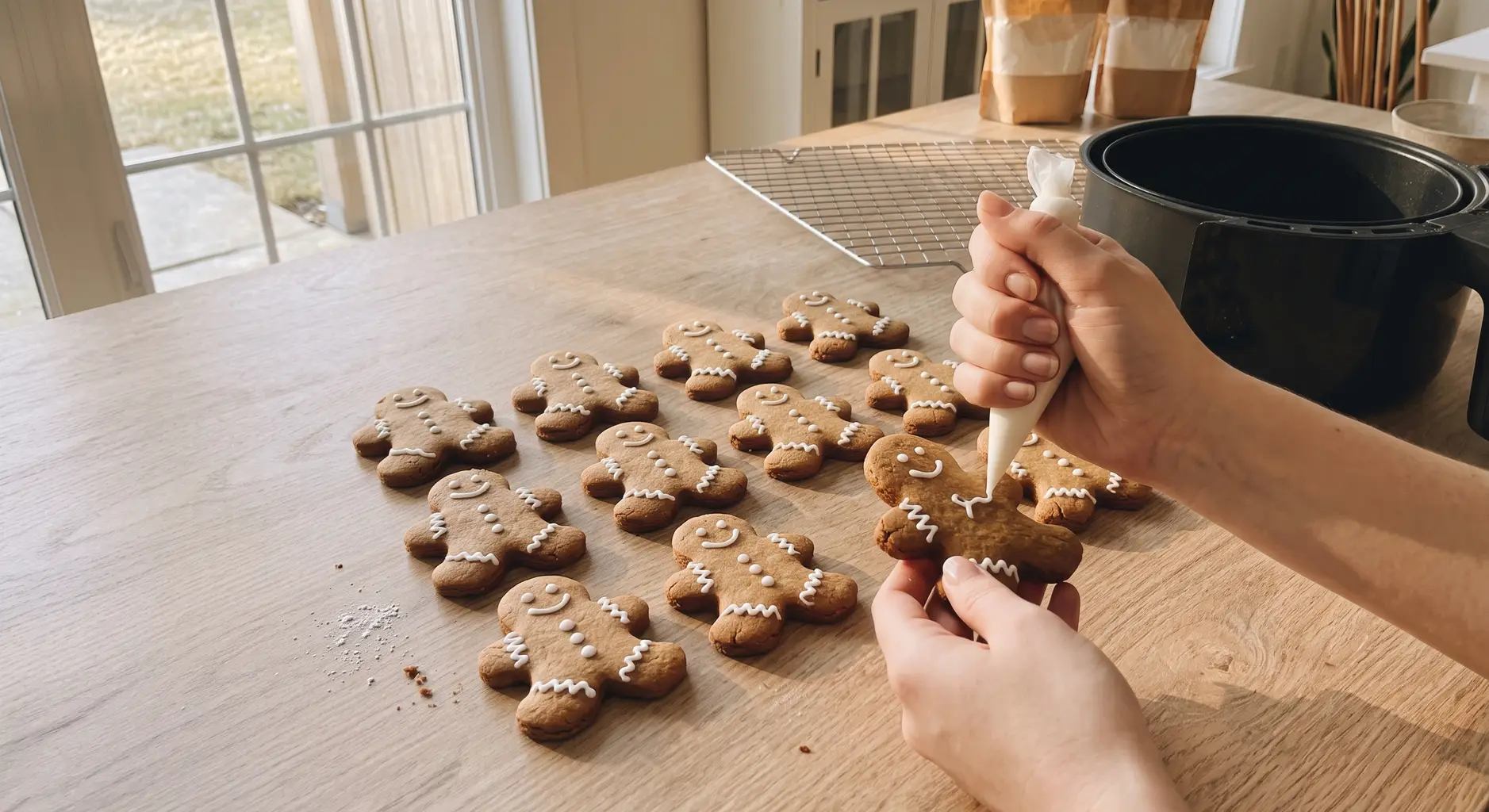
The oven traffic jam, solved
The Christmas kitchen has one bottleneck and it is not skill, it is square footage at 350°F. The roast owns the oven for hours, the sides are stacked behind it in a mental queue, and cookie dough waits in the refrigerator for a slot that never quite opens. Meanwhile a 5 quart basket sits on the counter, fully preheated in 3 minutes or needing no preheat at all, doing nothing.
The basket is not a compromise second oven; for cookies it is arguably the better one. It bakes in small trays, 4 to 6 cookies at a time, which sounds like a limitation until you notice what it buys. Trays turn over every 7 to 10 minutes, so cookies come off warm continuously instead of in one cooling heap. A mixed tray is legal: two sugar, two snickerdoodle, two chocolate chip, since most doughs share a temperature. And the machine costs a fraction of the oven to run per batch, arithmetic the oven cost calculator will do for your own rates. December is the month the air fryer stops being an appliance and becomes staff. New to baking in one? How to bake in an air fryer is the start-here piece behind every number on this page.
Five rules that run every cookie
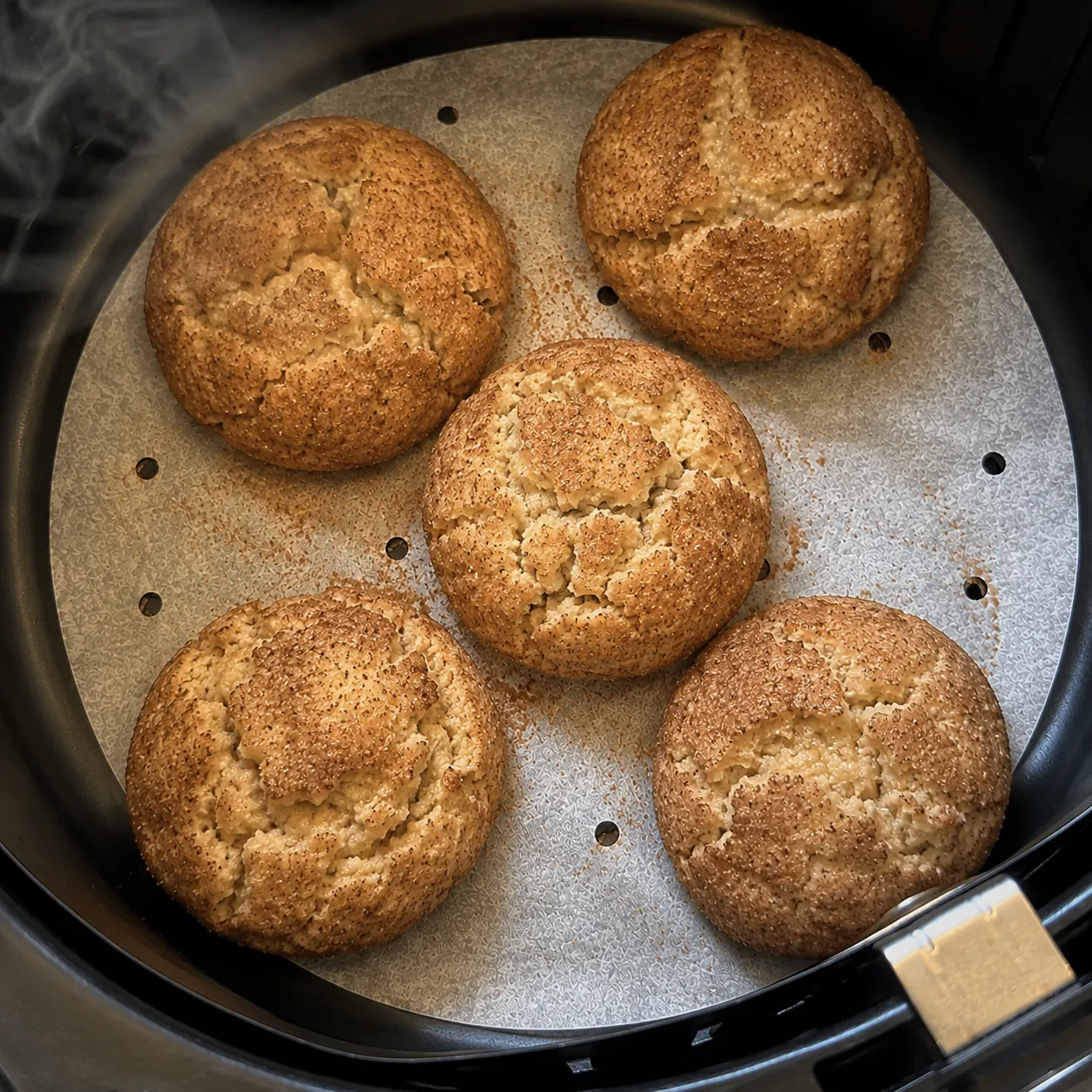
One: the 300 to 325°F band. Nearly every cookie dough lives there: 325°F for the drop cookie mainstream, 320°F where jam or loaded doughs need gentleness, 300°F for butter-heavy shortbread and macaroons that scorch above it. The sturdy exception is oatmeal dough, which takes 360°F happily. Oven cookie recipes run 350°F and up; run those numbers in a basket and the element bronzes the tops while the centers stay raw. Converting a family recipe is exactly what the air fryer calculator is for: give it the oven setting, take the basket setting, and check early.
Two: perforated parchment, never solid. Cookie dough cannot sit on bare basket holes, but a solid parchment sheet blocks the airflow that is doing the baking and leaves pale, greasy bottoms. Perforated rounds give the dough a floor and the fan its path; the full liner law is in the foil and parchment guide.
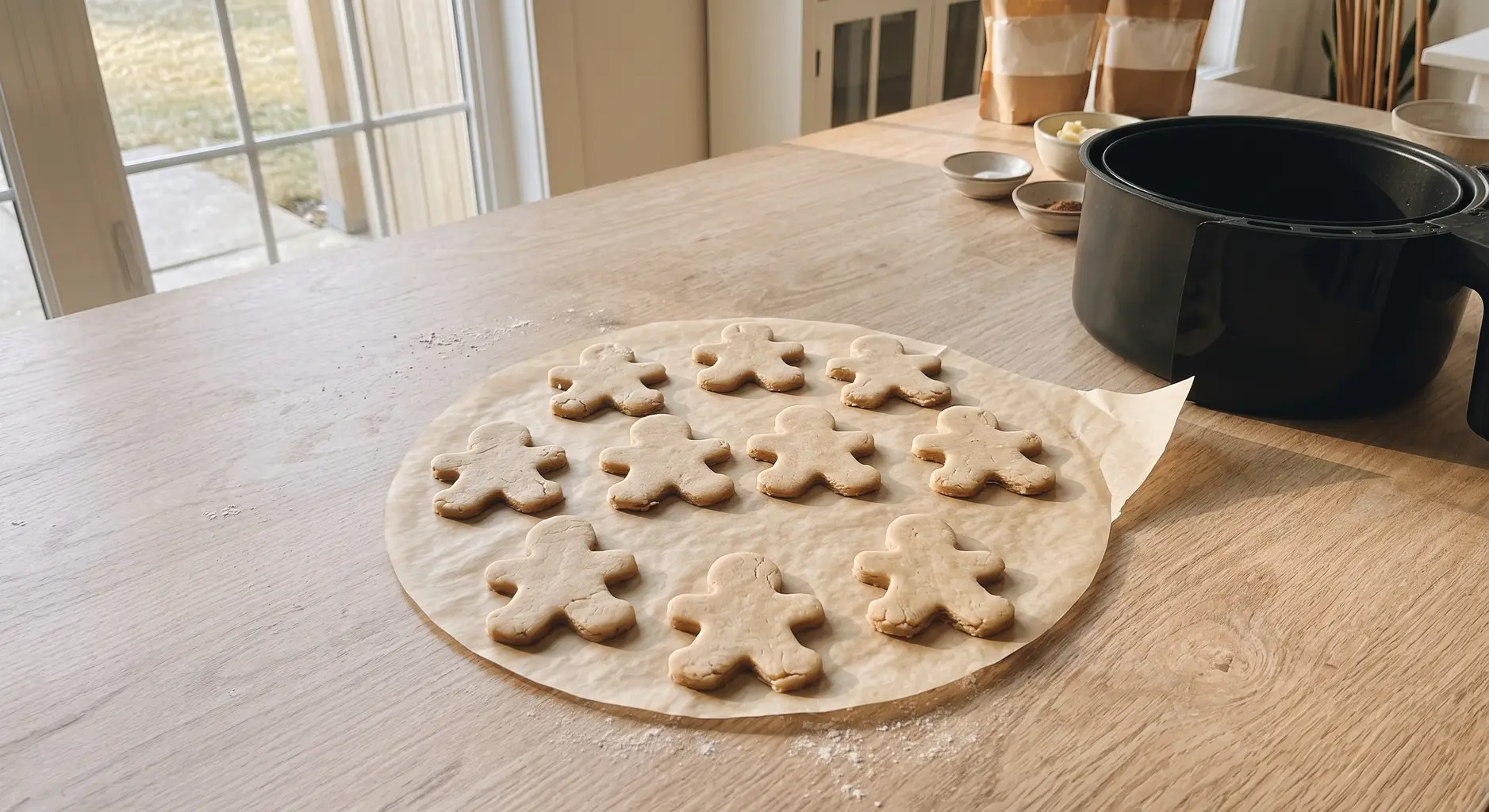
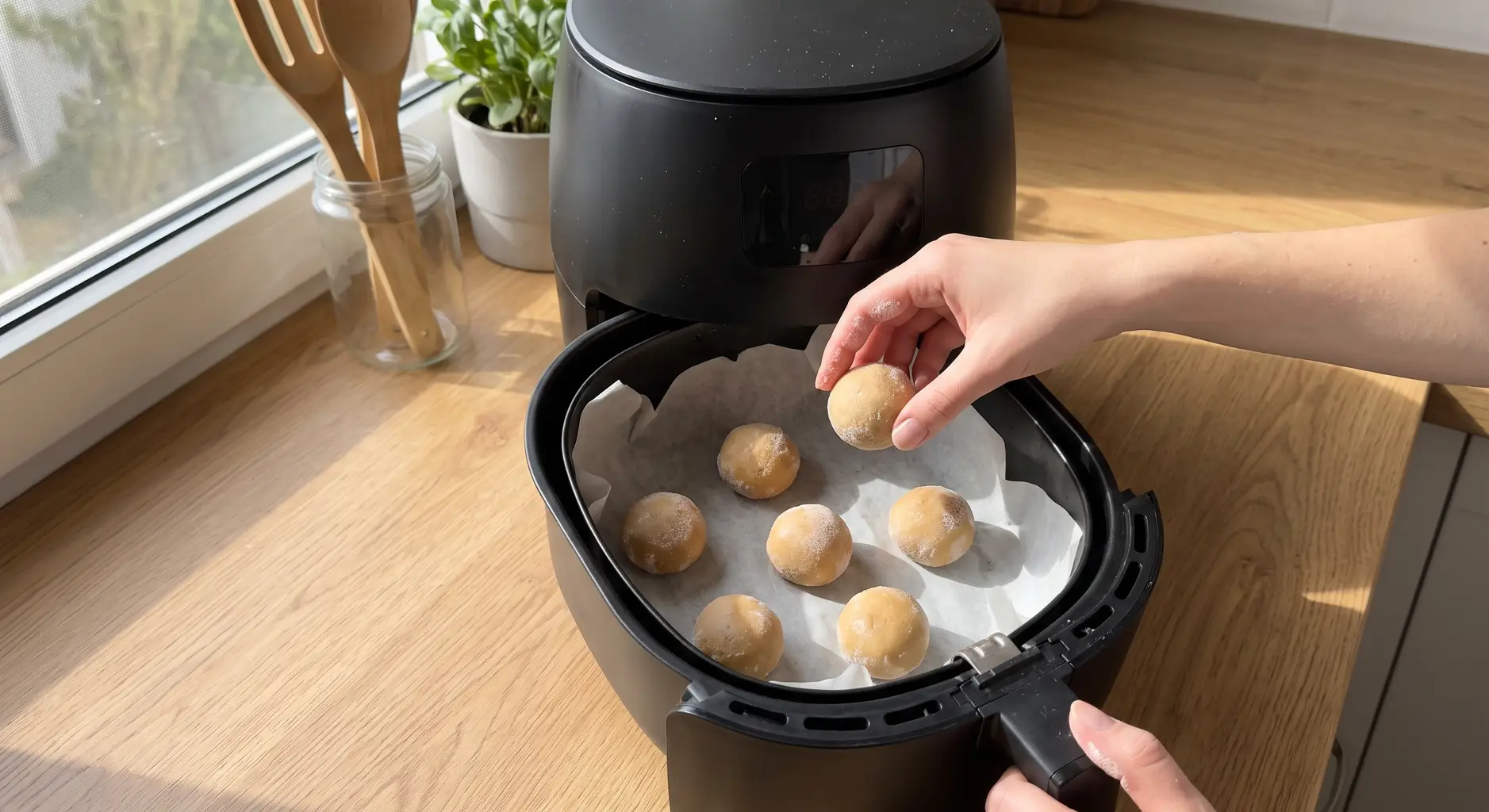
Three: small trays, real space. Four standard cookies, five or six small cutouts, never touching, because they spread. Crowding steams edges that were supposed to crisp.
Four: pull underdone, rest in the basket. Edges set, center a shade dark and slightly damp, then 3 minutes in the switched-off basket, where carryover finishes the middle without adding color. This one rule separates chewy from dry across the entire chart, and the wider argument lives in the dry bakes guide.
Five: every tray after the first runs about a minute shorter. The machine is fully hot from tray two onward. Set the timer accordingly and the last tray of the night comes out matching the first.
The classics chart
Every number comes from its linked recipe, all tested in the same 5.5 quart basket. Machines vary by about 10 degrees; the first tray tells you which way yours leans.
| Cookie | Temp | Time | The detail that matters |
|---|---|---|---|
| Sugar cookies | 325°F | 8 min | The decorating canvas; ice them fully cooled |
| Gingerbread cookies | 325°F | 7-10 min | Roll thin for snap, thick for soft; same dough |
| Snickerdoodles | 325°F | 7-8 min | Chewy at 185°F inside |
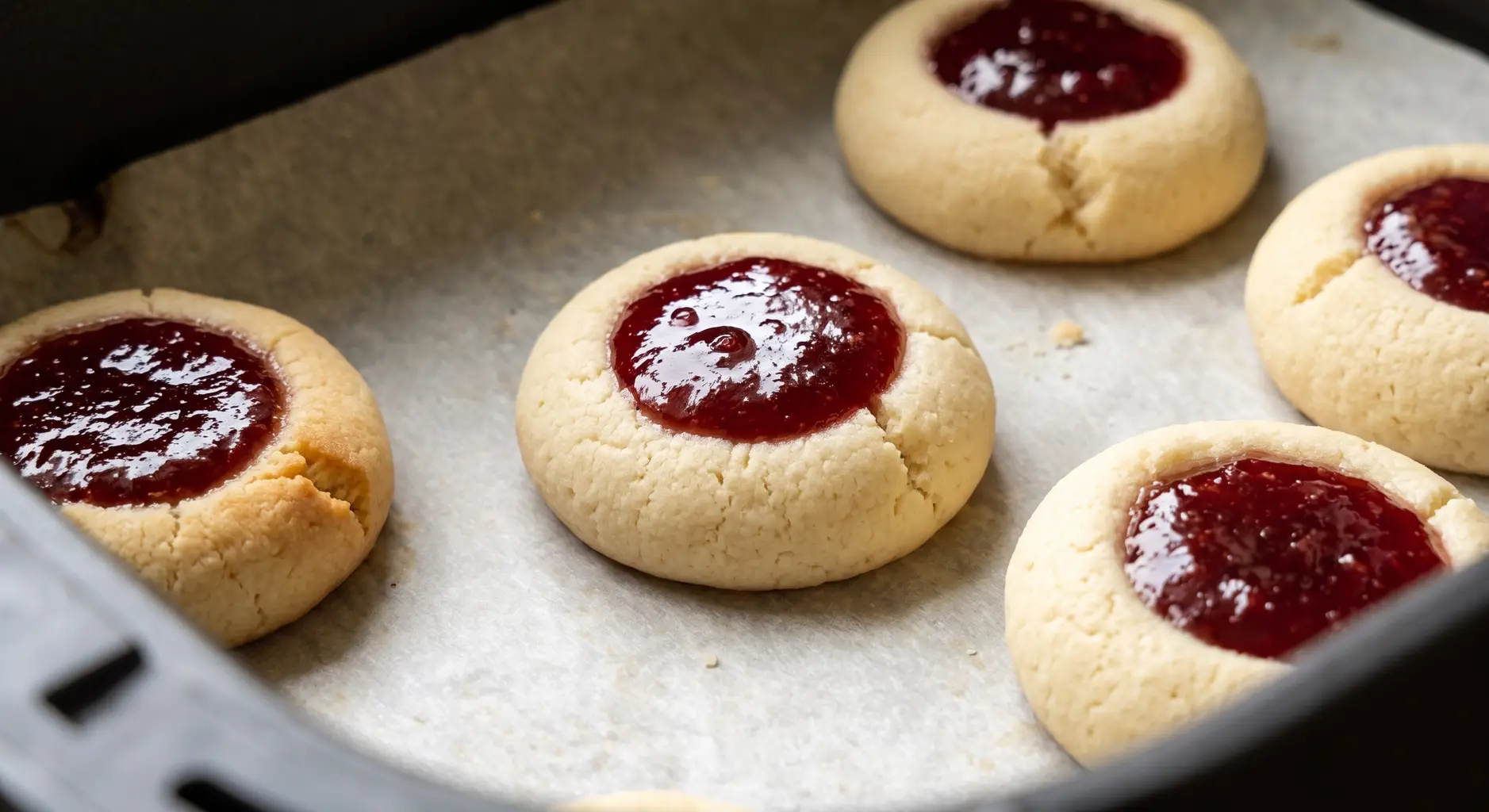
| Thumbprint cookies | 320°F | 8-10 min | The jam stays put instead of boiling out |
| Shortbread | 300°F | 10-12 min | Three ingredients; low and slow protects the butter |
| Chocolate chip cookies | 325°F | 8 min | Pull underdone, rest 3 minutes in the basket |
| Peanut butter cookies | 325°F | 7 min | The 5 minute dough |
| Oatmeal cookies | 360°F | 12 min | The sturdy dough that takes real heat |
| Coconut macaroons | 300°F | 10-12 min | Golden outside, chewy inside; rest 10 |
| Biscotti | 320°F, then 300°F | Two bakes | The coffee dunker; 15 minute rest between bakes |
| Monster cookies | 320°F | 7-8 min | No flour, one bowl, fully loaded |
| Palmiers | 350°F | 11-13 min | Two ingredients; puff pastry and sugar |
| Rice krispie treats | 300°F | 4-6 min melt | The no-stove method, one pan |
| Magic bars | 300°F | 22-26 min | Seven layers in a 7 inch pan |
| Frozen cookie dough balls | 325°F | 9-11 min | From solid, no thawing; the make-ahead engine |
| Refrigerated dough squares | 320°F | 6-8 min | The store shortcut, 4 to 5 per batch |
The chart's one-line summary: 325°F and 8 minutes is home base, butter-heavy doughs drop to 300°F, and everything gets pulled a shade early. The full cookie shelf, holiday and otherwise, lives at cookies and bars recipes.
The mixed tray, and the one rule it obeys
The basket's best December trick is the assorted tray: four different cookies baking side by side, one for each person's favorite, warm in 8 minutes. The chart makes the rule obvious once you see it: cookies can share a tray when they share a temperature. Sugar, chocolate chip, snickerdoodle and peanut butter doughs all live at 325°F on nearly the same clock, so any combination of the four bakes together honestly; pull the fast ones a minute early if a corner looks eager. Shortbread and macaroons keep each other company at 300°F, and thumbprints with monster cookies pair at 320°F.
What a mixed tray cannot do is bridge temperature camps. A shortbread wedge on a 325°F sugar cookie tray browns before its butter structure sets, and an oatmeal cookie at 300°F just sits there being pale. Size discipline matters too: keep the dough balls on a shared tray the same weight, because the chart's clocks assume standard scoops, and one oversized ball is the one that comes out raw in the middle. When in doubt, run the odd cookie as its own quick tray; at 8 minutes a round, the schedule forgives everything.
The cookie week battle plan
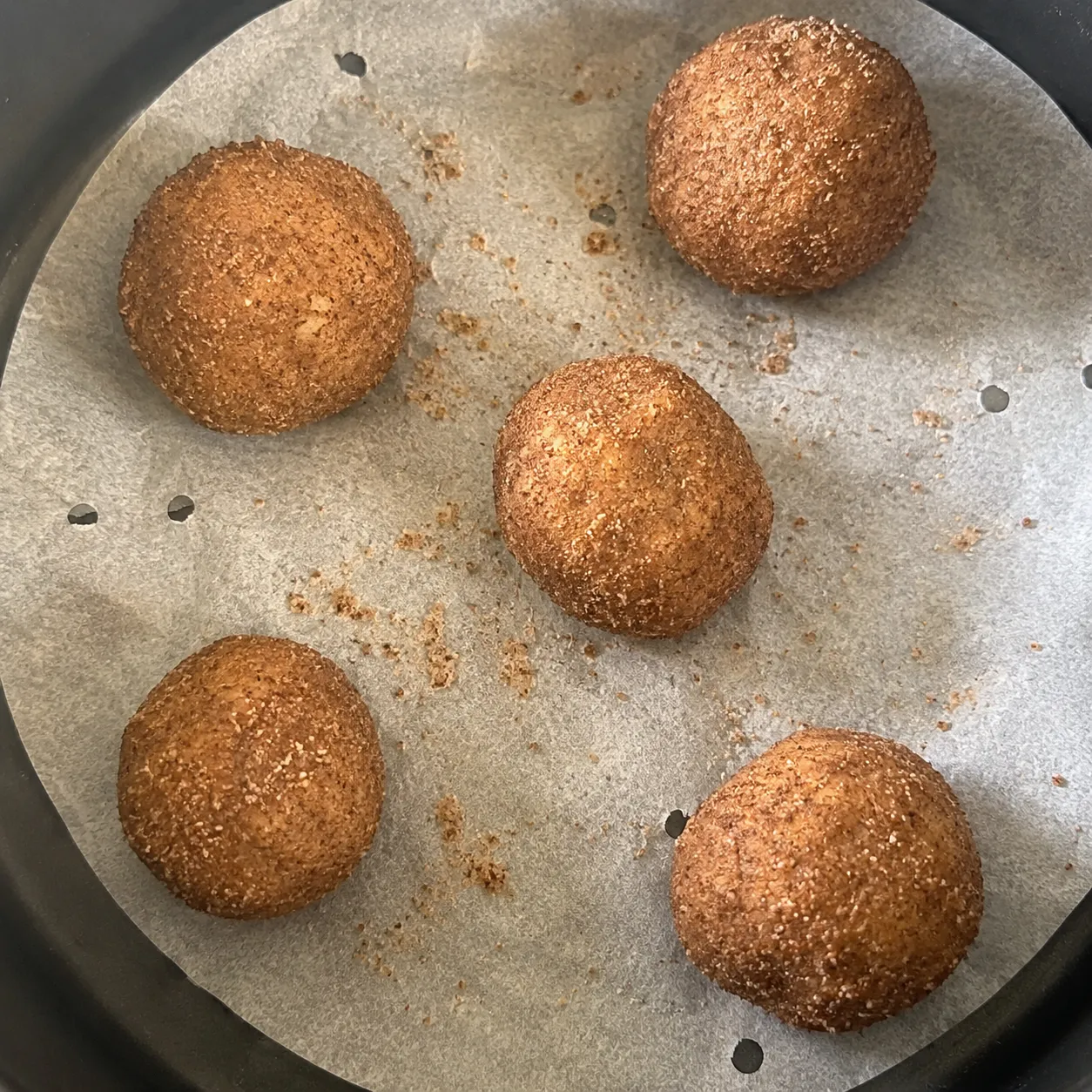
The real Christmas cookie problem is not baking, it is scheduling, and the freezer dissolves it. Weeks ahead: make your doughs on any quiet evening, scoop them into balls, freeze the balls solid on a tray, and bag them by flavor. Frozen dough balls keep 3 months and bake straight from solid, 325°F for 9 to 11 minutes, no thawing, indistinguishable from fresh-scooped; the mass-by-mass timing table lives on the frozen cookie dough page. Cutout doughs like gingerbread and sugar freeze as wrapped discs instead, ready to thaw overnight and roll.
Cookie week itself then runs as assembly: pull an assorted six from the bags, bake a mixed tray while the oven does whatever the roast demands, and repeat on an 8 minute cadence that a child can be put in charge of. Doubling recipes for an exchange is arithmetic the recipe scaler handles without a notepad, and the store shortcuts hold the line on the worst nights: refrigerated dough squares at 320°F in 6 to 8 minutes. Every setting on this page, and everything else the basket bakes, is collected on the baking chart and indexed in the recipe index.
Decorating on a tray schedule
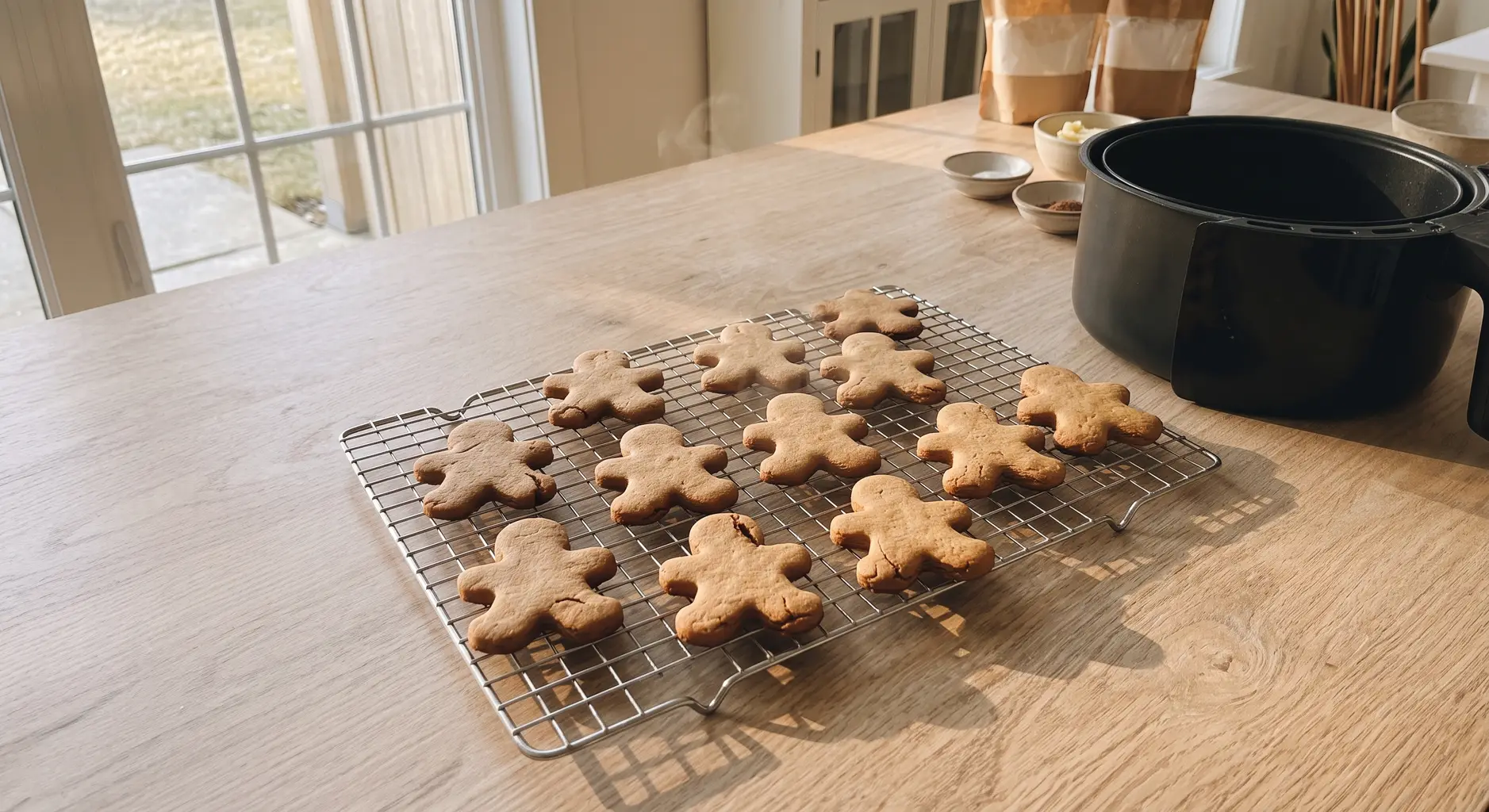
Small trays change decorating from a chore into a rhythm. While tray two bakes, tray one is cooling; by tray four, tray one is cool enough to ice, and the table becomes a small production line instead of a mountain of two dozen naked cookies at midnight. Two timing rules carry all of it. Icing goes on fully cooled cookies, because royal icing and glaze both melt into the crumb on a warm surface; the sugar cookies are the canvas this rule protects. Sprinkles go into wet icing immediately, in the first minute, or they bounce off forever. And gingerbread earns its place as the family diplomat: one dough, rolled thin for the snap camp and thick for the soft camp, both baked on the same 325°F setting, a treaty the gingerbread page brokered and this table has honored since. The technique pages for everything else live under guides.
Cookies are only the opening act of the season. The same one-basket, small-tray approach runs the rest of the holiday calendar: the Thanksgiving plan for the day the oven is busiest, the Easter bake list when spring comes round, and the Halloween treats when the season turns again. All four air fryer tools, the scaler, the calculators and the cost estimator, live in one place.
Frequently asked questions
QCan you bake Christmas cookies in an air fryer?
Yes, every classic on the tray: sugar cookies, gingerbread, snickerdoodles, thumbprints and shortbread all bake beautifully in a basket, in small trays of 4 to 6 cookies on perforated parchment. Most run in the 300 to 325°F band for 7 to 12 minutes. The trade against an oven is batch size for speed and freshness: an 8 minute tray means the machine turns out warm cookies continuously instead of two dozen at once, and it never has to fight the roast for oven space.
QWhat temperature do you bake cookies in an air fryer?
325°F is the workhorse for drop cookies: sugar, chocolate chip, snickerdoodle and peanut butter doughs all live there. Delicate, butter-heavy doughs run cooler, 300°F for shortbread and macaroons, 320°F for thumbprints, and sturdy oat doughs can take 360°F. If you are converting a family oven recipe, drop the temperature about 25 degrees and start checking at two thirds of the stated time; pale-bottomed, burnt-edged cookies are almost always an oven number run in a basket.
QHow many cookies fit in an air fryer at once?
Four standard drop cookies in a 5 to 6 quart basket, five or six smaller cutouts like gingerbread men, always in a single layer with space to spread. It sounds slow next to a sheet pan of twelve until you run the clock: trays rotate every 7 to 10 minutes with no preheat wait between them, the next tray gets assembled while the current one bakes, and every cookie on the table arrived warm. A sheet-pan oven batch beats it only on the first two dozen.
QDo you need parchment paper for cookies in an air fryer?
Yes, and it must be perforated parchment, not a solid sheet. Cookie dough is too soft and sticky to sit on bare basket holes, but a solid sheet of parchment blocks the airflow that is doing the baking and leaves pale, greasy bottoms. Perforated rounds sold for air fryers, or a square you punch holes in, give the dough a floor and the fan its airflow at the same time. Never put parchment in during a preheat with nothing on it; the fan will lift it into the element.
QHow do you keep air fryer cookies from burning on the edges?
Bake at the chart temperature instead of the oven number, and pull early on purpose: edges set, center still looking slightly underdone and damp, then 3 minutes of rest in the switched-off basket, where carryover heat finishes the middle without adding color. Cookies that brown too fast on every setting usually mean a machine that runs hot; drop 10 degrees and note it. And always shorten every tray after the first by about a minute, because the machine is fully hot from tray two onward.
QCan you bake frozen cookie dough in the air fryer for the holidays?
Yes, and it is the entire cookie week strategy: scoop your doughs into balls weeks ahead, freeze them solid on a tray, and bag them by flavor. Standard homemade balls bake from frozen at 325°F for 9 to 11 minutes, no thawing, and taste identical to fresh-scooped. December then becomes assembly only: pull six assorted balls, bake a mixed tray in 10 minutes, and serve warm cookies on demand while the oven does whatever the roast needs. Store-bought pucks and refrigerated dough squares run on their own clocks, both on the chart.
Made it? Rate it.
Never overbake again
Get our one-page times & temps cheat sheet, plus a new tested recipe each week.
No spam · unsubscribe anytime