
Air Fryer Kolaches: Soft Dough, Sweet or Savory Filling
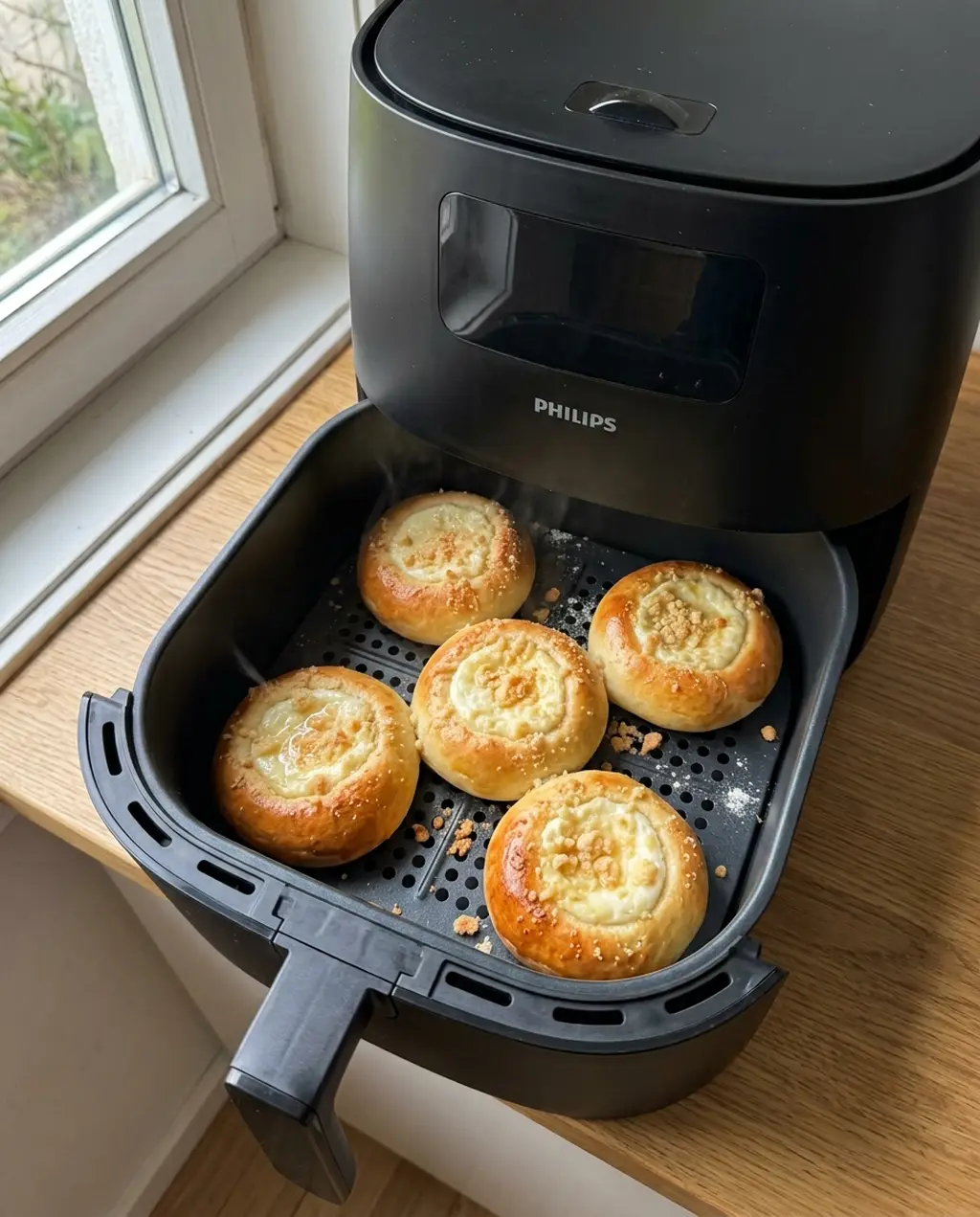
A kolache is what happens when a dinner roll gets a promotion: the same soft, eggy, buttery yeast dough, pressed with a well and filled with sweet cheese or fruit if your kitchen leans Czech, or wrapped around a sausage if it leans Texan. The internet's air fryer coverage of this pastry is a wasteland of reheating tips and one recipe running the dough at 400 degrees, which is how you build a mahogany shell around raw bread. This page does the whole thing properly: one enriched dough that handles both traditions, a well that stays open instead of swallowing its filling, a klobasnek that seals around its sausage, and 320 degrees, the temperature soft enriched dough actually wants, for buns that come out pillowy with a filling that stayed exactly where you put it.
What’s on this page
- Kolache, klobasnek, and who is right
- One soft dough for both traditions
- The well that stays open
- Sweet fillings that behave
- The klobasnek turn
- Temperature and timing
- What done looks like
- Ingredients
- How to make them
- Store-bought, frozen, and leftovers
- Fixing what goes wrong
- Frequently asked questions
Kolache, klobasnek, and who is right
Quick history, because the comments will come otherwise. The kolache arrived in Texas with Czech immigrants in the 1800s as a round, open-faced sweet bun: soft enriched dough, a pressed well of fruit, sweetened cheese or poppy seed, often a crumble of posypka streusel on top. The sausage version was invented later, in Texas, and Czech tradition gives it its own name, the klobasnek, because a sealed bun around meat is a different animal from an open bun under fruit. Texas gas stations sell both under one name, Czech grandmothers wince, and everyone keeps eating.
This page holds both without picking a fight: the same dough makes the sweet open-well kolache and the sealed sausage klobasnek, and the only things that change are the shaping and two minutes on the clock. Call them whatever your table calls them. The dough does not check IDs.
One soft dough for both traditions
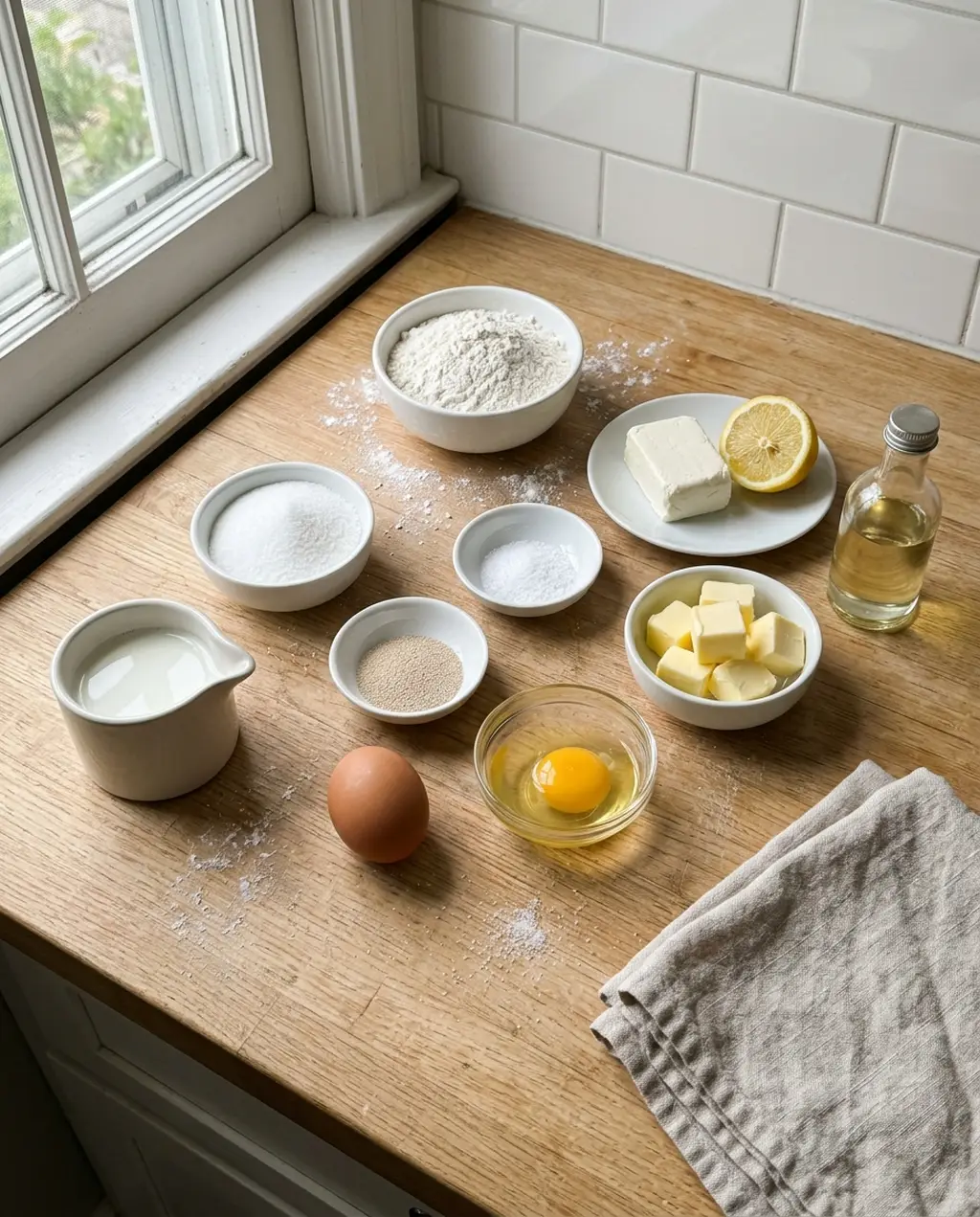
Kolache dough is a dinner roll that went to finishing school: milk, butter, sugar, a whole egg plus an extra yolk for tenderness, and flour held to the soft side. It mixes in one bowl with no machine, kneads for three forgiving minutes, and rises an hour on the counter or, better, overnight in the refrigerator, where the cold proof deepens the flavor and makes the soft dough far easier to shape. If the phrase soft yeast bun makes you nervous, our dinner rolls are this dough's plainer sibling and proof the basket handles the family well, and the beignets are its sweeter, fried-style cousin.
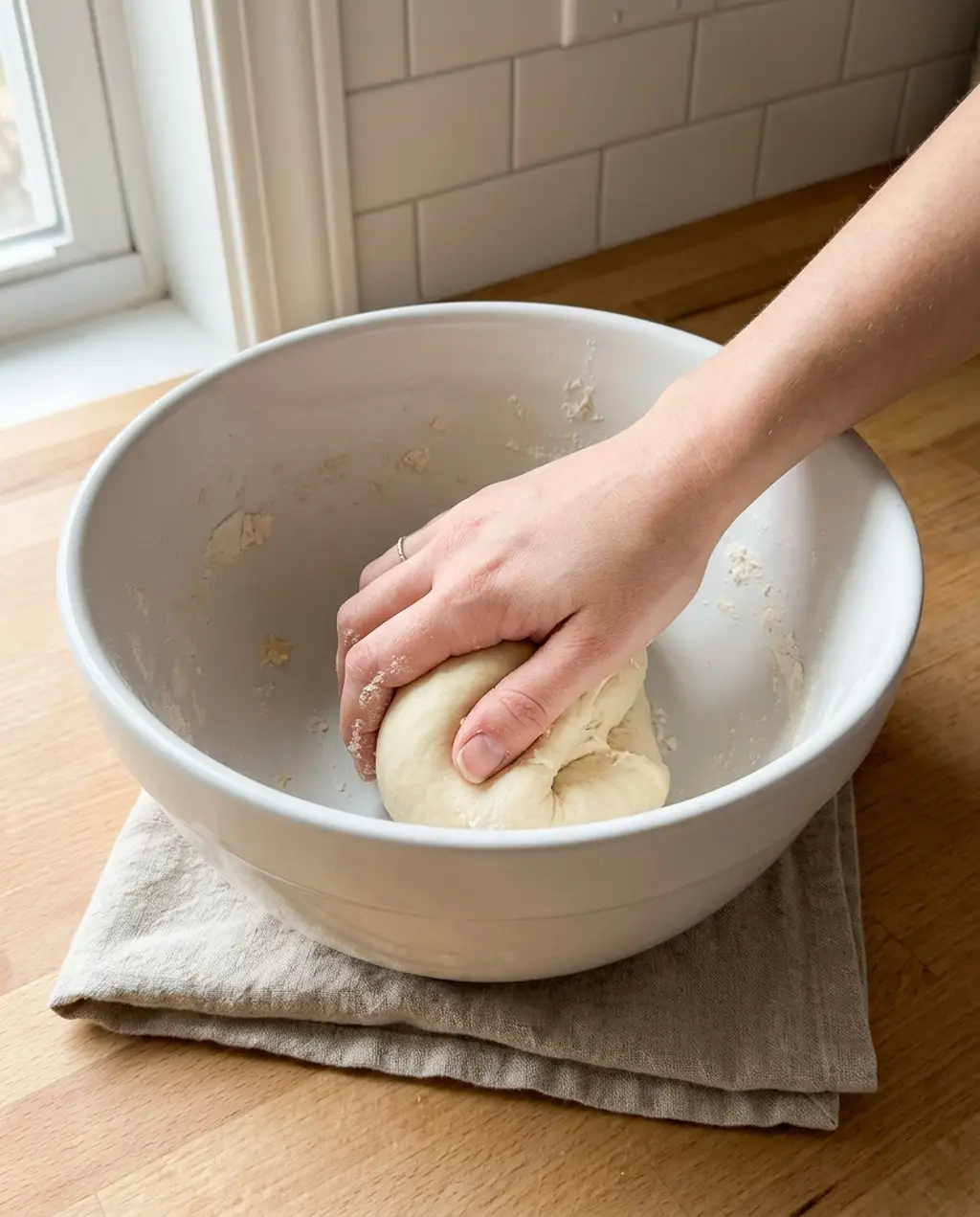
The cardinal sin is extra flour. A kolache should be cloud-adjacent, and every handful of flour you add while wrestling the sticky dough is a step toward bread. Flour your hands, not the dough, and when it misbehaves, ten minutes in the refrigerator disciplines it better than the flour jar ever will; if your enriched bakes trend dry anyway, the machine-side causes live in how to avoid dry air fryer bakes.
The well that stays open
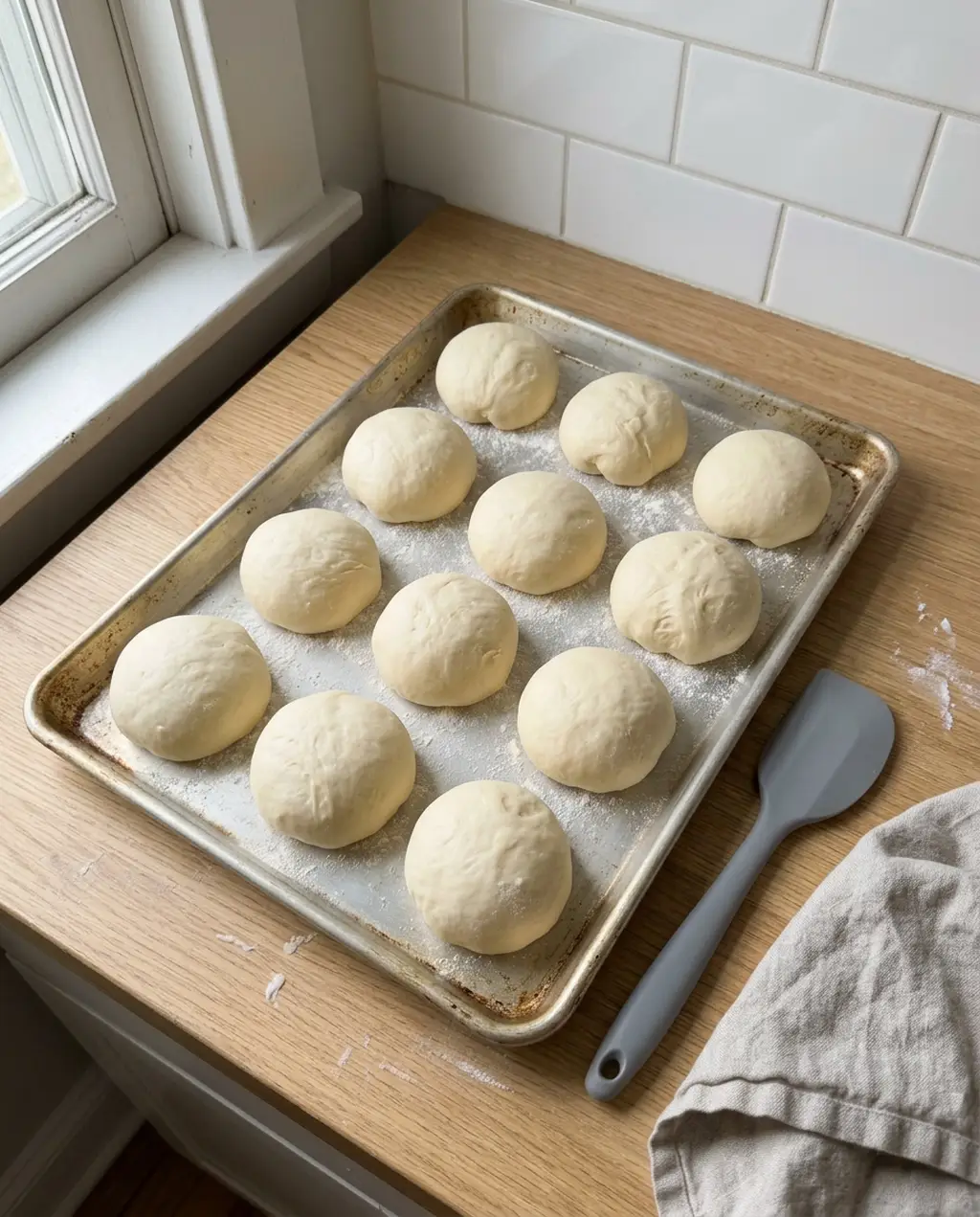
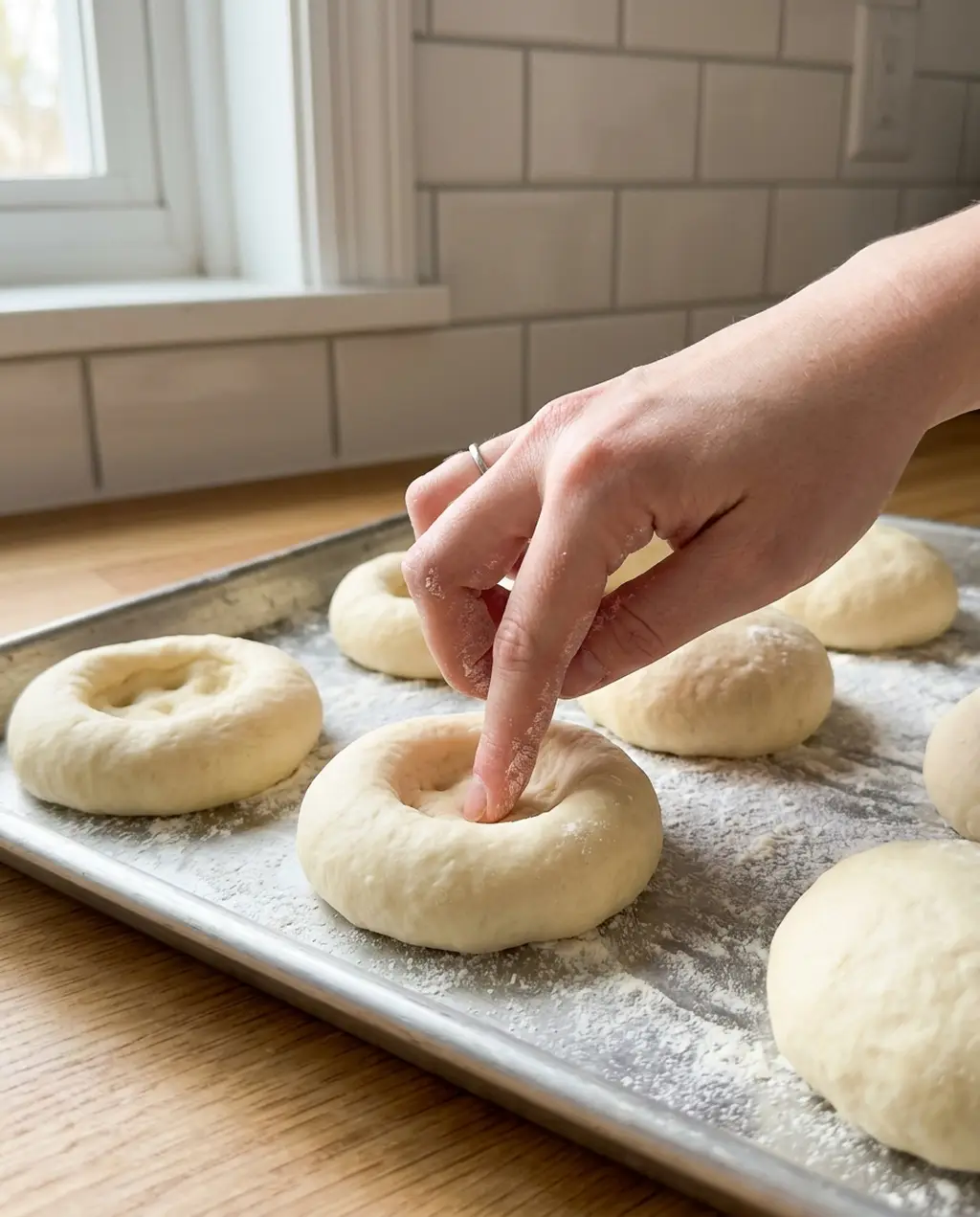
Every first-time kolache baker meets the same betrayal: a beautiful well pressed into the dough, filled with cheese, and by minute six the proofing dough has yawned and swallowed the filling whole. The fix is not pressing harder once, it is pressing twice. Shape the balls, let them take their 25 minute second rise until puffy, and then press the well, deep, with two fingers or the floured bottom of a small glass, right down until you can nearly feel the counter, leaving a fat rim. Fill immediately and bake immediately. Pressed after the rise, the well has no proofing left to do and no ambition to close; pressed before, it was always going to heal shut, because that is literally what proofing dough does.
Sweet fillings that behave
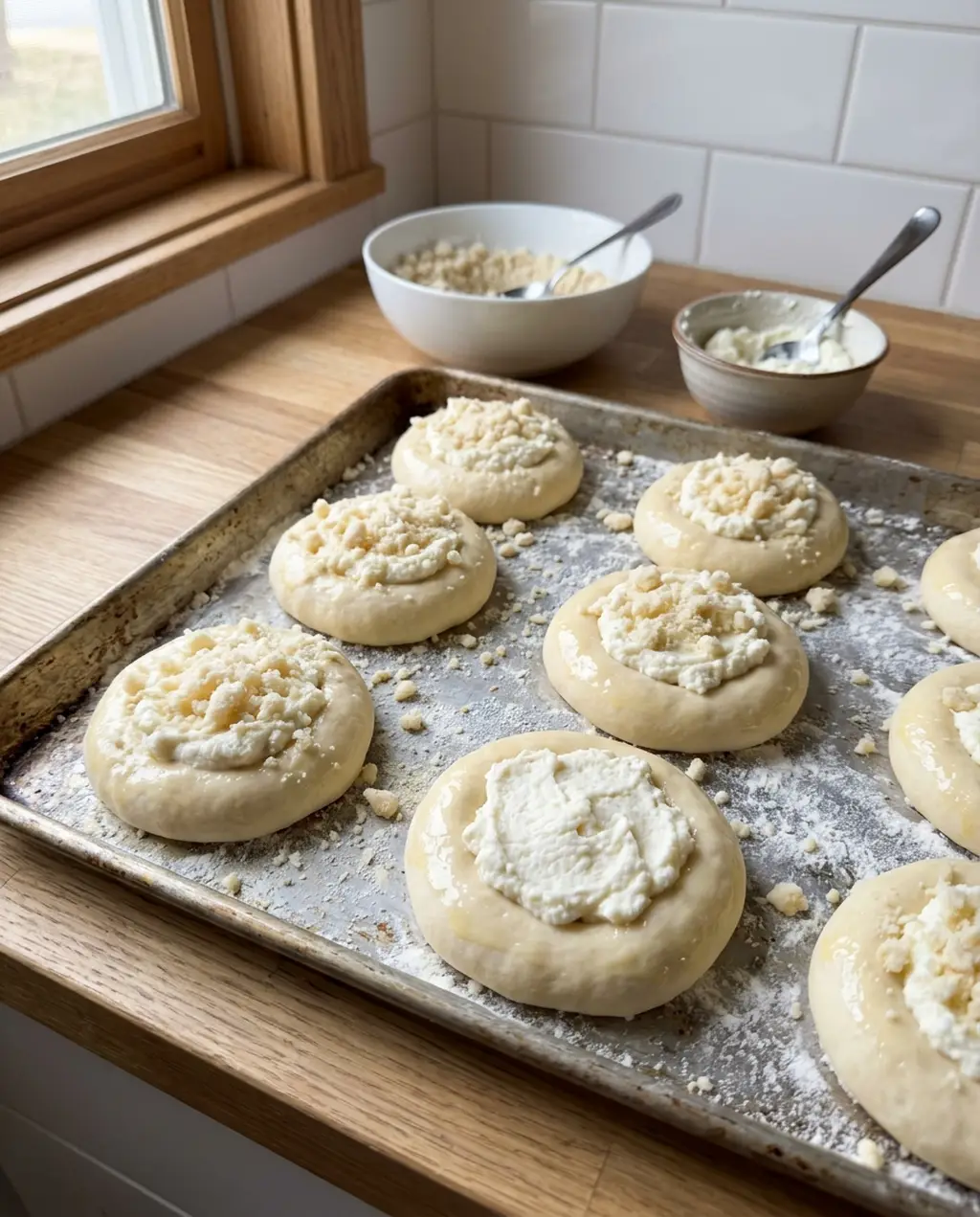
The house filling law from the hand pies page applies at full strength, since an open well gives a runny filling nowhere to hide: cold, ready to eat, and thick enough to mound on a spoon. The classic three, each sized at a generous tablespoon per kolache:
- Sweet cheese: cream cheese beaten stiff with sugar, an egg yolk, a little lemon and a spoon of cornstarch. The yolk sets it custardy instead of runny, the same yolk-only trick behind the cheese danish filling, and egg is what sets the cheesecake too.
- Fruit: thick jam stiffened with a quarter teaspoon of cornstarch per tablespoon, or fruit cooked down and thickened until a dragged spoon leaves a trail. Apricot and prune are the ancestral picks; berry jam is nobody's crime.
- Posypka: the streusel that makes a kolache look like a kolache: 3 tablespoons each of flour and sugar rubbed with 1 1/2 tablespoons of cold butter into coarse crumbs, scattered over the filling before baking. At 320°F it toasts golden instead of scorching, which is one more quiet argument for the temperature.
The klobasnek turn
For the Texas half of the title: take the same dough balls, flatten each into an oval, and wrap it around a fully cooked sausage, a little smoky link or half of a larger one, with a strip of cheddar and a stripe of mustard if breakfast demands it. Pinch the seam shut completely and set it seam side down, where the bun's own weight holds the closure while the dough sets. Cooked meat only, ever: the bake is 12 minutes of gentle heat, enough to bloom a precooked sausage and nowhere near enough to cook a raw one, which is the same law every filled dough on this site obeys, from the hand pies to the beef empanadas. These ride alongside the bacon and eggs as the hand-held wing of the breakfast table, and they freeze better than any pastry on this page.
Temperature and timing
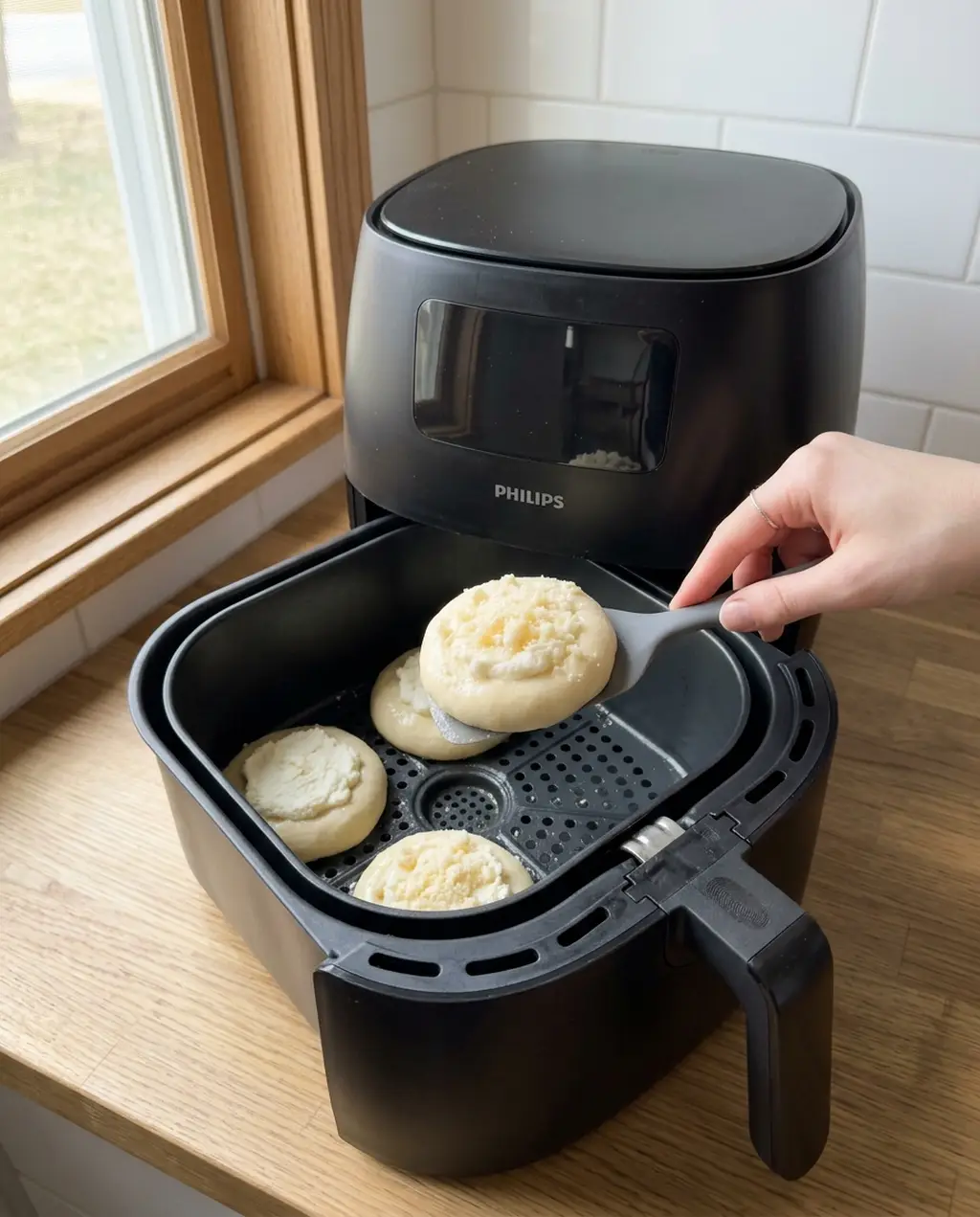
Sweet kolaches: 320°F for 9 to 11 minutes, open face up, never flipped. Klobasneks: 320°F for 10 to 12, seam down, also never flipped. Both in a basket preheated 3 minutes, 4 to 6 per batch with space to grow, on a lightly oiled bare floor. The one ranking recipe that bakes these at 400°F is fighting its own dough: enriched dough is loaded with milk sugars, egg and butter that brown on a hair trigger, and at 400 the crust finishes its color while the crumb under the filling is still setting. At 320°F, the same shelf where our cinnamon rolls live and one notch below the enriched yeast donut holes at 330°F, color and crumb arrive together and the posypka toasts instead of burning.
Oven kolache recipes run 375°F; our air fryer calculator drops that to 350 for a basket, and the last 30 degrees are the enrichment tax this dough family always pays. Preheating matters for the spring, argued in do you need to preheat an air fryer for baking, batch two runs about a minute faster, and every settled number on this site lives on the baking chart.
What done looks like
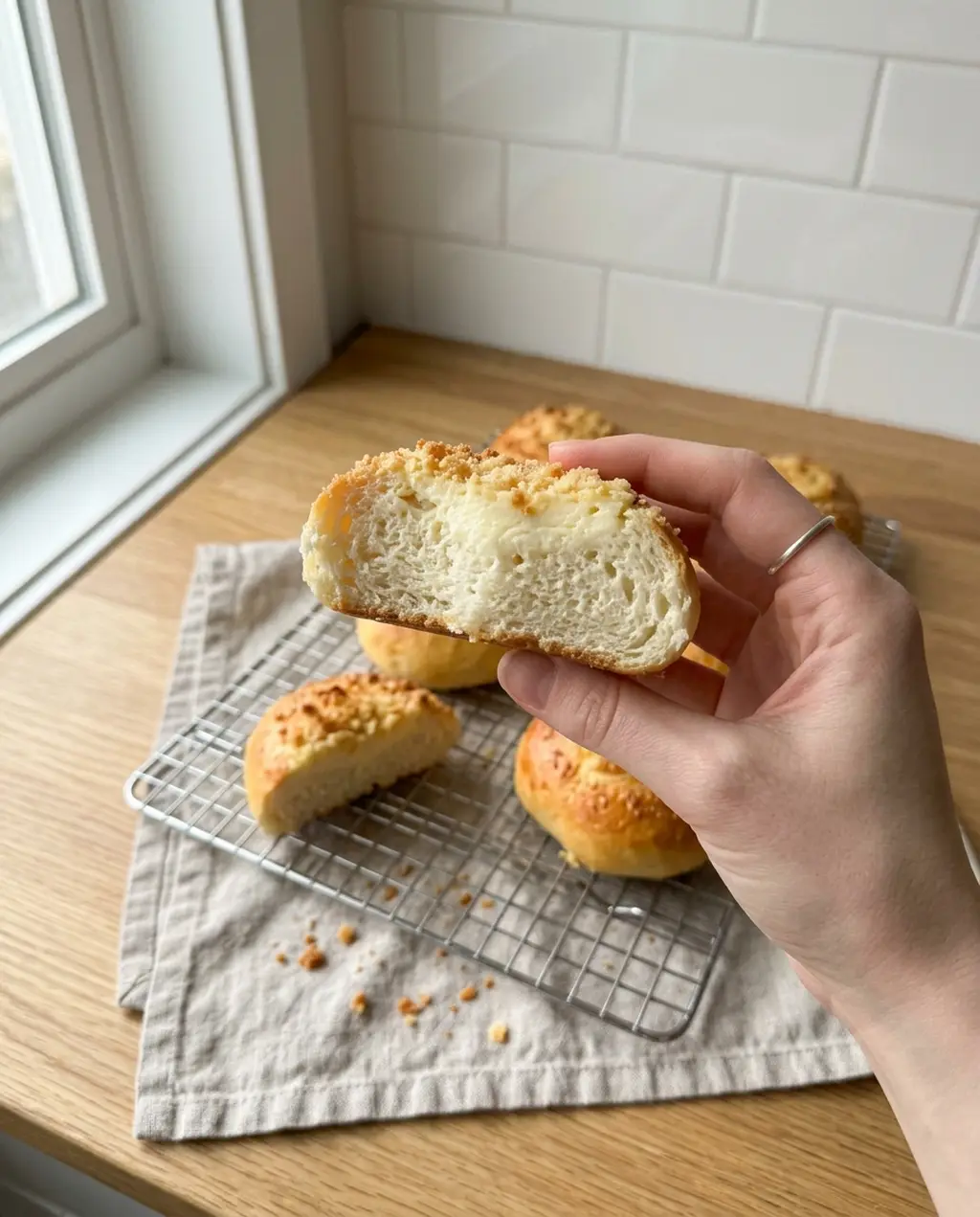
- Color: even gold on the rim and sides, a shade lighter than a dinner roll; the egg wash does the shine. Deep bronze means the machine ran hot for this dough.
- The well: still open, rim puffed proudly around a filling that is set at the edges, with cheese fillings keeping a slight shine in the center that firms as they cool.
- The spring: a gentle press on the rim springs back fully; a lingering dent buys 1 more minute.
- Klobasneks: golden all over, seam invisible underneath, and a probe or confident squeeze finding the middle hot; the bun reads done around 190°F inside.
Ingredients
For 12 kolaches
- 3/4 cup whole milk, warm to the touch, not hot
- 2 1/4 teaspoons instant yeast (one packet)
- 1/4 cup granulated sugar
- 1 large egg plus 1 yolk, the white saved for the wash
- 4 tablespoons butter, softened
- 1/2 teaspoon fine salt
- 2 3/4 to 3 cups all-purpose flour, stopping while the dough is still soft
- Sweet cheese filling: 6 oz cream cheese, 3 tablespoons sugar, 1 egg yolk, 1 teaspoon cornstarch, 1 teaspoon lemon juice
- Posypka: 3 tablespoons each flour and sugar, 1 1/2 tablespoons cold butter
- Neutral oil for the basket floor
Klobasnek option for any or all of the dozen: one fully cooked small sausage link per bun, plus a strip of cheddar. Same dough, same numbers plus a minute or two.
How to make them
- Whisk the warm milk, yeast, sugar, egg and yolk in a large bowl, then stir in the softened butter, salt and 2 3/4 cups of flour to a soft, slightly sticky dough, adding the last quarter cup only if it cannot hold a shape.
- Knead in the bowl for 3 minutes with floured hands, cover, and rise 1 to 1 1/2 hours until doubled, or refrigerate overnight.
- Divide the dough into 12 pieces, roll them into balls, and set them on a floured tray with room to grow.
- Let the balls rise 25 minutes until puffy, and beat the cream cheese filling smooth and stiff while they do; refrigerate it.
- Rub the posypka ingredients into coarse crumbs with your fingertips.
- Press a deep well into each risen ball with two floured fingers or the base of a small glass, nearly to the tray, leaving a fat rim.
- Fill each well immediately with a generous tablespoon of the cold cheese filling, scatter posypka over the top, and brush the rims with the saved egg white.
- Preheat the air fryer at 320F for 3 minutes and lightly oil the basket floor.
- Air fry 4 to 6 at a time at 320F for 9 to 11 minutes, never flipping, until the rims are even gold and the filling is set at its edges.
- Cool 10 minutes on a rack; the filling finishes setting as it cools, and batch two runs about a minute faster.
Store-bought, frozen, and leftovers
Half the search traffic for this page is really asking about the box from the donut shop or the warehouse-store bag, so: a thawed or day-old baked kolache revives at 300°F for 3 to 4 minutes, which re-tenderizes the bun and warms the filling without tanning the rim, and a fully baked frozen one goes 320°F for 6 to 8 minutes straight from the freezer. The microwave makes enriched dough gummy in the exact way it makes pastry soggy, and stays banned. Your own klobasneks are the meal-prep stars here: bake, cool, freeze, and reheat from frozen for a hand-held breakfast that beats anything in a gas station warmer, with the rest of the freezer playbook over at frozen biscuits. Sweet kolaches keep refrigerated 3 days because of the cheese; the shortcut crowd can press wells into flattened canned biscuits at 330°F for 8 to 10 minutes and reach a humbler, faster cousin of the same idea. Everything tested is indexed at the recipe index, with technique pages under guides.
Fixing what goes wrong
| Problem | Cause | Fix |
|---|---|---|
| Well closed and swallowed the filling | Pressed before the second rise | Rise first, then press deep and fill immediately; proofing dough heals wells |
| Filling ran over the rim | Loose filling, or a shallow well | Stiff cold filling that mounds on a spoon, and a well pressed nearly to the tray |
| Dark crust, gummy crumb | 350°F and up on enriched dough | 320°F and the full clock; this dough browns on a hair trigger |
| Dense, bready buns | Too much flour, or a skipped second rise | Stop at soft and sticky, flour your hands instead, and give the balls their 25 minutes |
| Klobasnek burst its seam | Seam up, or pinched lazily | Pinch closed completely and bake seam down, so the bun's weight holds the door |
| Posypka scorched | Hot-running machine | Drop to 310°F and watch from minute 8; the wider rescue kit is in the burning guide |
Frequently asked questions
QWhat temperature do you cook kolaches in an air fryer?
320F, preheated 3 minutes: 9 to 11 minutes for open sweet kolaches and 10 to 12 for sealed sausage klobasneks, never flipping either. Kolache dough is enriched with milk, butter, sugar and egg, all of which brown aggressively, and the recipes running 375F or 400F build a dark crust around an unset crumb. At 320F the bun bakes through as it colors, and the posypka streusel toasts golden instead of scorching. Reheating is gentler still: 300F for 3 to 4 minutes for a baked kolache.
QWhat is the difference between a kolache and a klobasnek?
A kolache is the Czech original: a round, open-faced sweet bun with a pressed well of fruit, sweetened cheese or poppy seed, often topped with posypka streusel. A klobasnek is the Texas-born savory cousin, the same enriched dough sealed around a sausage, invented by Czech-Texan bakers later. Most of Texas calls both kolaches, Czech tradition keeps the names separate, and the argument is eternal and friendly. In the basket the practical difference is small: the klobasnek bakes seam down and takes about 2 minutes longer.
QWhy did my kolache wells close up and swallow the filling?
Because the wells were pressed before the dough finished proofing, and proofing dough heals every dent you give it; the well closes in the basket and the filling sinks into the crumb. The fix is order of operations: shape the balls, give them their full 25 minute second rise until puffy, and only then press the wells, deep, nearly to the tray, with floured fingers or the base of a small glass, leaving a fat rim. Fill immediately and bake immediately, and the well has no rising left in it to close with.
QCan I make kolaches with canned biscuit dough?
A shortcut version, yes: flatten canned biscuits, press a well into each, add a spoon of stiff cream cheese or thick jam filling, and air fry at 330F for 8 to 10 minutes, the temperature biscuit dough always runs on this site. What you get is a filled biscuit, pleasant and fast, with a flakier, saltier crumb than a true kolache's soft sweet bun; the yeast dough is what makes a kolache taste like one. Use the can on the mornings that need rescue and the real dough on the mornings that deserve ceremony.
QCan I make kolache dough the night before?
Yes, and it is the better schedule. Mix and knead, then refrigerate the covered bowl up to 24 hours; the slow cold rise deepens the flavor and firms the soft, sticky dough so it divides and shapes cleanly straight from the refrigerator. In the morning, shape the balls and give them a slightly longer second rise, 30 to 35 minutes, since they start cold, then press, fill and bake as usual. Fully assembled klobasneks can also be frozen unbaked and given an overnight refrigerator thaw plus a short rise before baking.
QHow do you reheat kolaches in an air fryer?
300F for 3 to 4 minutes for a refrigerated or day-old kolache, sweet or savory, which warms the filling and revives the bun's softness without over-browning the rim. From fully frozen, baked kolaches take 320F for 6 to 8 minutes. Skip the microwave, which turns enriched dough gummy and heats fruit filling to lava while the bun still feels cool. Sausage klobasneks reheat especially well from frozen, which is why a batch in the freezer is the best fast breakfast this dough offers.
Made it? Rate it.
It helps more people find the well that stays open.
Air Fryer Kolaches
A dozen soft enriched buns at 320°F for 9 to 11 minutes: wells pressed after the rise so they stay open, filled with stiff sweet cheese under posypka crumbs, with the sausage klobasnek turn built in.
Ingredients
- 3/4 cup whole milk, warm to the touch, not hot
- 2 1/4 teaspoons instant yeast (one packet)
- 1/4 cup granulated sugar
- 1 large egg plus 1 yolk, the white saved for the wash
- 4 tablespoons butter, softened
- 1/2 teaspoon fine salt
- 2 3/4 to 3 cups all-purpose flour, stopping while the dough is still soft
- Sweet cheese filling: 6 oz cream cheese, 3 tablespoons sugar, 1 egg yolk, 1 teaspoon cornstarch, 1 teaspoon lemon juice
- Posypka: 3 tablespoons each flour and sugar, 1 1/2 tablespoons cold butter
- Neutral oil for the basket floor
Instructions
- Whisk the warm milk, yeast, sugar, egg and yolk in a large bowl, then stir in the softened butter, salt and 2 3/4 cups of flour to a soft, slightly sticky dough, adding the last quarter cup only if it cannot hold a shape.
- Knead in the bowl for 3 minutes with floured hands, cover, and rise 1 to 1 1/2 hours until doubled, or refrigerate overnight.
- Divide the dough into 12 pieces, roll them into balls, and set them on a floured tray with room to grow.
- Let the balls rise 25 minutes until puffy, and beat the cream cheese filling smooth and stiff while they do; refrigerate it.
- Rub the posypka ingredients into coarse crumbs with your fingertips.
- Press a deep well into each risen ball with two floured fingers or the base of a small glass, nearly to the tray, leaving a fat rim.
- Fill each well immediately with a generous tablespoon of the cold cheese filling, scatter posypka over the top, and brush the rims with the saved egg white.
- Preheat the air fryer at 320F for 3 minutes and lightly oil the basket floor.
- Air fry 4 to 6 at a time at 320F for 9 to 11 minutes, never flipping, until the rims are even gold and the filling is set at its edges.
- Cool 10 minutes on a rack; the filling finishes setting as it cools, and batch two runs about a minute faster.

Sujata Thapa
Sujata bakes everything on this site in a 5.5 quart basket air fryer on a Kathmandu counter, then re-tests the keepers until the timings hold for anyone. The press-after-the-rise rule cost her a full dozen: twelve perfect wells at noon, twelve smug unfilled buns by half past, the cheese entombed somewhere inside each one.