

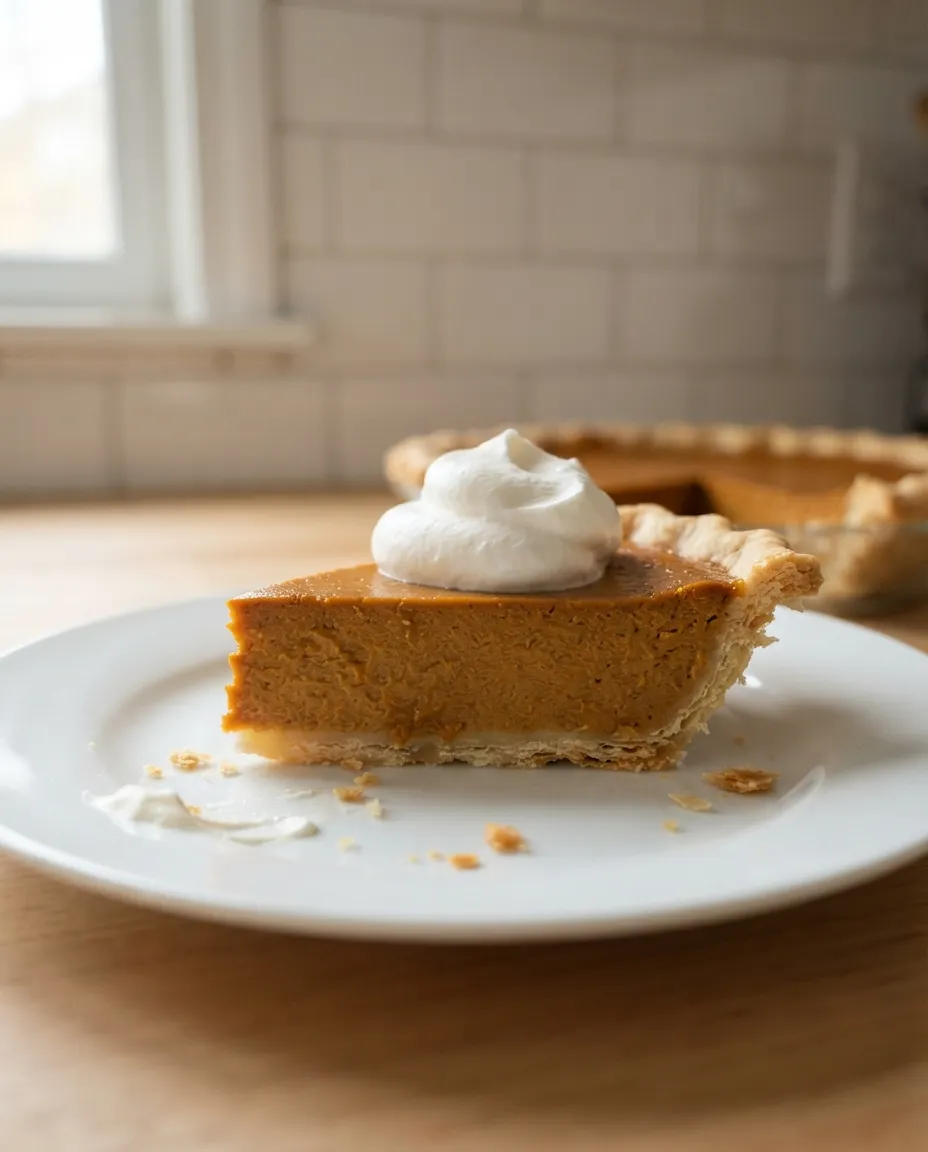
Pumpkin pie has the highest stakes-to-difficulty ratio in American baking: it is genuinely easy, and it is due at the one dinner a year where everyone is watching. Which is why the crack hurts the way it does. You did everything the card said, the kitchen smells like November, and the pie comes out with a canyon across its face like dried lakebed, always discovered in front of witnesses.
Here is the consolation and the fix in one: the crack was never about your recipe. Pumpkin pie is custard, eggs setting a liquid, and eggs are done at a temperature, not a time. Bake past it and they keep tightening until something gives. Every crack is an overshoot, which means every crack is preventable with a ten dollar thermometer and the discipline to stop early, and the air fryer's small, steady chamber makes the stopping easier than an oven ever did.
Quick answer: Pour the filling into a par-baked, egg-white-sealed 7 inch shell and bake at 300°F for 35 to 45 minutes, until the edges are set, the center 2 inches still wobble, and a thermometer slid in where the whipped cream will sit reads 175°F. Then the half of the recipe nobody performs: rest 10 minutes in the switched-off machine, cool 2 hours on the counter, then chill. Carryover finishes the center; the slow ramp down is what keeps the surface whole.
Why pumpkin pies crack
- Cracks are overcooked eggs. Egg proteins set the custard in the low 170s and keep contracting as heat climbs past it. Contract far enough, unevenly enough, and the filling tears: that is the crack, fully formed or arriving as hairlines during cooling.
- The oven's follow-through is the trap. A pie that reads done in the machine keeps cooking on the counter; carryover in a dense custard runs 5 to 10 degrees. A pie pulled at fully-set is a pie finishing at overcooked.
- Fast cooling cracks pies that survived the bake. Hot custard moved to a cold counter contracts at the surface faster than at the core, and the surface loses. The cooldown is part of the bake, which gets its own section.
- The air fryer advantage is honest here: a small chamber at a low setting holds steadier around a single small pie than a big oven cycling its element, and the same closed chamber becomes the slow-cool box afterward. This is one of the custard's better rooms.
175°F: the number that replaces the jiggle
The jiggle test is real but unreliable in exactly the way folklore always is: set edges and a Jell-O wobble in the center 2 to 3 inches is correct, and every cook calibrates wobble differently, once a year, under pressure. The number does not negotiate: 175°F at the center, the custard sweet spot, above the low-170s where the eggs have safely set and below the territory where they tighten toward cracking. It is a close cousin of the 170°F the pumpkin cheesecake is pulled at; the pie runs a few degrees higher because the starchy puree buffers the eggs.
And the objection everyone raises, the hole in the beautiful surface, has a two-word answer: whipped cream. Probe once, dead center or just off it, exactly where the serving dollop lands. The instant-read thermometer costs one hidden pinprick, and in exchange the pie is never overcooked and never raw, which is a trade every Thanksgiving cook should sprint to take.
The shell: par-baked and sealed
Raw dough cannot survive under custard; the wet filling soaks it faster than the machine can set it, and the result is the pale, damp floor everyone politely eats around. The full fix lives in this site's blind baking guide, and this pie is precisely the pie that guide was written for. The sweet potato pie and pecan pie start from the same sealed shell. The short version:
- Par-bake a 7 inch crust: 15 minutes at 300°F under weights filled flush to the rim, then 6 to 8 unweighted, to a dry, matte, barely gold floor.
- Seal it: brush the hot floor with beaten egg white and give it 2 minutes back in the machine. The glaze waterproofs the docking holes and pores, and it is the difference between a crisp base on day two and a soggy one on day one.
- Pour the filling into the still-warm shell and bake immediately. A warm shell gives the bottom of the custard a head start, which shortens the total bake, which protects the eggs. Everything in this pie conspires toward gentleness.
- The 7 inch size is the honest air fryer format: it fits 5 to 6 quart baskets with clearance, feeds 6 to 8 in Thanksgiving-width slices, and bakes more evenly than a 9 inch ever could in a machine this size. Check your basket against the pan size calculator before committing dough.
The filling: cans, milks, and a pinch of pepper
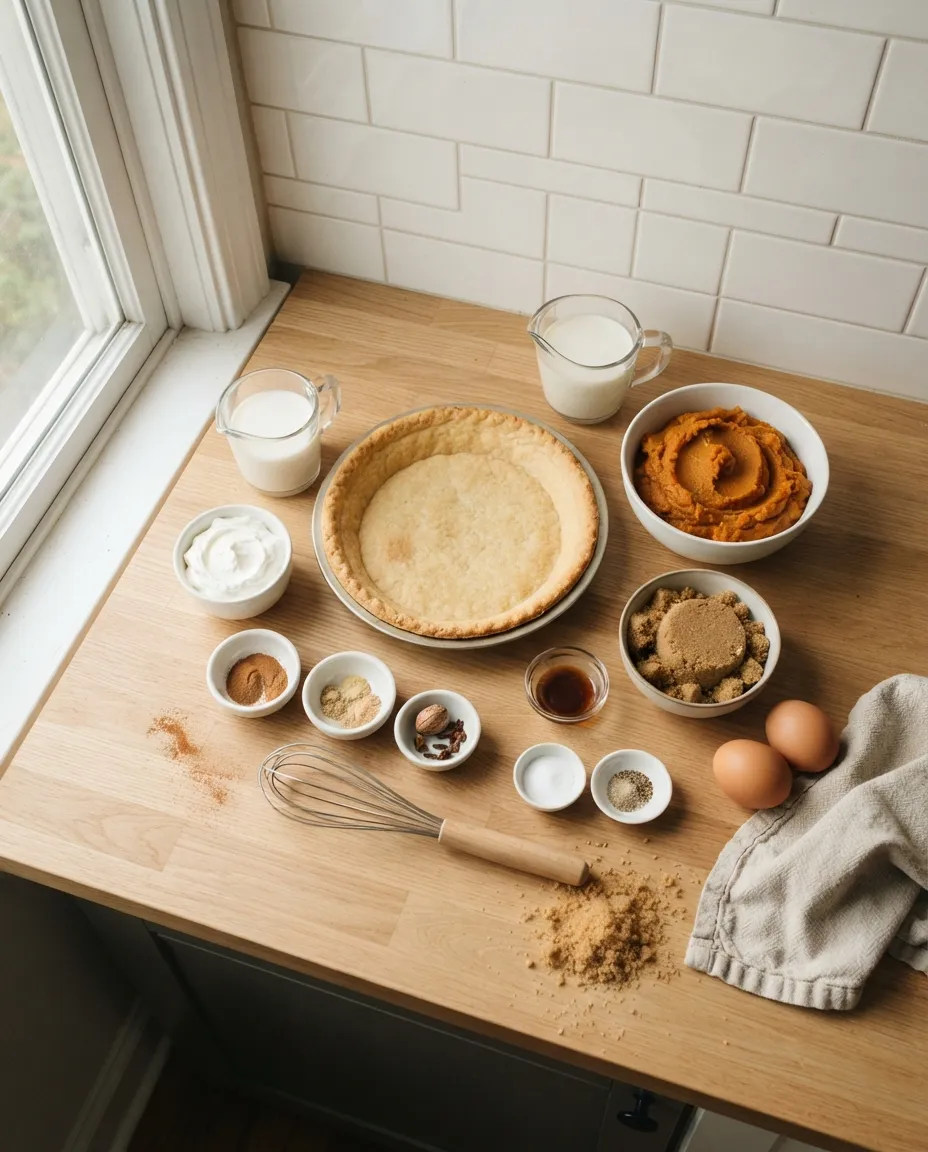
- Canned pumpkin is the professional choice, not the compromise. Canned puree is consistent in moisture and density batch to batch, which is exactly what a custard needs. Fresh roasted pumpkin is a lovely project and a wetter, looser variable; if you go fresh, drain it in a towel-lined sieve for an hour and accept a few extra minutes of bake. A 15 ounce can leaves about half a cup behind, exactly what the pumpkin cookies call for.
- Evaporated milk, never sweetened condensed. The cans live side by side and are not related: evaporated is concentrated milk, condensed is milk candy, and the swap is the single most common pumpkin pie disaster. Check the label twice; the word you want is unsweetened.
- Brown sugar over white, for the molasses depth that reads as tradition.
- The spice blend with the secret handshake: cinnamon, ginger, nutmeg, cloves, and a small pinch of black pepper. The pepper is the old diner trick: undetectable as itself, it sharpens every other spice by a step. Pre-mixed pumpkin pie spice works; the pinch of pepper improves that too.
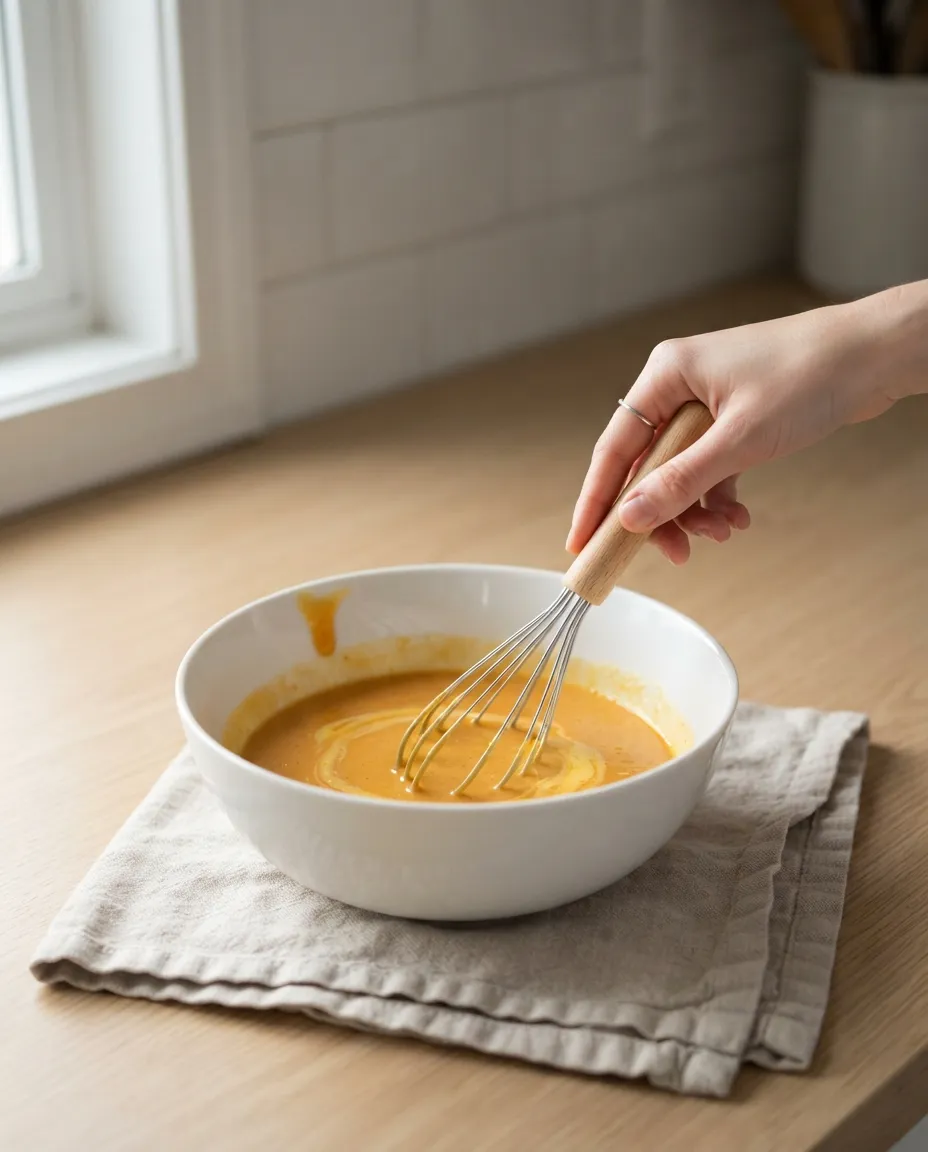
- Room temperature eggs, whisked in last and gently. Vigorous whisking aerates the filling, and bubbles bake into a pocked surface. Smooth and lazy is the stroke.
How to make it
- Par-bake and seal the shell per the section above, or per the blind baking guide in full.
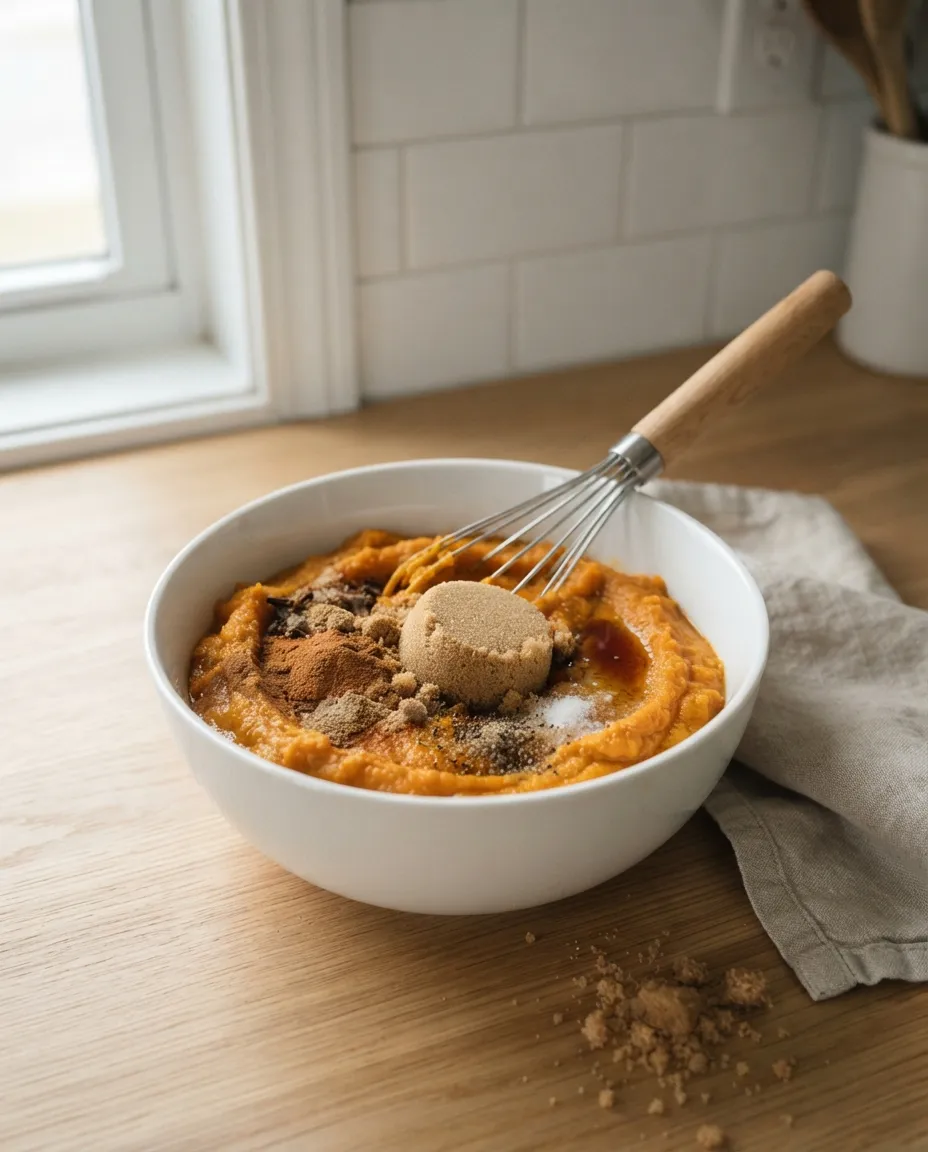
- Whisk the filling: 1 1/4 cups pumpkin puree, 1/2 cup brown sugar, the spices, 1/2 teaspoon salt, 1 teaspoon vanilla, then 2/3 cup evaporated milk, then 2 room-temperature eggs, gently, until just smooth.
- Pour into the warm shell, leaving a whisper of headroom, and settle the pan with one gentle tap.
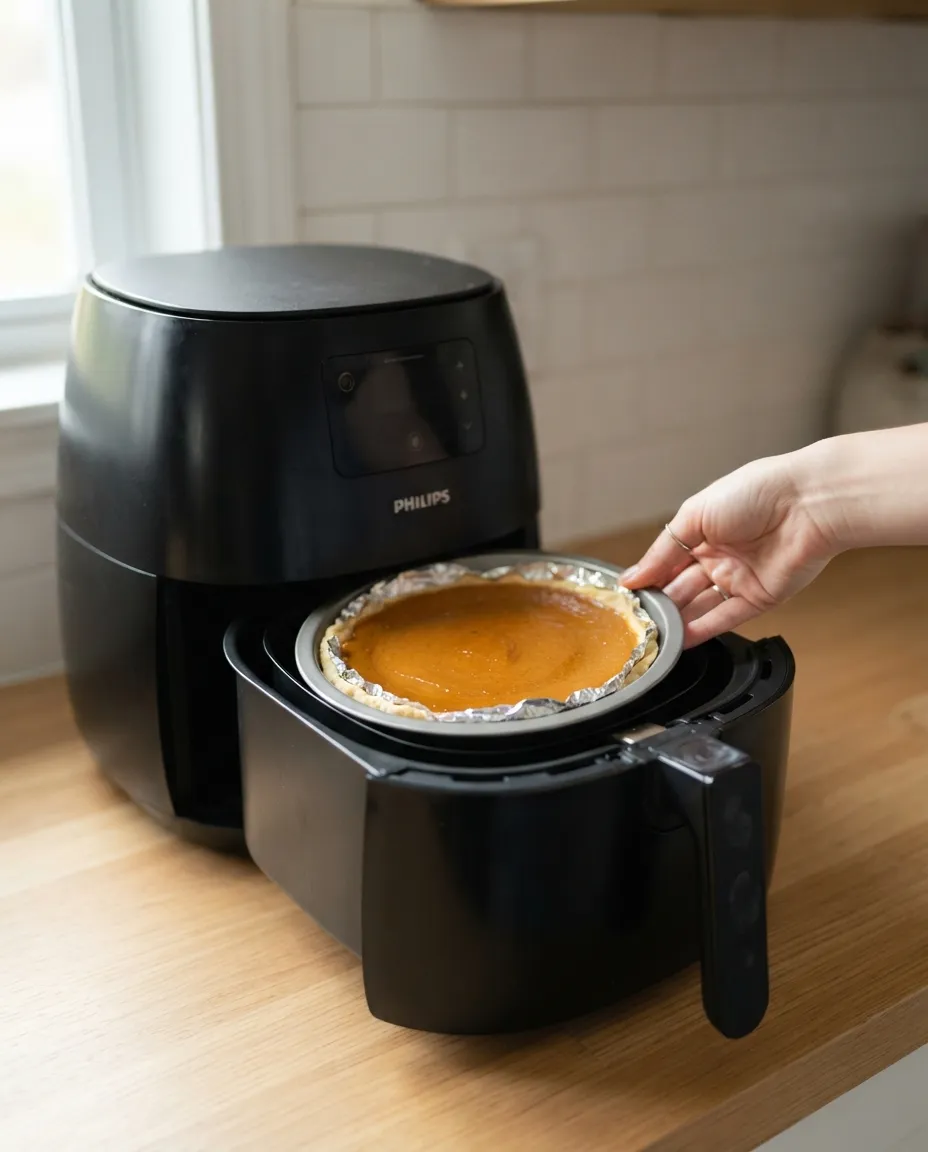
- Bake at 300°F for 35 to 45 minutes. No preheat, per the preheat guide; a cold start is one more gentleness. Oven recipes open at 425°F and drop to 350°F, and the air fryer calculator would convert those honestly, but custard under a close top element wants no hot act at all: steady and low beats the oven's two-step here, the reverse of the muffin shelf's logic, because custard has no dome to raise and everything to lose. The full dial lives in the air fryer baking chart.
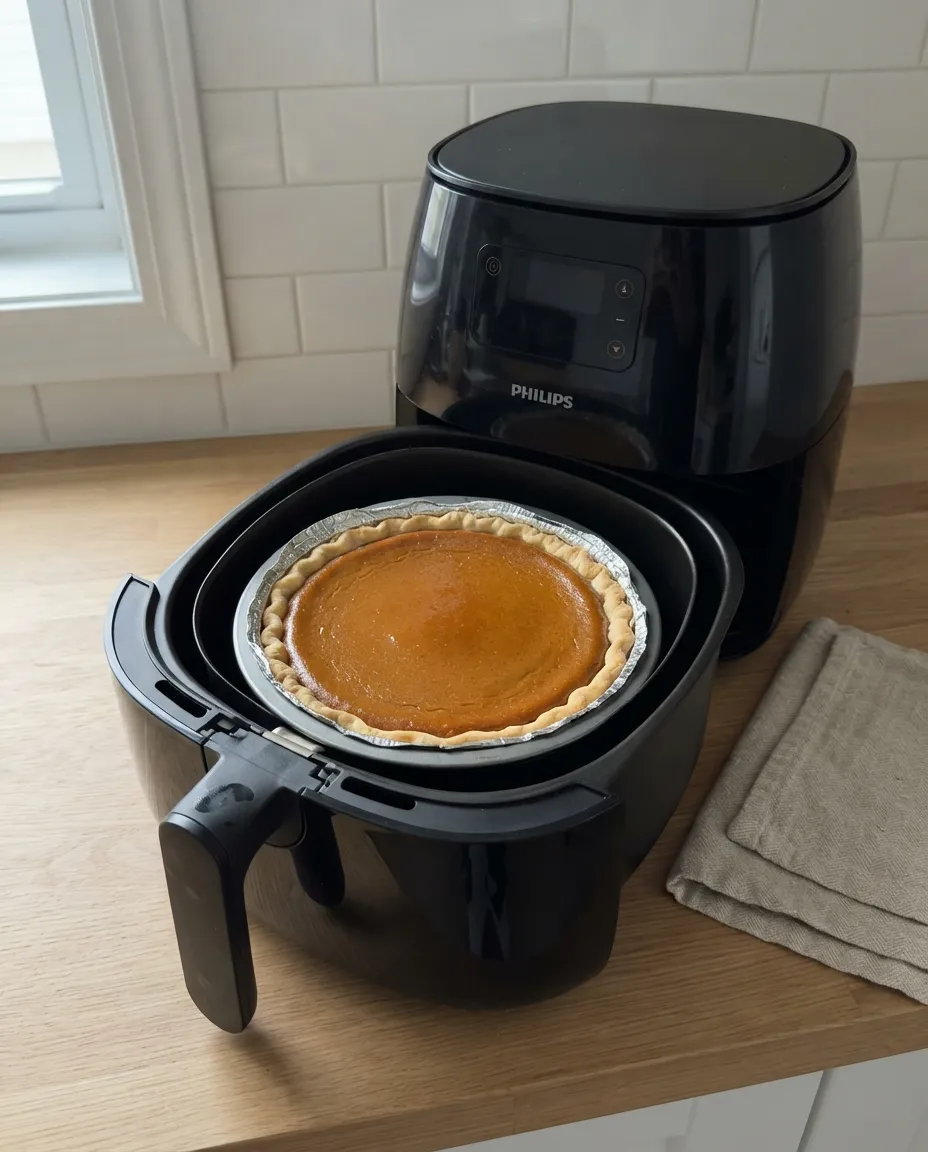
- Check at 35: edges set and slightly puffed, center 2 inches wobbling like Jell-O, and the probe, where the cream will sit, reading 175°F. Short? Back in for 4 minute rounds.
- Rest 10 minutes in the switched-off, closed machine, then the slow cool below.
The slow cool: half the recipe
The bake sets the custard; the cooldown decides whether it stays whole, and rushing it undoes everything the thermometer just protected. The ramp:
Ten minutes in the machine
Switched off, drawer closed. The chamber cools gently around the pie instead of shocking it, and carryover uses the time to finish the center's last degrees.
Two hours on the counter
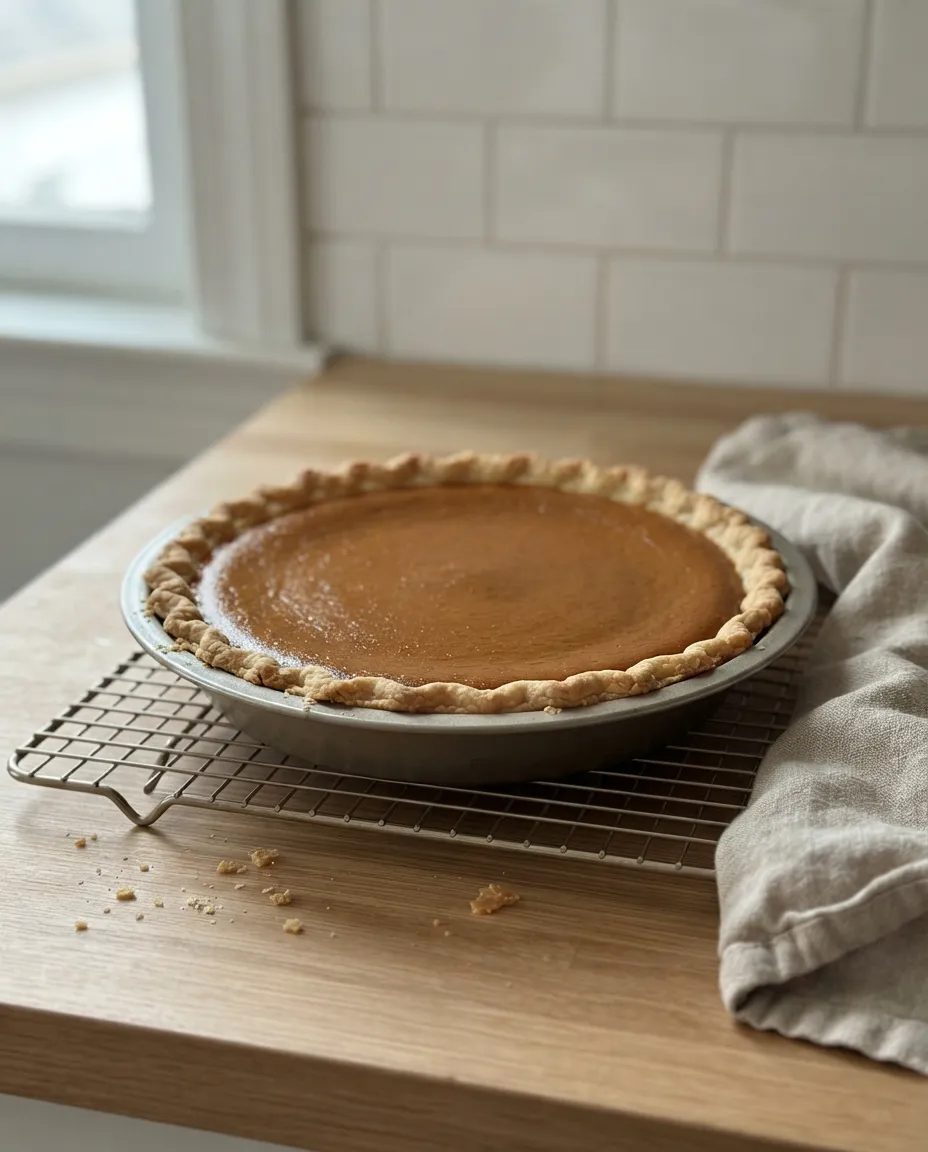
On a rack, away from drafts, windows, and anyone who wants to refrigerate it early. The custard finishes setting as it descends to room temperature; cutting warm pumpkin pie is serving pudding in a crust.
Then, and only then, the fridge
Loosely covered once fully cool. A hot pie into a cold fridge is the crack's second chance and the soggy crust's first. Chilled overnight, the flavor is better on day two anyway, which the schedule section turns into a feature.
Protecting the custard's surface
- Watch for early bronzing. A custard surface sitting close to a top element can blotch and darken before the center sets. If the top is coloring by minute 20, lay a loose foil tent over the pan, the site's standing move, resting on the rim without touching the filling. The tent rules live in the foil and parchment guide, and chronic scorchers have a file in the burning guide.
- A ring for the rim: the crimped crust edge finished its baking during the blind bake, so it needs armor early; the foil donut from the blind baking guide goes on from the start of the custard bake, not at golden.
- Rotate at the halfway mark if your machine has a known hot spot; an unevenly heated custard sets unevenly, and uneven setting is pre-cracking.
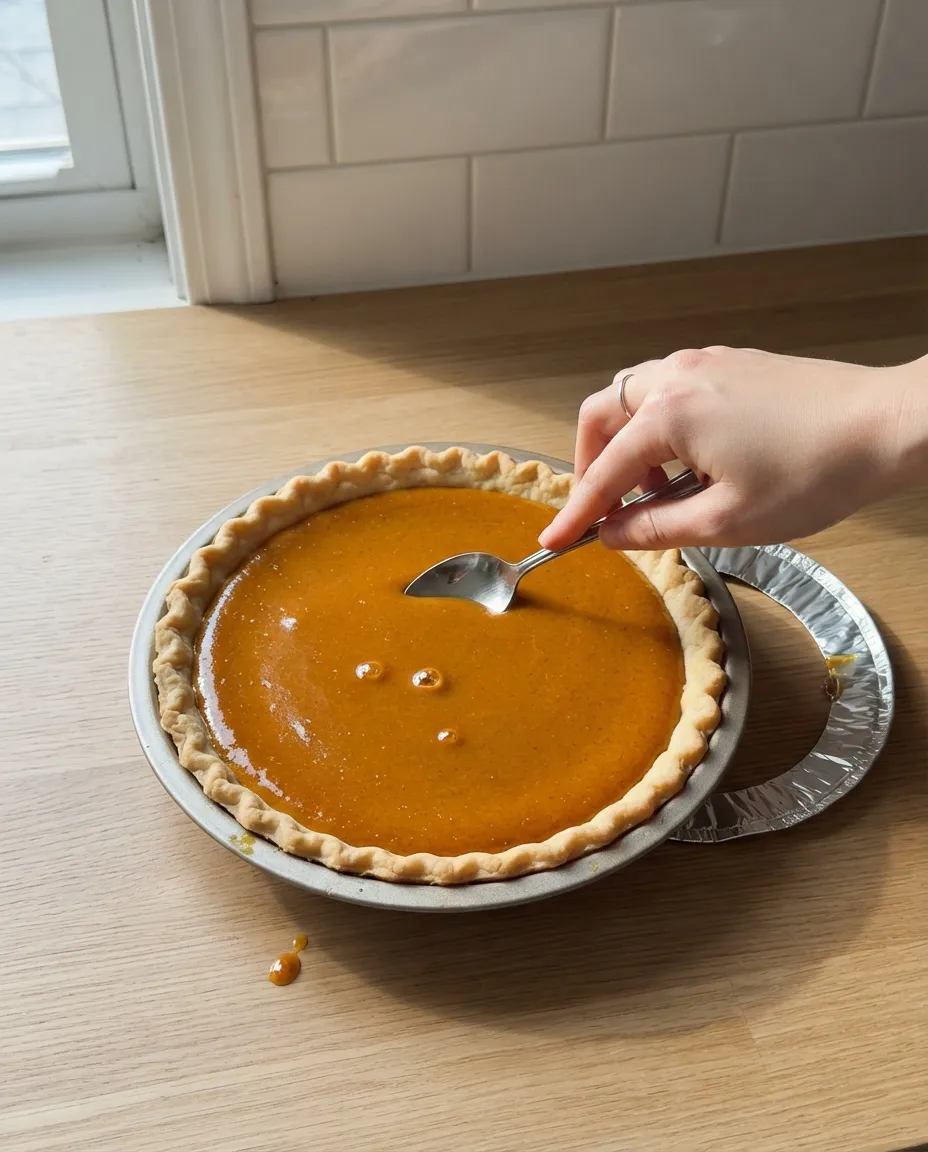
- Bubbles in the poured filling pop under a quick pass of a spoon before the pan goes in; they otherwise bake into permanent pinholes.
Troubleshooting
| What you got | Why | Fix |
|---|---|---|
| The crack | Overbaked past 175°F, or shock-cooled. | The probe under the cream spot, and the three-stage ramp. Both halves, every time. |
| Weeping, watery slices | Overcooked custard squeezing out its moisture, the crack's quieter sibling. | Same fix: 175°F and patience. |
| Soggy bottom crust | Raw or unsealed shell under wet filling. | Par-bake and the egg white seal, no exceptions for custard pies. |
| Center never set | Pulled on the clock while the probe would have said 160°F. | The number rules the clock; 4 minute rounds until 175°F. |
| Dark, blotchy surface | Top element working an exposed custard too hard. | The loose tent from minute 20, and 300°F, never higher. |
| Burnt rim | A twice-baked edge with no armor. | The foil ring from the start of the custard bake. |
| Curdled, grainy texture | Way overbaked; the eggs scrambled in place. | Unrescuable, and unrepeatable once the thermometer moves in. |
| Sweet, dense, wrong filling | Sweetened condensed milk wore evaporated's costume. | Read the can twice. The word is unsweetened. |
Cross-recipe mysteries live in the troubleshooting guide. And if your freezer aisle sells the shortcut, note that store-bought frozen pumpkin pies are often pre-baked thaw-and-serve; the frozen pie manual sorts which kind is in your cart before the machine ever turns on.
Make-ahead and the holiday schedule
- Pumpkin pie is a day-ahead pie by design. Chilled overnight, the custard is fully set, the spices have married, and Thanksgiving morning owes you nothing. Bake Wednesday; serve Thursday; accept praise.
- The shell can be par-baked and sealed two days out, held at room temperature under a towel, which splits the project into two twenty-minute sessions.
- Serve cool or barely room temperature with the whipped cream doing its structural duty over the probe mark. Warm slices slump; this pie's dignity is in its chill.
- Leftovers keep 4 days covered in the fridge. Freezing works in a pinch, wrapped whole for a month, thawed overnight in the fridge, but custard loses a little silk in the ice; the better plan is a pie small enough to finish, which the 7 inch conveniently is.
- The fall table, fully assembled: this beside the apple pie covers both American pie churches in one machine, the pecan bars slice cleanly for a dessert table, and the cider donuts handle the crowd that hovers in the kitchen before dinner. For a breakfast-side use of the same pumpkin and spices, the pumpkin muffins bake in about 15 minutes.
Frequently asked questions
QCan you bake a pumpkin pie in an air fryer?
Yes, and the format suits the machine: a 7 inch pie in a par-baked shell bakes at 300°F for 35 to 45 minutes, pulled at 175°F in the center while the middle still wobbles, then rested 10 minutes in the switched-off machine. The small steady chamber holds a low temperature around a custard more evenly than most ovens, and it frees the actual oven on the one day of the year that matters most.
QWhy did my pumpkin pie crack?
Overcooked eggs. Custard sets in the low 170s, and past that the egg proteins keep tightening until the filling tears, either in the machine or during a too-fast cooldown, when the surface contracts faster than the core. The two-part fix: pull at 175°F on a thermometer rather than at fully-set-looking, since carryover adds degrees after the pull, and cool in stages, 10 minutes in the closed machine, 2 hours on the counter, then the fridge.
QHow do you know when pumpkin pie is done?
175°F on an instant-read thermometer at the center, probed once at the exact spot where the serving dollop of whipped cream will sit, which retires the hole objection permanently. The visual cues that support the number: edges set and slightly puffed, and only the center 2 to 3 inches wobbling like Jell-O when the pan is nudged. A pie with no wobble at all at pull time is already past the number and cooling toward a crack.
QDo you have to blind bake the crust for pumpkin pie?
Yes, partially, and it is the difference between a crisp base and the damp floor everyone eats around. Custard soaks raw dough faster than the machine can set it. Par-bake the shell 15 minutes weighted and 6 to 8 unweighted at 300°F, then brush the hot floor with egg white and bake 2 more minutes; the glaze waterproofs the crust against the filling. Then pour into the still-warm shell, which gives the base a head start.
QEvaporated milk or condensed milk for pumpkin pie?
Evaporated, always, and the cans are neighbors so check twice. Evaporated milk is just milk concentrated by half, the custard's liquid; sweetened condensed milk is milk cooked down with a heavy load of sugar, effectively a candy, and swapping it in produces a dense, oversweet filling that never tastes right. The label word that saves the pie is unsweetened. Brown sugar in the filling handles all the sweetening this pie needs.
QIs canned pumpkin better than fresh for pie?
For custard, honestly, yes. Canned puree is consistent in moisture and density every single time, which is what a recipe balanced around eggs and milk requires; it is the professional kitchen's choice, not a shortcut. Fresh roasted pumpkin is a rewarding project with a wetter, variable result; if you use it, drain the puree in a towel-lined sieve for an hour and expect a few extra minutes of bake, confirmed by the same 175°F.
QWhy is the top of my pie dark or blotchy?
The exposed custard sat too close to the top element for too long. In an air fryer the heat comes from above, so a custard surface takes the machine's full attention in a way oven pies never experience. Bake at 300°F and no higher, and if the surface is coloring by minute 20, lay a loose foil tent over the pan for the rest of the bake. The rim gets its own foil ring from the start, since the crimped edge already baked once.
QHow long should pumpkin pie cool before cutting?
Two hours minimum on the counter after its 10 minute rest in the machine, and the pie is genuinely better after a night in the fridge, fully set with the spices settled in. Cutting warm pumpkin pie serves spiced pudding in a crust, and rushing a hot pie into the refrigerator risks the crack you just spent a thermometer avoiding, plus a steamed-soft base. The slow ramp is half the recipe, not an afterthought.
QCan I make pumpkin pie ahead for Thanksgiving?
You should. Bake it Wednesday, ramp it down properly, and chill it overnight; day-two pumpkin pie is the better pumpkin pie, fully set and deeper in flavor, and Thursday's oven schedule never hears about it. The shell can be par-baked and sealed up to two days earlier still, splitting the whole project into two short sessions. Leftovers hold 4 covered days in the fridge, exactly long enough for the breakfast-pie tradition.
Never overbake again
Get our one-page times & temps cheat sheet, plus a new tested recipe each week.
No spam · unsubscribe anytime