

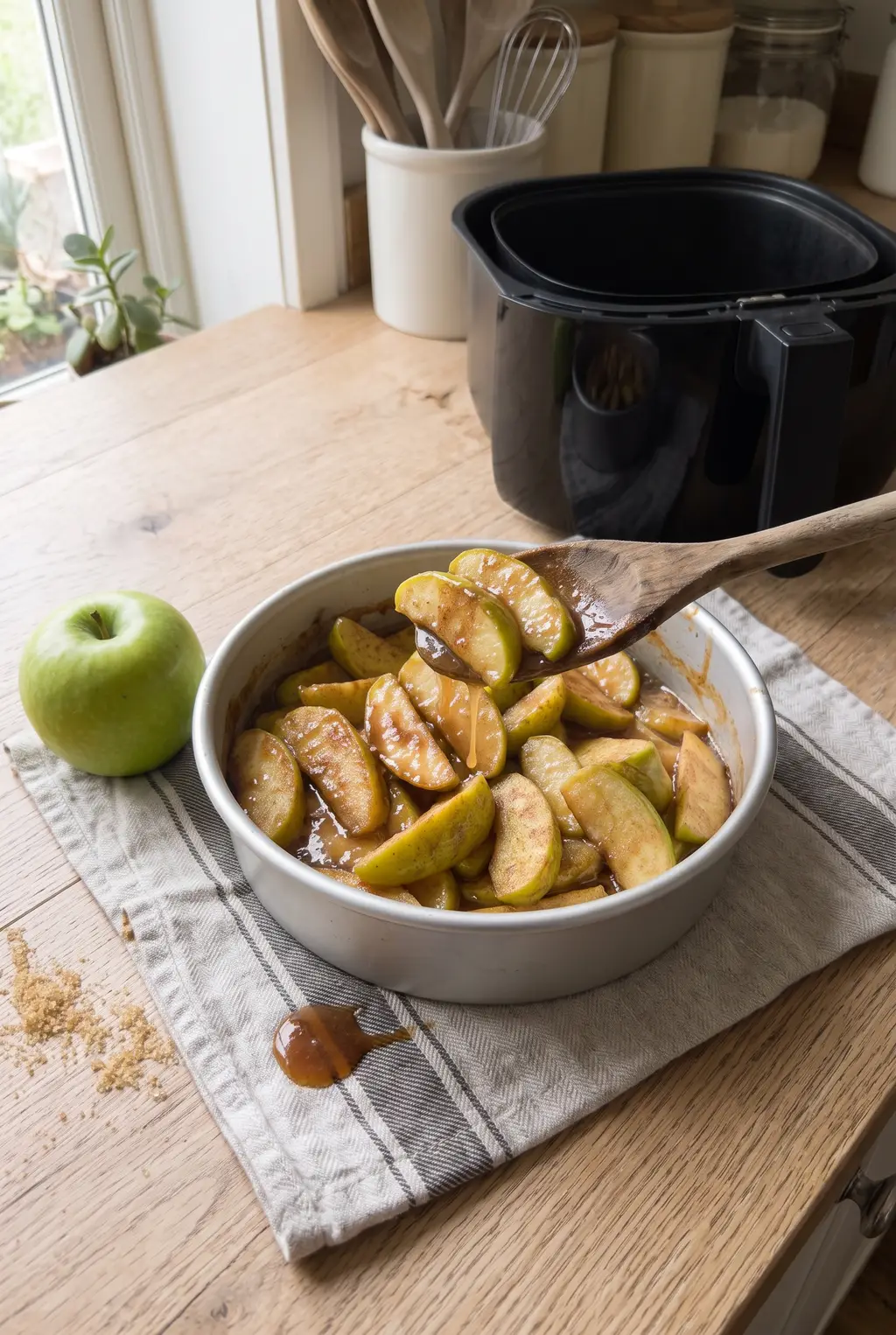
Cinnamon apples were the first thing I ever cooked in an air fryer that disappointed me, and it took an embarrassing while to figure out why, because they were not bad. They were tender, they smelled like October, they vanished off the plate. But they were not the apples I had been picturing, which were the spoonable, syrup-glossed ones from a cast iron skillet, the kind that slump over a biscuit like they have nowhere better to be. Mine were roasted apples. Nice, dry, roasted apples.
The difference is not seasoning and it is not butter. It is architecture. A skillet holds the juice an apple releases and lets sugar thicken it into sauce; a perforated basket drains that same juice into the drawer while the fan evaporates whatever lingers. Neither result is wrong, but they are two different dishes, and every recipe ranking for this keyword sells you the second while you are hungry for the first. So this page does what none of them do: it gives you both, tells you exactly when to want each, and spends real words on the two other questions that decide everything, which are how thick to cut and which apple to buy.
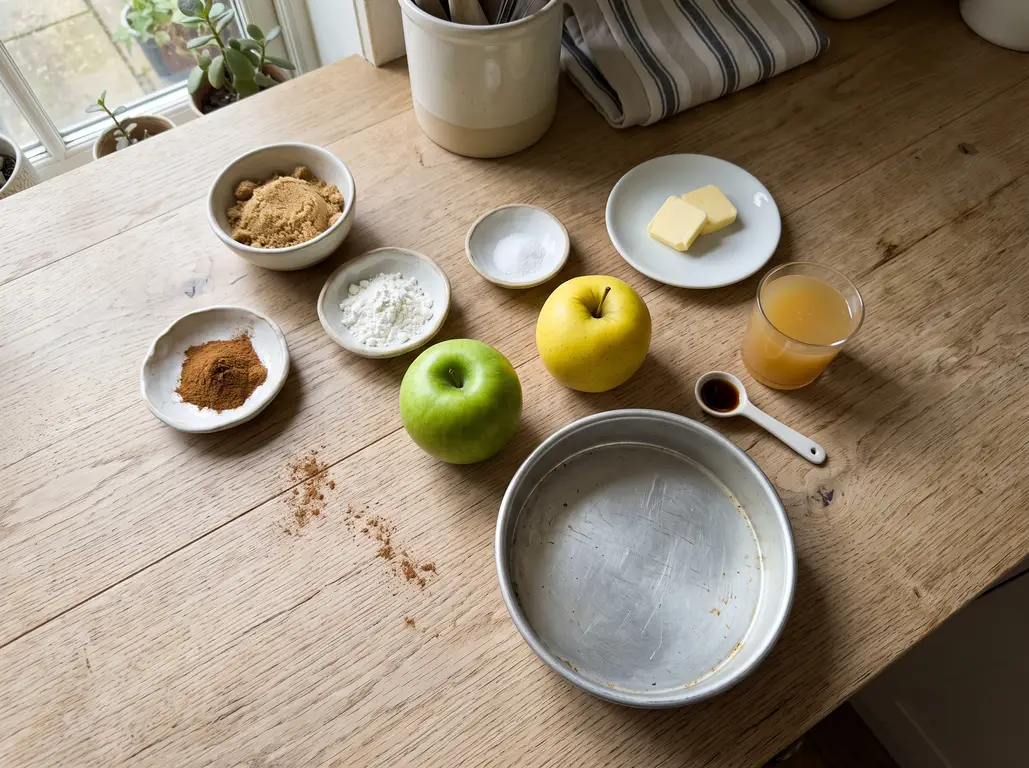
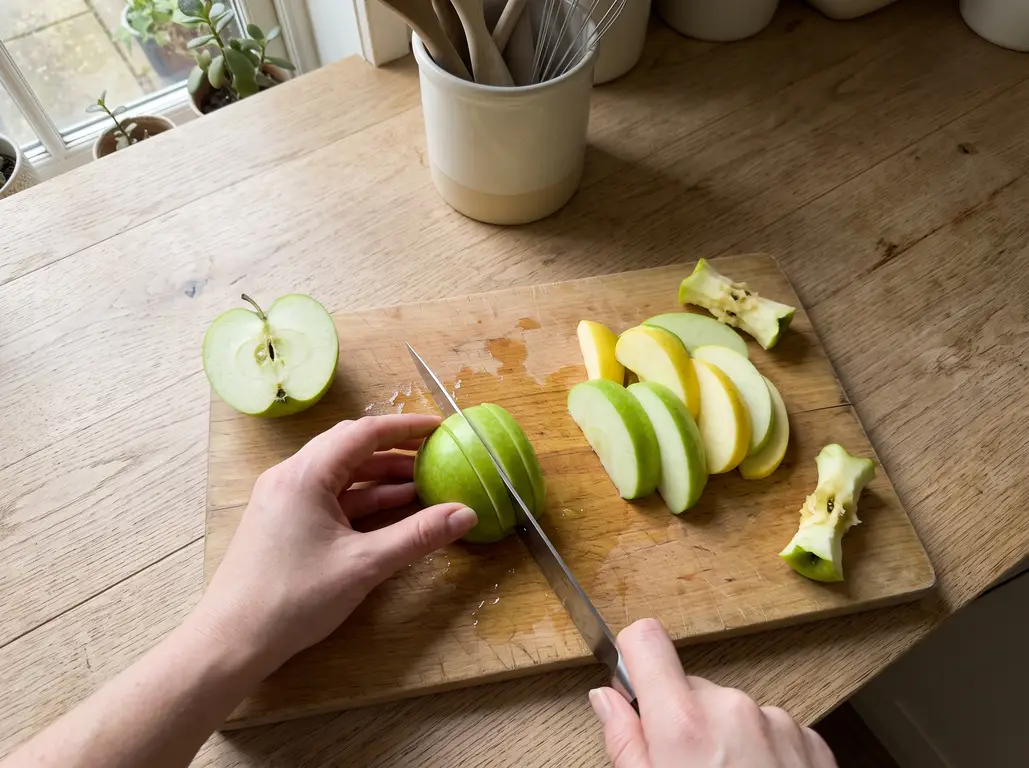
Quick answer: Cut apples into 3/4 inch wedges, always uniform. For saucy, diner-style apples, toss the wedges with cornstarch, brown sugar, and cinnamon, add butter and a splash of cider, and bake in a small metal pan at 350F for 12 to 15 minutes, stirring once, until fork-tender in a glossy sauce. For crisp-edged roasted apples, toss the wedges with a teaspoon of oil and cinnamon sugar and cook straight in the basket at 375F for 8 to 10 minutes, shaking once. Pull both the moment a fork slides in with slight resistance.
Which apple recipe you actually want, in one paragraph
This site's apple shelf runs the whole texture spectrum, and thirty seconds here saves a wrong turn: whole apples, cored, stuffed, and baked soft in their skins, are the baked apples; paper-thin slices dried crisp are the apple chips; wedges in a crunchy cinnamon crust are the apple fries; a full oat-topped fruit dessert is the apple crisp; and apples wrapped in pastry are the turnovers and the hand pies. This page is the naked-wedge middle of that spectrum: soft cinnamon apples, sauced or roasted, eaten with a spoon or piled on something that deserves them.
The two modes, and how to choose in five seconds
Choose pan mode when the apples are the point: over biscuits, pancakes, waffles, oatmeal, ice cream, pork chops, or alone in a bowl with cream. The pan catches every drop of juice, the cornstarch and brown sugar turn that juice into a sauce that clings, and the result is the Cracker Barrel genre done honestly at home, in half the skillet method's time and with one stir instead of constant tending. Choose basket mode when the apples are a component: chewier, drier, edges caramelized by direct wind, perfect folded through yogurt, scattered on salads, tucked beside roasted things, or eaten off the cutting board in the manner of someone who meant to plate them. Pan mode is a dessert. Basket mode is an ingredient. Both start from the same bag of apples and the same knife work, which is where the science actually lives.
The mush line: geometry, variety, pull point
Apple mush is not bad luck; it is one of three mistakes, usually the first one. Geometry: an apple wedge cooks from the outside in, so thin slices finish their outsides and insides almost together, blow straight past tender, and collapse, while a 3/4 inch wedge has enough interior to still be structural when the outside is soft. Worse than thin is uneven: mixed sizes in one batch guarantees mush and crunch on the same plate. Cut once, cut uniform, and the battle is half won. Variety: covered properly in the table below, because apples differ more in the heat than they do in the bowl. Pull point: fork-tender means the fork slides in with slight resistance and the wedge comes up whole; if the wedge breaks when lifted, that batch is already ten degrees past its best and headed for applesauce. The machine keeps cooking after the drawer opens, the same carryover every bake on this site budgets for, so pull at slight resistance and let the resting minute finish the job.
The apple variety table
| Apple | In the heat | Best mode | Verdict |
|---|---|---|---|
| Honeycrisp | Holds shape stubbornly, stays juicy | Either | The all-rounder; hardest to overcook |
| Granny Smith | Holds shape, stays tart against the sugar | Pan | Best sauce apples; the tartness earns the syrup |
| Golden Delicious | Goes soft and buttery, just short of collapse | Pan | The authentic diner texture; watch it closely |
| Fuji or Gala | Softens fast, very sweet | Basket | Fine, but cut back the sugar and the minutes |
| McIntosh | Collapses on schedule | Neither | Born for sauce; make applesauce and be happy |
Mixing one shape-holder with one softener in pan mode is the quiet pro move: the Granny Smith wedges stay whole while a Golden Delicious melts halfway into the sauce and thickens it with itself.
Pan mode: the self-saucing method, walked through
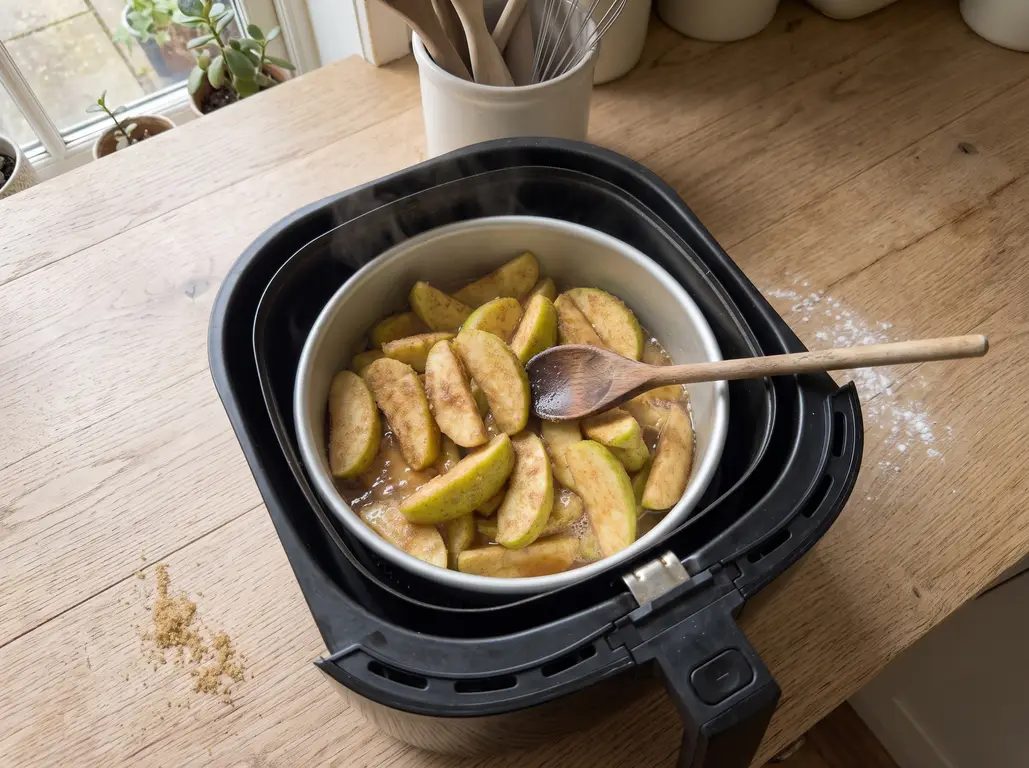
The pan is the entire trick, and it needs to be metal: a 6 or 7 inch cake pan, a foil boat folded from heavy foil per the foil guide, anything that fits your basket with airflow to spare, which the pan size calculator settles in ten seconds. Toss the wedges first with cornstarch, then with brown sugar, cinnamon, and salt; the cornstarch order matters, because a dry dusting on the fruit thickens the sauce evenly instead of clumping in a corner of the pan. Scatter cubed butter over the top, add a tablespoon of apple cider or water to start the steam, and bake at 350F for 12 to 15 minutes, stirring once at the halfway mark to baste every wedge in what is rapidly becoming syrup.
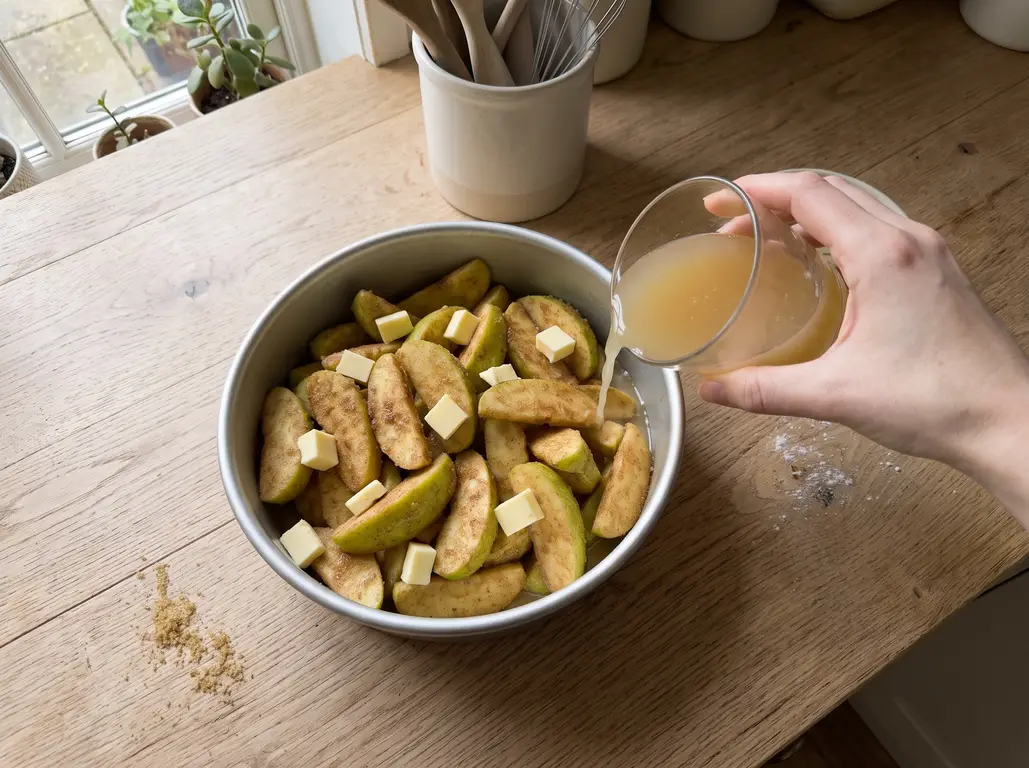
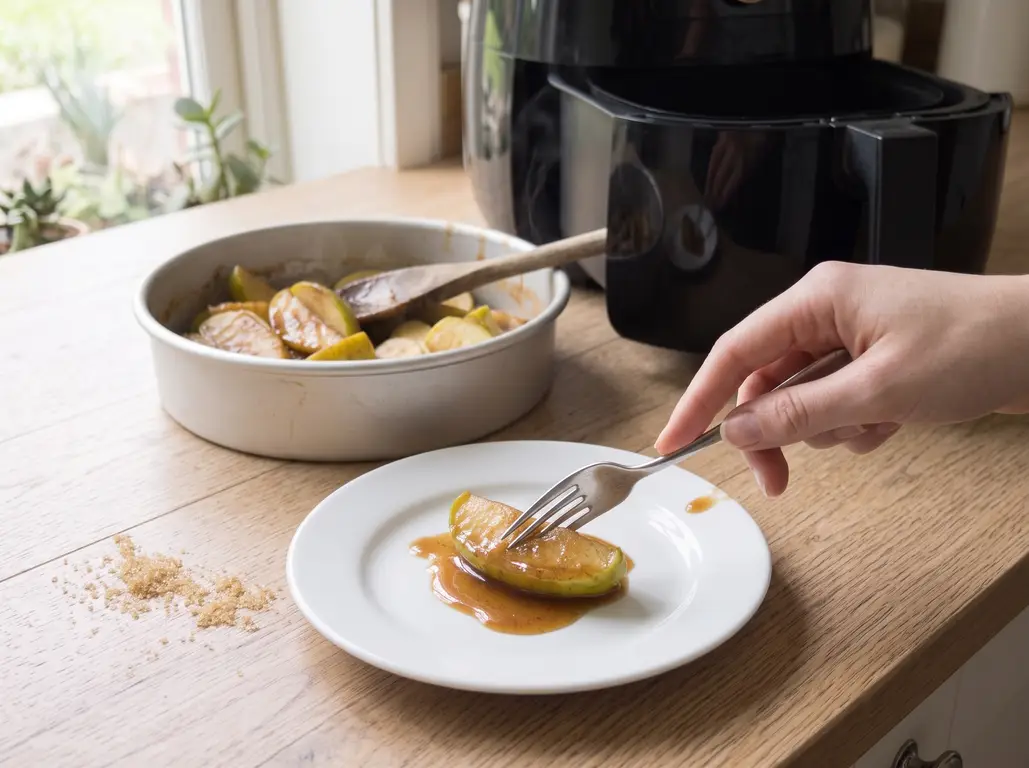
What comes out is the diner dish, honestly: wedges bronzed at the edges, a sauce that coats the spoon, cinnamon bloomed in butter instead of dusted on dry. Two notes from repetition: resist the urge to double the batch in one pan, because juice depth is sauce math and a crowded pan stews instead of bakes, the same crowding tax the mistakes guide charges everywhere; and if your machine runs hot enough to catch the sugar before the apples soften, drop to 330F and add three minutes, the standard personal calibration every machine owes you once. Skillet recipes you already love convert to this method directly: the air fryer calculator turns any stovetop-adjacent oven setting into basket settings, and pan mode follows the result.
Basket mode: the crisp-edge method, walked through
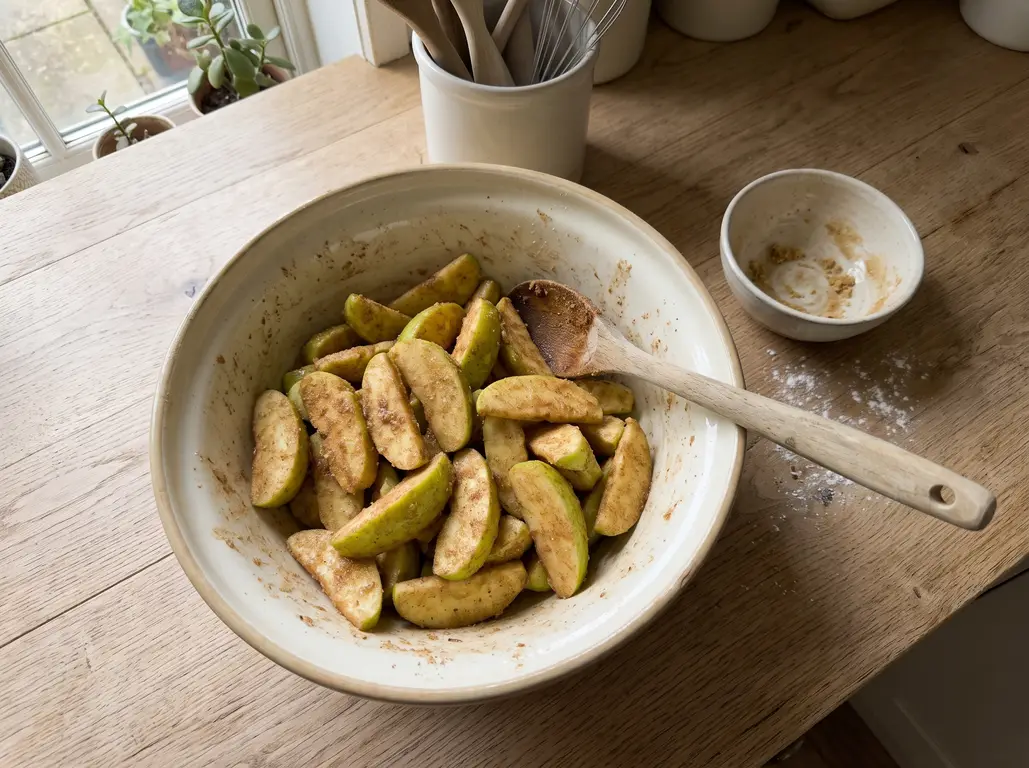
Basket mode is faster and simpler and asks only that you respect the wind. Toss the wedges with one teaspoon of neutral oil, from the shortlist that survives the heat, then with cinnamon sugar. The oil is not optional the way the healthy-recipe blogs imply: bare fruit in moving air goes leathery at the edges before it softens at the center, and a teaspoon across two apples is the difference between caramelized and cured. Single layer, 375F, 8 to 10 minutes, one shake at the middle, and pull at the same fork-tender standard. The juice you lose to the drawer in this mode was the price of the chewy, concentrated edges; that is the trade, named honestly, and when you want the juice back, that is what pan mode is for.
What to do with them, which is the real reason to master this
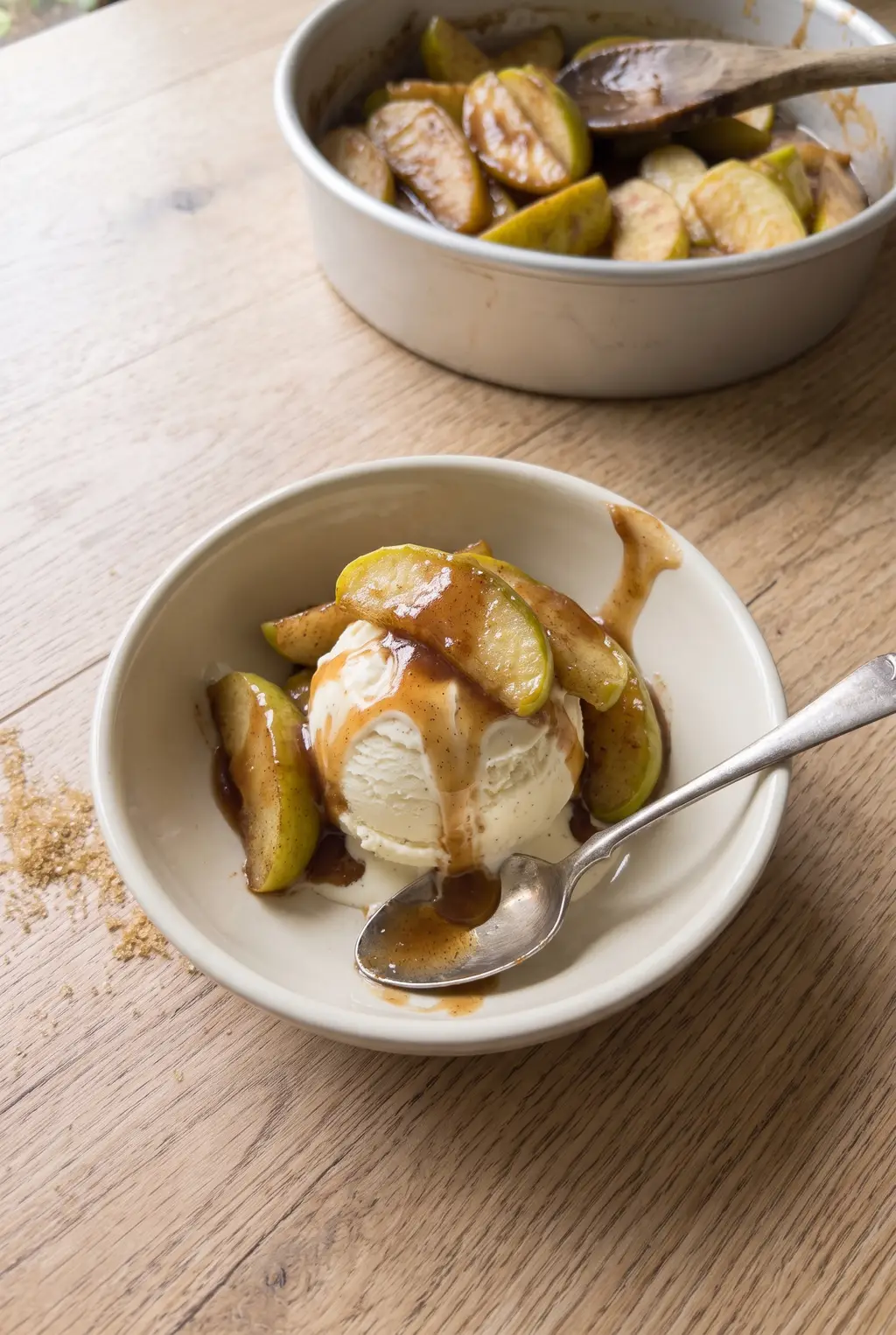
A batch of cinnamon apples is the most connected ingredient in fall baking. Spoon pan-mode apples over vanilla ice cream, into oatmeal, across pancakes, or beside a warm batch of the cinnamon rolls when breakfast is allowed to be a celebration; fold basket-mode wedges into yogurt or pile them on toast under a drift of granola. And both modes moonlight as fillings, because cooked apples are exactly what this site's pastry doctrine demands before fruit goes inside anything: pan-mode apples, cooled, are a ready-made filling for the turnovers and the hand pies, and either mode gives the crumble a head start on its cooked-filling rule. They keep 4 days refrigerated, reheat in 2 minutes at 330F, and freeze in their sauce for 2 months, which means Sunday's fifteen minutes can garnish an entire week of breakfasts. For the wider map of what else the machine does to fruit, the whole orchard lives on the can-and-cannot-bake rankings.
Frequently asked questions
QHow do you make cinnamon apples in an air fryer?
Two ways, depending on the texture you want. For saucy, diner-style apples: toss 3/4 inch wedges with cornstarch, brown sugar, cinnamon, and salt, add cubed butter and a splash of cider, and bake in a small metal pan at 350F for 12 to 15 minutes, stirring once. For drier, crisp-edged apples: toss the wedges with a teaspoon of oil and cinnamon sugar and cook directly in the basket at 375F for 8 to 10 minutes, shaking once. Both are done at fork-tender.
QWhy are my air fryer apples dry instead of saucy?
Because the basket is designed to remove exactly what a sauce is made of. The perforated floor drains the juice the apples release, and the moving air evaporates the rest, so bare-basket apples always come out roasted rather than sauced, no matter how much butter goes on. The fix is a container: bake the apples in a small metal pan or a foil boat that holds their juices, add butter and a cornstarch dusting, and the sauce forms right in the pan.
QWhat apples are best for cinnamon apples?
Honeycrisp if you want wedges that refuse to fall apart, Granny Smith if you want tartness cutting through the brown sugar sauce, and Golden Delicious if you are chasing the soft, buttery diner texture, watched closely because it sits near the collapse line. Fuji and Gala run sweet and soften fast, so shorten their time and their sugar. Skip McIntosh for wedges entirely; it is engineered by nature to become applesauce, and it will keep that promise in your basket.
QWhy did my apples turn to mush?
Almost always the knife, not the machine. Slices cut thin, or cut unevenly so small pieces overcook while big ones catch up, blow past tender into collapse. Cut uniform 3/4 inch wedges, use a variety that holds its shape, and pull at true fork-tender: the fork slides in with slight resistance and the wedge lifts out whole. If the wedge breaks when lifted, it went too long. The machine keeps cooking the apples for a minute after the drawer opens, so err on the early side.
QDo I need to peel apples for cinnamon apples?
Preference, with one honest note per mode. In pan mode the peel softens in the sauce and most people stop noticing it, so peeling is optional and the fiber argues for leaving it. In basket mode the wind toughens exposed peel slightly, so peeled wedges eat more tenderly there. Where the skin matters most is structure: unpeeled wedges hold together longer, which buys insurance for softer varieties. When in doubt, leave the peel on Golden Delicious and take it off Honeycrisp.
QHow do you make Cracker Barrel style fried apples in an air fryer?
Use the pan method, which rebuilds the skillet inside the basket. Toss 3/4 inch wedges of Golden Delicious or Granny Smith with cornstarch first, then brown sugar, cinnamon, and a pinch of salt. Put them in a small metal pan with cubed butter and a tablespoon of apple cider, and bake at 350F for 12 to 15 minutes, stirring once, until the wedges are fork-tender in a glossy syrup. It is the diner dish with one stir and no skillet-minding, ready in about half the stovetop time.
QAre air fryer cinnamon apples healthy?
The basket mode version is genuinely light: two apples, a teaspoon of oil, and a tablespoon of cinnamon sugar split across four servings, which lands near 70 calories a serving with all the fruit's fiber intact. The pan mode version is a modest dessert, roughly 120 calories a serving with its butter and brown sugar, still far lighter than a slice of pie chasing the same flavors. Both are honest labels; pick by the role the apples are playing, not by pretending the sauce has no butter in it.
QCan you use these as pie or turnover filling?
Yes, and pan mode was practically designed for it. Cooked-and-cooled fruit is the standing rule for filled pastry in an air fryer, because raw apple sheds water inside a sealed crust and steams it soggy from within. Pan mode apples arrive pre-cooked, pre-thickened by their cornstarch, and pre-flavored; chill them fully, chop the wedges once if the pastry is small, and fill turnovers or hand pies directly. Make a double batch on Sunday and the week's baking is half done.
QHow do you store and reheat cinnamon apples?
Refrigerate them in their sauce, airtight, for up to 4 days; the flavor deepens overnight as the cinnamon settles in. Reheat in the air fryer at 330F for about 2 minutes in a pan, or briefly in the microwave, where sauced apples are one of the few things on this site that survive microwaving with dignity. They also freeze in their sauce for 2 months; thaw overnight in the refrigerator, and expect the wedges a shade softer, which spooned over oatmeal is not a flaw anyone has reported.
Never overbake again
Get our one-page times & temps cheat sheet, plus a new tested recipe each week.
No spam · unsubscribe anytime