

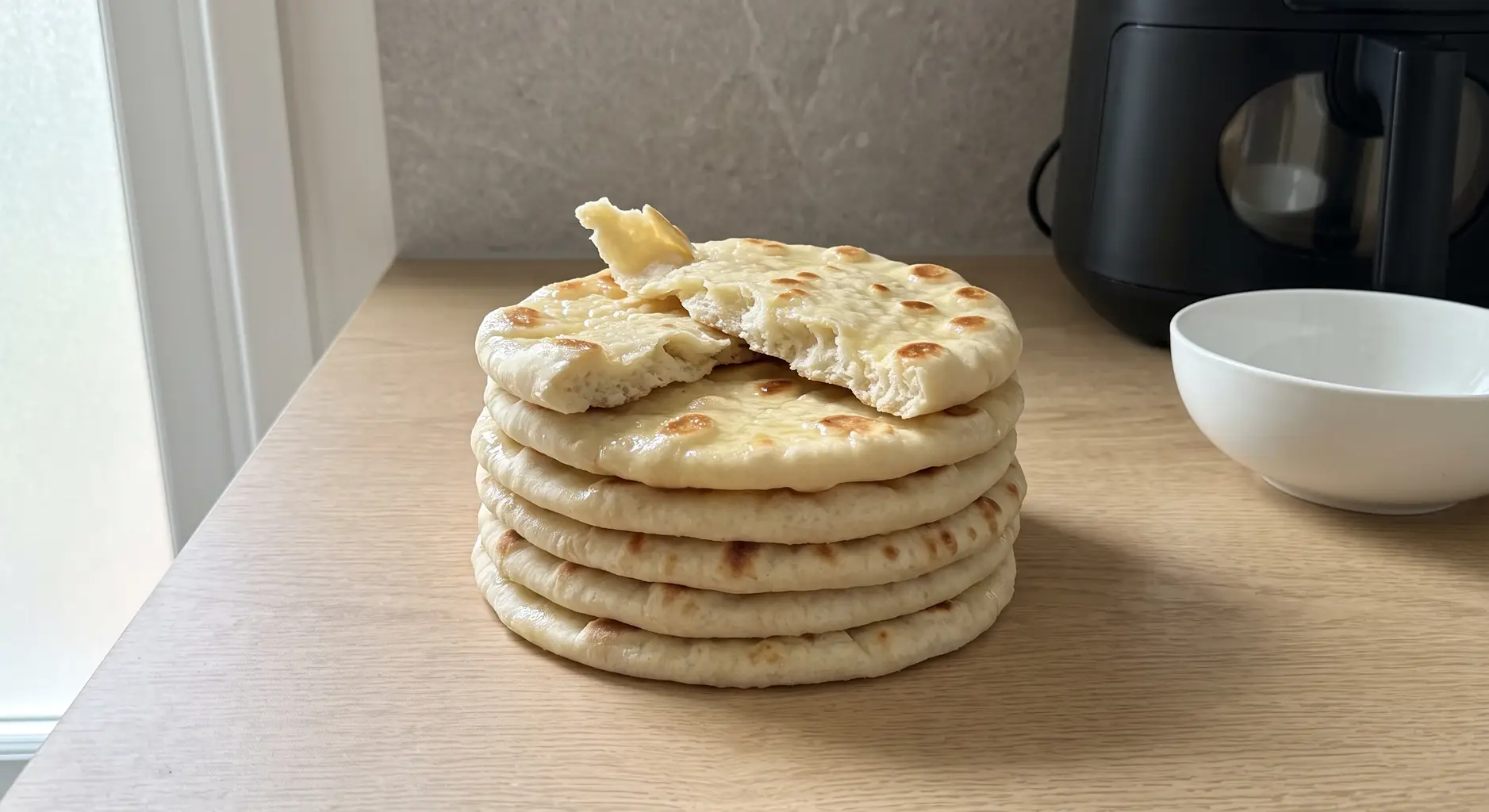
The night this recipe earned its place, the pizza app said forty-five minutes and the group chat said everyone was already hungry. I had flour, a tub of Greek yogurt, and a machine that heats in three minutes. The first flatbread pizza hit a plate before the app would have finished asking about the tip.
That is the honest pitch for two-ingredient dough. It is not the best bread on this site. The naan beats it for blisters and chew, the dinner rolls beat it for softness, bagels beat it for chew and focaccia for crust, and both of them want an hour you do not always have. This dough wants five minutes and a spoon, and it turns into more different dinners than anything else in the flour bin. If the basket itself is new to you, how to bake in an air fryer covers the ground rules this page assumes.
Quick answer: Mix 1 cup self-rising flour with 3/4 cup thick Greek yogurt into a soft dough, divide into 6 balls, roll to your target: 1/4 inch for flatbread, thinner for wraps, thinnest plus a hot preheat for pita pockets. Cook at 330°F for 5 to 6 minutes, flipping once at 3, until both faces carry golden spots. Stack under a towel to keep them soft, or top and return for pizza.
Why two ingredients make bread
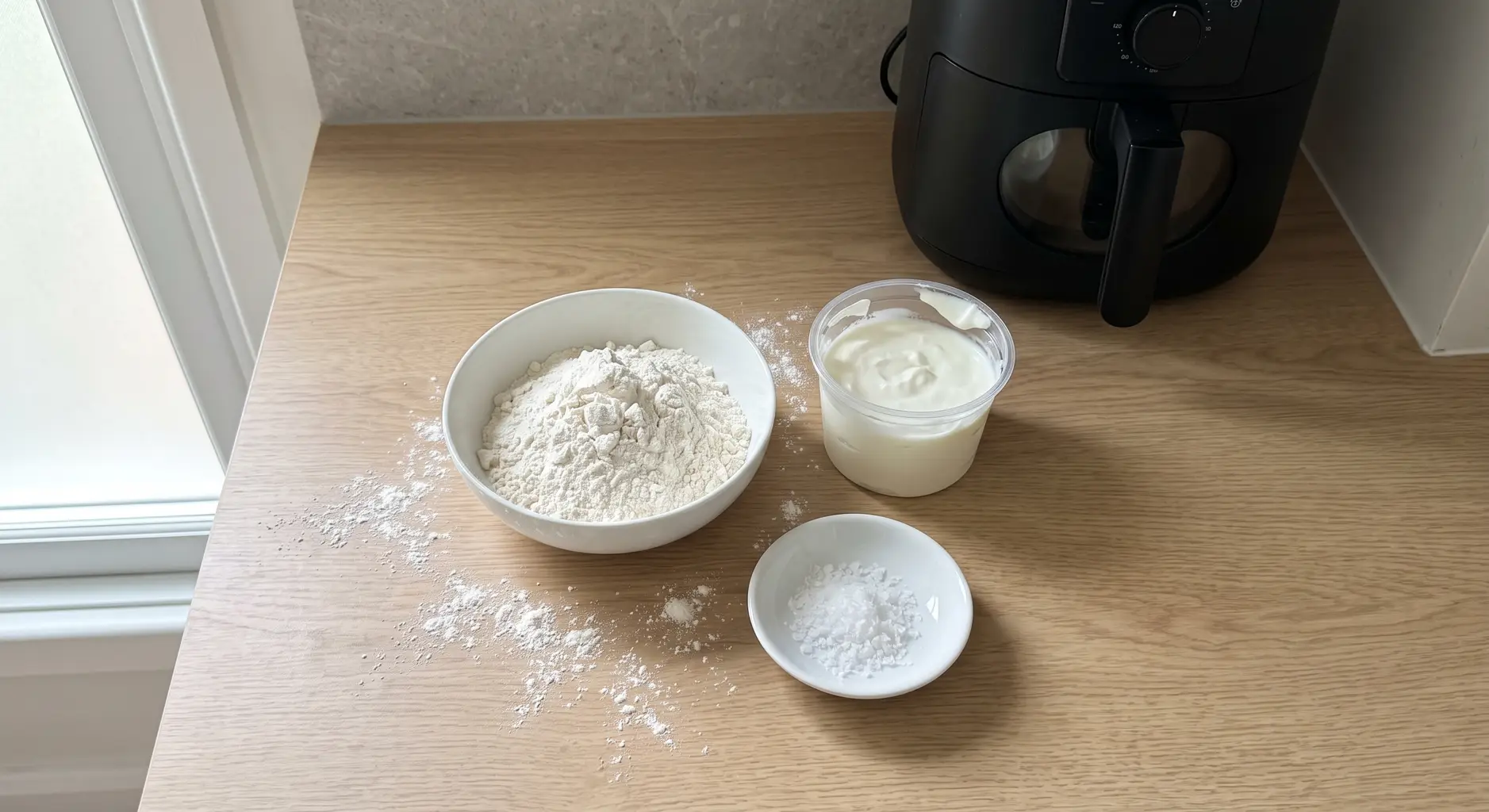
Self-rising flour is flour that already carries baking powder and salt, and Greek yogurt brings moisture, fat, and acidity. The baking powder fires when it meets the wet acidic yogurt, and again when it meets heat, which is where the puff comes from. No yeast means no rise time, and the yogurt's acidity keeps the crumb tender the same way buttermilk does in biscuits.
No self-rising flour in the house? Make it: 1 cup all-purpose flour plus 1 1/2 teaspoons baking powder and 1/4 teaspoon fine salt, whisked well. That is the entire secret, and it means this recipe is really a pantry recipe wearing a two-ingredient costume.
What the shortcut costs you is fermentation flavor. Yeast breads taste like bread because yeast eats sugars and leaves character behind. This dough tastes clean and mild, which is exactly right for a bread whose job is carrying garlic butter, curry, or pizza toppings, and exactly why it will never replace the yeasted loaves on this site.
The yogurt ratio, and fixing a wrong dough
Every two-ingredient dough complaint online is the same complaint: too sticky to roll, or too dry to hold together. It is not your technique. It is that yogurt is the least standardized ingredient in the store, and the recipes never say so.
Thick strained Greek yogurt and regular yogurt can differ in water content enough to swing the dough from clay to paste at the same measured volume. So treat the ratio as a starting point and the texture as the target:
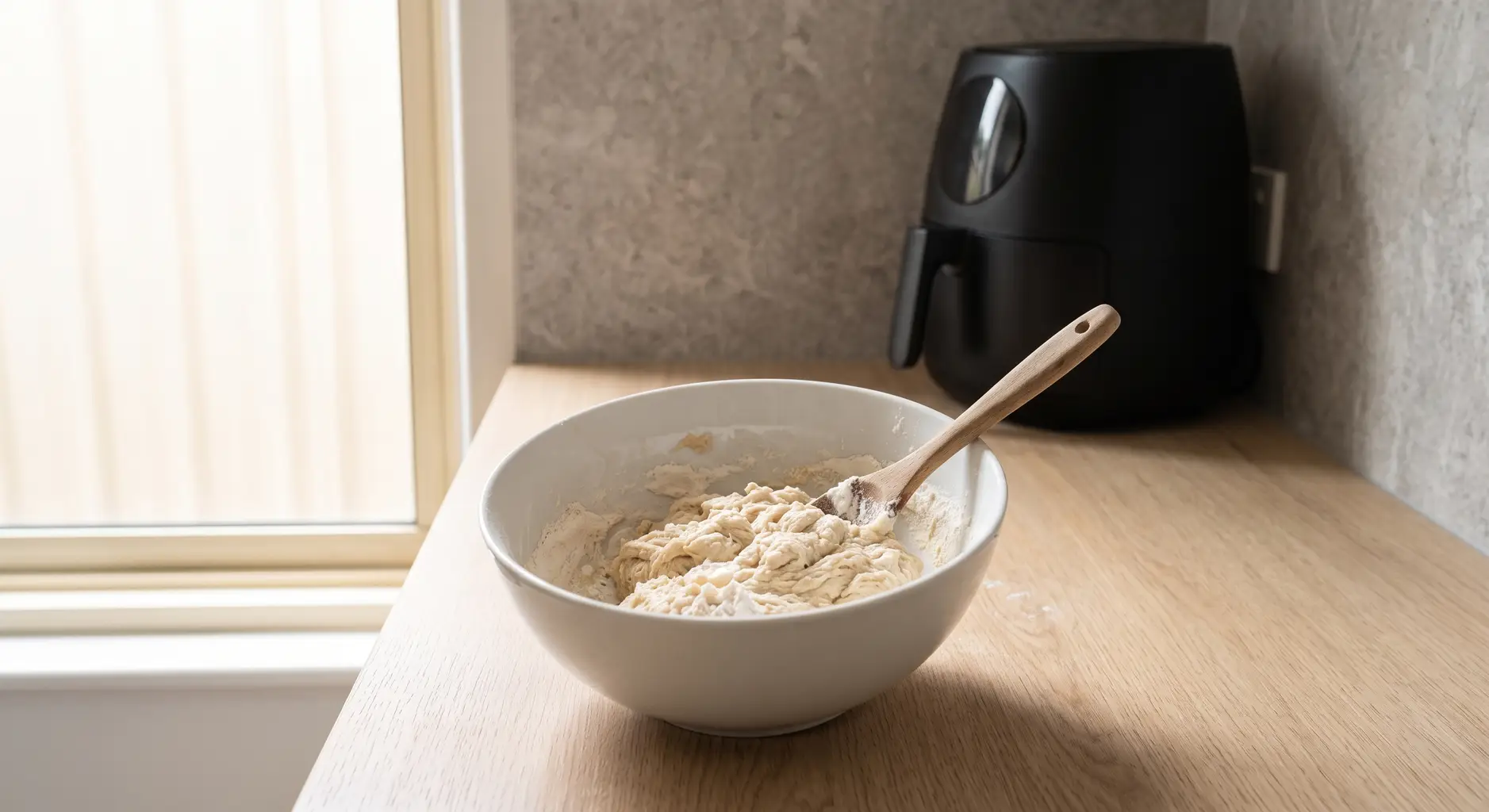
Soft and barely tacky
The dough should hold a ball, feel like an earlobe, and leave only a trace on your palm. That is rollable with a dusting of flour.
Sticks to everything
Regular or runny yogurt did this. Work in flour one tablespoon at a time, kneading briefly between, until the tack fades. Three or four spoons is normal.
Cracks and crumbles
Extra-thick yogurt or a heavy flour cup did this. Add yogurt a teaspoon at a time. Dry dough rolls into flatbreads that crack at the fold.
Two handling rules finish the job: use the yogurt cold, because cold dough is firmer and less sticky to roll, and stop kneading the moment it is smooth, about one minute. There is no yeast structure to develop here, and extra kneading just builds gluten toughness with no payoff.
The thickness dial: wrap, flatbread, or pita
One dough, three breads, and the rolling pin is the only setting that changes. This is the part no recipe for this dough spells out, and it is the reason to memorize it:
| You want | Roll to | Machine | Time | Result |
|---|---|---|---|---|
| Soft flatbread | 1/4 inch | 330°F, no preheat needed | 5 to 6 min, flip at 3 | Pillowy, golden-spotted, the dip and curry bread |
| Wraps | 1/8 inch, rolled wide | 330°F | 3 to 4 min, flip at 2 | Thin and flexible. Pull them slightly early and they fold without cracking |
| Pita pockets | Scant 1/8 inch, even | 380°F, preheated 3 min | 3 to 4 min, no flip | Steam balloons the middle and splits it into a pocket as it cools. The yeasted version is on the pita bread page |
| Pizza base | 1/4 inch | 330°F | 4 min naked, then top | The delivery-beater, full method below |
The pita row is the fun one: thin, even dough hitting a properly hot basket turns its own moisture to steam faster than the surface can set, so the whole bread inflates. Uneven rolling is why pockets fail, because the thick side anchors while the thin side balloons. A hot start matters here and nowhere else on this page, which is the usual preheat story on this site: it depends on the bake, and do you need to preheat an air fryer for baking has the general rule.
And yes, this bread flips. Regular readers know the house rule from the frozen biscuits page: flip breads with two plain faces, never breads with one precious face. A plain flatbread has no buttered top, no blisters to crush, no glaze. Two plain faces, so the flip at minute 3 is free and evens both sides. The naan next door never flips because its blistered face is the whole point, and the pita row above skips the flip only because flipping would vent the steam that builds the pocket.
How to make it
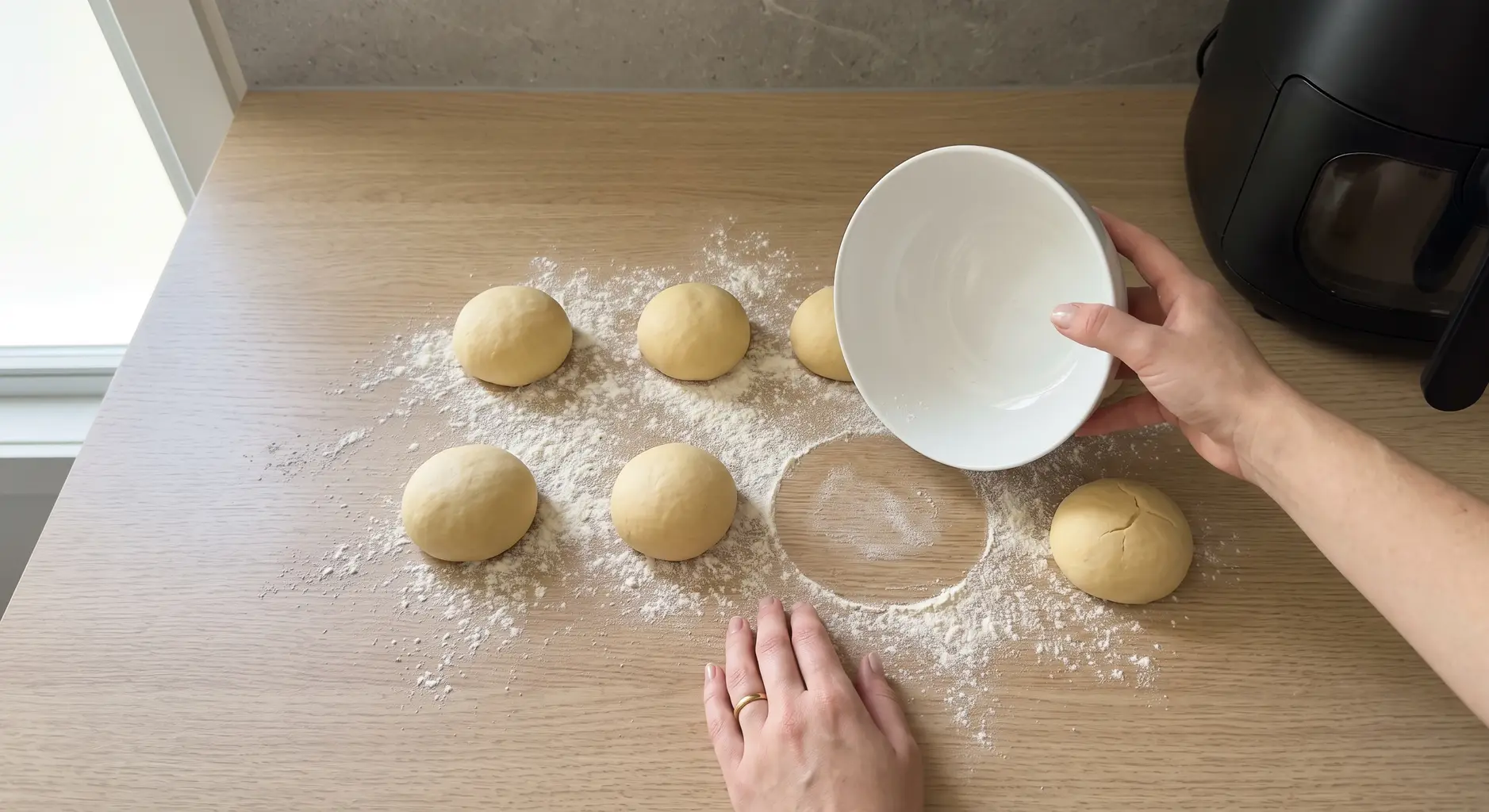
- Mix the dough. Stir 1 cup self-rising flour and 3/4 cup cold thick Greek yogurt with a spoon until shaggy, then knead in the bowl about one minute until just smooth. Adjust with flour or yogurt to the earlobe target above.
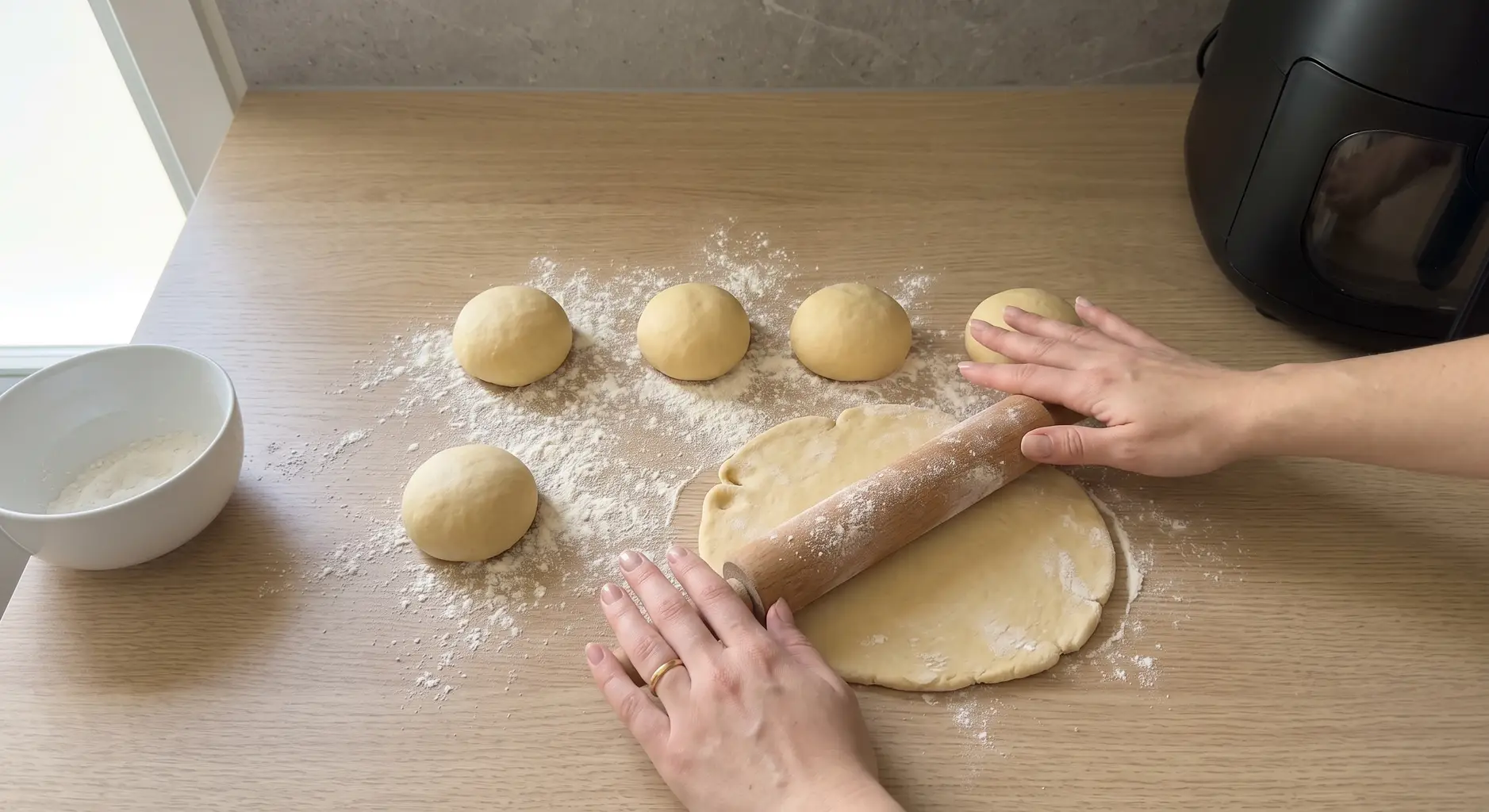
- Divide into 6 balls and let them sit 5 minutes under the bowl. The short rest relaxes the gluten so they roll instead of springing back.
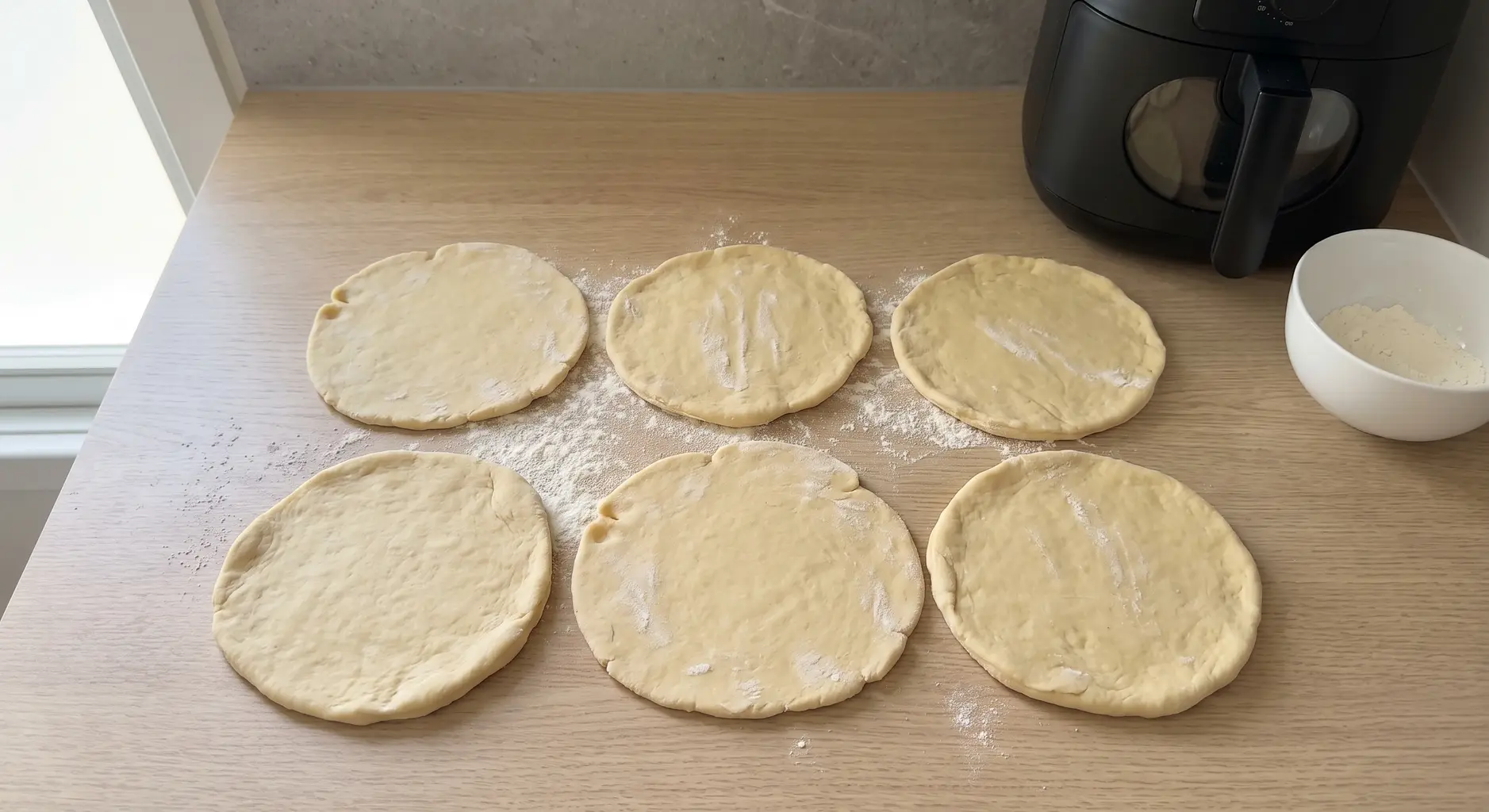
- Roll on a floured counter to your thickness from the dial. Rounds, ovals, or whatever shape your basket prefers. Imperfect edges crisp best, so do not chase circles.
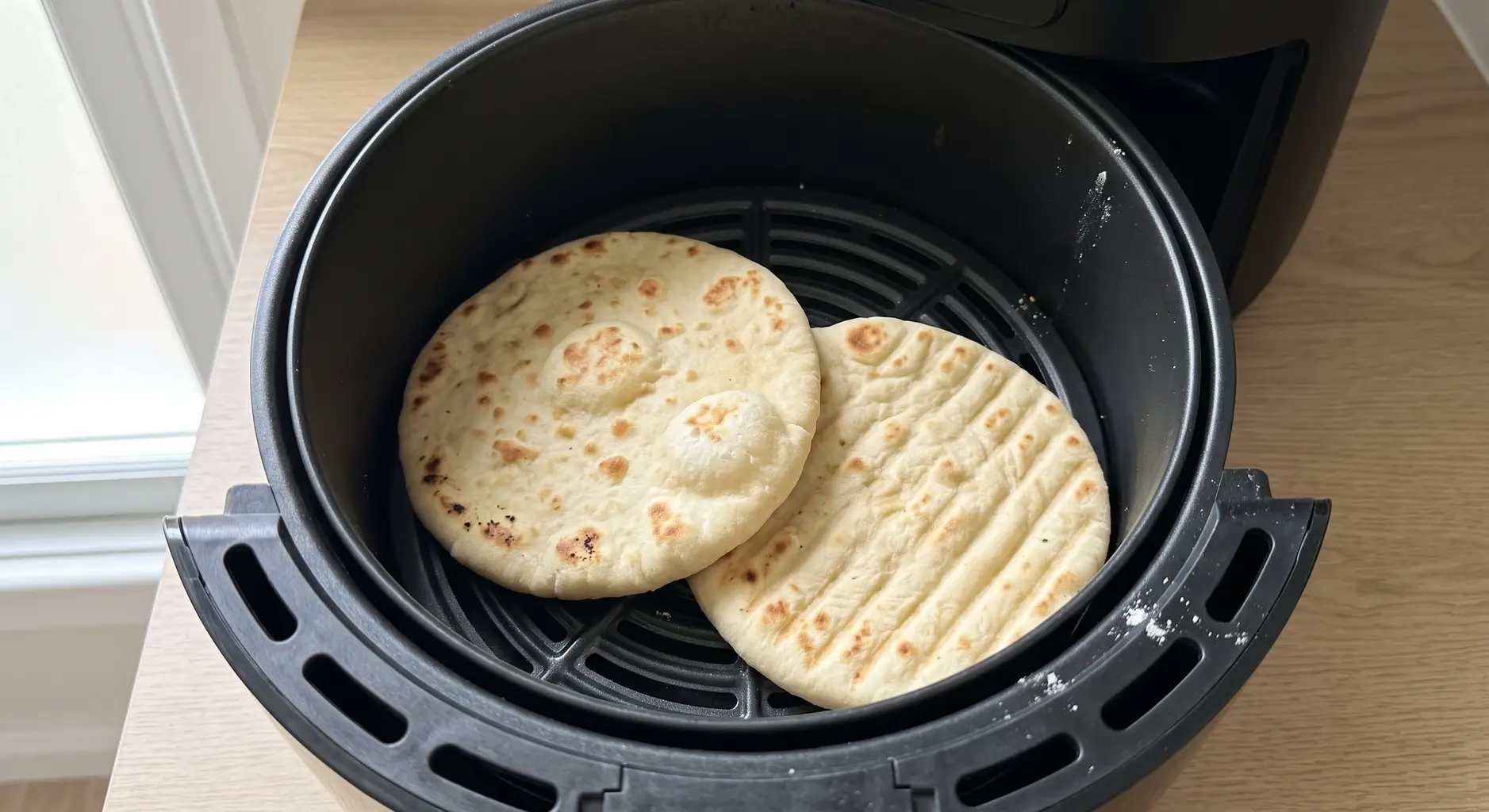
- Cook at 330°F, one or two at a time depending on basket size, without overlapping. Flip at minute 3 with tongs. Done when both faces carry golden-brown spots and the bread feels set but bendable.
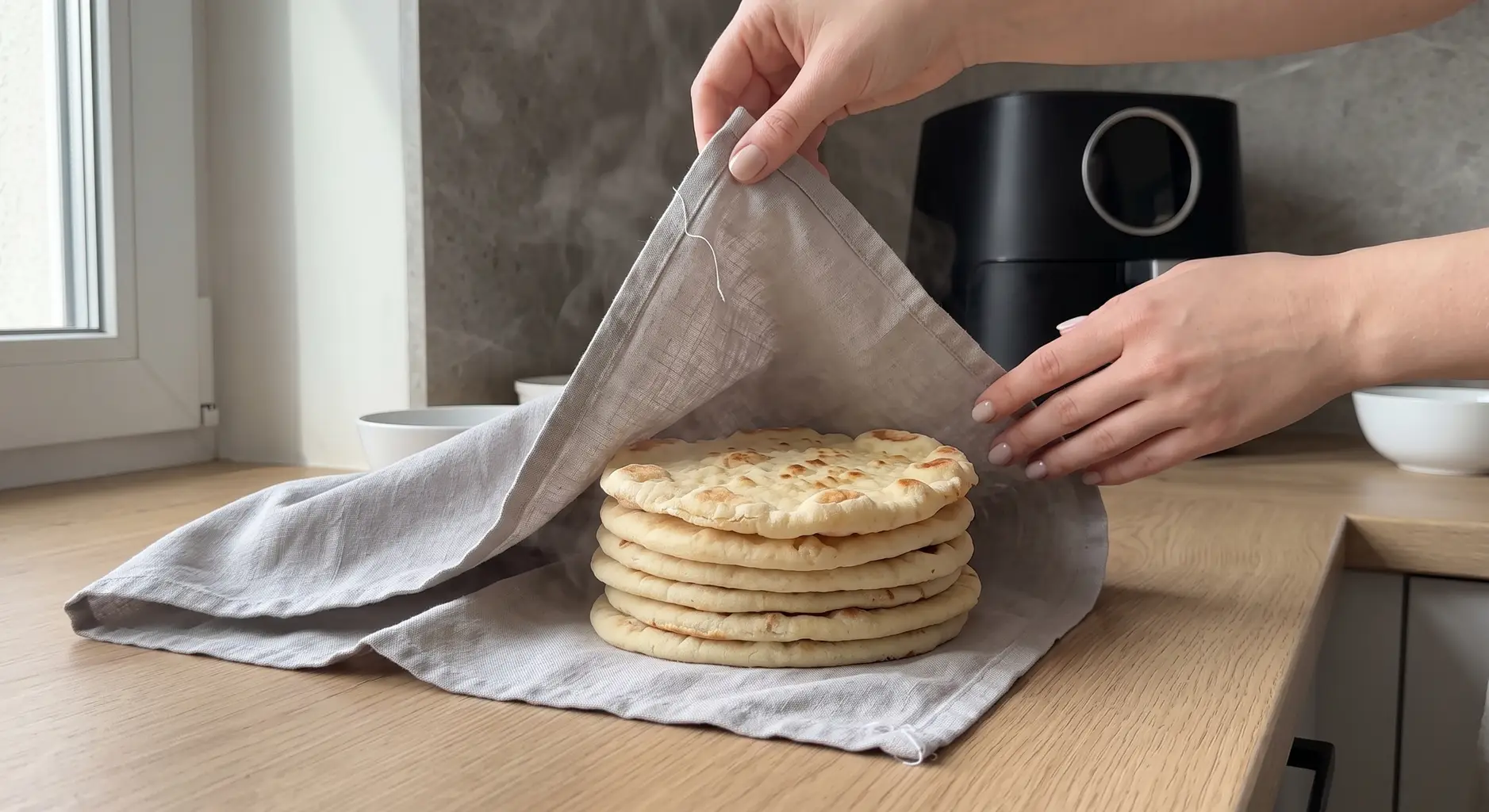
- Stack the finished breads under a folded towel straight from the basket. The trapped steam keeps the stack soft and flexible, the same towel trick the naan uses, and the batch stays warm through the last round.
- Brush with garlic butter, olive oil and flaky salt, or nothing. The grated-garlic butter from the garlic bread page turns the stack into a side dish on its own.
The pizza half: beating the delivery clock
Here is the whole timeline, honestly clocked: dough 5 minutes, rest 5, roll 2, pre-crisp 4, top and finish 5. A first pizza in about 21 minutes, and one more every 9 minutes after that. The app said 45, and the app was optimistic. When there is time for a proper base, the yeasted pizza dough is the upgrade this shortcut is standing in for.
The one technique that separates good flatbread pizza from a soggy disc is the pre-crisp: cook the naked base first, and cook it top-face-down so the side that will hold sauce gets direct heat and sets firm. Sauce on raw dough soaks in and steams the middle gummy; sauce on a pre-crisped face sits on a sealed surface and the base stays crisp to the last slice.
- Roll a ball to 1/4 inch and cook naked at 330°F for 4 minutes, flipping at 2, so both faces are set and lightly spotted.
- Top the flatter face: 2 tablespoons of sauce leaving a bare rim, a restrained handful of mozzarella, and thin-cut toppings. Restraint is structural: this base carries a light load, and a drowned flatbread pizza sogs from the weight, not the recipe.
- Back in at 350°F for 4 to 5 minutes, until the cheese is molten and the rim is deep gold. Cup-style pepperoni, small mushroom slices, and anything pre-cooked work best. Raw sausage does not belong on a 5 minute pizza.
- Rest one minute, cut, repeat. Roll the next base while the current pizza cooks and the line moves faster than any kitchen has a right to.
Cheese that escapes the rim welds to the basket, and welded cheese is a soak job, never a scrape job: the bakeware cleaning guide covers it. For the nights even this is too much cooking, the frozen pizza page runs the box version of the same race.
Store-bought shortcuts
The word flatbread on a package covers half the bread aisle, and the air fryer improves nearly all of it:
| Package | Temp | Time | Note |
|---|---|---|---|
| Store flatbread or naan, refreshed | 330°F | 2 to 3 min | Damp fingers over the top first revives the crumb |
| Store flatbread as pizza base | 360°F | 2 min naked bottom-up, then topped 4 to 5 | The pre-crisp rule applies to boughten bases too |
| Pita, warmed | 330°F | 2 min | Longer makes chips, which is not a failure |
| Frozen flatbread or naan | 350°F | 3 to 4 min | Straight from frozen, never thawed |
Package oven directions convert the usual way through the air fryer calculator, and every temperature on this site is collected in the air fryer baking chart. Doubling the homemade dough for a crowd is spoon math, but the recipe scaler keeps it exact.
Troubleshooting
| What you got | Why | Fix |
|---|---|---|
| Dough too sticky to roll | Runnier yogurt than the recipe assumed. | Flour, one tablespoon at a time, to the earlobe target. Cold yogurt helps from the start. |
| Cracked, dry flatbreads | Extra-thick yogurt or a heavy flour measure. | Yogurt by the teaspoon into the dough, and roll a touch thicker. |
| Tough and chewy | Over-kneaded. There is no yeast to justify it. | One minute of kneading, then hands off. |
| Gummy middle | Rolled too thick, or pulled before the flip side cooked. | 1/4 inch maximum, and both faces need golden spots before it comes out. |
| Flatbread lifted into the element | Rolled very thin and cooked in a strong fan with nothing anchoring it. | Press it onto the basket so it grips, or lay it in after 30 seconds of warmup. Never park loose parchment under it, per the parchment rules. |
| No pita pocket | Uneven rolling, or the machine was not hot enough at launch. | Even, scant 1/8 inch, into a fully preheated 380°F basket. |
| Soggy pizza base | Sauce went onto raw dough, or the toppings were a landslide. | Pre-crisp naked first, sauce on the sealed face, and top like it is a flatbread, not a deep dish. |
| One side always darker | A hot spot. | Rotate at the flip. Chronic scorching across recipes belongs to how to prevent burning in an air fryer, and everything else to the troubleshooting guide. |
Variations
- Garlic herb. A teaspoon of garlic powder and a tablespoon of chopped rosemary or za'atar kneaded in, brushed after with the garlic butter. The side dish version.
- Whole wheat. Swap half the flour for whole wheat and add a tablespoon more yogurt. Nuttier, sturdier wraps.
- Cheese-stuffed. A tablespoon of shredded mozzarella sealed inside the ball before rolling gently. Add a minute per side.
- Flatbread chips. Yesterday's flatbread cut into wedges, 4 minutes at 350°F, and it joins the tortilla chips on dip duty.
- The curry night pairing. This is the fast bread for the baingan bharta when the hour-long naan is not happening: bharta in the machine first, flatbreads in batches while it rests on the stove.
- Breakfast wrap. The thin-rolled version around the bacon and eggs, which is the entire reason to keep a ball of this dough in the fridge.
Storage and reheating
- Cooked flatbreads: 2 days airtight at room temperature, 3 months frozen with parchment between. Revive at 330°F for 2 minutes with a damp-fingers wipe over the top, and they come back soft.
- The dough: keeps 2 days in the fridge wrapped tight, and rolls better cold anyway. This is the make-ahead: mix Sunday, roll and cook in five-minute installments all week.
- Do not stack them hot into a sealed container. Towel first, container after they cool, or the steam turns the stack gummy.
- Topped pizzas reheat at 350°F for 3 minutes, base directly on the basket, and the pre-crisped face holds its crunch the second time too.
Frequently asked questions
QHow long does flatbread take in an air fryer?
5 to 6 minutes at 330°F for 1/4 inch flatbread, flipped once at minute 3, until both faces carry golden spots. Thin wraps take 3 to 4 minutes, and pita-style pockets take 3 to 4 minutes at 380°F in a preheated basket with no flip. The dough itself takes 5 minutes, so the first warm flatbread exists about 15 minutes after the flour comes out.
QWhy is my two-ingredient dough too sticky to roll?
Your yogurt is wetter than the recipe writer's, which is the unspoken variable in every version of this dough. Yogurt water content varies enormously between brands and styles. Use thick Greek yogurt, cold from the fridge, and treat the ratio as a starting point: knead in flour one tablespoon at a time until the dough is soft and barely tacky, like an earlobe. Three or four tablespoons of correction is completely normal.
QDo you flip flatbread in the air fryer?
Yes, at the halfway point. Plain flatbread has two identical plain faces and nothing to protect, so the flip costs nothing and evens the browning. The two exceptions prove the rule: naan never flips because flipping crushes its blistered face, and pita-style pockets skip the flip because turning them vents the steam that inflates the pocket.
QCan I make flatbread without self-rising flour?
Yes. Self-rising flour is just all-purpose flour with leavening built in: whisk 1 cup all-purpose with 1 1/2 teaspoons baking powder and 1/4 teaspoon fine salt and use it exactly as the recipe reads. The baking powder is what puffs this dough, since there is no yeast anywhere in it.
QHow do I make flatbread pizza in the air fryer without a soggy base?
Pre-crisp the naked base before anything wet touches it: 4 minutes at 330°F with a flip, so both faces are set. Then sauce the flatter face lightly, leave a bare rim, keep the toppings restrained and thin-cut, and finish at 350°F for 4 to 5 minutes. Sauce on raw dough soaks in and steams the middle gummy. Sauce on a sealed, pre-crisped face sits on top, and the base stays crisp to the last slice.
QWhat is the difference between flatbread and naan?
Naan is a yeasted dough that rises for an hour and cooks at maximum heat for blisters and chew, and it is the better bread when there is time. This flatbread is a baking powder dough that goes from bowl to basket in ten minutes and comes out soft, mild and flexible. Same family, different jobs: naan for the slow curry night, flatbread for the night dinner needed to exist twenty minutes ago.
QHow do I get flatbread to puff into a pita pocket?
Roll it thin and evenly, a scant 1/8 inch with no thick patches, and launch it into a basket preheated at 380°F for a full 3 minutes. The hot start turns the dough's moisture to steam faster than the surface sets, and the whole bread balloons, splitting internally into a pocket as it cools. Uneven rolling is the usual failure, because the thick side anchors while the thin side inflates.
QCan I make flatbread dough ahead?
Yes, and it improves the workflow: the dough keeps 2 days in the fridge wrapped tightly, and cold dough is firmer and easier to roll thin. Mix a batch on Sunday and cook flatbreads in five-minute installments all week, one or two at a time as meals need them. Cooked flatbreads also freeze for 3 months with parchment between and revive in 2 minutes at 330°F.
QIs air fryer flatbread pizza really faster than delivery?
Clocked honestly: 5 minutes for the dough, 5 for the rest, 2 to roll, 4 to pre-crisp, 5 topped, which is a finished pizza in about 21 minutes and another every 9 minutes after that. Average delivery quotes run 30 to 45 minutes before the driver finds your door. The flatbread version wins the race and skips the tip, and using a store-bought base cuts it to about 8 minutes flat.
Never overbake again
Get our one-page times & temps cheat sheet, plus a new tested recipe each week.
No spam · unsubscribe anytime