

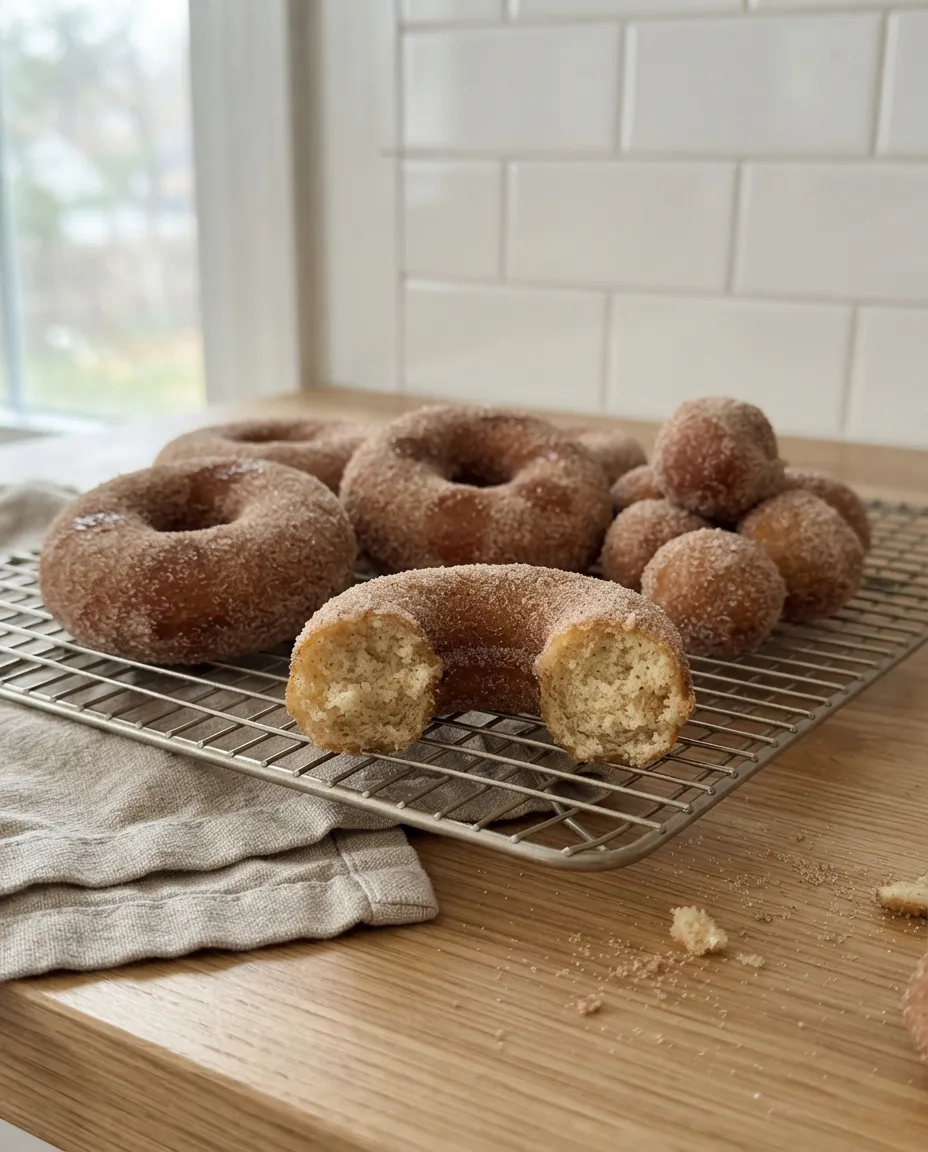
Every fall we drive forty minutes to an orchard that sells donuts out of a shed, and every fall I watch people who just picked twenty dollars of apples stand in a thirty minute line for a six dollar bag of donuts, myself included. The orchard donut is a genre: dense, warm, sandy with cinnamon sugar, smelling like a holiday that does not technically exist. It is also, under the romance, a simple cake donut, and cake donuts are the easiest donuts there are.
What the shed gets right that kitchens get wrong is concentration. The orchard's batter is built on cider syrup, not cider, and most recipes at home stop reducing far too early, which is how you end up with a handsome brown donut that tastes of cinnamon and wishful thinking. Fix the reduction and the rest of this recipe is nearly a formality.
Quick answer: Boil 2 cups of real apple cider down to 1/3 cup, a dark syrup, not the halfway reduction most recipes settle for. Build a spiced cake dough on it, buttermilk and a full teaspoon of nutmeg included, chill 30 minutes so it cuts cleanly, and bake rings at 330°F for 8 to 9 minutes with one flip, to 200°F. Then the crust: cider syrup whisked into melted butter, brushed on hot, and rolled in cinnamon sugar, so the coating tastes like apples too.
The donut shelf, and where this one sits
Glazed rings
The glazed donuts are yeasted: weightless, blonde, dipped warm in glassy glaze. Two rises, donut-shop genre.
Donut holes
The donut holes are the bite-sized crowd-feeders, spheres with their own geometry rules and a legal basket shake.
This page: the cake donut
No yeast, no rise, a tender-dense crumb leavened by baking powder. Denser is not a flaw here; it is the orchard texture, built to carry syrup and spice and to be eaten outdoors in a jacket.
Two more sit on the same shelf: biscuit donuts, the 10 minute version from a can, and vegan donuts, which skip the yeast too but trade the buttermilk and egg for pantry staples. None of them compete; they answer different cravings, and this one owns October. As with the others, the punched centers bake as holes, this time cider-flavored ones, which the holes page's rules govern at bite scale.
The sixfold reduction
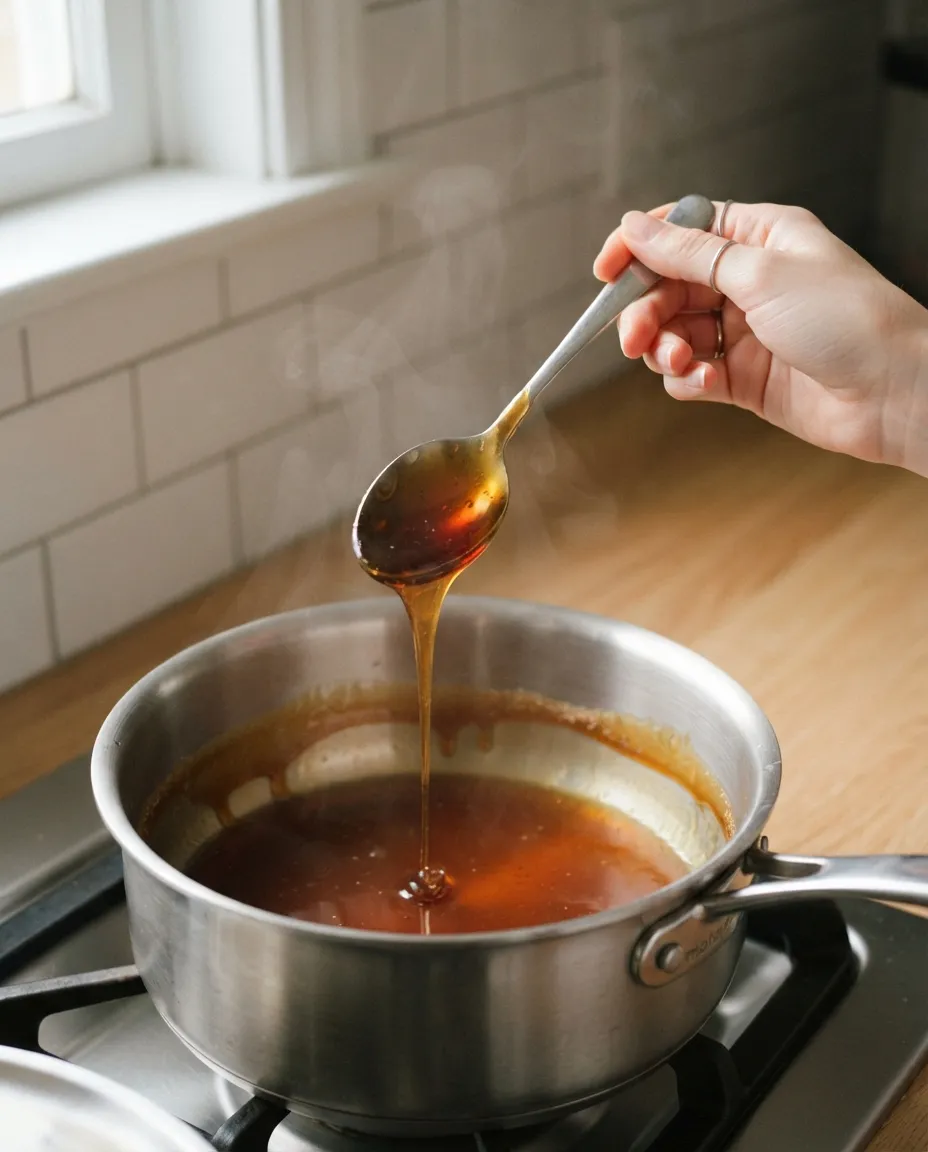
Here is where this recipe splits from the field. The common instruction, reduce 2 cups of cider to 1 cup, removes half the water and doubles the flavor, and doubled apple flavor still loses a fistfight with cinnamon, butter and brown sugar. So keep going:
- 2 cups of cider becomes 1/3 cup of syrup, a sixfold concentration, in 15 to 20 minutes at a busy simmer in a wide pan. Wide matters; surface area is speed.
- You are done when it coats a spoon and has gone from cloudy amber to something near maple syrup's color and body. New England sells this exact product as boiled cider, and if you can buy it, 1/3 cup substitutes directly and skips the pot.
- The syrup splits two jobs: 3 tablespoons into the dough, where it carries the apple into the crumb, and the remainder into the coating butter, where it puts apple on the crust. Dough-only cider is the other half of why homemade versions taste faint.
- Let it cool 10 minutes before it meets the egg, for the obvious scrambling reason.
Cider, not juice
The jug matters. Real apple cider is unfiltered pressed apples, cloudy and faintly tart, and when it reduces, all that suspended apple solids and acidity concentrates into complexity. Clear apple juice is filtered and sweetened-smooth, and it reduces into what it is: sugar water, more so. A donut built on reduced juice is sweeter and blanker than one built on reduced cider, and no spice can rescue it. Look for the cloudy stuff in the refrigerated case, ideally from a local press in season, and shake the jug before pouring because the good part settles.
Nutmeg is the donut spice
A small heresy with old credentials: cinnamon is the coat, but nutmeg is the crumb. The flavor people identify as "donut" in old-fashioned and cider mill donuts is substantially nutmeg, the signature spice of American cake donuts going back generations, and recipes that whisper an eighth of a teaspoon of it are why their donuts taste almost right. This dough takes a full teaspoon of nutmeg against one of cinnamon, freshly grated if the whole nutmeg and the box grater's fine side are both handy. If the batch smells faintly of a donut shop while still raw, the ratio is correct.
Cake dough, and why it chills
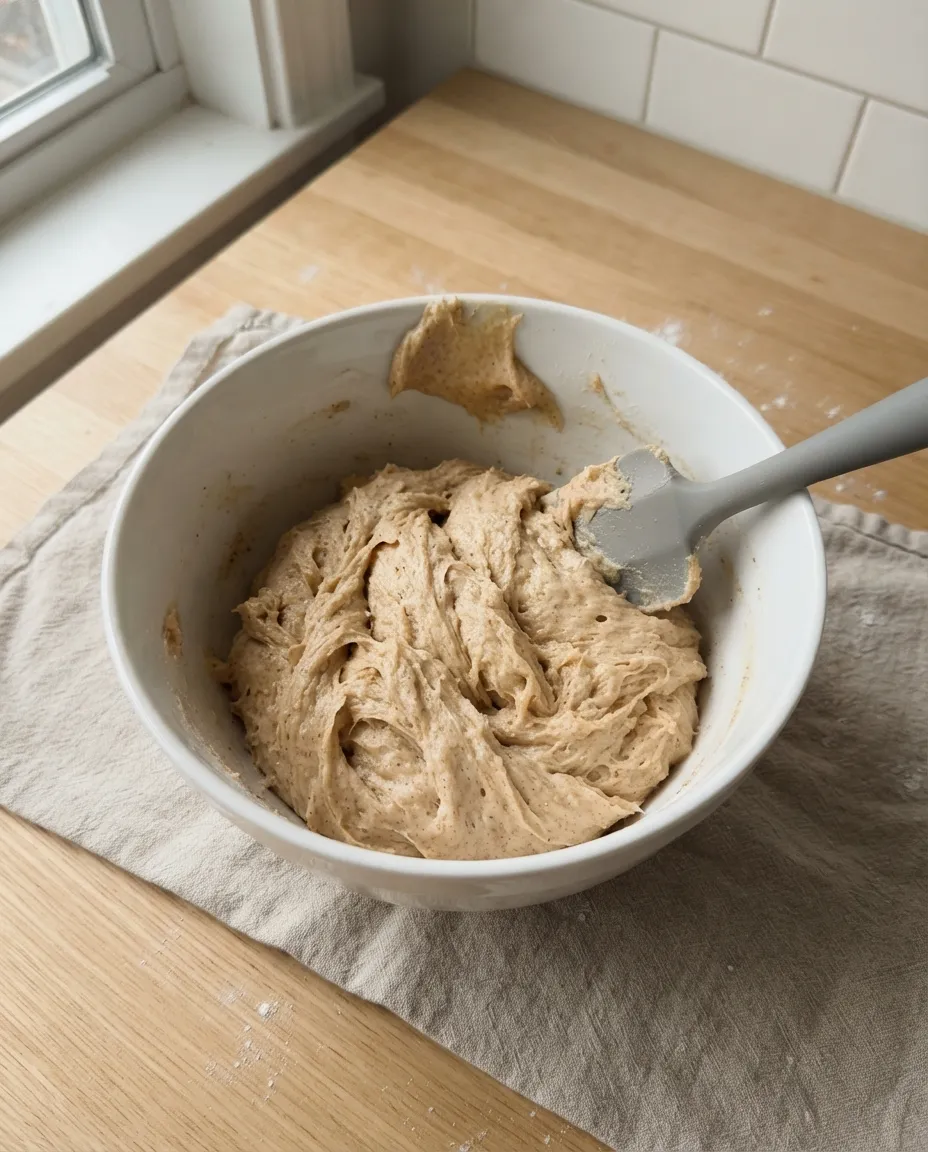
- This is quick bread logic in a ring: baking powder and soda do the lifting, buttermilk brings the tang that reads as old-fashioned, and the mixing follows the standing law of the quick bread family: stir until the flour disappears, then stop. Overworked cake donuts are rubber bagels.
- The dough is soft and sticky on purpose, wetter than the scone dough it resembles, because syrup and buttermilk are heavy passengers. Do not flour it into submission.
- The 30 minute fridge chill is what makes it cuttable. Cold firms the butter and hydrates the flour, and the same dough that glued itself to your hands rolls and cuts cleanly after its rest. The freezer-set principle from the churros and scones, at refrigerator strength.
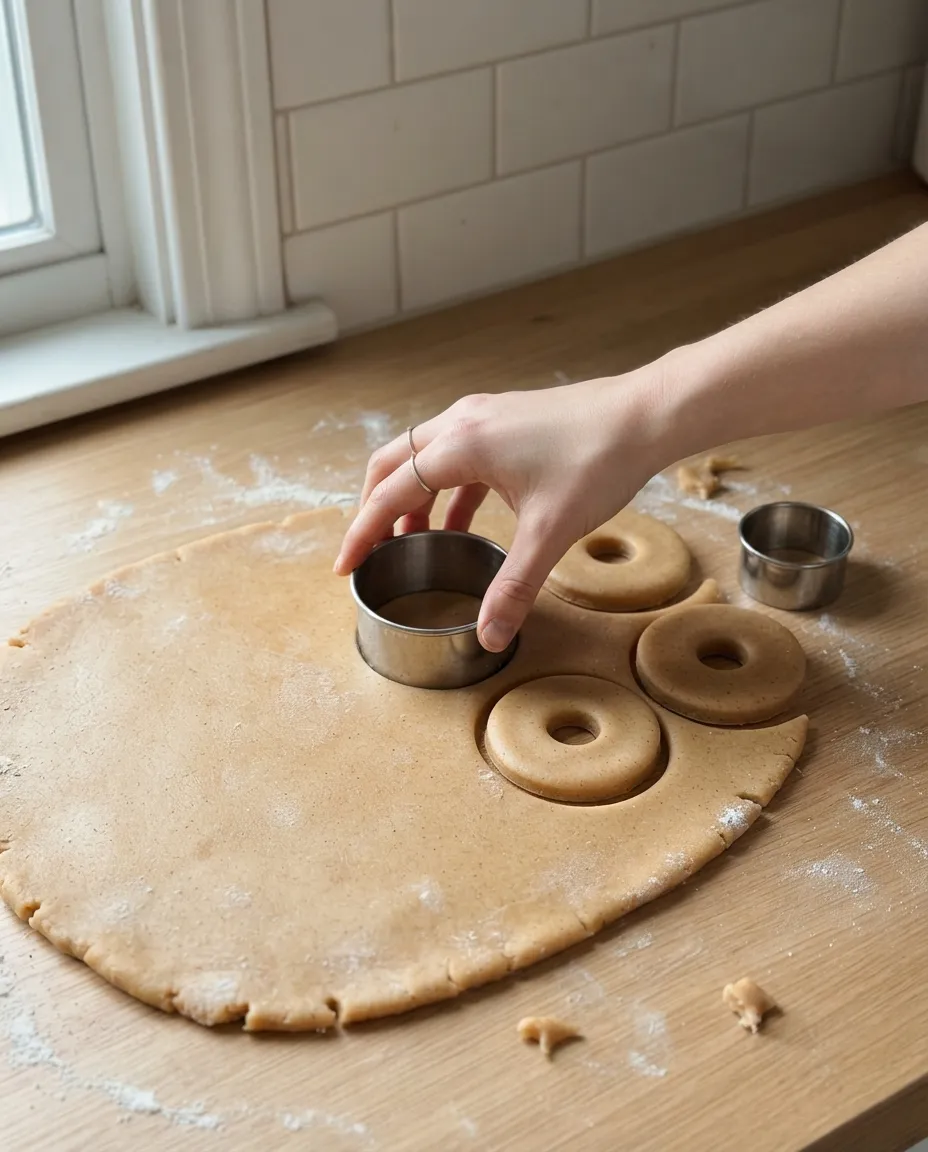
- Cut straight down, no twisting, 3 inch rings with 1 inch centers, and re-roll scraps once after a short rest. Ring number two is fine; ring number three becomes holes.
How to make them
- Reduce the cider first: 2 cups at a busy simmer in a wide pan to 1/3 cup of syrup, 15 to 20 minutes. Cool 10 minutes.
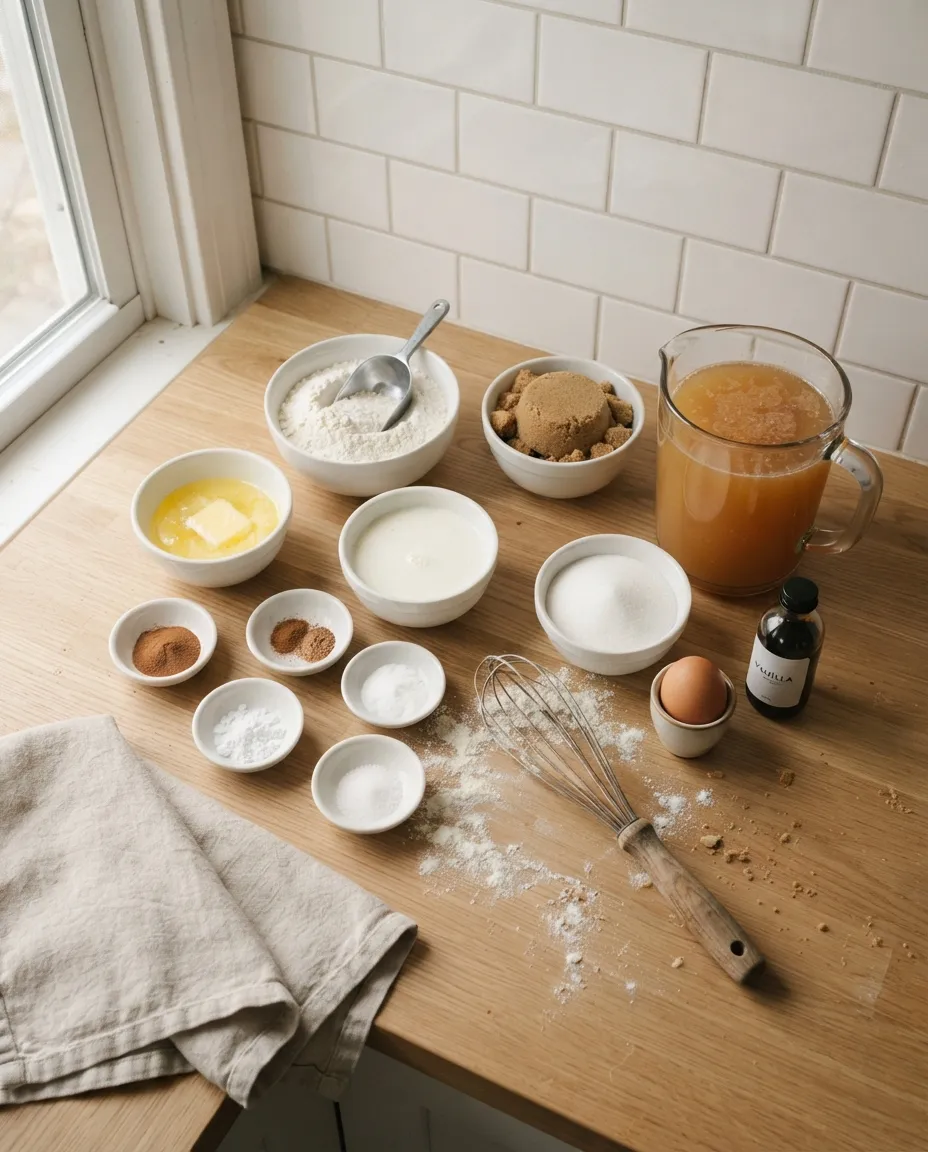
- Whisk the dry: 2 cups flour, 2 teaspoons baking powder, 1/2 teaspoon baking soda, 1/2 teaspoon salt, 1 teaspoon each cinnamon and nutmeg.
- Whisk the wet: 1 egg, 1/2 cup brown sugar, 1/4 cup buttermilk, 3 tablespoons melted butter, 3 tablespoons of the cider syrup, 1 teaspoon vanilla.
- Fold wet into dry just until the flour disappears. Soft and sticky is correct.
- Chill 30 minutes, covered, until the dough handles like dough instead of batter.
- Roll a half inch thick on a floured counter, cut about ten rings with 3 inch and 1 inch cutters, pressing straight down. Save the centers.
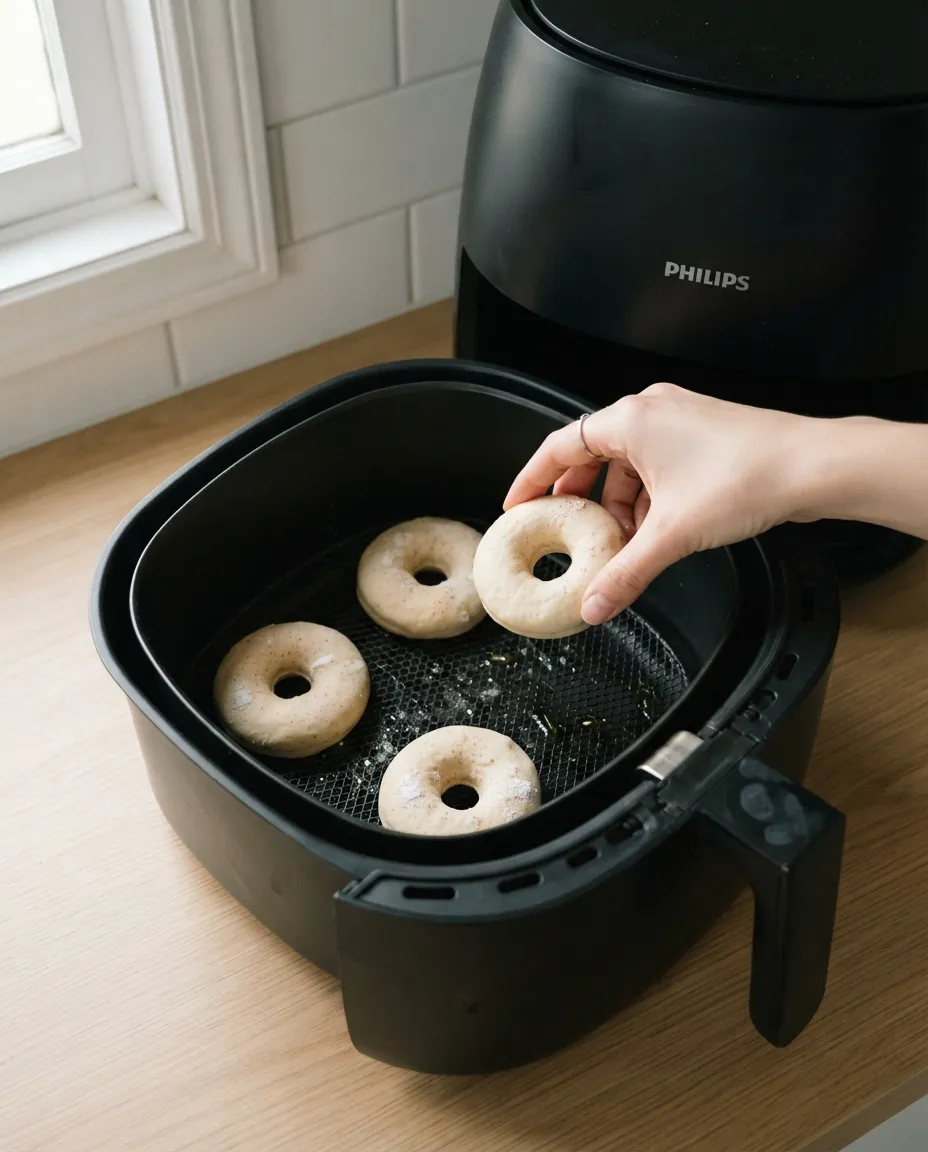
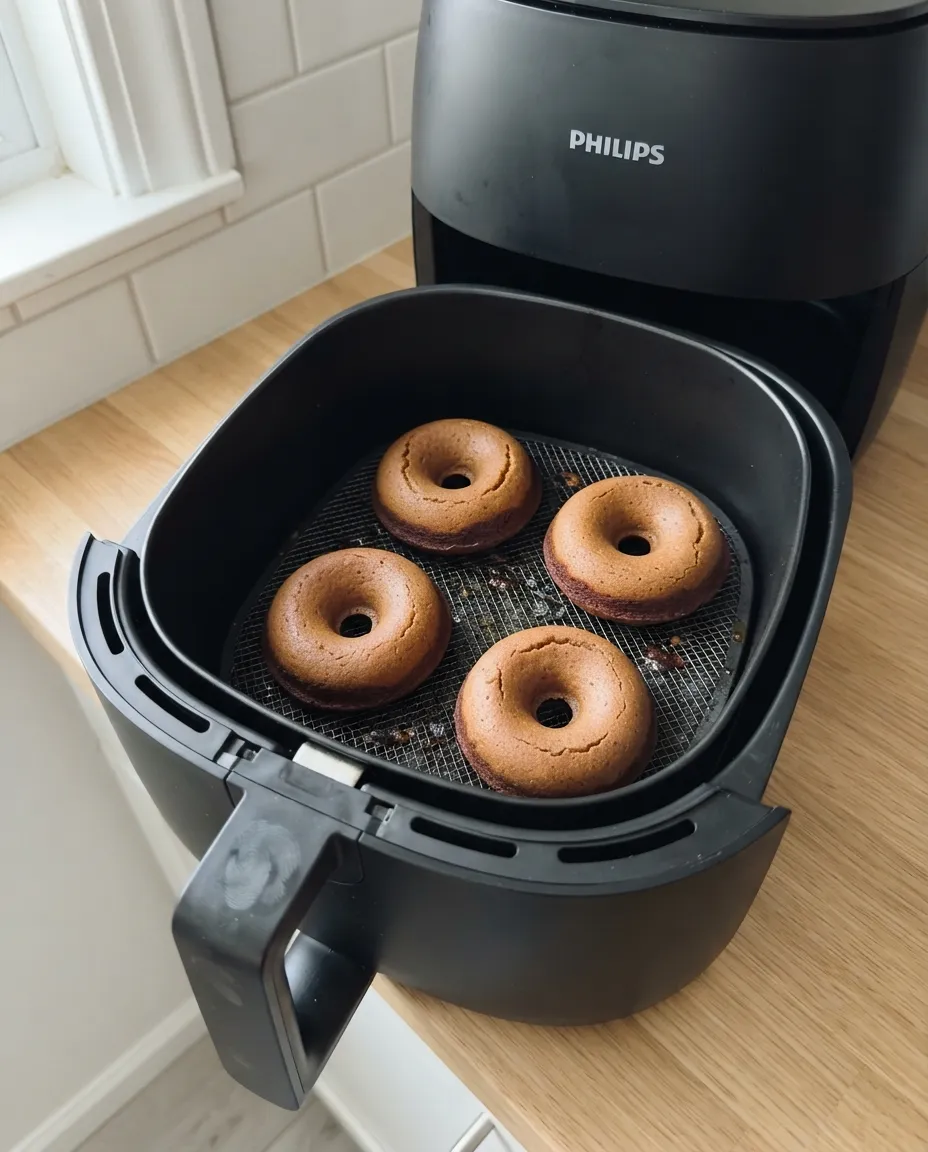
- Bake at 330°F for 8 to 9 minutes, 4 rings at a time on the lightly greased basket, flipping at minute 6, no preheat, until deep gold and 200°F on an instant-read thermometer. A ring has two plain faces, so the flip is legal and useful; cake crumb runs slower than the yeasted rings next door, hence the gentler dial and longer clock.
- Coat hot, per the crust section below, and bake the centers 5 to 6 minutes as cider donut holes while the rings disappear.
The cider-butter crust
The orchard donut's crust is sandy, spiced, and unmistakably apple, because it comes out of a fryer and into sugar while wearing hot fat. The air fryer version rebuilds that in the established butter-first sequence, with one upgrade that makes this page's coating different from every plain cinnamon sugar on this site:
| Step | Detail | Why |
|---|---|---|
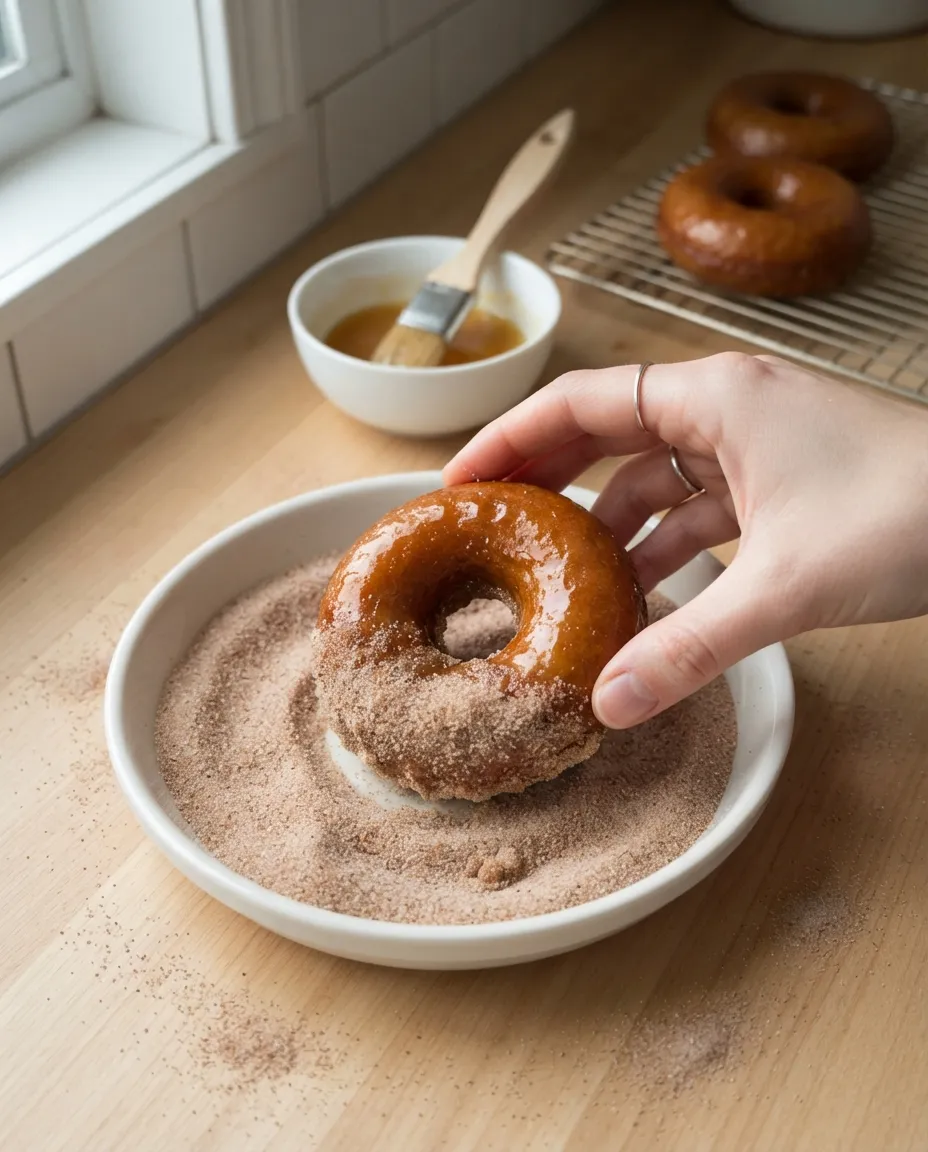
| 1. Cider butter, brushed hot | Whisk the remaining cider syrup, about 2 tablespoons, into 3 tablespoons melted butter, and brush the hot donuts generously | The fat film the sugar needs, now carrying apple and a little tack that grips a thicker sugar coat |
| 2. Roll immediately | 1/2 cup sugar, 2 teaspoons cinnamon, 1/4 teaspoon nutmeg in a shallow dish | Wet butter means full coverage, and the pinch of nutmeg in the coat echoes the crumb |
| 3. Rack, 5 minutes | The coat sets slightly sandy, the orchard texture | A plate steams the bottoms; the rack keeps the crust honest |
The butter-then-sugar law comes from the churros and holds across the dessert shelf; the cider syrup in the butter is this page's signature on it. Against the fried original, this donut lands at 9 out of 10, the missing point being the fryer's crisp rim, and the coating carries so much apple that several orchard loyalists in this house have stopped mentioning it.
Troubleshooting
| What you got | Why | Fix |
|---|---|---|
| No apple flavor | The reduction stopped at half, or juice stood in for cider. | Two cups to 1/3 cup, cloudy cider only, and syrup in both the dough and the coat. |
| Dough impossible to roll | Skipped or shortened chill. | The full 30 fridge minutes; sticky dough is a scheduling problem, not a flour problem. |
| Dense, gummy crumb | Overmixed, or pulled early. | Fold until the flour disappears and stop; 200°F at the thick side calls the finish. |
| Rubbery, tough rings | Scraps re-rolled past their one legal pass. | Second generation is the limit; third rolls into holes. |
| Burnt bottoms, pale tops | Sugar-heavy dough on hot metal, no flip. | Flip at minute 6, and rotate positions if your machine has a known hot spot. |
| Coating slid off in patches | Brushed cold, or the cider butter cooled and thickened. | Brush and roll while donut and butter are both warm, batch by batch. |
| Syrup reduced to candy | The pot outran you at the end, where reduction accelerates. | Watch the last 5 minutes closely; if it seizes, whisk in a spoonful of hot water and it returns. |
| Second batch darker | Warm basket head start. | Minus one minute, the standing rule. The burning guide covers chronic offenders. |
No preheat here, per the preheat guide. Converting an oven cake-donut recipe goes through the air fryer calculator honestly; a fried cider donut recipe does not convert by arithmetic, for the oil-versus-air reasons the churros page owns. The whole dial lives in the air fryer baking chart, and stubborn cross-recipe failures in the troubleshooting guide.
Variations
- Apple cider glaze: skip the sugar coat and whisk 2 tablespoons of cider syrup into 1 cup powdered sugar with a splash of milk, then dip the warm donuts. Quieter, shinier, very good with coffee.
- Maple cider: swap the brown sugar for maple sugar, or brush with maple syrup cut into the cider butter. The two orchards, cooperating.
- Cardamom lean: halve the cinnamon and add 1/2 teaspoon cardamom to the dough for the Scandinavian bakery version of fall.
- The full fall spread: these beside the apple pie and the apple cake, with hot cider in mugs, is the October table this site has been quietly assembling. The three share a season, not a job: pie for dessert, cake for company, donuts for the hand. The rest of the orchard haul runs through the same October basket as apple crisp, baked apples and apple turnovers.
- Doubling for a crowd: the recipe scaler resizes the dough; reduce a double batch of cider in the same wide pan, it just takes a few minutes longer, and bake in relays of four.
Storage and make-ahead
- Cider donuts are best warm and honest for two days, airtight once fully cool, which is longer than the yeast donuts manage; cake crumb and syrup both hold moisture.
- Revive at 320°F for 2 minutes and re-roll in fresh cinnamon sugar; day-two donuts treated this way pass for fresh at any breakfast table.
- The syrup is the real make-ahead: reduce a big batch of cider in season and keep the syrup jarred in the fridge for a month, or frozen in 1/3 cup portions all winter. With syrup on hand, these donuts are a 50 minute project instead of a 70 minute one, and half the chill is passive.
- The dough chills overnight happily, covered, and cold overnight dough cuts the cleanest rings of all. Freeze baked, uncoated donuts 2 months; refresh from frozen at 320°F for 3 to 4 minutes and coat warm as if new.
Frequently asked questions
QHow long do apple cider donuts take in an air fryer?
8 to 9 minutes at 330°F for the rings, flipped at minute 6, done at deep gold and 200°F inside; the punched centers bake 5 to 6 minutes as holes. The full project is about 70 minutes: 20 for the cider reduction, 30 for the chill, and the bakes, with the reduction and chill both make-ahead-able, which cuts an on-demand batch to under an hour.
QHow much do you reduce apple cider for donuts?
Much further than most recipes say: 2 cups of cider down to 1/3 cup of true syrup, a sixfold concentration that takes 15 to 20 minutes in a wide pan. The common reduce-by-half instruction doubles the flavor of something mild, and doubled-mild loses to cinnamon and brown sugar, which is why so many homemade cider donuts taste like spice donuts. Syrup-thick is the standard, and it should coat a spoon.
QCan I use apple juice instead of cider?
Not if apple flavor is the goal. Cider is unfiltered pressed apple, cloudy with the solids and acidity that concentrate into complexity when reduced. Clear juice is filtered and smooth, and it reduces into intensified sugar water. If cider is out of season, bottled boiled cider, a New England pantry staple, substitutes directly: use 1/3 cup and skip the reduction entirely.
QWhat is the difference between cake donuts and yeast donuts?
The leavening, and everything downstream of it. Yeast donuts rise on fermentation into a light, airy, chewy crumb, the glazed donut-shop animal. Cake donuts rise on baking powder into a tender, dense, moist crumb with no rising time at all, which is the orchard and old-fashioned genre. Cider donuts are cake donuts by tradition and by function: that denser crumb is what carries the syrup and spice.
QWhy is nutmeg important in donuts?
Because nutmeg, not cinnamon, is the historic signature spice of American cake donuts, and it is most of what people recognize as donut flavor in an old-fashioned or cider mill donut. Cinnamon dominates the sugar coat; nutmeg belongs in the crumb, and generously, a full teaspoon here. If a from-scratch donut tastes almost right but not quite like the shed at the orchard, missing nutmeg is the usual culprit.
QWhy do you chill the donut dough?
Because cider donut dough is deliberately soft and sticky, heavy with syrup and buttermilk, and at room temperature it handles like batter. Thirty minutes in the fridge firms the butter and finishes hydrating the flour, and the same dough rolls and cuts cleanly. Flouring it into obedience instead makes a dry, tough donut; the chill is a scheduling solution to what looks like a flour problem.
QDo air fryer cider donuts taste like the orchard's?
Nine out of ten, honestly scored. The crumb, the spice, the sandy cider-sugar crust and the warm apple presence are all fully there, helped by syrup going into both the dough and the coating. The missing point is the thin crisp rim that only hot oil builds. In exchange: no quart of oil, no smell, donuts on a Tuesday, and no thirty minute line in a cold field, though the line is admittedly part of the ritual.
QWhy are my cider donuts dense or gummy?
Overmixing or underbaking, the quick bread family's twin failures. Fold the wet into the dry until the flour disappears and put the spatula down; stirring past that point builds gluten and bakes rubber. And pull by the number, 200°F at the thick side of a ring, not by the clock, because syrup-dark dough looks done on the outside minutes before the crumb sets.
QCan I make apple cider donuts ahead of time?
In pieces, yes. The cider syrup keeps a month jarred in the fridge and freezes in portions all winter, which is the biggest time-saver. The dough chills overnight and cuts better cold. Baked, uncoated donuts freeze 2 months and refresh from frozen at 320°F for 3 to 4 minutes, then take the cider butter and sugar as if new. Coat only what will be eaten; the sugar coat is best inside two days.
Never overbake again
Get our one-page times & temps cheat sheet, plus a new tested recipe each week.
No spam · unsubscribe anytime