

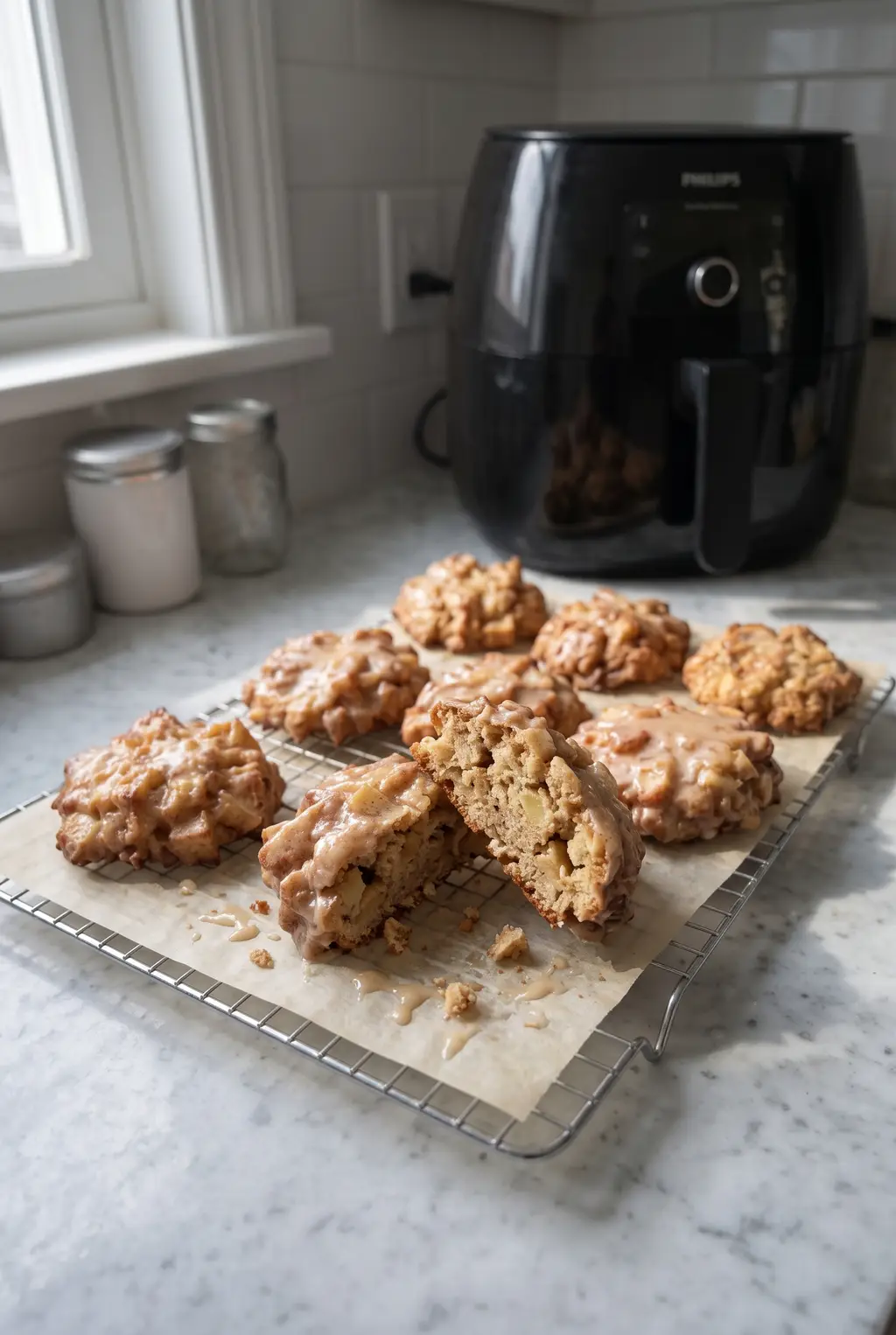
There is a rule on this site, stated more than once, that wet batter and air fryers do not mix: liquid batter has no oil to set it and no floor to trust, so it drips through the perforations and blows sideways into places batter should never go. I stand by the rule. This recipe is not an exception to it. This recipe is what happens when you read the rule closely enough to notice what it actually bans, which is batter that cannot hold its shape, and then build a batter that can.
Because the apple fritter deserves the effort. It is the best thing in the donut case: part pancake, part donut, part apple pie, fried into a shape no machine could stamp out, every crag holding its own share of glaze. And the standard recipes for the air fryer version, the ones ranking above this page today, quietly thin the genre into a spooned pancake puck without ever explaining the two decisions that separate a fritter from a disappointment. Those two decisions, the consistency of the batter and the condition of the apples, are the whole recipe. Everything else is choreography.
Quick answer: Saute diced apples in butter until their moisture cooks off, then fold them into a deliberately thick batter, one that holds a mound on the spoon without slumping. Scoop craggy heaps onto parchment, brush with melted butter, and bake at 350F for 8 minutes, flip, then 380F for 3 to 4 more until a probe reads 205F in the middle. Dip warm in an apple cider glaze, twice. No pot of oil, no soggy centers, no batter in the fan.
The forbidden dessert, and the loophole written into the rule
Why does wet batter fail in an air fryer? In a deep fryer, hot oil supports the batter on every side and sets it in seconds, which is how something liquid becomes something lacy. The basket offers neither support nor instant set: just a perforated floor below and a hard wind above. So the batter must supply its own support. That is the loophole. A batter thick enough to sit in a proud mound, the consistency of drop-biscuit dough rather than pancake pour, does not drip, does not fly, and does not need oil to hold a shape it already has. The fritters in the donut case were never thin batter either; the fry shops know the same secret and never write it down.
This makes the apple fritter cousin to the rest of this site's donut family, each of which solved the no-oil problem its own way: the glazed donuts and the donut holes with yeasted dough, the beignets with pillowy squares, the churros with piped choux stiff enough to keep its ridges. The fritter's answer is the thick drop batter, and it is the only member of the family you can have from craving to glaze in half an hour.
The two apple fritters, so you know which one this is
Every argument about fritter recipes comes from two desserts sharing one name. The donut-shop fritter is a yeast dough, folded and chopped through with apples, proofed and fried, with an open, chewy, bready interior. The farmhouse fritter is a quick drop batter, leavened with baking powder, with a texture between pancake and cake muffin, studded with fruit. This recipe is the farmhouse fritter, honestly labeled, because quick batter is what the machine handles brilliantly and what a Tuesday craving has time for. If your heart belongs to the yeasted kind, the dough and proofing method from the glazed donut recipe converts: fold sauteed apples into that dough at shaping, chop and reform the pieces, and follow its schedule. Same glaze either way.
The saute: fixing the apples before they wreck the batter
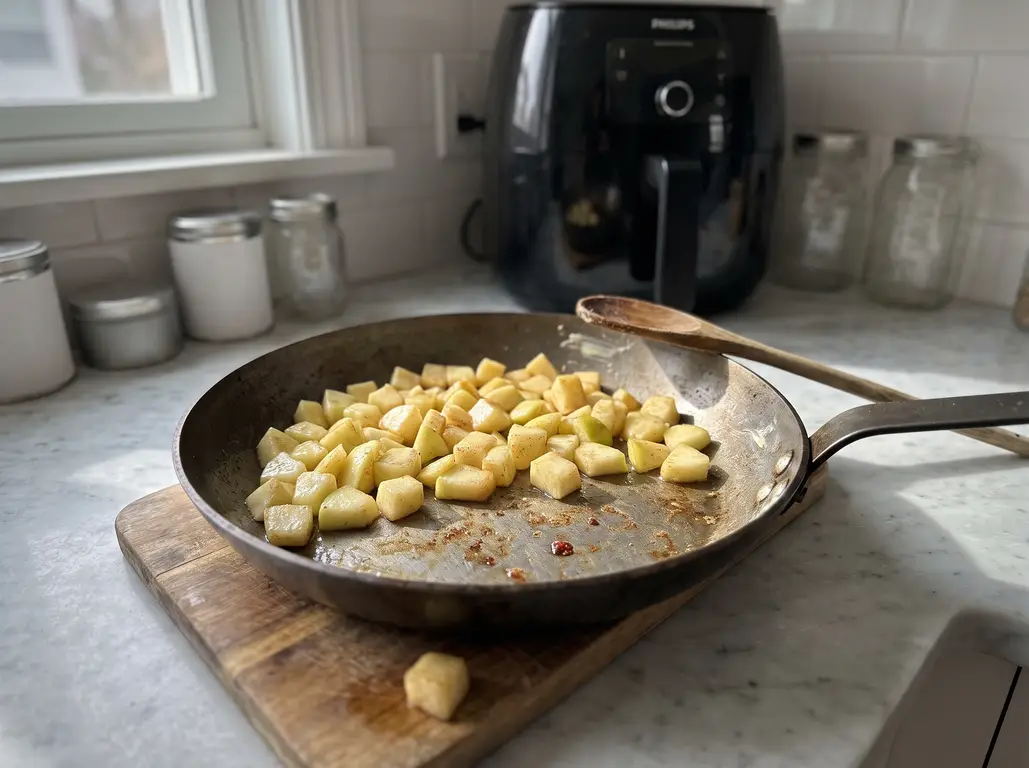
Here is the step that separates this recipe from every raw-apple version above it in the rankings, and it costs five minutes. A raw diced apple is mostly water held in crisp little cells. Fold it raw into batter, as almost every air fryer recipe instructs, and the bake bursts those cells right where the batter is trying to set, which is why so many fritters come out gummy in a ring around each apple piece, and why the centers read done on a timer and raw on a fork. The deep fryer's ferocious heat could outrun some of that moisture. The basket's gentler bake cannot.
So the apples cook first: quarter-inch dice, a tablespoon of butter, a skillet over medium-high for four to five minutes with a pinch of cinnamon and a spoonful of sugar, until the pieces have slumped slightly, smell like pie, and the pan has gone from wet to nearly dry. You have just removed the water that would have been sogginess and traded it for concentration, the same water-is-the-enemy logic that runs through the apple chips and the crumble's cooked filling. Cool the dice for ten minutes before it meets the batter; hot apples would start cooking the eggs early. Granny Smith holds its shape and its tartness best, Honeycrisp runs sweeter and softer, and this is the rare apple recipe where the dice is small enough that the variety war does not much matter.
The batter that holds still
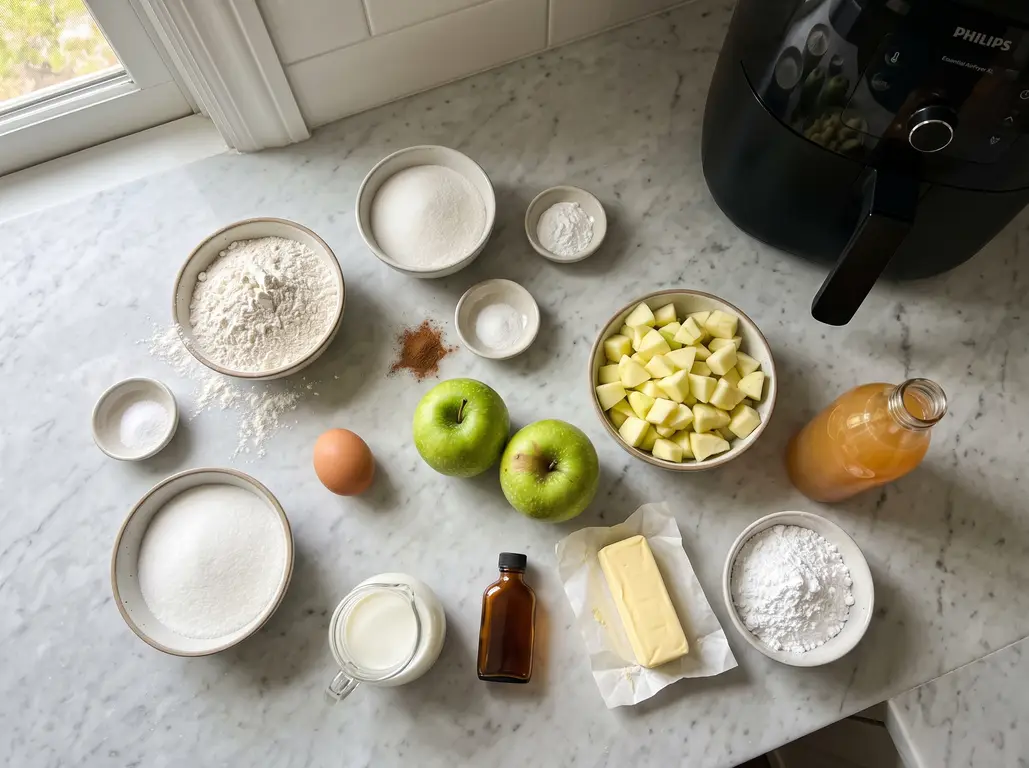
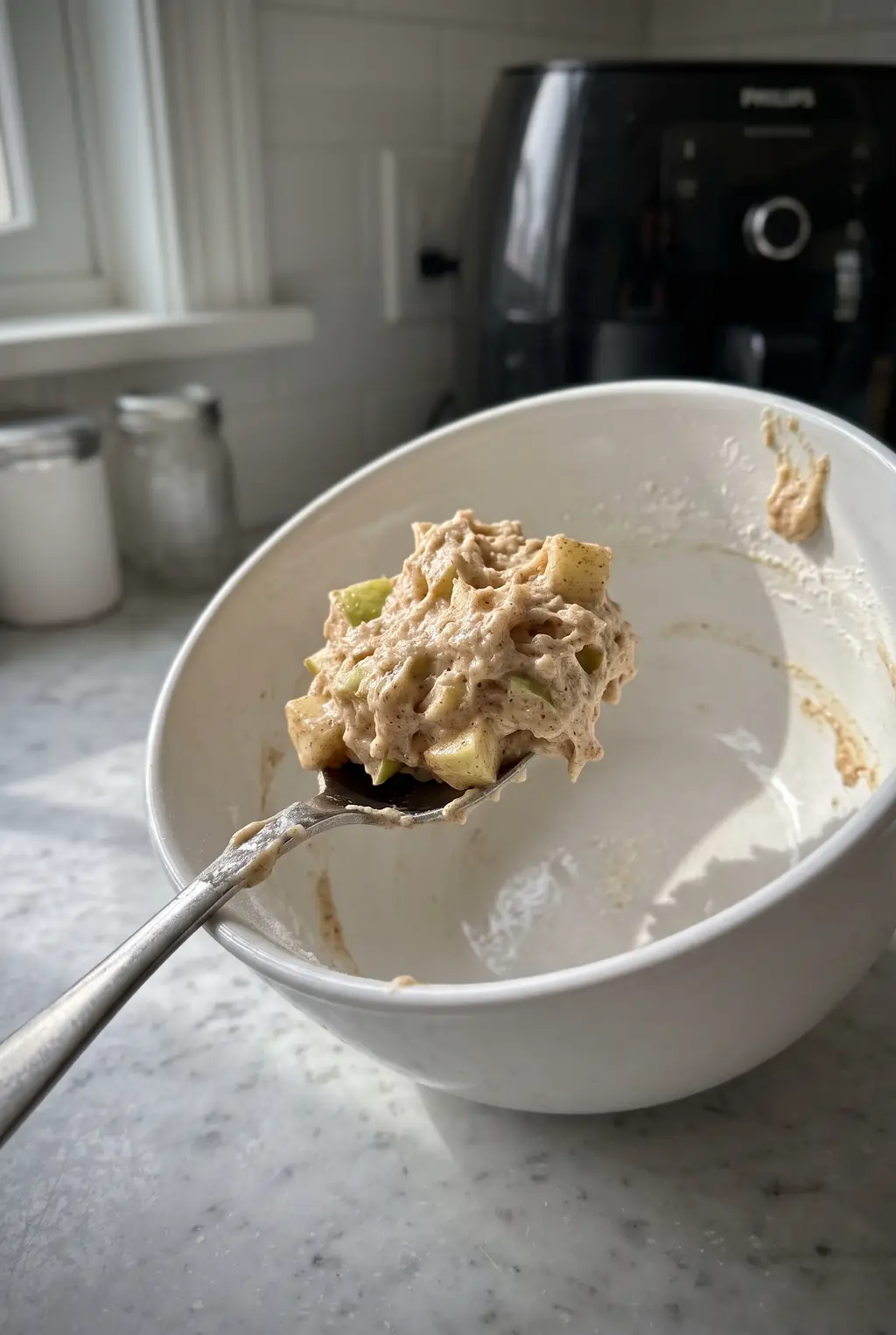
The batter is flour, sugar, baking powder, cinnamon, salt, one egg, vanilla, and milk, and the entire recipe lives in how little milk you add: three tablespoons to a cup of flour, which will look like a mistake right up until it looks like a fritter. Stir just to combine, fold in the cooled apples, and run the test that replaces every photograph you wish this page had: scoop a spoonful and turn the spoon on its side. The batter should hold a shaggy mound and let go slowly, all at once, like a drop biscuit. If it pours, add flour a tablespoon at a time. If it crumbles dry, a teaspoon of milk. The mound test is the whole quality control, and it is exactly the machine's own go-or-no-go rule dressed for dessert: batter that can hold still in a wind is batter that is allowed in the basket.
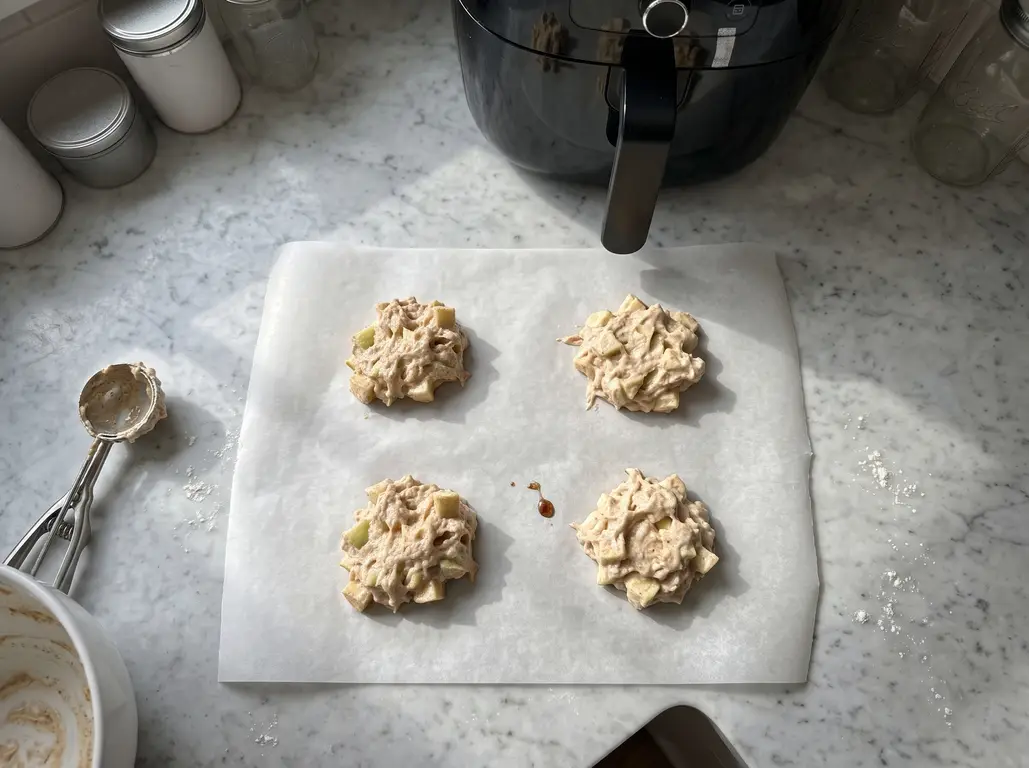
Do not smooth the scooped heaps, ever. The crags are the point: every ragged peak browns harder than the valleys and holds glaze like a gutter holds rain. A fritter piped or smoothed into tidiness bakes into a muffin top with regrets. Shaggy in, craggy out.
Parchment, the flip, and the two stage schedule
Parchment is required, because even a thick batter would glue itself to a bare basket, and parchment is also the one prop the fan loves to steal, so the order of operations matters. Cut a piece to fit the basket floor with an inch of margin, scoop the fritters onto it while it still sits on your counter, and lower paper and cargo together into the basket. The batter is the paperweight; an empty sheet never rides in the machine alone. That is the same weighted-parchment law the foil and parchment guide applies to everything light, and perforated rounds make it even easier. Four fritters per batch in a standard basket, with space between, because crowded fritters steam each other pale at the borders, the crime the mistakes guide never stops prosecuting.
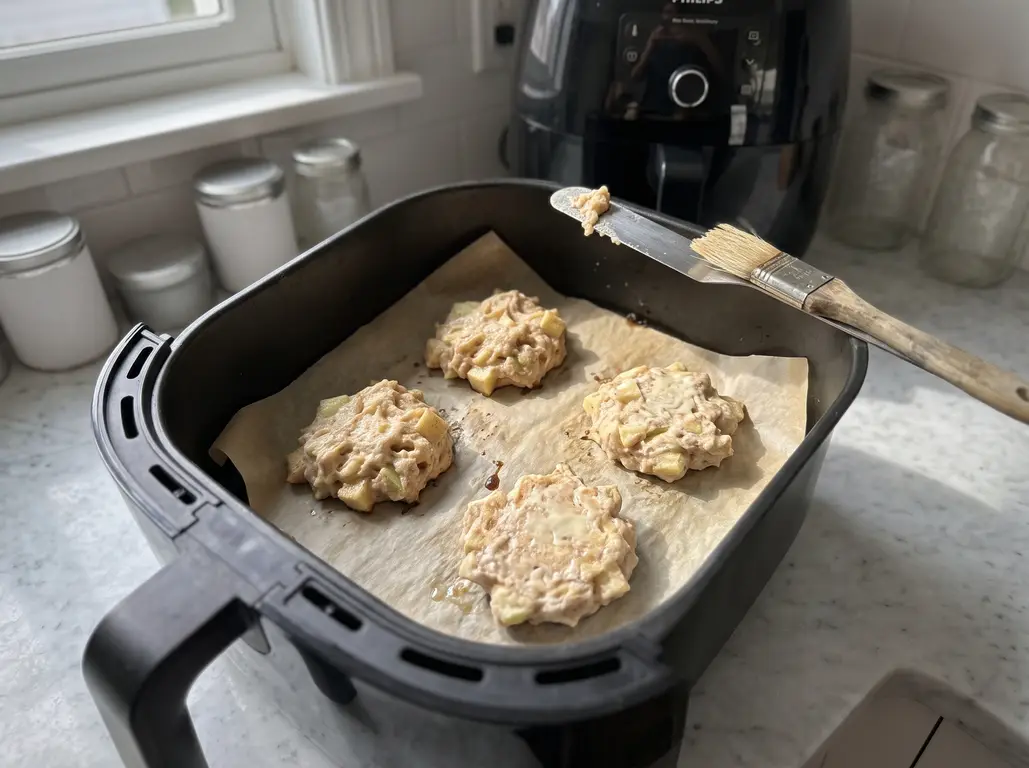
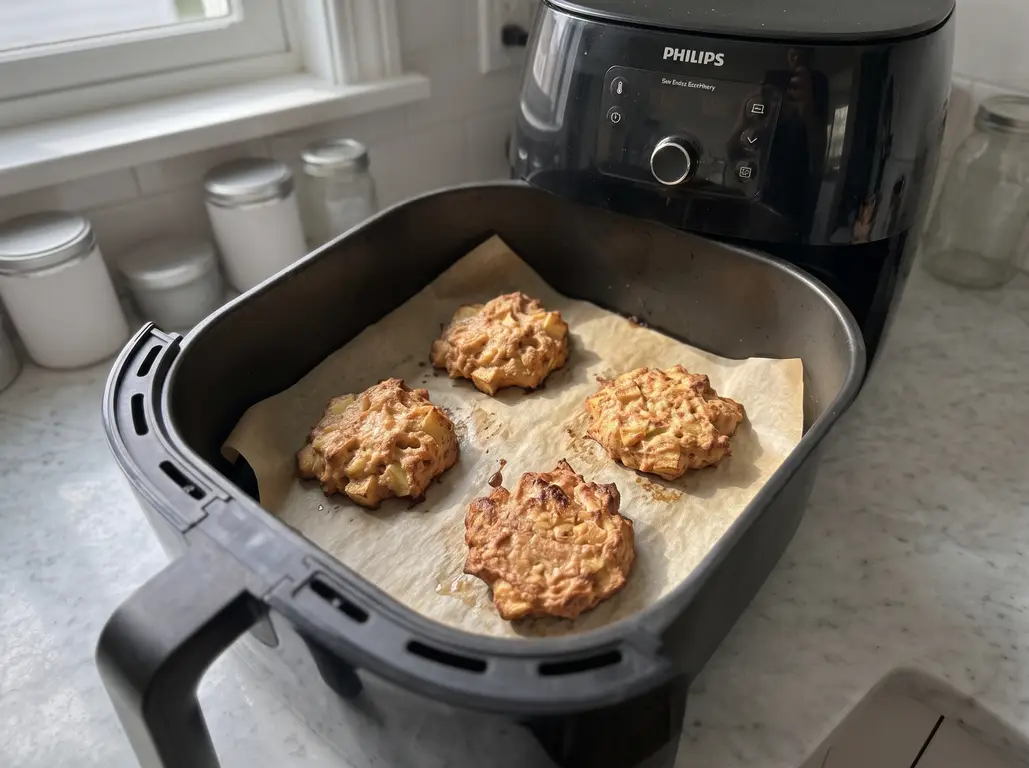
Then brush the tops with melted butter. This is not garnish; a lean batter surface has no fat of its own and will bake matte and pale without help, the browning problem this site solves the same way on every fried-adjacent bake. Bake at 350F for 8 minutes to set the structure gently, then flip each fritter, brush the fresh side, and finish at 380F for 3 to 4 minutes to brown both faces. The flip is not optional: the machine's heat lives in the ceiling, the parchment shades the underside, and a fritter baked one-sided is a fritter with a doughy secret. If your machine bakes noticeably hotter or cooler than these numbers, its personality is measurable in fifteen minutes, and any oven fritter recipe you love converts to basket settings through the air fryer calculator, with the whole tested family logged in the baking chart.
Doneness is a number, not a color: 205F on an instant-read thermometer slid sideways into the thickest fritter, the same quick-bread pull this site uses for every baking-powder crumb, because golden outsides lie about wet middles in this machine as a matter of policy. At 205F the crumb is set to the center and still moist; the probe hole disappears under glaze, which is one more thing the glaze is for.
The cider glaze, and why it is not the usual milk one
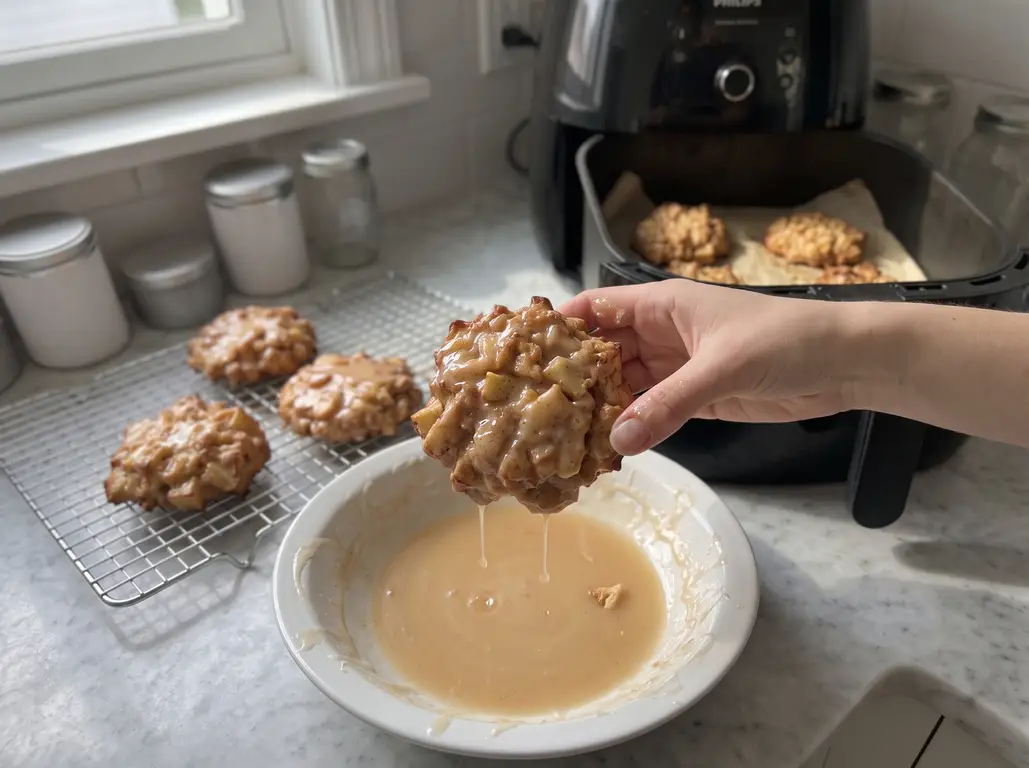
The standard fritter glaze is powdered sugar and milk, and it is fine, and fine is not why you bake. This one swaps the milk for apple cider reduced by half in the same skillet the apples used: simmer two-thirds of a cup down to a third while the fritters bake, whisk it warm into powdered sugar with a pinch of salt and cinnamon, and you have a glaze that tastes like the orchard instead of like sweetened white, the same cider-reduction trick behind the apple cider donuts. Dip each fritter top-down while both fritter and glaze are warm, set it on a rack for five minutes until the glaze hazes over, then dip again. The double dip is the donut-case finish: the first coat soaks into the crags, the second sits on top and dries to the crackly shell that shatters faintly when you bite. A rack underneath, never a plate, or the bottoms steam soft in their own escaping heat, which after all this engineering would be a shame.
What this is, and what it is not
Honesty being house policy: a deep fryer's version has a lacier, more violent crust, because immersion in 360F oil sets and shatters batter in a way moving air cannot, and nothing in this recipe pretends otherwise. What the basket version delivers is the same craggy shape, the same cooked-apple interior, the same cider-glazed finish, a fraction of the fat, no quart of oil to buy, heat, and dispose of, and a fifteen minute cleanup that is mostly rinsing a skillet. Weeknight math has one answer here. And if the batter-thickening trick has you curious what else the machine forgives once shape is solved, the wider map of its rules lives in what you can and cannot bake, with the fritter's crisp-adjacent cousins, the apple fries, the turnovers, and the hand pies, one shelf over, and the baked apples holding down the cozy end of the same orchard.
Frequently asked questions
QCan you make apple fritters in an air fryer?
Yes, if the batter is engineered for the machine instead of borrowed from the deep fryer. Wet, pourable batter fails in a basket because nothing supports it, so the fritter batter must be thick enough to hold a mound on the spoon, roughly drop-biscuit consistency. Scooped onto parchment, brushed with butter, baked at 350F, flipped, and finished at 380F, it bakes into craggy, golden fritters in about 12 minutes per batch with no pot of oil involved.
QWhy are my air fryer apple fritters soggy inside?
Raw apples, almost every time. Fresh diced apple is full of water that bursts out during the bake, leaving gummy rings around each piece and a center that never quite sets. Saute the dice in butter for four to five minutes first, until the pan runs nearly dry, and the problem disappears at the source. The other culprits are batter mixed too thin, fritters crowded close enough to steam each other, and pulling by color instead of by a 205F probe in the thickest one.
QHow thick should apple fritter batter be?
Thick enough to fail the pour test: a spoonful turned on its side should hold a shaggy mound and release slowly in one piece, like drop-biscuit dough, not stream off like pancake batter. That stiffness is what lets the batter hold still against the air fryer's fan and its perforated floor. If your batter pours, whisk in flour a tablespoon at a time; if it is dry and crumbly, loosen it with milk a teaspoon at a time. The mound is the entire test.
QWhat are the best apples for fritters?
Granny Smith is the classic choice because its tartness survives sugar and glaze and its firm flesh holds a dice through both the saute and the bake. Honeycrisp gives a sweeter, juicier result and still behaves well. Softer baking apples like McIntosh slump toward sauce, which suits a spread but not a fritter. Since the dice is small and gets sauteed dry either way, the honest answer is that the saute matters far more than the variety does.
QDo I need parchment paper for air fryer fritters?
Yes, and it needs handling in the right order. Even thick batter will weld itself to a bare basket floor, so the fritters bake on parchment cut to fit with a margin. The safety rule: never let an empty sheet ride in the machine, because the fan will lift it into the heating element. Scoop the fritters onto the parchment while it is still on the counter, then lower paper and batter together into the basket, so the fritters themselves are the paperweight.
QHow do you know when apple fritters are done?
By temperature, not by color: 205F on an instant-read thermometer slid sideways into the center of the thickest fritter. Air fryers brown surfaces faster than they cook centers, so a fritter can look bakery-finished while the middle is still batter, especially with moist sauteed apples inside. At 205F the crumb is fully set and still moist. The probe hole vanishes under the first coat of glaze, so there is no cosmetic price for certainty.
QCan I use canned apple pie filling for fritters?
It is the wrong ingredient for this job. Pie filling is sliced large, heavily sauced, and very sweet, so it tears the batter structure, adds the exact syrupy moisture the recipe works to remove, and doubles the sugar before the glaze arrives. The saute step costs five minutes and gives you drier, more concentrated apples with half the sweetness and none of the goo. If canned filling is what the pantry holds, it belongs in the turnovers or hand pies instead, where pastry can contain it.
QHow do you store and reheat apple fritters?
Fritters are best the day they are made, glaze and all, but they keep 2 days in an airtight container at room temperature and freeze unglazed for 2 months. Revive them the way you would any crisp thing: 3 to 4 minutes at 350F in the air fryer, uncovered, which re-dries the surface the storage container softened. The microwave turns glaze to syrup and crumb to sponge. Frozen unglazed fritters reheat straight from the freezer in 5 to 6 minutes, then get glazed warm.
QCan I make these fritters with yeasted dough instead?
Yes, that is the donut-shop genre of fritter, and the machine handles it well because proofed dough holds its shape by nature. Use the dough and proofing schedule from an air fryer glazed donut recipe, fold the sauteed apples through at shaping, chop the dough roughly and press it back together so the fried edges multiply, and bake per that recipe's settings. The batter version on this page trades that chewy, open crumb for a 30 minute total timeline; the yeast version trades the timeline back for the chew.
Never overbake again
Get our one-page times & temps cheat sheet, plus a new tested recipe each week.
No spam · unsubscribe anytime