

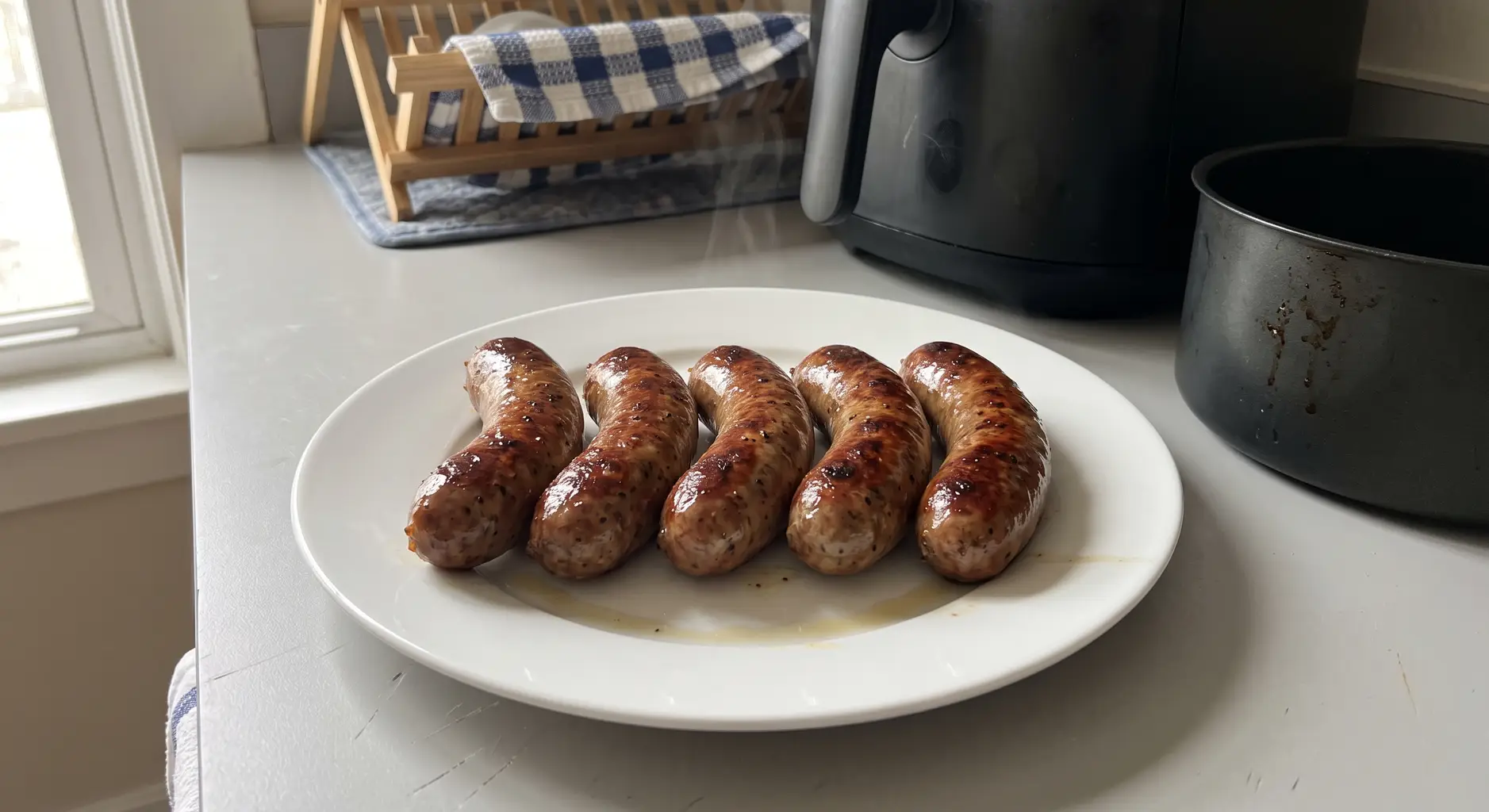
Sausage night used to mean a skillet, a spatter guard that never quite guarded, and twenty minutes of rolling links around so they browned on more than two sides. The air fryer ended all of it. The fan browns the casing on every side at once, the rendered fat drops into the drawer instead of onto my stove, and the links come out tight and snappy with juice still inside where it belongs.
But sausage is also where sloppy internet numbers cost you the most. Cook links to the wrong target and they are dry; run the basket too hot and the casings split and leak their juice into the drawer; prick them because a Facebook tip said to and you drain the very thing that makes a sausage worth eating. So before the recipe, three short arguments the ranking pages skip.
Quick answer: Fresh Italian sausage links, any heat level: 360°F for 11 to 13 minutes, flipped once at minute 6, until a thermometer in the center of the thickest link reads 160°F. Do not pierce the casings. Frozen links run 350°F for 15 to 18 minutes, straight from the bag. Peppers and onions get a 5-minute head start in the basket, then finish alongside the links.
Why 360, not 350 or 400
The top recipes for this exact search run everywhere from 350 to 400 degrees, and the spread is not taste, it is physics ignored. A raw Italian sausage is roughly a third fat, wrapped in a thin casing, and the cook is a race between three finish lines: casing browned, fat rendered, center at temperature.
- At 400°F, the casing wins the race by too much. It browns and tightens while the center is still climbing, and a tight casing over expanding juice is how links split down the side. The leak then hits the hot drawer and sausage night becomes smoke night.
- At 350°F and below, nothing loses, but nothing quite wins either. The links cook through gently and safely, and come out a polite, pale tan. Fine for slicing into sauce, underwhelming on a plate.
- 360°F is the setting where all three lines get crossed together: deep mahogany casing, fat fully rendered into the drawer, and a center that arrives at 160°F right as the outside finishes. It is the same logic as every temperature on this site: match the dial to the slowest job, not the flashiest one. Every setting this site has tested sits in the air fryer baking chart.
Machines differ by real margins, so treat 11 to 13 minutes as the window and the thermometer as the referee. If yours browns hard in 8, it runs hot; drop to 350°F and add a couple of minutes. Converting a package's oven directions instead? The air fryer calculator translates any oven time and temperature into basket settings in a second.
The piercing question, answered
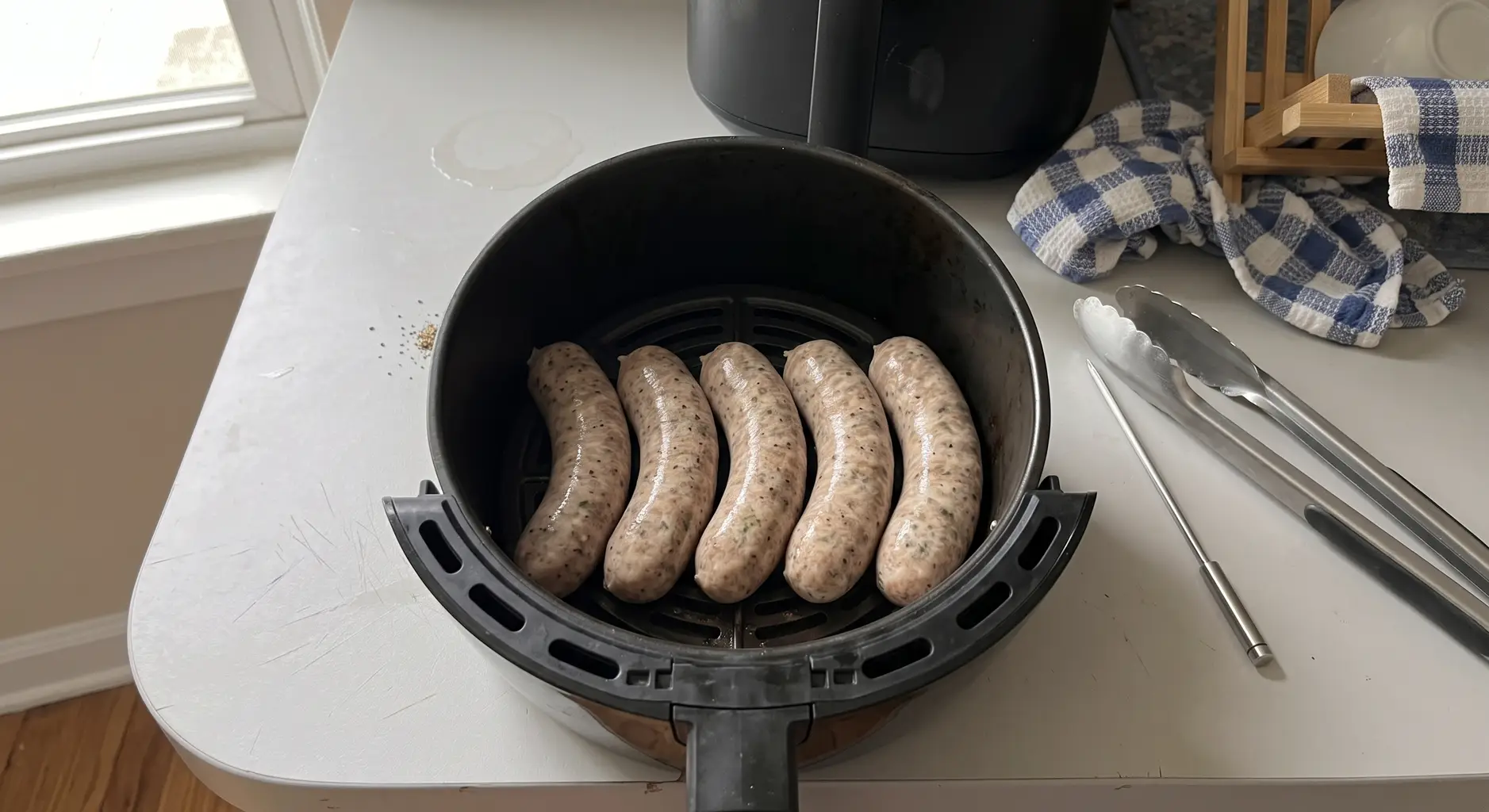
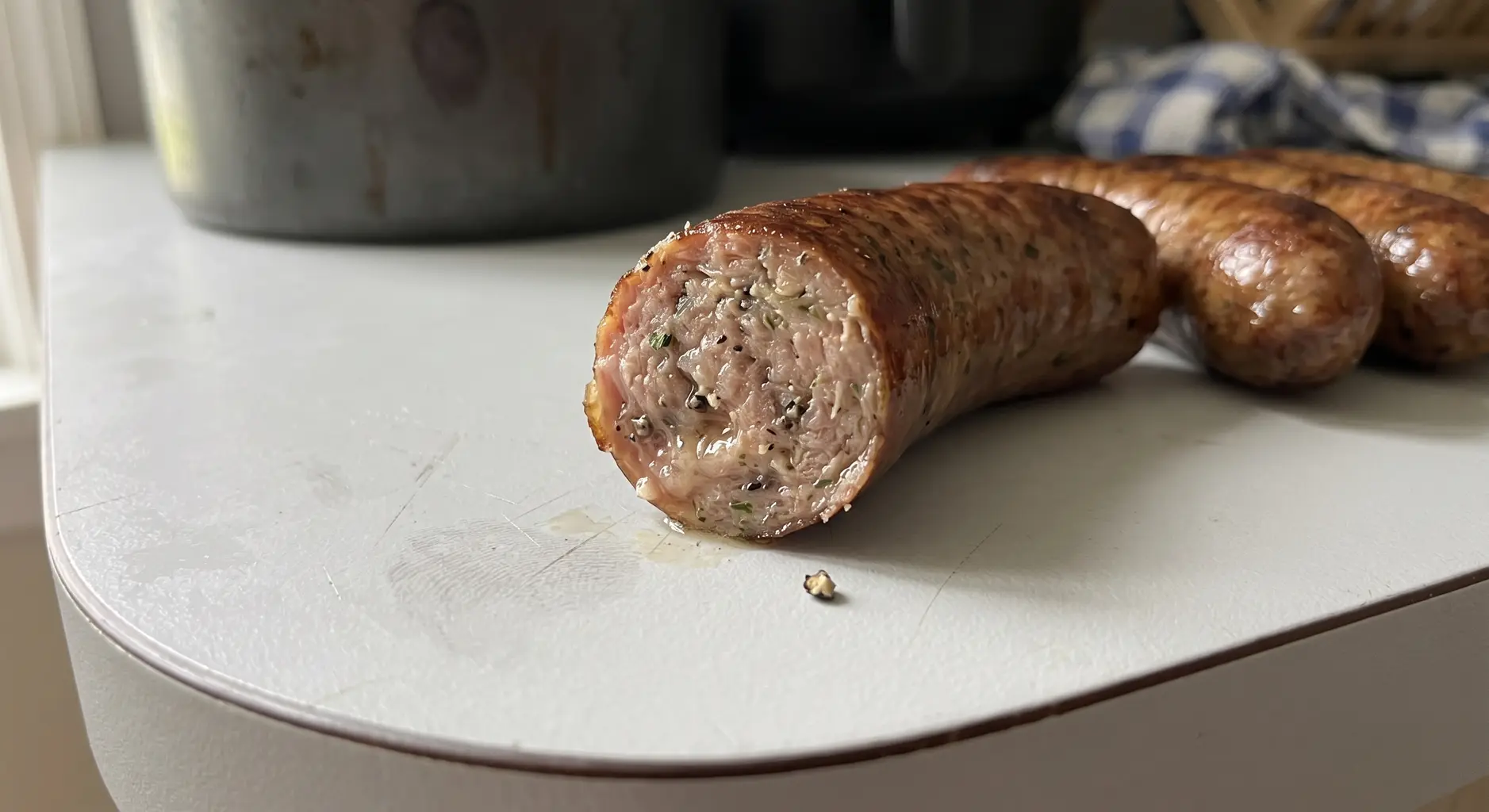
Not one page in the current top ten commits to an answer, so here is one: do not pierce Italian sausage before air frying. The holes-let-steam-escape logic sounds sensible and drains the wrong thing. A sausage's juiciness is fat and seasoned liquid held under gentle pressure by the casing; every hole you poke is a tap you have opened, and the juice that escapes spends the rest of the cook burning in the drawer. Splitting is not prevented by holes anyway. It is prevented by temperature, which is the whole argument for 360°F above.
The one exception: sausages going into a very hot quick sear on purpose, a technique that belongs to grills. In a basket, whole and unpierced wins on juiciness every single time, and the flip at minute 6 keeps casing stress even on both sides.
160 or 165: get the number right
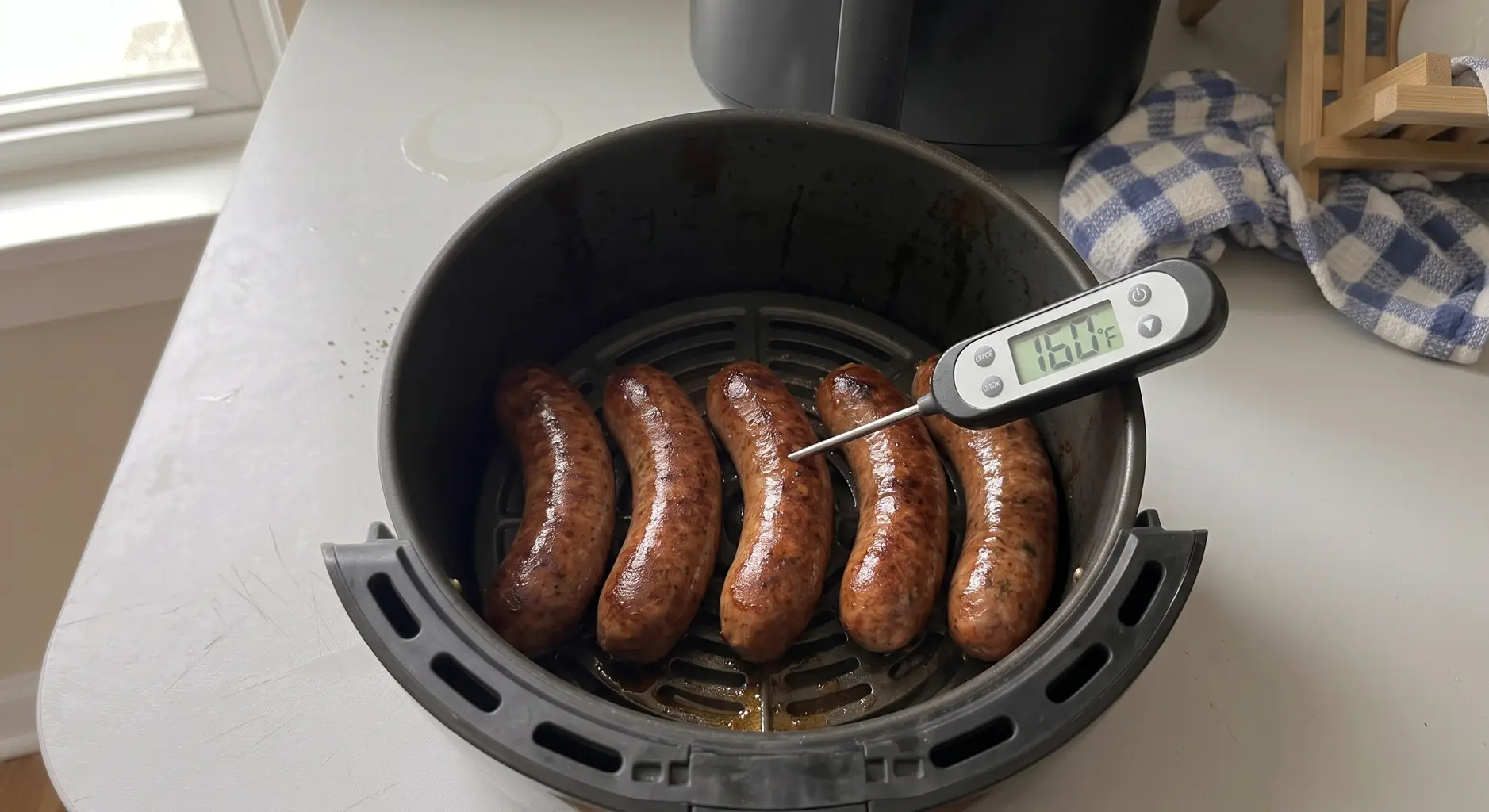
Half the recipes ranking for this keyword tell you 165°F. That is the poultry number, the one the turkey burgers live by. Pork and beef Italian sausage is done at 160°F, the USDA target for all ground meats, and the five-degree difference is not pedantry: past 160 the fat you carefully kept inside starts pushing out, and every extra degree trades juice for safety you already had. Dark meat runs the opposite way, which is why the chicken drumsticks get pushed well past their safety number on purpose. The full rule set:
| Sausage | Done at | Note |
|---|---|---|
| Pork Italian sausage (sweet, mild, hot) | 160°F | The standard grocery link, and this recipe's target. |
| Beef or pork-beef blends | 160°F | Same ground-meat rule. |
| Chicken or turkey Italian sausage | 165°F | Poultry rule. Settings and timing live on our chicken sausage page. |
| Pre-cooked and smoked sausage | Hot through, about 140°F | Already safe; you are reheating and browning, 8 to 10 minutes at 360°F. |
Probe through the end of the link with an instant-read thermometer, along its length, so the tip sits in the center of the thickest part. A side-poke reads the fast-cooking edge and lies to you by several degrees.
Ingredients
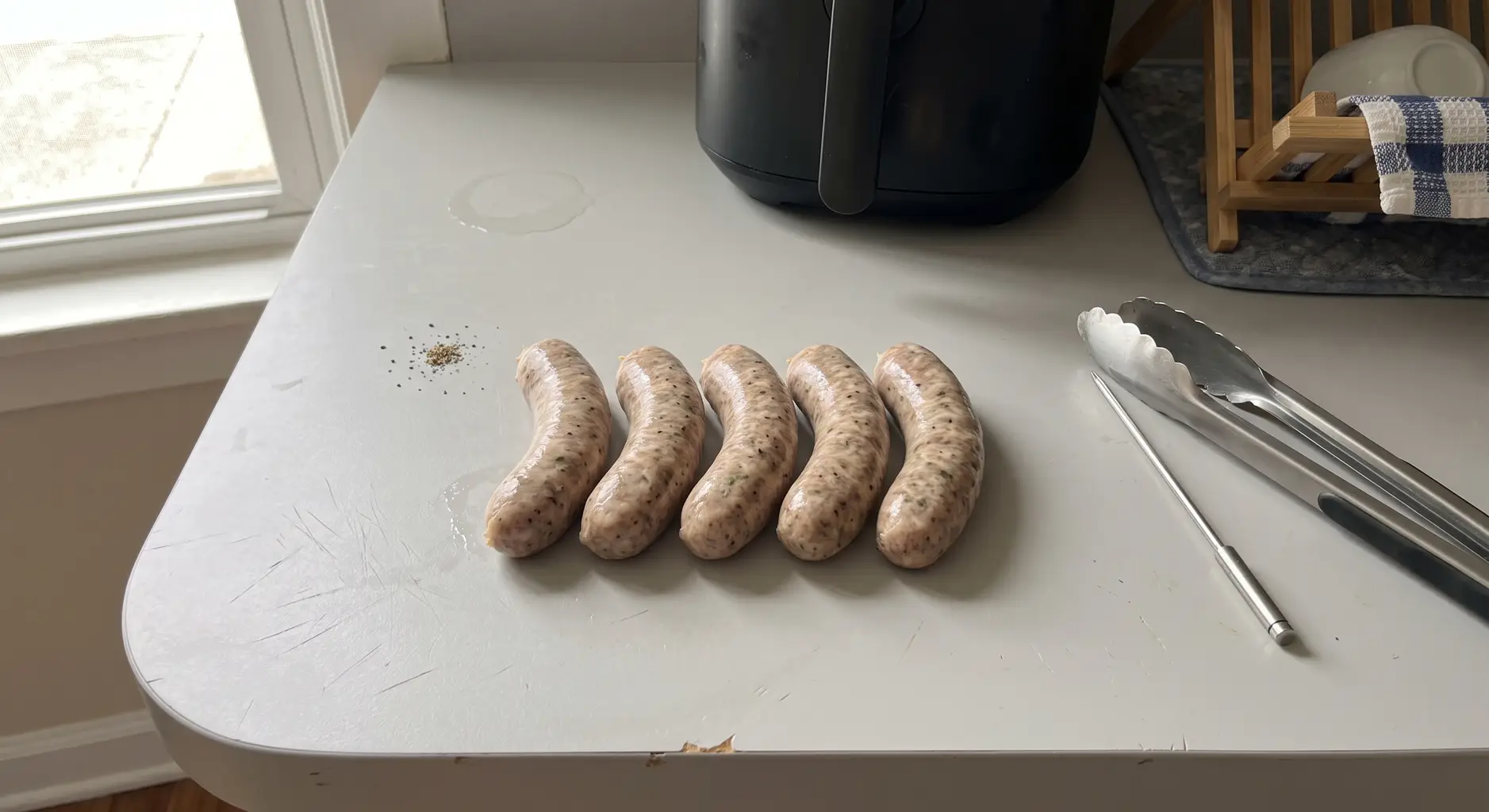
The whole list
- 5 links fresh Italian sausage (about 1 1/4 lbs), sweet, mild or hot
- That is it. No oil: the sausage brings a third of its weight in fat.
For the same-basket peppers and onions
- 2 bell peppers, cut into 1/2-inch strips
- 1 large onion, cut into 1/2-inch wedges
- 1 tablespoon olive oil, 1/2 teaspoon salt, 1/2 teaspoon dried oregano
Sweet, mild and hot links all cook identically; the heat is in the spicing, not the timing. The one label that changes the recipe is poultry, which needs the 165°F target above, and the one that shortens it is pre-cooked, which only needs heating through.
How to make them
- Preheat the air fryer to 360°F for 3 minutes. Sausage benefits from a hot start: the casing sets before it has time to glue itself to the basket. The general rule lives in do you need to preheat an air fryer.
- Lay the links in a single layer with a finger of space between them, straight on the basket floor. No oil, no liner, no piercing: rendered fat needs a clear path to the drawer, and the liner debate is settled in can you use foil or parchment paper in an air fryer.
- Air fry 6 minutes, then flip each link. Tongs, not a shake: sausages roll back to their heavy side if you shake, and you want the pale side up for round two.
- Cook 5 to 7 minutes more, until the casings are deep mahogany with a few blistered spots.
- Verify 160°F in the center of the thickest link, probing from the end. No thermometer? Cut one open at the center: fully set, no translucent pink, juice running clear, then give the batch one more minute for the cut one's sacrifice.
- Rest 3 minutes on a plate. The juice redistributes and the carryover nudges the center a couple of degrees higher; cut immediately and that juice ends up on the cutting board instead.
- Between batches, empty the drawer if fat has pooled. Round two drips onto round one's grease, and that is where sausage-night smoke comes from. The bacon page runs the full fat-management course, including the slice of bread that catches the drips.
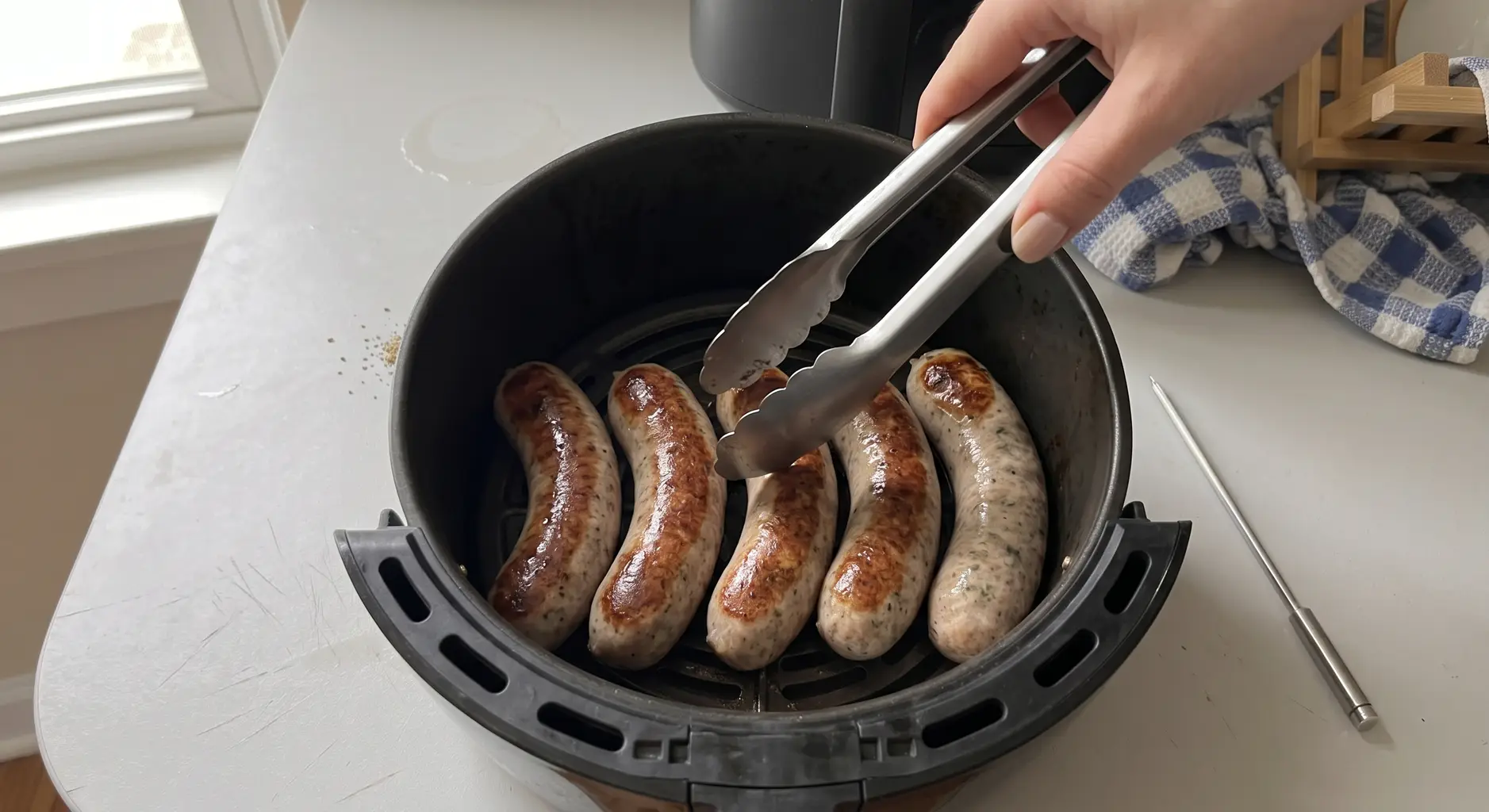
Peppers and onions, same basket
Every ranking page serves peppers and onions with the sausage and then quietly cooks them in a skillet. The basket does both, in one vessel, with an offset start, because vegetables need more time than links:
- Toss the peppers and onions with the oil, salt and oregano and give them a 5-minute head start at 360°F.
- Push them to the sides and lay the links down the middle. Cook the recipe as written, flipping the links at 6 and tossing the vegetables when you do.
- Everything finishes together: links at 160°F, peppers slumped and edged with char, onions sweet. The vegetables spend the second half basting in sausage fat, which is the entire point of the combination.
Crowded baskets steam. If five links plus two peppers overfills yours, run the vegetables first, hold them in a bowl, and give them 90 seconds back in the basket while the cooked links rest. Small-basket owners lose nothing but a little ceremony.
Frozen links, straight from the bag
Forgot to thaw? The basket does not care. Frozen Italian sausage: 350°F for 15 to 18 minutes, flipping at minute 8, to the same 160°F finish. The temperature drops a step so the outside does not finish five minutes ahead of the frozen core, the same never-thaw logic as the rest of our freezer playbook, from frozen burgers to frozen garlic bread. Links frozen into a solid raft get 5 minutes together, then pry apart with tongs and continue separated. Do not run frozen links at 400°F on any account; that is the one honest way to get a burnt casing around a cold center.
Doneness and the rest
| The signal | What it means |
|---|---|
| Casings tan and taut, thermometer under 150°F | Not there. 2 to 3 more minutes. |
| Deep mahogany casings, a blister or two, 160°F center | Done. Rest 3 minutes before cutting. |
| Casing split down one side, juice sizzling below | Ran too hot, or the links were pierced. Still safe eating at 160°F, just drier; next batch cooler and whole. |
| Dark casings but 150°F inside | Extra-thick links or a hot machine. Drop to 340°F and finish gently rather than blackening the outside. |
The 3-minute rest is not fussiness: carryover keeps the center climbing a couple of degrees while the juice thickens enough to stay in the slice.
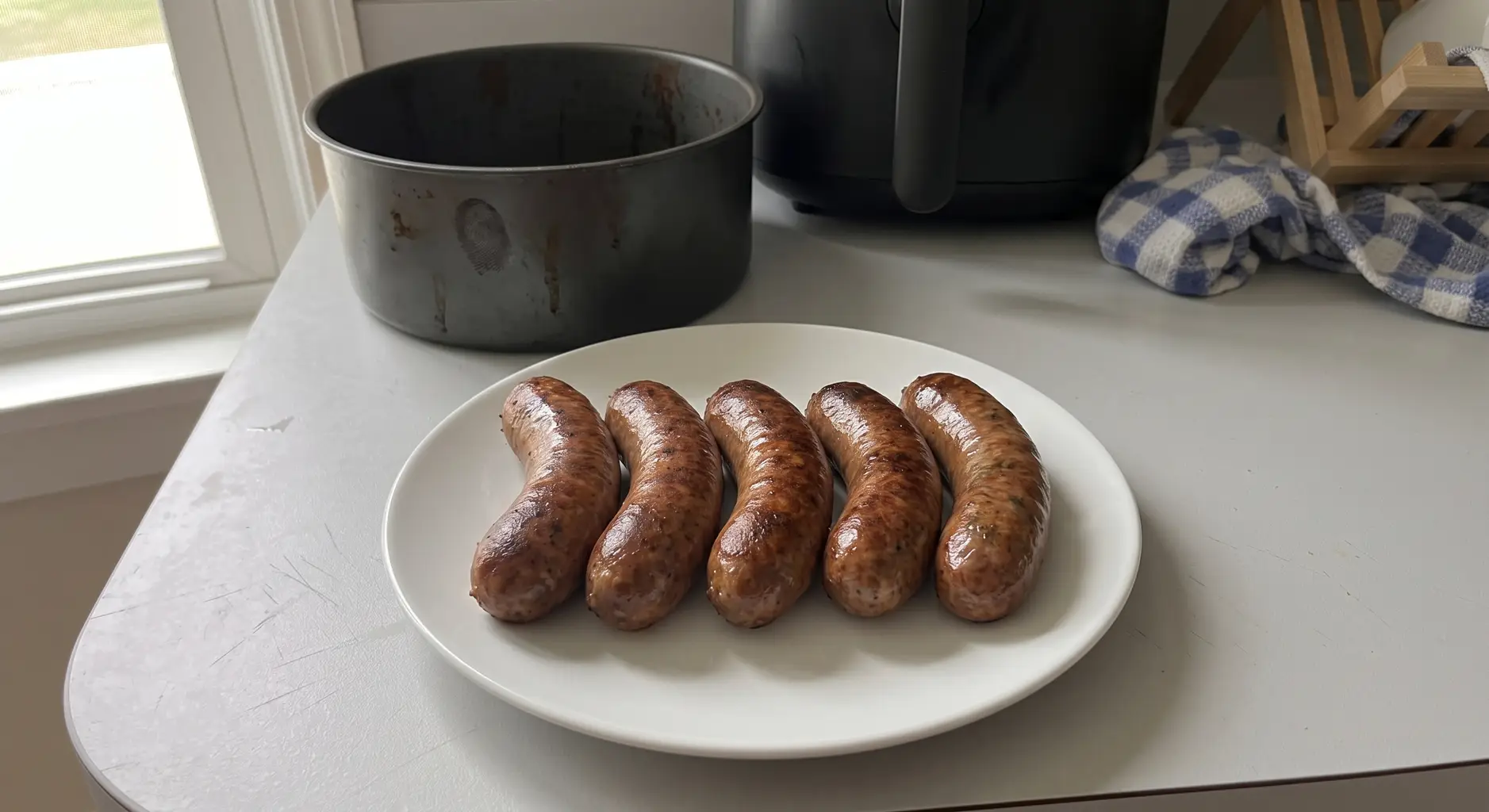
Troubleshooting
| What you got | Why | Fix |
|---|---|---|
| Split casings | Too hot, so the casing tightened over expanding juice, or the links were pierced. | 360°F fresh, 350°F frozen, no holes. Splits are a temperature symptom, not bad luck. |
| Smoke pouring from the machine | Rendered fat hitting a drawer already coated in old grease. | Empty and wipe the drawer between batches, and deep-clean it if smoke persists: why your air fryer smokes has the full cure. |
| Pale, steamed-looking links | Crowded basket or a cold start. | Preheat, single layer, space between links. Browning needs air contact on the casing. |
| Dry, crumbly inside | Cooked past 160°F, usually chasing the mistaken 165 number. | 160°F for pork and beef. Pull on the thermometer, not on extra caution. |
| Burnt outside, undercooked center | 400°F, frozen links, or both. | The slow job sets the dial: 350°F when frozen, 360°F fresh. |
| One link always behind the others | The thick one, or it sat in the machine's cool corner. | Probe the thickest link as your reference, and rotate positions at the flip; every machine has a hot spot. |
| Links stuck to the basket | Cold basket at load, or sugar-glazed sausage varieties. | Preheat properly; glazed and maple types get a quick oil spray on the basket floor only. |
| Grease burnt onto the basket after | Sausage fat polymerizes if left through another cook. | Soak while warm, never scrape: the bakeware cleaning guide makes it painless. |
Faults that show up across every bake rather than this one live in the troubleshooting guide.
Serving: subs, pasta, dinner plates
- The sausage and pepper sub. The same-basket peppers method, a split roll toasted cut-side up in the basket for the links' final 2 minutes, marinara and provolone. Better than the fair version, and no burnt paper boat. If the bakery aisle disappoints, the dinner roll dough shapes into sub-length rolls without complaint.
- Over pasta. Rest, slice into coins, and fold into marinara or a garlicky olive oil pasta. The browned casing edges season the whole pot. Garlic bread on the side happens in the same machine while the pasta drains.
- The weeknight plate. Links plus baby potatoes or a baked potato run earlier, plus something green: asparagus takes 8 minutes while the sausage rests.
- Breakfast-for-dinner. Sliced links beside bacon and eggs, which our basket-breakfast page already times out.
- Meal prep. Cook a double round, slice, and the coins reheat at 360°F for 3 minutes all week: grain bowls, sheet-pan-style suppers, pizza topping for upgraded frozen pizza.
Frequently asked questions
QHow long does Italian sausage take in an air fryer?
Fresh links take 11 to 13 minutes at 360°F, flipped once at minute 6, to an internal temperature of 160°F. Frozen links take 15 to 18 minutes at 350°F. Thin breakfast-width links run a few minutes faster and extra-thick butcher links a few slower, which is why the thermometer, not the clock, makes the final call.
QWhat temperature do you cook Italian sausage in an air fryer?
360°F for fresh links and 350°F for frozen. Higher settings brown the casing ahead of the center and cause splitting; lower ones cook safely but leave the casing pale. The sausage itself is done when the center of the thickest link reads 160°F for pork or beef, and 165°F only if the label says chicken or turkey.
QShould you pierce sausages before air frying?
No. Piercing drains seasoned fat and juice into the drawer for the rest of the cook, which dries the sausage and feeds the smoke. It does not prevent splitting either; splits come from cooking too hot, not from trapped steam. Keep the casings whole, cook at 360°F, and the links stay intact and juicy.
QIs Italian sausage done at 160 or 165?
160°F for pork, beef and blends, which covers nearly every Italian sausage at the grocery store; that is the USDA figure for ground meats. The 165°F number belongs to poultry, so it applies only to chicken or turkey Italian sausage. Cooking pork links to 165 is safe but needlessly dry: those last five degrees squeeze out fat you paid for.
QCan you cook frozen Italian sausage in the air fryer?
Yes, with no thawing: 350°F for 15 to 18 minutes, flipping at minute 8, to 160°F inside. If the links are frozen together, cook the raft 5 minutes, separate with tongs, and continue. The one rule is resisting high heat; frozen centers need the gentler setting to catch up with the casing.
QDo you need oil to air fry sausage?
None. Italian sausage is roughly a third fat, and the cook is largely that fat rendering out through the casing, which self-bastes the link and browns it. Added oil just deepens the pool in the drawer and raises the smoke risk. The exceptions are very lean poultry sausages and sticky glazed varieties, which appreciate a light spray on the basket floor.
QWhy is my air fryer smoking when I cook sausage?
Rendered sausage fat is dripping onto a drawer that already carries grease from earlier cooks, and the thin old layer smokes long before the fresh drippings do. Empty and wipe the drawer between batches and wash it properly after sausage night. A spoonful of water in the drawer before cooking also keeps drippings below their smoke point on machines that are prone to it.
QCan you cook peppers and onions with the sausage?
Yes, in the same basket with a stagger: give oiled, seasoned pepper strips and onion wedges a 5-minute head start at 360°F, then add the links down the middle and cook the recipe as normal, tossing the vegetables at the flip. Everything lands together, and the vegetables finish glossed in sausage drippings, which no skillet version can match.
QHow do you reheat cooked sausage in an air fryer?
Whole links: 360°F for 4 to 5 minutes. Sliced coins: 3 minutes flat, shaken once. Refrigerated sausage keeps 3 to 4 days, and cooked links freeze well for 2 months; reheat frozen whole links at 350°F for 8 to 10 minutes. The casing never quite regains day-one snap, which is a fine excuse to slice reheats into sauce instead.
Never overbake again
Get our one-page times & temps cheat sheet, plus a new tested recipe each week.
No spam · unsubscribe anytime