

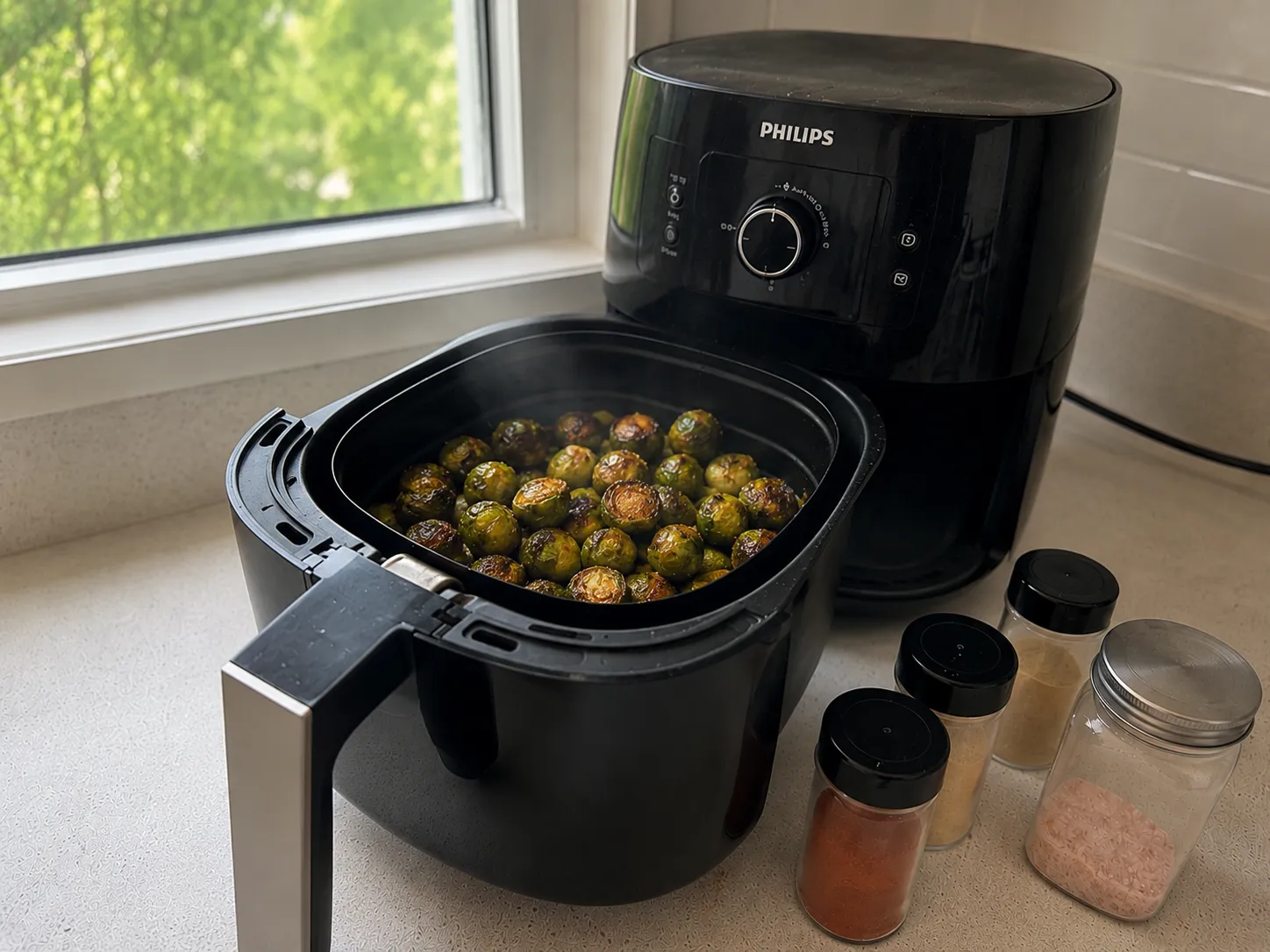
Every page that ranks for air fryer Thanksgiving recipes is a list. Fifteen recipes, forty five recipes, fifty recipes, each one a photo and a link, and not one of them answers the only question that actually matters on the day: you have one basket, it cooks one thing at a time, and six dishes are due on the table at 3:00. Which one goes in first?
That is not a recipe problem. Every dish on that table is easy on its own. It is a scheduling problem, and it has a right answer, and nobody writes it down.
So this page is the plan. The recipes are all here and they are all linked, but they are arranged the way you will actually cook them: in order, working backwards from the moment dinner hits the table, with the times and temperatures in one place and a reason for every slot.
The short version: The oven does the turkey. The basket does everything else, in order of how well each dish survives waiting. Bakes and desserts go first, the day before or in the morning, because they improve or hold. Dense, wet sides go in the early afternoon, because foil keeps them hot for an hour. Anything crisp goes last, inside the window while the turkey rests, because crisp dies in about fifteen minutes and nothing you do will hold it. Work backwards from 3:00 and the whole day falls into place.
The turkey is the oven's job
Let me deal with the elephant first, because a few of the pages ranking for this promise you a whole Thanksgiving dinner, turkey included, out of an air fryer.
Read those pages closely and you will find the machine doing the work is a 26 quart oven-style unit with three racks. That is not the air fryer most people own. That is a small oven with a fan, and if you have one, genuinely, use it like the oven it is. This page is written for the 5 or 6 quart basket sitting on the average counter, and a whole turkey does not go in one. Not a small turkey, not at an angle, not with the legs tucked. The basket that fits a 12 pound bird has not been built.
What a basket does instead is more useful than the stunt anyway. On Thanksgiving your oven is the scarcest thing in the house. It is booked solid from morning to mid afternoon, and every side dish you move out of it is a half hour of oven time handed back to the bird. The air fryer's real Thanksgiving job is being the second oven you already own.
The turkey and the wide things
The bird, the 9x13 casseroles, anything for a crowd. Big, slow, already spoken for.
Every side, one at a time
Roast vegetables, potatoes, the bakes, the reheats. Faster than the oven per dish, free the whole day, and better at crisp than the oven has ever been.
Gravy and the mash
Some things belong to a pot. The basket cannot mash a potato and it should not be asked to make gravy.
If you want turkey out of the basket anyway, the honest version is a 3 pound boneless turkey breast, which fits a 5 quart basket with room for air. 350°F, roughly 45 to 55 minutes, turned once, and it is done when the thickest part reads 165°F, not when the clock says so. Rest it 15 minutes under foil before carving. It will not feed ten people, but for a small Thanksgiving it is genuinely excellent, and it frees the oven entirely.
One basket means an order, and the order is not a matter of taste
Here is the idea the fifty-recipe roundups skip, and it is the whole page.
Since the basket cooks one dish at a time, every dish has to wait its turn, which means every dish spends part of the afternoon sitting cooked on the counter. So the question that decides the order is not which dish is most important. It is which dish survives the waiting.
And that is not a matter of opinion. It is physics, and dishes fall into three groups.
| Group | What happens while it waits | So it cooks |
|---|---|---|
| Bakes and desserts | Nothing bad. A pound cake is genuinely better the next day, a pie holds its structure for hours, cheesecake has to chill anyway | The day before, or in the morning |
| Dense, wet sides | They hold. Water stores heat better than almost anything in a kitchen, so a covered dish of potatoes or squash is still properly hot 45 minutes later | Early afternoon, then foil |
| Anything crisp | It dies. Steam from the hot interior keeps rising into the crust after cooking, and in 15 to 20 minutes crisp is gone. No foil trick stops it, because the enemy is inside | Last, in the final half hour |
That third row is the one to respect. Covering a crisp dish makes it worse, not better, because the foil traps the steam that was going to escape. It is the same reason our baby potatoes page tells you never to lid them while hot, and the same reason day-old fries are sad. Crisp is not a state, it is a countdown.
Once you sort your menu into those three groups, the schedule writes itself. Everything in group one is done before the day starts. Everything in group two runs through the early afternoon in a queue. Group three waits for the very end, and the end turns out to be a better slot than it sounds, for a reason the next section explains.
The turkey rest is your free 40 minutes
This is the piece of Thanksgiving scheduling that changed how I run the day, and it applies whether or not you own an air fryer. It just happens to make a basket twice as useful.
A roast turkey has to rest before carving. Not five minutes, properly rest: 30 to 45 minutes for a whole bird, loosely tented, and it stays plenty hot the whole time because a turkey is an enormous store of heat. Carve early and the juice ends up on the board instead of in the meat.
Which means that in the last 40 minutes before dinner, the exact window when everything feels most frantic, two appliances come free at once.
- The oven is suddenly empty, still holding at around 300°F from the bird. Drop it to its lowest setting, and it is now a warming cabinet. Everything you cooked earlier and covered in foil goes in it, and the holding problem is solved with equipment you were already running.
- The basket runs its final sprint. This is where the crisp things live: back to back batches, no gaps. And back to back is where an air fryer is at its best, because the machine is fully heat-soaked, so the second batch runs a minute or two faster than the first. Our recovery time entry covers why.
So the rest is not dead time. It is the busiest and most productive slot of the day: oven holding, basket crisping, you carving at the end of it. Once I started planning the last hour around the rest instead of around the bird coming out, the 3:00 pile-up stopped happening.
The schedule, backwards from a 3:00 dinner
Here is the whole day in one table, written for dinner at 3:00 with one 5 or 6 quart basket. Shift every time by the same amount if you eat at a different hour. The dish links go to the full recipes, and every one of those pages has its own doneness temperature, which outranks anything a clock says.
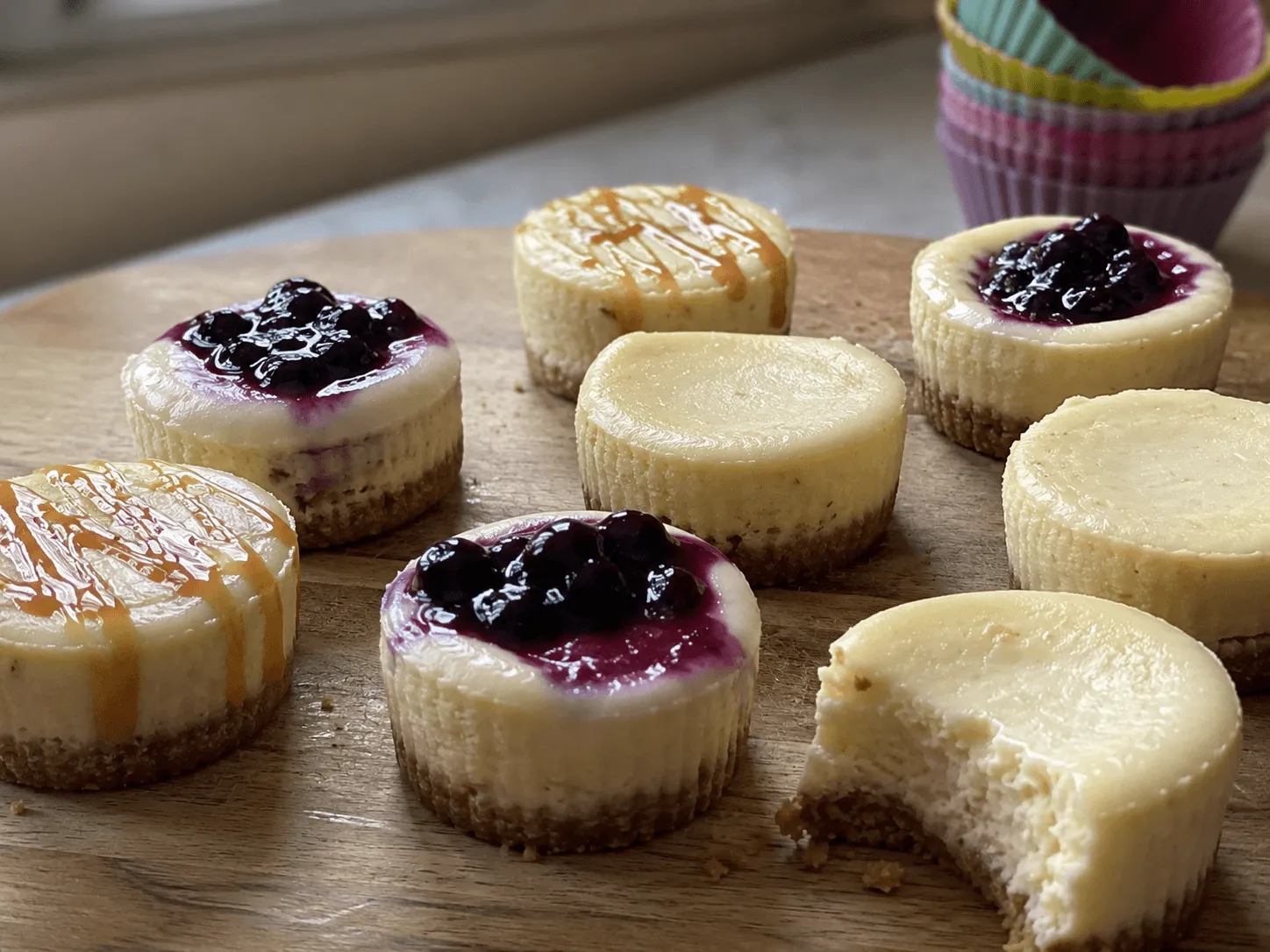
- The day before: bake the keepers. Pound cake, carrot cake or pumpkin bread, and mini cheesecakes, which need the overnight chill anyway. These improve while you sleep. Wrapped once cool, on the counter, fridge for the cheesecakes.
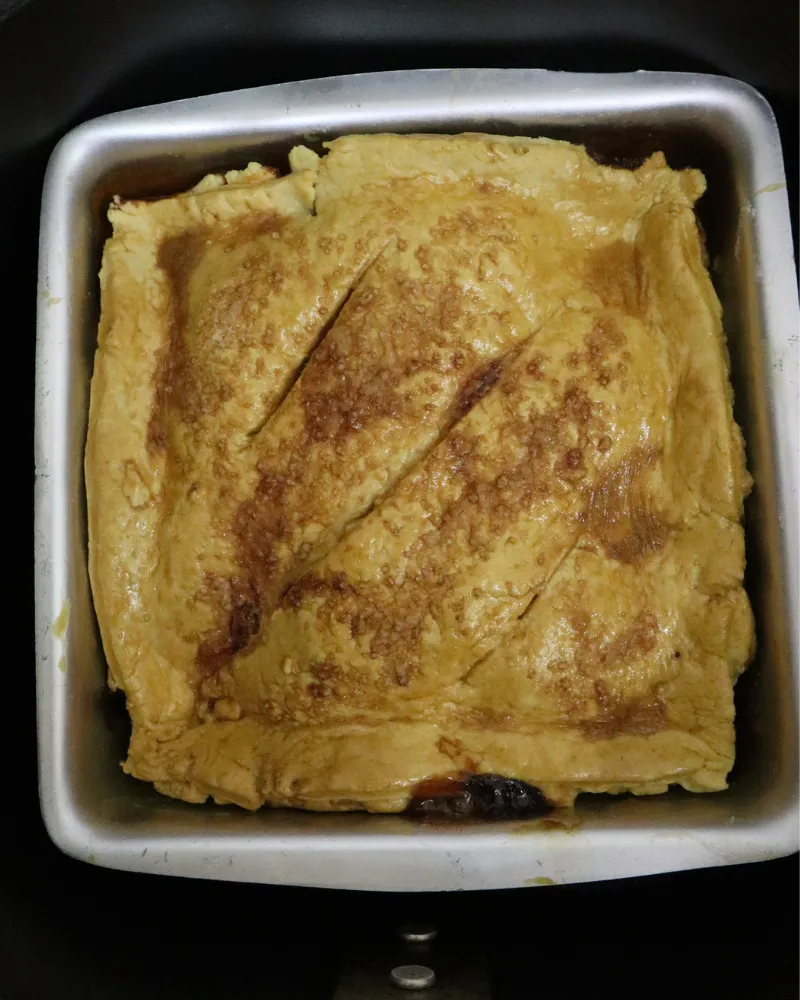
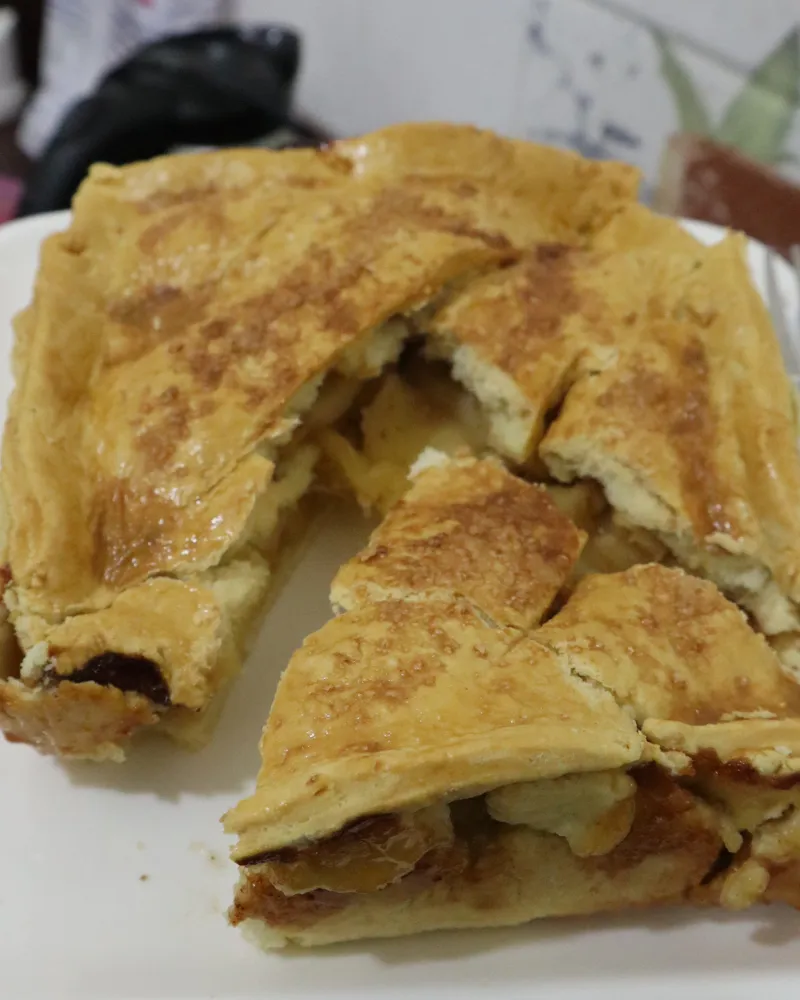
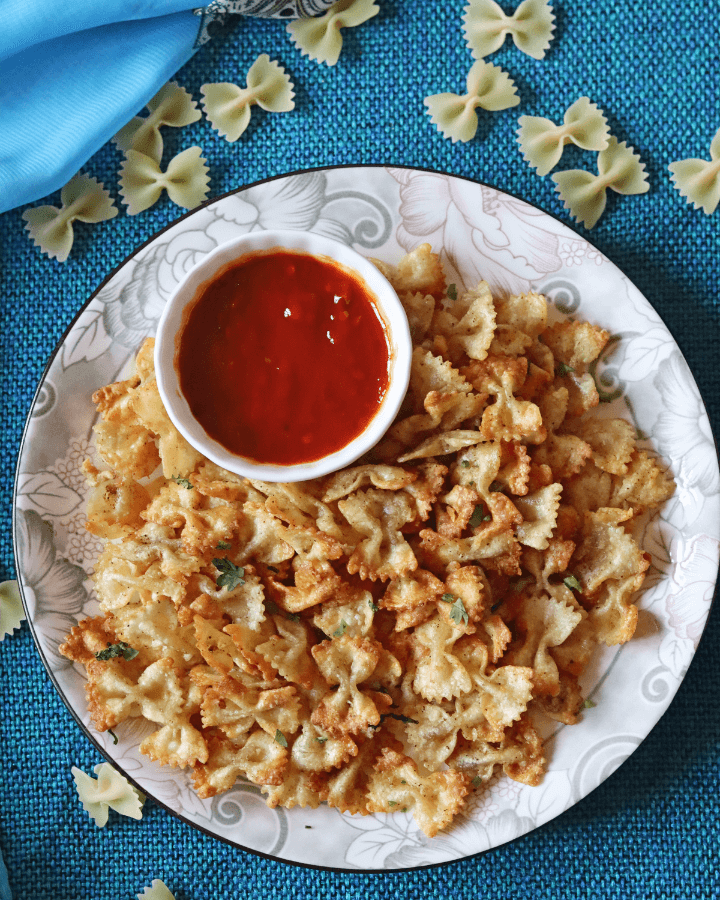
- Thanksgiving morning: the pie and the crunch. Apple pie at 320°F for about 28 minutes, done when the filling bubbles at 200°F. Then the snack tier while the basket is hot: candied walnuts and pasta chips for the grazers. All of it holds at room temperature until dinner.
- 12:30, the dense sides start. Baby potatoes at 400°F, 18 to 22 minutes to 205°F inside. Then accordion potatoes or a squash if you are running one. As each finishes: foil, towel over the top, counter. These are group two and they will wait patiently.
- 1:45, dry the stuffing bread. Ten minutes in the basket turns cubed bread into proper dry croutons, which is the whole secret to stuffing that is not wet. The stuffing itself assembles in a 6-inch dish and can share the oven with the bird's last stretch.
- 2:15, the turkey comes out and the sprint begins. Bird tented on the board. Oven to its lowest setting, foil dishes in. Basket now runs the crisp queue back to back: frozen Brussels sprouts at 400°F for 18 minutes, straight into asparagus at 400°F for 7. No gap between batches, and expect the later ones to run slightly fast.
- 2:50, refresh and carve. Dinner rolls get 2 minutes in the basket to bring the crust back. Carve the rested bird. Everything comes out of the warm oven at once, and it is all hot at the same time, which is the entire trick.
- During dinner: dessert cooks itself. Baked apples take 20 minutes at 330°F and nobody has to leave the table to make them. The pie from this morning gets 3 minutes at 320°F if you want the crust crisp again, and it is better than it was at noon.
If your machine has a known hot spot, the sprint batches are where it shows, because there is no time to rotate anything twice. Turn each batch once at halfway and accept it. And preheat properly at the two moments the temperature changes, morning bakes to afternoon roasting: whether you need to preheat covers when it earns its three minutes.
Every dish, one table
These are our own tested recipes with their real numbers, not a scrape of other people's. Each link has the full method, and every one bakes or roasts to a temperature rather than a clock.
| Dish | Basket time | Temp | When |
|---|---|---|---|
| Pound cake | 38 min | 300°F | Day before |
| Carrot cake | 30 min | 320°F | Day before |
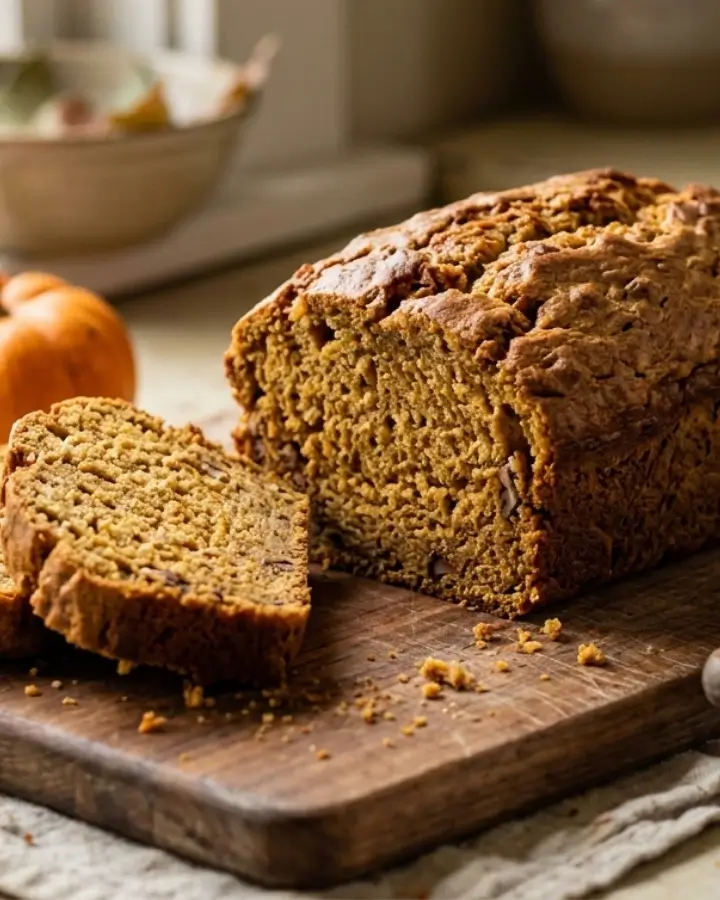
| Pumpkin bread | 32 min | 320°F | Day before |
| Mini cheesecakes | 13 min | 300°F | Day before, they chill overnight |
| Apple pie | 28 min | 320°F | Morning |
| Pecan pie | See recipe | 320°F | Day before, it sets as it cools |
| Sweet potato pie | See recipe | 320°F | Day before, chills overnight |
| Candied walnuts | See recipe | Low | Morning |
| Pasta chips | 12 min | 400°F | Morning |
| Baby potatoes | 18 to 22 min | 400°F | 12:30, then foil |
| Accordion potatoes | 16 min | 390°F | 1:00, then foil |
| Potato peels | 8 min | 370°F | 1:30, from the mash prep |
| Cornbread | See recipe | 320°F | Morning, reheats in 2 min |
| Frozen Brussels sprouts | 18 min | 400°F | 2:15, the sprint |
| Asparagus | 7 min | 400°F | 2:35, the sprint |
| Corn on the cob | See recipe | High | The sprint, if it is on the menu |
| Baked apples | 20 min | 330°F | During dinner |
The potato peels row is not a joke. If someone is peeling five pounds of potatoes for the mash anyway, the peels are a free appetizer eight minutes later, and our potato peels page exists because of exactly this day. The full air fryer baking chart has internal temperatures for everything else on the site.
How much a basket actually holds
The other reason roundup pages disappoint on the day: a 5 quart basket cooks for four, and Thanksgiving is rarely four.
The limit is floor space, not volume. Roast vegetables need a single layer to brown instead of steam, so what matters is the flat area at the bottom of your basket, and on most 5 to 6 quart machines that is about the size of a dinner plate. In practice:
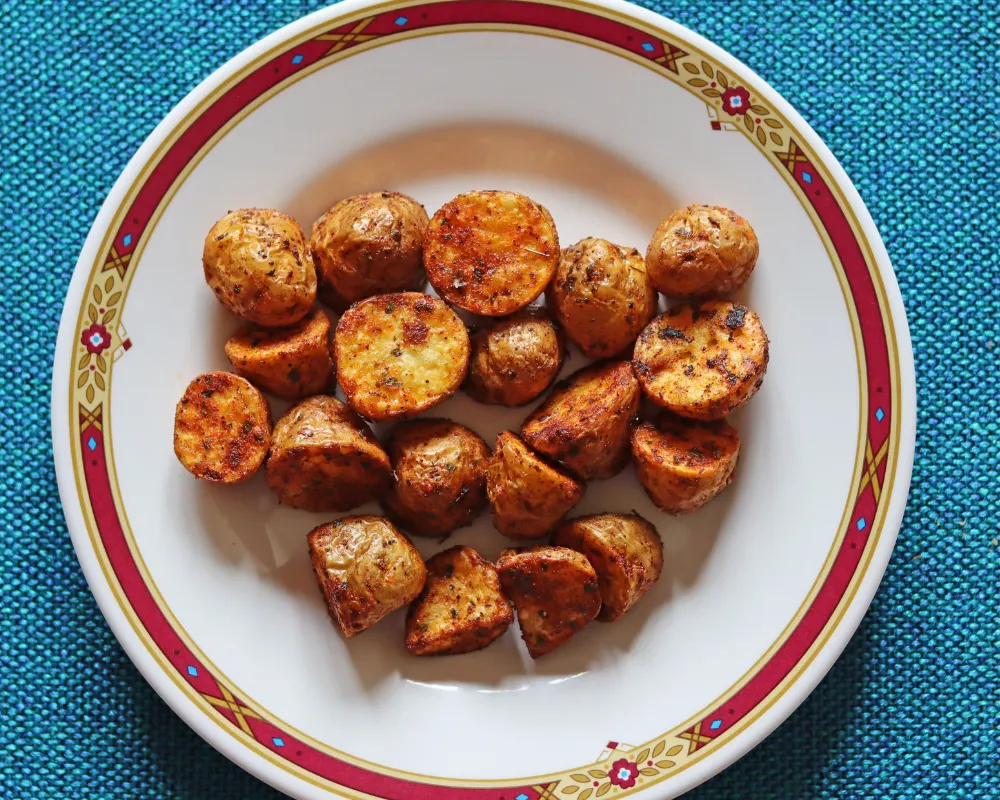
- A pound and a half of halved baby potatoes is one full single layer. Feeding eight means two batches, and the second runs a couple of minutes faster.
- A pound of Brussels sprouts is one batch. Same math.
- A bundle of asparagus fits in one go, which is why it earns its slot at the end of the sprint.
Two batches is not a failure, it is the plan, and it is why the schedule above starts the dense sides at 12:30 rather than 2:00. If you have never measured your basket floor, the pan size calculator takes the three numbers and tells you what fits, and the recipe scaler resizes any of our recipes to the batch size your basket actually takes. If you are converting your own family recipe from the oven instead, the air fryer calculator does the temperature and time translation, and the conversion guide explains the rules it applies.
And if this is the week you are choosing between a basket and one of the big oven-style units, Thanksgiving is honestly the strongest case the oven-style ever gets: three flat racks is three sides at once. Basket versus oven-style walks through the trade, and the best air fryers for baking covers specific models.
Cook early, reheat late
One more scheduling tool, and it is the one that removes the most stress: an air fryer is a far better reheater than it is a holder. If the timing gets away from you, do not try to keep a dish hot for two hours. Let it go cold, and give it back its texture in the last ten minutes.
Reheating with moving dry air works because it does the opposite of a microwave. A microwave heats the water in food, which is efficient and turns every crust soft. The basket dries the surface while it warms the middle, which is why it is the only machine in the kitchen that can bring a roast potato back from the dead. It is the same logic as our reheating fried chicken page, applied to a whole holiday.
| Cold dish | Bring it back | Worth knowing |
|---|---|---|
| Roast potatoes | 4 to 5 min at 380°F | Cut side down again, exactly like the first time |
| Brussels sprouts | 3 to 4 min at 380°F | They re-crisp better than they held |
| Dinner rolls | 2 to 3 min at 320°F | A crust the oven bag never gave them |
| Pie, by the slice | 3 to 4 min at 320°F | Crisper than it was when it first cooled |
| Stuffing | 5 to 6 min at 350°F | Loosened with a spoonful of broth first |
These are starting points for a single-serving layer, not gospel: thicker piles take longer, and a thermometer settles arguments here the way it does everywhere else on this site. Leftovers on Friday reheat by exactly the same table, which is the quiet second life of this whole page.
What not to attempt in a basket
An honest list, because every one of these shows up in the roundups and every one of them ends badly.
| Skip this | Why | Do instead |
|---|---|---|
| A whole turkey | It does not fit. The pages that do it are using 26 quart oven-style units | Oven for the bird, or a 3 pound boneless breast in the basket |
| Mashed potatoes | There is no mechanism. A basket cannot boil | The stove, and send the peels to the basket: potato peels, 8 minutes |
| Gravy | A liquid under a fan is a redecorated kitchen | The stove, from the resting tray's drippings |
| The 9x13 green bean casserole | The dish does not fit, and never will | A half batch in a 6-inch dish works. Fried onions go on for the last 3 minutes only, or they scorch, the same late-topping logic as our coffee cake streusel |
| Marshmallow sweet potato casserole | Marshmallows under a fan lift, land on the element and burn | Sweet potatoes in the basket, marshmallow finish under the oven broiler for one watched minute |
| Loose stuffing | The fan redistributes it, and the top scorches while the middle steams | Dry the bread in the basket, bake the stuffing in a dish: croutons first, assembly second |
The longer version of which bakes are and are not worth attempting in a basket is in what you can and cannot bake in an air fryer, and it is worth ten minutes before you commit a menu to the machine.
One safety note for the long day. A basket that runs from morning to mid afternoon collects grease, and turkey-adjacent drippings smoke at roasting temperatures. Wipe the drawer out between the fatty batches and the sweet ones, for flavor as much as safety. If your machine starts hazing mid-schedule, why your air fryer smokes has the five-minute triage, and how to prevent burning covers the fan-lifts-light-things problem that foil and marshmallows share. The full cleanup afterwards is the bakeware cleaning guide's department.
The grazing tier, while people wait
Appetizers occupy the basket, and the basket has a schedule, so the trick is choosing things that are made by noon and genuinely fine at room temperature. Pasta chips and tortilla chips were built for exactly this, candied walnuts disappear faster than anything else on the table, and the potato peels arrive as a byproduct of mash prep at 1:30. If your crowd expects something warm, popcorn shrimp runs in the late morning without touching the afternoon queue.
And for the overnight guests, the same machine earns breakfast: cinnamon rolls are 10 minutes at 320°F, and hash browns come out better than the skillet does them, with nobody standing over anything.
Dessert is a timing gift
Dessert is the easiest part of the plan precisely because nothing about it is urgent. Almost every dessert on this site holds or improves, which is why the schedule pushes it all before noon.
- Apple pie baked in the morning, re-crisped for 3 minutes while the table is cleared. The filling has had six hours to set, so it slices cleanly instead of flooding, and warm-again crust on a settled filling is better pie than fresh.
- Pecan pie and sweet potato pie, the two most Thanksgiving pies there are, both day-before bakes that set as they cool and slice cleaner for the overnight wait.
- Pound cake and carrot cake from yesterday, because a dense butter cake genuinely improves overnight as the crumb settles and the butter redistributes.
- Mini cheesecakes from yesterday, since cheesecake is a make-ahead dessert whether you want one or not. Individual portions also skip the one moment of drama a whole cheesecake carries: the cutting.
- Baked apples as the one live dessert, started as the plates are cleared, ready with the coffee. Twenty unattended minutes, and the house smells like the holiday is supposed to.
- Sugar cookies if there are children who need a job that keeps them away from the stove: 8 minutes a batch, decorating takes hours of their afternoon, everybody wins.
- Apple cake if the crowd is bigger than one pie serves, baked the day before alongside the pound cake.
The one dessert I would not schedule for the day itself is a full-size cheesecake, only because its cooling curve owns the basket and the fridge for the better part of a day. Make it Wednesday or choose the minis.
Running the basket instead of a second oven cycle all afternoon is also simply cheaper, and if you are curious what the day's electricity actually costs, the running cost calculator will put a number on it. All four air fryer tools live in one place, the guides index holds the technique pages behind everything here, how to bake in an air fryer is the start-here piece if the machine is new, and the full recipe index has everything this page did not have room for. When the turkey is a memory, the same one-basket planning runs the rest of the season: the Christmas cookie guide, the Easter plan, and the Halloween treats.
Frequently asked questions
QCan you cook a whole turkey in an air fryer?
Not in a basket air fryer, no. A whole turkey, even a small one, does not physically fit in a 5 or 6 quart basket, and the recipes that show a full bird are using 26 quart oven-style units with racks, which are small ovens in everything but name. What works genuinely well in a basket is a 3 pound boneless turkey breast: 350F, roughly 45 to 55 minutes, turned once, cooked until the thickest part reads 165F, then rested 15 minutes under foil. For a gathering of four or five it frees the oven completely.
QWhat order should I cook Thanksgiving sides in one air fryer?
In order of how well each dish survives waiting. Bakes and desserts first, the day before or in the morning, because they hold or improve. Dense sides like potatoes and squash through the early afternoon, wrapped in foil as they finish, because wet, heavy food stores heat for a long time. Anything crisp goes last, in the half hour while the turkey rests, because crispness fades in about fifteen minutes no matter what you do. Working backwards from serving time with that rule, the whole day schedules itself.
QHow do I keep air fryer sides warm for Thanksgiving dinner?
Two different answers for two kinds of food. Dense, wet sides hold beautifully: foil over the dish, a towel over the foil, and a covered dish of roast potatoes is still properly hot 45 minutes later. Better still, the moment the turkey comes out to rest, the oven becomes a warming cabinet at its lowest setting, and everything in foil goes in it. Crisp things are the opposite: do not cover them and do not try to hold them, because trapped steam kills the crust. Cook those last, or let them go cold and re-crisp them for three or four minutes just before serving.
QHow many sides can one air fryer basket realistically handle?
Five or six across the day, comfortably, if they are scheduled, and about two if everything is left to the final hour, which is the mistake the day usually produces. The limit is floor space per batch: roast vegetables need a single layer, and a 5 to 6 quart basket floor holds about a pound and a half of halved potatoes or a pound of Brussels sprouts at a time. Feeding eight means two batches of each, which is fine at 12:30 and a disaster at 2:40. Start the dense sides early and the count stops mattering.
QCan I make green bean casserole in an air fryer?
A half batch in a 6-inch dish, yes. The traditional 9x13 does not fit in any basket. Assemble the casserole in the dish, cook it through, and add the fried onions only for the last 3 minutes, because they are small, dry and sugary, which is exactly the combination the element scorches fastest. Putting a delicate topping on late rather than early is the same move our coffee cake makes with its streusel, and it works for the same reason.
QCan I make stuffing in an air fryer?
In a dish, yes. Loose, no. Loose stuffing under a fan gets rearranged, and the top layer scorches while the middle steams. The basket's real contribution to stuffing happens earlier: ten minutes turns cubed bread into properly dry croutons, which is the difference between stuffing with structure and stuffing that is wet bread. Dry the cubes in the basket, assemble in a 6-inch dish with the aromatics and stock, and bake it in the dish, in either machine.
QWhat Thanksgiving desserts work in an air fryer?
Most of them, and almost all of them are better made ahead, which is the scheduling gift. A 6-inch apple pie bakes in about 28 minutes at 320F in the morning and re-crisps in 3 minutes at dinner. Pecan and sweet potato pies, pound cake, carrot cake and pumpkin bread are all day-before bakes that improve overnight. Mini cheesecakes need the overnight chill anyway. The one live dessert worth running is baked apples, twenty minutes at 330F while the table is cleared, so dessert arrives hot with the coffee and nobody left the conversation.
QCan an air fryer run all day without a break?
Yes. The machine cycles its own element and the duty is no different from any busy Sunday, so back to back batches all afternoon are fine, and later batches actually run a minute or two faster because the machine is fully heat-soaked. The one thing worth doing mid-schedule is a quick wipe of the drawer between greasy batches and sweet ones, partly so the pie does not taste of Brussels sprouts, partly because accumulated grease is what smokes at roasting temperatures.
QWhy is my air fryer smoking during Thanksgiving cooking?
Almost always accumulated fat on the drawer floor reaching its smoke point, and a day of back to back roasting is exactly how it accumulates. Pull the basket, wipe the drawer with a paper towel, carry on. Oily marinades and fatty drippings from poultry are the usual sources, and a spoonful of water in the drawer under greasy items heads it off. If the smoke is white and smells acrid rather than fatty, stop and check for a stray crumb or a lifted piece of foil touching the element instead.
QAre frozen sides worth it for Thanksgiving?
For the busiest day of the cooking year, honestly yes, and the air fryer is the best thing that ever happened to them. Frozen Brussels sprouts come out with browned edges the bag never promises, frozen sweet potato fries are a ten minute side, and tater tots keep a table of children quiet for the cost of one basket slot. Nobody at a table of twelve is auditing whether the sprouts were fresh. Spend the effort where it shows, on the bird and the bakes, and let the freezer carry a side or two.
QShould I buy a bigger air fryer for Thanksgiving?
Not for one day a year, but if you were already replacing the machine, this is the day the oven-style format earns its counter space: three flat racks is three sides cooking at once, and the whole scheduling problem this page solves gets dramatically easier. The trade is that oven-style units are slower per dish and worse at the crisp finish that makes a basket special. For the other 364 days, a 5 to 6 quart basket remains the better daily machine for most kitchens.
QHow do I reheat Thanksgiving leftovers in an air fryer?
In a single layer, hot and fast, and it beats the microwave for everything with a surface worth saving. Roast potatoes take 4 to 5 minutes at 380F cut side down, Brussels sprouts 3 to 4 at the same, rolls 2 to 3 at 320F, pie 3 to 4 at 320F by the slice, stuffing 5 to 6 at 350F with a spoonful of broth stirred through first. Turkey reheats best at 325F with a little foil tent so the outside does not dry before the middle warms. The microwave heats the water in food and softens every crust; moving dry air does the opposite, which is the whole point.
Did this plan save your oven?